
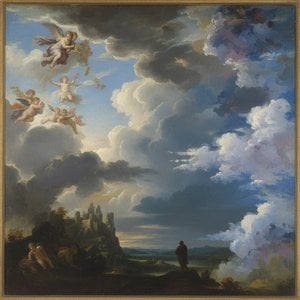
Cloud

- 130.0 x 162.0 cm

Obraz dostosowuje się do Twoich wyborów: , .
Opis obiektu
 Rozwiń treść
Biografia artysty
Discover eikyū (1911-1960), a Japanese artist blending traditional techniques & modern influences. Explore his landscapes, engravings, & unique style at ArtsDot.
Ten utwór podlega ochronie prawem autorskim
Dzieło sztuki prezentowane na tej stronie podlega ochronie prawem autorskim, co oznacza, że nie mamy prawa do tworzenia ani sprzedaży jego identycznej reprodukcji. Ochrona ta jest egzekwowana na mocy umów międzynarodowych, takich jak Konwencja berneńska oraz przez przepisy prawa krajowego, w tym te określone w Prawo autorskie USA – Tytuł 17.
Jako pełną szacunku i legalną alternatywę oferujemy personalizowane, malowane ręcznie dzieła sztuki inspirowane oryginałem. Nasi wykwalifikowani i profesjonalni artyści starannie analizują styl, nastrój oraz artystyczną esencję pierwowzoru, aby stworzyć nowe, unikalne dzieło, które przywołuje te same emocje – pozostając jednocześnie w pełni oryginalną kreacją.
Metoda ta jest w pełni zgodna z przepisami prawa autorskiego, ponieważ nie polega na kopiowaniu ani powielaniu chronionego dzieła. Stanowi ona kreatywną reinterpretację – nowy obraz, który czerpie inspirację z oryginału, ale nie jest z nim tożsamy.
Zamów swój w czterech prostych krokach
Nie spiesz się. Możesz zmienić każdą odpowiedź; cena w Twoim koszyku będzie aktualizowana po każdym wyborze.
1 Pierwszy z czterech kroków
Na jakim podłożu ma zostać wydrukowane?
Płótno jest drukowane farbami giclée i może zostać naciągnięte na ramę lub oprawione jak obraz; papier dostarczany jest w formie płaskiej lub w ramie z szybą.
2 Drugi z czterech kroków
Który rozmiar wybierasz?
Te rozmiary zachowują proporcje oryginalnego obrazu. Rysunek przedstawia wybrany przez Ciebie format na ścianie, nad dwumetrową sofą.
lub podaj własne wymiary
Wybierz spośród naszych standardowych rozmiarów, które zachowują oryginalne proporcje dzieła sztuki.

Wpisz wymaganą szerokość i wysokość, aby dopasować grafikę do ramy lub ściany. Wydruk można jedynie przyciąć, nigdy nie powiększając go poza oryginalny obraz, dlatego format o innych proporcjach spowoduje utratę części kompozycji. Przed rozpoczęciem druku prześlemy Ci cyfrowy podgląd do zatwierdzenia. Obraz wyświetlany na tej stronie nie pokazuje rzeczywistego przycięcia — jedynie podgląd oddaje ten efekt.
3 Trzeci z czterech kroków
W jaki sposób przygotować dzieło: w formie tuby, na krosnach czy w ramie?
Poniższe ceny dotyczą rozmiaru wybranego w pierwszym kroku.
Wybierz krawędzie płótna naciągniętego na ramę
Wybierz ramę

Białe krawędzie zł1

rozmyte krawędzie zł1

Przedłużony zł1

P118B zł10

P118H zł10

P118W zł10

P438Z zł10

P508JH zł12

P508YH zł12

P805H zł10

P805Z zł10

P919BZ zł10

P919G zł10

P919XJ zł10

P959ZH zł10

P968JZ zł12

W106C zł8

W218G zł10

W218JH zł8

W218Y zł10

W307PJ zł10

W316G zł10

W316PJ zł8

W316Y zł10

W398PJ zł8

W4111J zł10

W500HY zł15

W500JH zł15

W692G zł12

W849H zł8

W940BG zł15

W953PJ zł8

H24-GOLD zł30

H24-SILVER zł30

H36-GOLD zł45

H36-SILVER zł45
W oprawie
Profil: . Wymiar całkowity w ramie: .
4 Krok czwarty z czterech
Kilka opcji wykończenia
Wszystkie są opcjonalne. Wybrane już odpowiedzi nie wiążą się z żadnymi dodatkowymi kosztami.
Dostawa na cały świat () w ciągu 2 tygodni zamiast standardowych 4/5 tygodni. (23 Listopad)
Tabliczka informacyjna, jak w muzeum?
Szczegóły grawerowanej brązowej tabliczki
This elegant plaque features the artist's name and the title of the artwork, finely engraved for a timeless presentation.
It is made from bronze with a refined, elegant finish. The text is precisely laser-engraved for a sharp and permanent result. Measuring 9x2 cm, the plaque is compact yet easy to read. It's built to be durable and scratch-resistant, offering a professional, museum-quality look. Mounting is simple thanks to the included adhesive backing.
Szczegóły przezroczystej tabliczki akrylowej
The plaque includes essential engraved details such as the artist's name, the title of the artwork, the date it was created, the type of media used-like oil on canvas or watercolor-a brief description of the piece, and a QR code that links to the complete artwork information.
It is crafted from clear acrylic, offering a sleek, modern appearance. The text is UV-engraved in black to ensure strong visual contrast. With a size of 10x15 cm, it ensures optimal readability. It comes equipped with two metal hooks for secure wall mounting. The plaque is designed to be weather-resistant, making it suitable for various environments, and it includes interactive features that work seamlessly with smartphone scanning.
Szczegóły czarnej tabliczki akrylowej
This elegant plaque includes engraved information such as the artist's name, the title of the artwork, the date it was created, the type of media used (like oil on canvas or watercolor), a short description of the artwork, and a QR code for quick access to more information.
The plaque itself is made from refined black acrylic with a premium finish. The text is laser-engraved in white for high contrast and readability. Its size is 10x15 cm, designed to be easy to read. It comes with two metal hooks for professional mounting. The design is sleek and fits any interior style. It is also weather-resistant and durable, with built-in digital integration for mobile compatibility.
Werniks ochronny?
Kiedy potrzebujesz dostawy?
✓ Sprawdź i zamów
Twój wydruk, zgodnie z zamówieniem

Cloud
Technika reprodukcji
Wymiary reprodukcji
-

Opcje oprawy reprodukcji
-
-
W przypadku dzieł sztuki lub reprodukcji, których którykolwiek z boków przekracza 105 cm (około 41 cali), rama zostanie wysłana w formie zestawu do samodzielnego montażu. Metoda ta zapewnia bezpieczną dostawę i zapobiega uszkodzeniom podczas transportu.
Wymagany profesjonalny montaż – nie jest to produkt typu DIY.
Zestaw musi zostać złożony, a płótno naciągnięte przez doświadczonego profesjonalnego ramiarza, przy użyciu kleju do drewna (brak w zestawie), kleszczy do naciągania płótna oraz ścisków, które utrzymają krosna w równej pozycji podczas schnięcia kleju. Nieprawidłowy montaż lub nierównomierne napięcie płótna może trwale uszkodzić dzieło sztuki i nie podlega naszej gwarancji.
 W przypadku dzieł sztuki lub reprodukcji, których którykolwiek z boków przekracza 105 cm (około 41 cali), rama zostanie wysłana w formie zestawu do samodzielnego montażu. Metoda ta zapewnia bezpieczną dostawę i zapobiega uszkodzeniom podczas transportu.
W zestawie znajdują się wszystkie listwy z litego drewna, precyzyjnie docięte do wymiarów.
Montaż odbywa się przy użyciu dołączonych wkrętów oraz kleju do drewna do łączenia narożników, którego zestaw nie zawiera i który musi zostać dostarczony przez ramiarza.
Wymagane są profesjonalne narzędzia, których nie ma w zestawie: kleszcze do naciągania płótna (napinacz) oraz zaciski, które pozwolą utrzymać listwy w równej pozycji podczas schnięcia kleju.
Ważne:
Do połączenia narożników niezbędny jest klej do drewna, listwy należy unieruchomić za pomocą ścisków do momentu całkowitego wyschnięcia kleju, a naciągnięcie płótna na złożoną ramę wymaga użycia kleszczy do naciągania płótna. Żaden z tych elementów nie jest dołączony do zestawu. Przed zamówieniem tego rozmiaru zalecamy konsultację z doświadczonym ramiarzem.

Etykieta obiektu
-
-

Lakier ochronny
Lakier z połyskiem (pogłębia kolory, chroni przed światłem i wilgocią)
-

Ekspresowa
Dostawa na cały świat () w ciągu 2 tygodni zamiast standardowych 4/5 tygodni. (23 Listopad)
-
Przesyłka ekspresowa
Dostawa na cały świat () w ciągu 4-5 tygodni. (30 Listopad).
W cenie
Cena całkowita
zł 247
Opcja ze szkłem jest dostępna wyłącznie w rozmiarach poniżej 110 cm
W każdym zamówieniu
- Bezpłatna ekspresowa wysyłka na cały świat
- Wysokiej jakości płótno lniane
- Pełne ubezpieczenie przesyłki
- Gwarancja zwrotu należności celnych i podatków importowych
- Gwarancja wiernego odwzorowania kolorów
- 100-dniowa polityka zwrotów (tylko w przypadku wad)
- Gwarancja 100% zwrotu pieniędzy
- Zniżka przy zakupie wielu sztuk


Pytania i odpowiedzi
Czy kolory dzieła "Cloud" są intensywne czy stonowane?
Kolorystyka dzieła "Cloud" charakteryzuje się nasyceniem na poziomie Muted oraz intensywnością wynoszącą Monochromatic.
Gdzie mogę kupić wydruk „Cloud” – Ei-Q?
„Cloud” jest dostępny jako szlachetna odbitka na płótnie bawełnianym lub archiwalnym papierze o strukturze płótna. Zamówienia można składać na stronie Wydruk artystyczny premium, wybierając dowolny rozmiar.
Czy "Cloud" charakteryzuje się silnym kontrastem światłocienia?
Więcej o tym obrazie
 Podgląd w skali 1:1

 Zamów ręcznie malowaną reprodukcję
 Wyślij jako kartkę
 Udostępnij
 Szczegóły dzieła
 Przewodnik


 Pobierz obraz
 Podobne obiekty
 RTG
 Pokaz slajdów
 Pytania i odpowiedzi
 Statystyki
Podobne dzieła


Ei-Q
1911 - 1960, Japan
Biografia artysty
Romare Bearden: A Tapestry of American Experience
Romare Howard Bearden, born September 2, 1911, in Charlotte, North Carolina, and passing away March 12, 1988, in New York City, was more than just an artist; he was a chronicler of the Black experience in America. His life unfolded as a rich tapestry woven with threads of social work, artistic exploration, and profound personal reflection. From his early years navigating the segregated South to his later career as a celebrated visual storyteller, Bearden’s journey is inextricably linked to the history and culture he so powerfully depicted. He began his formal education at Lincoln University in Pennsylvania, but transferred to Boston University and ultimately completed his degree at New York University (NYU), where he honed his skills as a cartoonist and art editor for student publications – experiences that would profoundly shape his later artistic vision. Bearden’s early career involved working as a social worker with the New York City Department of Social Services, a role that provided him with invaluable insight into the realities faced by marginalized communities, informing many of his works with empathy and understanding. This dual life—artist and advocate—created a unique perspective, allowing him to blend personal observation with artistic expression.- Early Influences: Bearden’s artistic development was deeply rooted in the diverse influences he encountered throughout his life. He drew inspiration from Western masters like Duccio, Giotto, and Matisse, alongside a fervent appreciation for African art – particularly its sculptures, masks, and textiles. This synthesis of European tradition and African heritage became a defining characteristic of his work.
- The Harlem Renaissance: Bearden was deeply connected to the Harlem Renaissance, a vibrant cultural movement that celebrated Black identity and creativity. He participated in the Harlem Artists Guild, absorbing the energy and spirit of this era and carrying its legacy forward through his art.
- Collage as Medium: Bearden’s most recognizable technique was collage—a process he embraced with remarkable innovation. He skillfully combined disparate elements – photographs, newspapers, fabrics, and painted surfaces – to create layered compositions that evoked memory, emotion, and social commentary.
The Language of Memory and Myth
Bearden’s art is not simply a representation of the world; it's an exploration of memory, myth, and the complexities of Black identity. His collages frequently depict scenes from American history—the Great Migration, jazz performances, and everyday life in Harlem—but always filtered through a distinctly personal lens. He didn’t merely record events; he reconstructed them, layering fragments of experience to create evocative narratives that resonated with both historical significance and emotional depth. His work is rich in symbolism, drawing on African motifs, biblical imagery, and the rhythms of jazz music to convey profound meanings. The recurring presence of figures dancing, celebrating, or mourning speaks to the resilience and spirit of the Black community. Bearden’s use of color—bold reds, yellows, and blues—adds to the vibrancy and emotional intensity of his compositions.- Jazz as Inspiration: Jazz music played a central role in Bearden's artistic process. He often incorporated musical notation, rhythms, and improvisational elements into his collages, reflecting the dynamic energy and improvisational spirit of jazz.
- Mythological Allusions: Bearden frequently drew upon African mythology and folklore, weaving these narratives into his work to explore themes of identity, spirituality, and cultural heritage.
- The Fragmented Narrative: A key element of Bearden’s style is the fragmented nature of his compositions. He deliberately broke down traditional narrative structures, presenting viewers with a series of interconnected images that invite interpretation and contemplation.
A Legacy of Innovation and Social Commentary
Throughout his career, Bearden achieved significant recognition for his artistic contributions. His first solo exhibition in Harlem in 1940 marked a pivotal moment in his career, while his Washington, D.C., show in 1944 further solidified his reputation as a rising star. He continued to exhibit internationally throughout the mid-20th century, establishing himself as one of America’s leading artists. Beyond his artistic achievements, Bearden was deeply committed to social justice and community engagement. His work with the Harlem Cultural Council demonstrated his dedication to supporting young, emerging Black artists and fostering cultural development within the African American community. His legacy extends beyond individual artworks; he helped establish institutions like The Studio Museum in Harlem and Cinque Gallery, providing vital platforms for Black artists and promoting cross-cultural understanding. Key Achievements:- First solo exhibition in Harlem (1940)
- Solo exhibition in Washington, D.C. (1944)
- Appointment as the first art director of the Harlem Cultural Council (1964)
- Establishment of Cinque Gallery with Norman Lewis and Ernest Crichlow
The Enduring Power of a Visual Storyteller
Romare Bearden’s artistic legacy continues to resonate today. His collages, watercolors, oils, photomontages, and prints offer a powerful testament to the richness and complexity of Black American experience. His work is not merely aesthetically pleasing; it's a profound reflection on history, identity, memory, and the enduring spirit of a community. Bearden’s innovative use of collage, combined with his deep understanding of social issues and cultural traditions, cemented his place as one of the most important artists of the 20th century—a visual storyteller whose work continues to inspire and challenge viewers around the world. His life's work serves as a reminder of the power of art to illuminate the human condition and foster empathy across cultures.Powiązane artykuły
Ephemeral Visions: Clouds as Motif & Metaphor in Western Art History
Explore the captivating history of clouds in Western art! From Romantic masterpieces to Symbolist visions, discover how artists captured atmosphere, emotion & spirituality. A guide for collectors and enthusiasts.

Mastering the Great Wave: The Top 25 Iconic Artworks by Katsushika Hokusai
Journey through the soul of Japan with our curated guide to the top 25 Katsushika Hokusai masterpieces. From The Great Wave to iconic ukiyo-e prints, explore the stories behind these timeless woodblock legends. Find museum-quality reproductions on ArtsDot.com.

10 Iconic Ukiyo-e Masterpieces That Defined Japanese Art
Journey through the 'Floating World' with our curated guide to 10 Ukiyo-e masterpieces. From Hokusai’s waves to Hiroshige’s landscapes, explore the stories behind these iconic woodblock prints. Find museum-quality reproductions for your decor at ArtsDot.com. Explore the full collection online.