


 Podgląd w skali
 Wyślij jako kartkę
 Udostępnij
 Szczegóły dzieła

 Pobierz
 Podobne obiekty
 RTG
RTG Pokaz slajdów
Landscape
 Oil On Canvas
- WallArt
- Baroque Style
 1650
1650- Early Modern
 98.0 x 157.0 cm
 Muzeum Ermitażu
 Rozwiń treść
Giclée / Wydruk artystyczny
Druk giclée lub płótno o jakości muzealnej, szybka realizacja i szeroki wybór opcji wykończenia. ( Przełącz na obraz ręcznie malowany Przełącz na obraz)




P118B $10

P118H $10

P118W $10

P438Z $10

P508JH $12

P508YH $12

P805H $10

P805Z $10

P919BZ $10

P919G $10

P919XJ $10

P959ZH $10

P968JZ $12

W106C $8

W218G $10

W218JH $8

W218Y $10

W307PJ $10

W316G $10

W316PJ $8

W316Y $10

W398PJ $8

W4111J $10

W500HY $15

W500JH $15

W692G $12

W849H $8

W940BG $15

W953PJ $8




Wybierz spośród naszych standardowych rozmiarów, które zachowują oryginalne proporcje dzieła sztuki.

Możesz wprowadzić własne wymiary, aby dopasować dzieło do konkretnej ramy lub przestrzeni. Jeśli wybrany rozmiar nie będzie odpowiadał proporcjom oryginalnego obrazu, przytniecie dzieło lub rozszerzymy obraz za pomocą odbicia lustrzanego lub jednolitego wypełnienia krawędzi. Przed rozpoczęciem produkcji prześlemy cyfrową wizualizację do Twojej akceptacji.
Prosimy pamiętać, że podgląd na ekranie nie odzwierciedla faktycznego przycinania ani rozszerzania. Tylko wizualizacja dokładnie pokaże końcową kompozycję.
Mimo dostępności niestandardowych rozmiarów, zalecamy wybór wymiaru z listy zdefiniowanej, aby zachować oryginalne proporcje.
Dostawa na cały świat () w ciągu 2 tygodni zamiast standardowych 4/5 tygodni. (10 Sierpień)

Bezpłatna ekspresowa wysyłka na cały świat

Wysokiej jakości płótno lniane

Pełne ubezpieczenie przesyłki

Gwarancja zwrotu należności celnych i podatków importowych

Gwarancja wiernego odwzorowania kolorów

Polityka 60-dniowego zwrotu (tylko w przypadku wad)

Gwarancja 100% zwrotu kosztów

Zniżka przy zamówieniu wielu produktów
 Opcja ze szkłem jest dostępna wyłącznie w rozmiarach poniżej 110 cm

Landscape
Giclée / Wydruk artystyczny
Wymiary reprodukcji
-


Cena całkowita
$ 62
Opis kolekcjonerski
A Pastoral Dream from the Flemish Golden Age
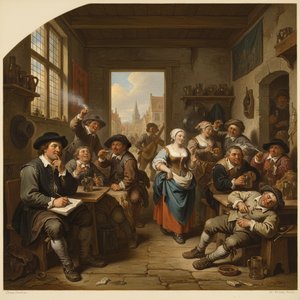
To gaze upon this magnificent landscape is to step directly into a sun-dappled afternoon in 17th-century Flanders. David Teniers the Younger, master chronicler of everyday life and bucolic scenes, has gifted us a vision steeped in tranquility and gentle human activity. The composition immediately draws the eye into a pastoral tableau where nature and humanity coexist in perfect, harmonious leisure. It is more than just a depiction of an outing; it feels like a memory itself—the lingering warmth of a perfect day spent among friends or family.
The Artistry of Teniers: Technique and Subject
Teniers possessed a remarkable gift for capturing the mundane with the grandeur usually reserved for mythology. Here, that skill is evident in every meticulously rendered detail. Observe the foreground, where figures move with an unforced grace; their casual interactions suggest deep familiarity and shared joy. The background unfolds with lush, believable foliage, providing a rich, verdant curtain against which the human drama plays out. Technique-wise, one can appreciate the subtle handling of light—the way sunlight filters through unseen leaves, dappling the ground and illuminating the figures just enough to bring them into sharp relief. The inclusion of scattered birds adds an exquisite layer of life, suggesting movement even in a moment captured forever on canvas.
Symbolism of Companionship and Nature
The elements within this painting are rich with quiet symbolism. The presence of the dogs, positioned attentively near the center and to the right, anchors the scene in domestic reality; they are loyal companions mirroring the bonds between the people depicted. In the art of this period, such outdoor gatherings often served as meditations on the ideal life—a return to simplicity away from the clamor of urban existence. The landscape itself functions as a visual metaphor for peace, suggesting that true contentment is found in natural settings and shared moments.
A Timeless Atmosphere for Modern Living
For the discerning collector or designer seeking to infuse a space with history and soulful depth, this piece offers unparalleled ambiance. Its scale, 98 x 157 cm, allows it to command a wall while maintaining an intimate, breathable quality. Reproducing such a work allows one to bring the sophisticated charm of the Flemish Baroque into contemporary interiors. Imagine this scene above a grand mantelpiece or within a sunlit drawing-room; it whispers tales of bygone eras while promising the serenity of a perfect afternoon today.
Podobne dzieła


O artyście
David Teniers the Younger: A Master of Flemish Life
David Teniers the Younger, born in Antwerp on December 15, 1610, wasn’t simply a painter; he was a chronicler of his time, a vibrant observer who captured the essence of Flemish society with an unparalleled eye for detail and a remarkable talent for portraying everyday life. His lineage – his father, David Teniers the Elder, was himself a respected artist – provided him with a solid foundation in artistic techniques, but it was through close association with giants like Peter Paul Rubens that Teniers truly blossomed, absorbing their dynamism and embracing a style uniquely his own. His story is one of family tradition intertwined with courtly patronage, ultimately culminating in a legacy as the foremost Flemish genre painter of the Baroque era.Early Influences and Artistic Training
Teniers’ early artistic development was profoundly shaped by his father's work, primarily smaller-scale cabinet paintings – intimate scenes of aristocratic life and portraits. However, a pivotal moment arrived through his marriage to Anna Brueghel, daughter of Jan Brueghel the Elder, and, crucially, Rubens himself acted as their wedding witness, forging a close connection with the master painter. This association wasn’t merely ceremonial; it provided Teniers with direct access to Rubens' studio and an invaluable understanding of his innovative approach to composition and color. Beyond his father and mentor, he also drew inspiration from other Flemish masters like Pieter Bruegel the Elder, whose landscapes instilled in him a deep appreciation for the beauty of the natural world. Despite facing periods of financial hardship within his family – necessitating the creation of copies of older works to supplement their income – Teniers’ artistic spirit remained undeterred, constantly seeking new ways to express himself and hone his craft.The Rise of Genre Painting and the "Kermess" Series
Teniers' career truly took flight as he began specializing in genre painting—a revolutionary approach at the time. Rather than focusing on grand historical narratives or religious subjects, he turned his attention to the lives of ordinary people: peasants celebrating festivals, bustling tavern interiors, lively village landscapes – scenes brimming with humor, merriment, and a keen observation of human behavior. His most celebrated works are undoubtedly his “Kermess” paintings—a series depicting elaborate peasant festivities known as *kermis*. These vibrant canvases explode with color, capturing the energy and chaos of these communal gatherings with astonishing detail. The figures are rendered with remarkable realism, their faces reflecting a wide range of emotions – joy, drunkenness, mischief, and even a touch of melancholy. The landscapes surrounding the festivals are equally captivating, showcasing the beauty of the Flemish countryside. These paintings weren’t merely depictions; they were social commentaries, offering a glimpse into the values, customs, and traditions of the time.Courtly Patronage and the Antwerp Academy
Teniers' artistic reputation quickly gained him recognition within the Habsburg court. He secured a position as court painter and curator for Archduke Leopold Wilhelm, the influential Governor General of the Spanish Netherlands, a role that afforded him considerable prestige and access to an extraordinary collection of art. As curator, he was tasked with cataloging and managing this vast collection, meticulously documenting each piece and contributing significantly to its organization. This position also led to his most ambitious undertaking: the establishment of the Antwerp Academy of Fine Arts in 1663. Driven by a desire to revive Flemish painting after a period of decline following the deaths of Rubens and Van Dyck, Teniers envisioned an institution where young artists could receive rigorous training in drawing and sculpting. Despite initial resistance, he ultimately secured royal recognition for the academy, solidifying his place as a pivotal figure in the artistic landscape of Antwerp.A Lasting Legacy
David Teniers the Younger died on April 25, 1690, leaving behind an astonishing body of work—estimated to be around two thousand paintings. His influence extended far beyond his own lifetime, inspiring numerous followers and shaping the course of Flemish painting for generations to come. Artists like Coryn Boel and Mattheus van Helmont directly emulated his style, while even figures as renowned as Antoine Watteau in France acknowledged his impact. Teniers’ legacy isn't simply one of artistic skill; it’s a testament to his ability to capture the spirit of an era, offering us a vibrant and enduring portrait of Flemish life during the Baroque period. His paintings remain treasured examples of genre painting, inviting viewers to step into a world of bustling festivals, convivial taverns, and the everyday lives of ordinary people—a world rendered with remarkable beauty, detail, and profound insight.
David Teniers Młodszy
1610 - 1690 , Belgia
Krótka nota
- Artistic Movement Or Style: Barok
- Artists Or Movements Influenced By This Artist: ['Watteau']
- Artists Who Influenced This Artist:
- Rubens
- Brueghel
- Date Of Birth: 1610
- Date Of Death: 1690
- Full Name: David Teniers II
- Nationality: Flamand
- Notable Artworks:
- Kermessy
- Taverny
- Krajobrazy
- Place Of Birth: Antwerp, Belgia
Powiązane artykuły
David Teniers the Younger: Genre Painting & Social Commentary in Baroque Flanders
Explore the captivating world of David Teniers the Younger, a leading Flemish Baroque painter. Discover his genre scenes, social commentary, and lasting influence on 17th-century art. Learn about his life, techniques & legacy.

Romantyczny Krajobraz w Malarstwie: 10 Arcydzieł, Które Zdefiniowały Epokę | ArtsDot.com
Odkryj 10 arcydzieł romantyzmu w malarstwie! Poznaj historie Caspara Davida Friedricha, Turnera i innych mistrzów. Inspiracje wnętrzarskie & reprodukcje obrazów najwyższej jakości na ArtsDot.com. Eksploruj kolekcję online!

Krajobraz w sztuce: 10 arcydzieł, które inspirują (malarstwo, dekoracje wnętrz)
Odkryj 10 arcydzieł krajobrazu w sztuce! Poznaj historie Moneta, van Gogha i Turnera. Inspiracje pejzażami, techniki malarskie i reprodukcje najwyższej jakości na ArtsDot.com. Znajdź idealny obraz do Twojego wnętrza!

Holenderski Barok: 10 Arcydzieł, Które Zdefiniowały Epokę | ArtsDot
Poznaj 10 arcydzieł holenderskiego baroku! Odkryj historie Rembrandta, Vermeera i innych mistrzów XVII wieku. Reprodukcje obrazów najwyższej jakości – idealne do Twojego wnętrza. ArtsDot.com

Złoty Wiek Niderlandów: Światło, Realizm i Kulturowe Innowacje w Malarstwie Barokowym
Odkryj fascynujący świat malarstwa holenderskiego Złotego Wieku! Poznaj arcydzieła Rembrandta, Vermeera i innych mistrzów. Analiza technik, gatunków i wpływu na sztukę europejską.



