


 Zobacz w skali 1:1
 Wyślij
 Udostępnij
 Szczegóły
 Przewodnik

 Pobierz plik obrazu
 Podobne obiekty
 RTG
RTG Pokaz slajdów
 Statystyki
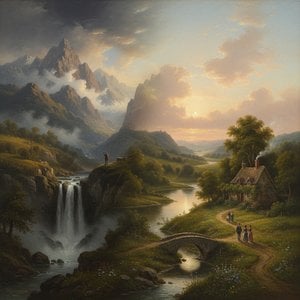
Tintern Abbey
 Romanticism
 49.0 x 75.0 cm
 Czytaj więcej
Ręcznie malowana reprodukcja olejowa
Ręcznie malowany obraz olejny na płótnie, wykonany na zamówienie przez naszych artystów w wybranym przez Ciebie wymiarze i oprawie. ( Przełącz na wersję drukowaną Przełącz na wersję cyfrową)




































Wybierz spośród naszych standardowych rozmiarów, które zachowują oryginalne proporcje dzieła sztuki.

Wpisz wymaganą szerokość i wysokość, aby obraz pasował do Twojej ramy lub ściany. Ponieważ jest to dzieło malowane ręcznie, w przypadku rozmiaru o innym proporcji artysta może domalować nieco więcej wokół obrazu lub przyciąć fragmenty — wybór należy do Ciebie. Przed rozpoczęciem pracy prześlemy Ci cyfrową wizualizację do zatwierdzenia. Obraz widoczny na tej stronie nie przedstawia rzeczywistego efektu — jedynie wizualizacja oddaje realny rezultat.
Po złożeniu zamówienia zespół ArtsDot.com skontaktuje się z klientem drogą mailową w celu uzyskania instrukcji i prześle wizualizację projektu
Dostawa na całym świecie () w ciągu 3–4 tygodni zamiast standardowych 5 tygodni. (23 Październik). Bez kompromisów w kwestii jakości.

Bezpłatna ekspresowa wysyłka na cały świat

Wysokiej jakości płótno lniane

Pełne ubezpieczenie transportowe

Gwarancja zwrotu należności celnych i podatków importowych

Gwarancja idealnego odwzorowania barw

100-dniowy okres na zwrot dzieła w przypadku wykrycia wad produkcyjnych

Gwarancja 100% zwrotu pieniędzy

Oferta przy zakupie wielu sztuk
 Opcja ze szkłem jest dostępna wyłącznie w rozmiarach poniżej 110 cm

Tintern Abbey
Technika wykonania
Rozmiar reprodukcji
-


Suma do zapłaty
zł 1012
Podobne dzieła


Biografia artysty
A Life Etched in Color: The Story of Daniel Sherrin
Daniel Sherrin, born in 1868, remains a compelling yet somewhat enigmatic figure within the landscape of early 20th-century Lithuanian art. While biographical details are scarce – a testament to the turbulent times and limited documentation surrounding artists from this region – his work speaks volumes, revealing a deeply sensitive soul grappling with modernity, abstraction, and a unique personal vision. Sherrin’s artistic journey unfolded against a backdrop of significant political and social upheaval in Lithuania, then part of the Russian Empire, later achieving independence before facing renewed challenges. This context undoubtedly shaped his aesthetic choices and thematic concerns. He wasn't merely painting *pictures*; he was documenting an era, a feeling, a shift in consciousness.From Realism to Rhythmic Abstraction
Sherrin’s early work demonstrates a grounding in traditional realism, typical of the academic training available at the time. However, this foundation quickly gave way to experimentation. He didn't abandon representation entirely but began to deconstruct it, fragmenting forms and prioritizing color and texture over precise depiction. This evolution wasn’t abrupt; rather, it was a gradual process of distillation, stripping away extraneous detail to reveal the underlying emotional core of his subjects. His paintings from the 1920s and 30s are characterized by a rhythmic abstraction – swirling compositions filled with vibrant hues and dynamic brushstrokes. These weren't purely formal exercises; they often hinted at landscapes, figures, or urban scenes, but rendered in a way that emphasized feeling over fidelity. The influence of Expressionism is palpable, though Sherrin developed a distinctly Lithuanian sensibility, infused with the folk traditions and spiritual undercurrents of his homeland. He wasn’t simply mimicking Western trends; he was synthesizing them with his own cultural heritage.The ArtsDot Collection & Recognition
Much of what we know about Sherrin today is thanks to the extensive collection housed within ArtsDot, and particularly the significant holdings at the MO Museum in Vilnius. This body of work provides a rare glimpse into the breadth and depth of his artistic output. The MO Museum’s curation has been instrumental in bringing Sherrin's paintings to wider attention, revealing him as a pivotal figure in Lithuanian modernism. Furthermore, pieces held by institutions like the Wadsworth Atheneum demonstrate an international resonance that was perhaps not fully appreciated during his lifetime. The sheer volume of work suggests a prolific artist who consistently explored new avenues of expression. It’s important to note that Sherrin wasn't operating in isolation; he was part of a vibrant artistic community in Vilnius, engaging with fellow painters and intellectuals.Themes & Symbolism: A Search for Identity
Recurring themes within Sherrin’s oeuvre include the Lithuanian landscape – not as picturesque scenery but as a symbolic representation of national identity and resilience. Figures often appear fragmented or distorted, perhaps reflecting the psychological toll of political instability and social change. Color plays a crucial role in his work; vibrant reds, blues, and yellows evoke both joy and melancholy, creating a complex emotional tapestry.- Landscapes as Metaphor: Sherrin’s depictions of nature are rarely literal; they serve as vehicles for exploring deeper themes of belonging and displacement.
- The Fragmented Figure: The human form in his paintings often appears incomplete or distorted, symbolizing the challenges faced by individuals within a rapidly changing society.
- Color & Emotion: His use of color is highly expressive, conveying a range of emotions from hope and optimism to anxiety and despair.
Legacy and Historical Significance
Daniel Sherrin died in 1940, a year that marked another turning point in Lithuanian history – the Soviet occupation. His work largely faded from public view for decades, overshadowed by the dominant Socialist Realist aesthetic of the Soviet era. However, with Lithuania’s independence in 1990, there has been a renewed interest in his art and its significance within the broader context of modernism. Sherrin is now recognized as a key figure in the development of abstract expressionism in Lithuania, bridging the gap between traditional realism and avant-garde experimentation. His paintings offer a powerful testament to the enduring human spirit, a search for identity amidst chaos, and a unique artistic vision that continues to resonate with audiences today. He represents not just a painter but a cultural touchstone, a voice from a nation striving to define itself in a world of constant change.
Daniel Sherrin
1868 - 1940
Zobacz także powiązane artykuły

Evocations of Place: A Historical Journey Through Landscape Art
Explore the rich history of landscape art with ArtsDot. Discover renowned artists, movements like Impressionism & Romanticism, and expert guidance for collecting timeless pieces. Find your perfect serene escape today!
Sublime i malownicze: Emocje i natura w romantycznym krajobrazie
Odkryj fascynujący świat romantyzmu w malarstwie! Poznaj Caspara Davida Friedricha, kategorię sublime i symbolikę krajobrazów. Inspiracje dla miłośników sztuki i dekoracji wnętrz – ArtsDot.

Sublime i malowniczość w krajobrazie romantycznym: Emocje, natura i duchowość w sztuce XIX wieku
Odkryj fascynujący świat romantycznego krajobrazu! Poznaj filozofię Sublime, arcydzieła Friedricha i Turnera oraz wpływ tego nurtu na sztukę. Inspiracje i reprodukcje najwyższej jakości – ArtsDot.

Romantyczny Krajobraz w Malarstwie: 10 Arcydzieł, Które Zdefiniowały Epokę | ArtsDot.com
Odkryj 10 arcydzieł romantyzmu w malarstwie! Poznaj historie Caspara Davida Friedricha, Turnera i innych mistrzów. Inspiracje wnętrzarskie & reprodukcje obrazów najwyższej jakości na ArtsDot.com. Eksploruj kolekcję online!

Hubert Robert: Picturing Ruins, Preserving Memory – A Study of Romantic Antiquarianism & Artistic Innovation
Explore the captivating world of Hubert Robert, master of Romantic landscape painting & 'capriccio' ruins. Discover his historical context, artistic innovations, and collecting insights with ArtsDot.