

 Podgląd w skali 1:1
 Wyślij jako kartkę
 Udostępnij
 Szczegóły dzieła
 Przewodnik

 Pobierz obraz
 Podobne obiekty
 RTG
RTG Pokaz slajdów
 Pytania i odpowiedzi
 Statystyki
Virgin and Child

- 62.0 x 42.0 cm


 Rozwiń treść
Giclée / Wydruk artystyczny
Wydruki giclée lub płótna o jakości muzealnej, szybka realizacja i szeroki wybór opcji wykończenia. ( Zamów ręcznie malowaną reprodukcję Przejdź do wersji cyfrowej)




P118B zł10

P118H zł10

P118W zł10

P438Z zł10

P508JH zł12

P508YH zł12

P805H zł10

P805Z zł10

P919BZ zł10

P919G zł10

P919XJ zł10

P959ZH zł10

P968JZ zł12

W106C zł8

W218G zł10

W218JH zł8

W218Y zł10

W307PJ zł10

W316G zł10

W316PJ zł8

W316Y zł10

W398PJ zł8

W4111J zł10

W500HY zł15

W500JH zł15

W692G zł12

W849H zł8

W940BG zł15

W953PJ zł8




Wybierz spośród naszych standardowych rozmiarów, które zachowują oryginalne proporcje dzieła sztuki.

Wpisz wymaganą szerokość i wysokość, aby dopasować grafikę do ramy lub ściany. Wydruk można jedynie przyciąć, nigdy nie powiększając go poza oryginalny obraz, dlatego format o innych proporcjach spowoduje utratę części kompozycji. Przed rozpoczęciem druku prześlemy Ci cyfrowy podgląd do zatwierdzenia. Obraz wyświetlany na tej stronie nie pokazuje rzeczywistego przycięcia — jedynie podgląd oddaje ten efekt.
Dostawa na cały świat () w ciągu 2 tygodni zamiast standardowych 4/5 tygodni. (4 Listopad)

Bezpłatna ekspresowa wysyłka na cały świat

Wysokiej jakości płótno lniane

Pełne ubezpieczenie przesyłki

Gwarancja zwrotu należności celnych i podatków importowych

Gwarancja wiernego odwzorowania kolorów

100-dniowa polityka zwrotów (tylko w przypadku wad)

Gwarancja 100% zwrotu pieniędzy

Zniżka przy zakupie wielu sztuk
 Opcja ze szkłem jest dostępna wyłącznie w rozmiarach poniżej 110 cm

Virgin and Child
Giclée / Wydruk artystyczny
Wymiary reprodukcji
-


Cena całkowita
zł 246
Exquisite Subject and Sacred Symbolism
This captivating painting depicts the revered Madonna and Child, a timeless symbol of divine grace and maternal tenderness. The central figures radiate serenity and spiritual intimacy, inviting viewers into a sacred moment of reverence. The Madonna’s gentle gaze and the infant Jesus’s innocent expression evoke a profound sense of devotion, making this piece a powerful focal point for both personal reflection and spiritual inspiration.Masterful Style and Artistic Technique
Created during the Renaissance or Baroque period, this artwork exemplifies meticulous craftsmanship and a deep understanding of religious iconography. The artist employs fine brushwork and a rich palette of colors—subtle pinks, warm oranges, and luminous golds—that enhance the divine atmosphere. The careful use of light and perspective creates a sense of depth, drawing the viewer’s eye directly to the sacred figures and emphasizing their spiritual significance.Historical Context and Artistic Significance
Produced around 1520, this painting reflects the era’s devotion to religious themes and the revival of classical artistic principles. During this period, religious artworks served as both devotional objects and expressions of cultural identity. The balanced composition and symbolic elements—such as the serene landscape background—situate the divine within a natural, earthly realm, bridging the spiritual and the worldly.Symbolism and Emotional Impact
Every detail in this piece is imbued with meaning: the tender embrace signifies divine love and maternal care, while the harmonious composition underscores spiritual harmony. The use of radiant colors and delicate textures evokes feelings of peace, hope, and reverence. This artwork not only celebrates religious devotion but also inspires a sense of calm and spiritual elevation in its viewers.Perfect for Collection and Interior Design
Ideal for art collectors, interior designers, and those seeking a meaningful centerpiece, this hand-painted reproduction offers a high-quality, timeless addition to any space. Its profound symbolism and exquisite craftsmanship make it a compelling conversation piece, enriching both private collections and sacred environments. Whether displayed in a living room, chapel, or gallery, this piece transforms any setting into a sanctuary of beauty and spiritual reflection.Pytania i odpowiedzi
Jaką kolorystykę wykorzystuje "Virgin and Child"?
„Virgin and Child” – Cranach The Elder wykorzystuje Earthy paletę barw, która definiuje ogólny charakter kolorystyczny dzieła.
Czy kolory dzieła „Virgin and Child” – Cranach The Elder są żywe czy stonowane?
Kolory dzieła „Virgin and Child” – Cranach The Elder charakteryzują się Balanced Soft nasyceniem oraz Balanced intensywnością.
Czy istnieją dzieła podobne do „Virgin and Child”?
Dzieła podobne do „Virgin and Child” – Cranach The Elder można znaleźć na stronie Podobne dzieła danego dzieła.
Podobne dzieła


Biografia artysty
Lucas Cranach the Elder: Life and Legacy
Early Life and Training
- Born around 1472 in Kronach, Germany, Lucas Cranach the Elder was a pivotal figure of the German Renaissance.
- His father, Hans Maler (meaning “the painter”), provided his initial artistic training.
- The specifics of his early education remain somewhat unclear, but it’s believed he studied with South German masters and potentially spent time in Vienna.
Career at the Saxon Court
- In 1504, Cranach entered the service of Duke Frederick III, Elector of Saxony (Frederick the Wise), marking a turning point in his career.
- He became the court painter and remained in this position for life, creating portraits, altarpieces, and woodcuts.
- His workshop flourished, becoming one of the most productive artistic centers in Germany.
Artistic Style and Influences
- Cranach’s style is characterized by elegant elongated figures, delicate colors, and a keen observational skill.
- He was influenced by the Northern Renaissance emphasis on realism and detail.
- Early works show influences from traditional religious art, but his style evolved over time.
- His work often blended mythological and religious themes with a distinctive aesthetic sensibility.
Major Works and Themes
- Notable paintings include Judith victorious, Venus and Cupid, and The Golden Age.
- He produced numerous portraits, including a series of depictions of Catherine Bore.
- Cranach is particularly famous for his portraits of Martin Luther, creating eleven surviving images of the reformer.
- His work frequently explored themes of love, beauty, morality, and religious faith.
The Reformation and Cranach’s Role
- Cranach was a staunch supporter of the Protestant Reformation and embraced its cause with enthusiasm.
- He used his art to promote Reformation ideals, creating images that challenged traditional Catholic iconography.
- His close friendship with Martin Luther profoundly influenced his artistic output.
Legacy and Historical Significance
- Cranach’s workshop continued to produce works in his style after his death in 1553, carried on by his son, Lucas Cranach the Younger.
- He is considered one of the most successful German artists of his time.
- His art provides valuable insights into the social, religious, and political landscape of the 16th century.
- Cranach’s influence can be seen in the work of later Renaissance and Baroque artists.

Cranach The Elder
1553 , Germany
Krótka nota
- Name: Lucas Cranach the Elder
- Movement: German Renaissance, Northern Renaissance
- Birth_Date: c. 1472
- Death_Date: 1553
- Influenced: His son, Lucas Cranach the Younger
- Birth_Place: Kronach, Germany
- Nationality: German
- Date Of Death: 1553
- Influenced_By: South German masters
- Notable_Works:
- Judith victorious
- Venus and Cupid
- The Golden Age
- Portraits of Catherine Bore
- Hans Melber
- Portraits of Martin Luther
- Place Of Birth: Kronach, Germany
Powiązane artykuły

Iluminując Wiarę: Symbolika i Religijność w Historii Sztuki – Głębia Ukrytych Znaczeń
Odkryj głębię symboliki w sztuce religijnej! Poznaj historię ikonografii, znaczenie kolorów i technik malarskich. Ekspercka analiza dzieł sakralnych – ArtsDot.
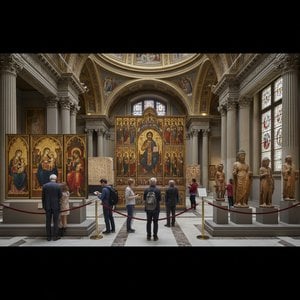
Sacred Narratives Embodied: A Comprehensive Exploration of Religious Iconography in Art History
Explore the rich history of religious iconography in art! Discover symbolism, movements & masterpieces from Byzantine to Renaissance periods. Expert insights for collectors and enthusiasts at ArtsDot.

Fra Angelico: 25 Arcydzieł Sztuki Włoskiego Renesansu | Reprodukcje Obrazów Online
Odkryj 25 arcydzieł Fra Angelico – mistrza renesansu włoskiego! Poznaj historię, techniki i piękno jego fresków oraz obrazów religijnych. Reprodukcje najwyższej jakości na ArtsDot.com. Eksploruj kolekcję online!

Raphael: 25 Arcydzieł Mistrza Renesansu - Obrazy i Dekoracje ArtsDot.com
Odkryj 25 arcydzieł Raphaela – od Madonn po freski Watykanu. Poznaj historię, technikę i piękno renesansowego malarstwa. Reprodukcje obrazów najwyższej jakości na ArtsDot.com. Eksploruj kolekcję online!

Sacred Narratives on Canvas: Exploring Religious Painting Through History
Explore the rich history of religious painting with ArtsDot.com! Discover iconic artworks, symbolism & techniques from antiquity to the Renaissance. Enhance your art appreciation today.