

 Podgląd w skali 1:1
 Wyślij jako kartkę
 Udostępnij
 Szczegóły dzieła
 Przewodnik

 Pobierz obraz
 Podobne obiekty
 RTG
RTG Pokaz slajdów
 Pytania i odpowiedzi
 Statystyki
Spring - a triptych

 Rozwiń treść
Dzieło sztuki prezentowane na tej stronie podlega ochronie prawem autorskim, co oznacza, że nie mamy prawa do tworzenia ani sprzedaży jego identycznej reprodukcji. Ochrona ta jest egzekwowana na mocy umów międzynarodowych, takich jak Konwencja berneńska oraz przez przepisy prawa krajowego, w tym te określone w Prawo autorskie USA – Tytuł 17.
Metoda ta jest w pełni zgodna z przepisami prawa autorskiego, ponieważ nie polega na kopiowaniu ani powielaniu chronionego dzieła. Stanowi ona kreatywną reinterpretację – nowy obraz, który czerpie inspirację z oryginału, ale nie jest z nim tożsamy.
Giclée / Wydruk artystyczny
Wydruki giclée lub płótna o jakości muzealnej, szybka realizacja i szeroki wybór opcji wykończenia. ( Zamów ręcznie malowaną reprodukcję Przejdź do wersji cyfrowej)




P118B zł10

P118H zł10

P118W zł10

P438Z zł10

P508JH zł12

P508YH zł12

P805H zł10

P805Z zł10

P919BZ zł10

P919G zł10

P919XJ zł10

P959ZH zł10

P968JZ zł12

W106C zł8

W218G zł10

W218JH zł8

W218Y zł10

W307PJ zł10

W316G zł10

W316PJ zł8

W316Y zł10

W398PJ zł8

W4111J zł10

W500HY zł15

W500JH zł15

W692G zł12

W849H zł8

W940BG zł15

W953PJ zł8




Wybierz spośród naszych standardowych rozmiarów, które zachowują oryginalne proporcje dzieła sztuki.

Wpisz wymaganą szerokość i wysokość, aby dopasować grafikę do ramy lub ściany. Wydruk można jedynie przyciąć, nigdy nie powiększając go poza oryginalny obraz, dlatego format o innych proporcjach spowoduje utratę części kompozycji. Przed rozpoczęciem druku prześlemy Ci cyfrowy podgląd do zatwierdzenia. Obraz wyświetlany na tej stronie nie pokazuje rzeczywistego przycięcia — jedynie podgląd oddaje ten efekt.
Dostawa na cały świat () w ciągu 2 tygodni zamiast standardowych 4/5 tygodni. (14 Listopad)

Bezpłatna ekspresowa wysyłka na cały świat

Wysokiej jakości płótno lniane

Pełne ubezpieczenie przesyłki

Gwarancja zwrotu należności celnych i podatków importowych

Gwarancja wiernego odwzorowania kolorów

100-dniowa polityka zwrotów (tylko w przypadku wad)

Gwarancja 100% zwrotu pieniędzy

Zniżka przy zakupie wielu sztuk
 Opcja ze szkłem jest dostępna wyłącznie w rozmiarach poniżej 110 cm

Spring - a triptych
Giclée / Wydruk artystyczny
Wymiary reprodukcji
-


Cena całkowita
zł 245
Podobne dzieła


Biografia artysty
The Soul of the Lens: The Life and Legacy of Clarence Hudson White
In the soft, diffused light of the early twentieth century, a new way of seeing was being born—one that sought to elevate the camera from a mere mechanical tool to a brush capable of profound emotional expression. At the heart of this revolution stood Clarence Hudson White, an artist whose vision transformed the photographic medium into a poetic language of light and shadow. Born in 1871 amidst the idyllic landscapes of small-town Ohio, White’s early life was steeped in the quiet rhythms of rural America. This formative period, characterized by a deep connection to the natural world and the simple dignity of domestic life, would later become the cornerstone of his artistic identity. His sensibilities were further enriched by a childhood fascination with music, particularly the violin, which instilled in him a rhythmic approach to composition and a sensitivity to harmony that would define his photographic eye.
White’s journey into the world of imagery was not one of formal academic training, but rather a serendipitous encounter with the magic of light. A visit to the World's Columbian Exposition in Chicago in 1893 ignited a passion for photography that would consume his life. Though largely self-taught, he possessed an innate ability to manipulate light to achieve a painterly quality, a hallmark of the Pictorialism movement. His work moved away from the sharp, clinical documentation of reality, opting instead for soft focus and evocative textures that suggested mood rather than mere fact. This approach allowed him to capture what many called the "spirit" of his subjects—the tender interplay of sunlight through a window, the gentle contours of a loved one's face, or the melancholic beauty of a fading landscape.
A Pioneer of the Photo-Secession
As White’s reputation grew, he found himself at the center of a radical movement that sought to redefine the boundaries of art. Alongside the formidable Alfred Stieglitz, White became a founding member of the Photo-Secession, an elite group of photographers dedicated to promoting photography as a fine art. This was a period of intense creative struggle and triumph, where the very definition of "art" was being contested in galleries and salons across the globe. White’s contribution to this movement was vital; his images provided a bridge between the traditional aesthetics of painting and the emerging possibilities of the photographic print. His work often featured themes of domesticity and intimacy, utilizing his family and friends as models to create a sense of universal, quiet beauty that resonated deeply with the era's romantic sensibilities.
The technical mastery White achieved was nothing short of extraordinary. He understood that the true subject of a photograph was not merely what stood before the lens, but the artist's subjective vision of it. Through careful manipulation of exposure, printing processes, and composition, he could imbue a simple scene with profound symbolic weight. His compositions often echoed his early sketches—images of floating spheres or seated figures that hinted at a deeper, more metaphysical reality beneath the surface of the everyday. This ability to infuse the mundane with the extraordinary is what truly set him apart as a master of the Pictorialist style.
The Legacy of the Clarence H. White School
Beyond his individual achievements behind the camera, White’s impact on the trajectory of American photography was cemented through his role as an educator. In 1914, he established the Clarence H. White School of Photography in New York City, the first institution in America dedicated to teaching photography as a fine art. This school became a crucible for innovation, attracting a generation of photographers who would go on to shape the future of the medium. His students included luminaries such as:
- Dorothea Lange, whose documentary work would define the human face of the Great Depression;
- Gertrude Käsebier, a fellow pioneer of the Pictorialist movement;
- Ralph Steiner, who brought a modern, avant-garde sensibility to the craft.
Through his teaching, White ensured that his philosophy of expressive, subjective photography would endure long after his passing. Though his own photographic output declined in his later years due to the immense demands of running his school, his influence remained pervasive. His death in 1925, following a heart attack while teaching in Mexico City, marked the end of an era, yet the echoes of his vision continue to be felt. Clarence Hudson White did more than just take photographs; he taught the world how to look at the light, finding the extraordinary within the ordinary and forever changing the way we perceive the beauty of our shared existence.

Krótka nota
- Artistic Movement Or Style: Pictorialist Photography
- Artists Or Movements Influenced By This Artist:
- Malevich
- John White Alexander
- Artists Who Influenced This Artist: ['Alfred Stieglitz']
- Date Of Birth: April 8, 1871
- Date Of Death: July 8, 1925
- Full Name: Clarence Hudson White
- Nationality: American
- Notable Artworks:
- Morning, 1905
- Drops of Rain, 1902
- The Sea [Rose Pastor Stokes, Caritas Island, Connecticut], 1909
- Place Of Birth: West Carlisle, Ohio
Powiązane artykuły
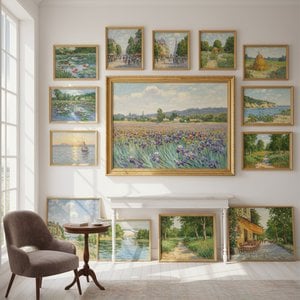
10 Arcydzieł Impresjonizmu Krajobrazowego: Sztuka, Artyści i Dekoracje Wnetrz
Odkryj 10 arcydzieł impresjonizmu krajobrazowego! Poznaj historie Monet, Renoir i innych mistrzów. Inspiracje wnętrzarskie, techniki malarskie i reprodukcje obrazów najwyższej jakości na ArtsDot.com. Eksploruj pełną kolekcję online!

Prezent na Rocznicę z Duszą: 10 Arcydzieł Sztuki dla Kochanych | ArtsDot.com
Znajdź idealny prezent na rocznicę! Odkryj 10 arcydzieł sztuki – od Van Gogha po Moneta – i ich wzruszające historie. Reprodukcje obrazów najwyższej jakości dla wyjątkowych wnętrz. ArtsDot.com - inspiracje i dekoracje z duszą. Explore the full collection online!

The Lyrical Landscape: Finding Spiritual Depth in the Works of Savrasov and Levitan
Explore the spiritual depth of Savrasov and Levitan's Russian landscapes. Discover the mastery of lyrical realism today.

Kultywowanie Spokoju: Psychologiczny Wpływ Reprodukcji Artystycznych na Projektowanie Przestrzeni Wellness
Odkryj psychologiczny wpływ reprodukcji artystycznych na projektowanie przestrzeni wellness. Eksperckie porady, biophilic design i personalizacja z ArtsDot – stwórz harmonijne wnętrze sprzyjające relaksacji i zdrowiu.