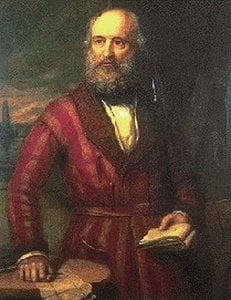
Possibly Jonathan Elliot

The picture follows your choices: , .

Biografia artysty

Charles Bird King (1785-1862) – amerykański malarz portretowy, słynący z wiernych przedstawień przywódców Ameryki Północnej i XIX wieku. Jego twórczość inspirowana sztuką holenderską oraz umiejętność uchwycenia charakteru postaci czynią go jednym z najważniejszych artystów epoki.

Ręcznie malowana reprodukcja olejowa

Ręcznie malowany obraz olejny na płótnie, wykonany na zamówienie przez naszych artystów w wybranym przez Ciebie wymiarze i oprawie. ( Przełącz na wydania drukowane Przejdź do wersji cyfrowej)

More about this painting

Podgląd w skali 1:1 Podgląd AR Przełącz na wydania drukowane Przejdź do wersji cyfrowej Wyślij jako kartkę
Szczegóły dzieła Przewodnik Dodaj do ulubionych Pobierz obraz Podobne obiekty RTG Pokaz slajdów Q&A Statystyki

Order your painting in four simple steps

Take your time. You can change any answer; the price in your order card follows each choice.

1 Step one of four

Which size would you like?

These sizes keep the proportions of the original painting. The drawing shows your choice on a wall, above a two-metre sofa.

Your painting: () — with its frame.

Or give your own measurements

Standardowy format
personalizowane
CM
INCH

Wybierz spośród naszych standardowych rozmiarów, które zachowują oryginalne proporcje dzieła sztuki.

szerokość
wysokość

Wpisz wymaganą szerokość i wysokość, aby obraz pasował do Twojej ramy lub ściany. Ponieważ jest to dzieło malowane ręcznie, w przypadku rozmiaru o innych proporcjach artysta może domalować nieco więcej wokół obrazu lub przyciąć jego fragmenty — wybór należy do Ciebie. Przed rozpoczęciem pracy prześlemy Ci cyfrową wizualizację do zatwierdzenia. Obraz widoczny na tej stronie nie przedstawia rzeczywistego efektu — jedynie wizualizacja oddaje realny rezultat.

2 Step two of four

How should it be prepared: rolled, stretched or framed?

The prices below are for the size you chose in step one.

Choose the edges of the stretched canvas

Choose your frame

Corner sample of the WhiteWrap canvas edge finish, stretched on lite drewno bars
White zł1
Corner sample of the BlurSideWrap canvas edge finish, stretched on lite drewno bars
Blurside zł1
Corner sample of the ExtendedWrap canvas edge finish, stretched on lite drewno bars
Extended zł1
Corner sample of the P118B picture frame: polistyren formowany, 5 cm wide and 3 cm thick
P118B zł10
Corner sample of the P118H picture frame: polistyren formowany, 5 cm wide and 3 cm thick
P118H zł10
Corner sample of the P118W picture frame: polistyren formowany, 5 cm wide and 3 cm thick
P118W zł10
Corner sample of the P438Z picture frame: polistyren formowany, 5.5 cm wide and 3.5 cm thick
P438Z zł10
Corner sample of the P508JH picture frame: polistyren formowany, 7 cm wide and 3.5 cm thick
P508JH zł12
Corner sample of the P508YH picture frame: polistyren formowany, 7 cm wide and 3.5 cm thick
P508YH zł12
Corner sample of the P805H picture frame: polistyren formowany, 5 cm wide and 3.5 cm thick
P805H zł10
Corner sample of the P805Z picture frame: polistyren formowany, 5 cm wide and 3.5 cm thick
P805Z zł10
Corner sample of the P919BZ picture frame: polistyren formowany, 7 cm wide and 3.5 cm thick
P919BZ zł10
Corner sample of the P919G picture frame: polistyren formowany, 7 cm wide and 3.5 cm thick
P919G zł10
Corner sample of the P919XJ picture frame: polistyren formowany, 7 cm wide and 3.5 cm thick
P919XJ zł10
Corner sample of the P959ZH picture frame: polistyren formowany, 5 cm wide and 3 cm thick
P959ZH zł10
Corner sample of the P968JZ picture frame: polistyren formowany, 6 cm wide and 4 cm thick
P968JZ zł12
Corner sample of the W106C picture frame: lite drewno, 5 cm wide and 3 cm thick
W106C zł8
Corner sample of the W218G picture frame: lite drewno, 5 cm wide and 3 cm thick
W218G zł10
Corner sample of the W218JH picture frame: lite drewno, 5 cm wide and 3 cm thick
W218JH zł8
Corner sample of the W218Y picture frame: lite drewno, 5 cm wide and 3 cm thick
W218Y zł10
Corner sample of the W307PJ picture frame: lite drewno, 6 cm wide and 3 cm thick
W307PJ zł10
Corner sample of the W316G picture frame: lite drewno, 6 cm wide and 3 cm thick
W316G zł10
Corner sample of the W316PJ picture frame: lite drewno, 6 cm wide and 3 cm thick
W316PJ zł8
Corner sample of the W316Y picture frame: lite drewno, 6 cm wide and 3 cm thick
W316Y zł10
Corner sample of the W398PJ picture frame: lite drewno, 5 cm wide and 3 cm thick
W398PJ zł8
Corner sample of the W4111J picture frame: lite drewno, 6.5 cm wide and 3.5 cm thick
W4111J zł10
Corner sample of the W500HY picture frame: lite drewno, 7 cm wide and 5 cm thick
W500HY zł15
Corner sample of the W500JH picture frame: lite drewno, 7 cm wide and 5 cm thick
W500JH zł15
Corner sample of the W692G picture frame: lite drewno, 8 cm wide and 4 cm thick
W692G zł12
Corner sample of the W849H picture frame: lite drewno, 5 cm wide and 3 cm thick
W849H zł8
Corner sample of the W940BG picture frame: lite drewno, 7.5 cm wide and 4.5 cm thick
W940BG zł15
Corner sample of the W953PJ picture frame: lite drewno, 6 cm wide and 3.5 cm thick
W953PJ zł8
Corner sample of the H24-GOLD picture frame: rzeźbione drewno pokryte gipsem, 10 cm wide and 6 cm thick
H24-GOLD zł30
Corner sample of the H24-SILVER picture frame: rzeźbione drewno pokryte gipsem, 10 cm wide and 6 cm thick
H24-SILVER zł30
Corner sample of the H36-GOLD picture frame: rzeźbione drewno pokryte gipsem, 15 cm wide and 6.5 cm thick
H36-GOLD zł45
Corner sample of the H36-SILVER picture frame: rzeźbione drewno pokryte gipsem, 15 cm wide and 6.5 cm thick
H36-SILVER zł45

Moulding: . Overall size with the frame: .

3 Step three of four

Would you like anything changed in the painting?

Most people answer no. Because each painting is made by hand, our artist can also adapt it for you.

Examples of what can be changed: Replace face with customer photo; Add pet (e.g., replace cat with dog); Include hidden message in background; Change background landscape or elements.
After order, ArtsDot.com team will email client for instructions and provide a mockup preview

4 Step four of four

A few finishing options

All of them are optional. The answers already selected cost nothing extra.

Who paints it?

Dostawa na całym świecie () w ciągu 3–4 tygodni zamiast standardowych 5 tygodni. (2 Listopad). Bez kompromisów w kwestii jakości.

A nameplate, as in a museum?

Szczegóły grawerowanej brązowej tabliczki

This elegant plaque features the artist's name and the title of the artwork, finely engraved for a timeless presentation.

It is made from bronze with a refined, elegant finish. The text is precisely laser-engraved for a sharp and permanent result. Measuring 9x2 cm, the plaque is compact yet easy to read. It's built to be durable and scratch-resistant, offering a professional, museum-quality look. Mounting is simple thanks to the included adhesive backing.

Szczegóły przezroczystej tabliczki akrylowej

The plaque includes essential engraved details such as the artist's name, the title of the artwork, the date it was created, the type of media used-like oil on canvas or watercolor-a brief description of the piece, and a QR code that links to the complete artwork information.

It is crafted from clear acrylic, offering a sleek, modern appearance. The text is UV-engraved in black to ensure strong visual contrast. With a size of 10x15 cm, it ensures optimal readability. It comes equipped with two metal hooks for secure wall mounting. The plaque is designed to be weather-resistant, making it suitable for various environments, and it includes interactive features that work seamlessly with smartphone scanning.

Szczegóły czarnej tabliczki akrylowej

This elegant plaque includes engraved information such as the artist's name, the title of the artwork, the date it was created, the type of media used (like oil on canvas or watercolor), a short description of the artwork, and a QR code for quick access to more information.

The plaque itself is made from refined black acrylic with a premium finish. The text is laser-engraved in white for high contrast and readability. Its size is 10x15 cm, designed to be easy to read. It comes with two metal hooks for professional mounting. The design is sleek and fits any interior style. It is also weather-resistant and durable, with built-in digital integration for mobile compatibility.

A protective varnish?

When do you need it?

✓ Check and order

Your painting, as you ordered it

Possibly Jonathan Elliot

Technika reprodukcji

Wymiary reprodukcji

-

Wybitny mistrz artystyczny

Większa szczegółowość, finezja i dodatkowy czas na realizację

-

Opcje oprawy reprodukcji

-

-

W przypadku dzieł sztuki lub reprodukcji, których którykolwiek z boków przekracza 105 cm (około 41 cali), rama zostanie wysłana w formie zestawu do samodzielnego montażu. Metoda ta zapewnia bezpieczną dostawę i zapobiega uszkodzeniom podczas transportu.

Wymagany profesjonalny montaż – nie jest to produkt typu DIY.
Zestaw musi zostać złożony, a płótno naciągnięte przez doświadczonego profesjonalnego ramiarza, przy użyciu kleju do drewna (brak w zestawie), kleszczy do naciągania płótna oraz ścisków, które utrzymają krosna w równej pozycji podczas schnięcia kleju. Nieprawidłowy montaż lub nierównomierne napięcie płótna może trwale uszkodzić dzieło sztuki i nie podlega naszej gwarancji.

  • W zestawie znajdują się wszystkie listwy z litego drewna, precyzyjnie docięte do wymiarów.

  • Montaż odbywa się przy użyciu dołączonych wkrętów oraz kleju do drewna do łączenia narożników, którego zestaw nie zawiera i który musi zostać dostarczony przez ramiarza.

  • Wymagane są profesjonalne narzędzia, których nie ma w zestawie: kleszcze do naciągania płótna (napinacz) oraz zaciski, które pozwolą utrzymać listwy w równej pozycji podczas schnięcia kleju.

Ważne:
Do połączenia narożników niezbędny jest klej do drewna, listwy należy unieruchomić za pomocą ścisków do momentu całkowitego wyschnięcia kleju, a naciągnięcie płótna na złożoną ramę wymaga użycia kleszczy do naciągania płótna. Żaden z tych elementów nie jest dołączony do zestawu. Przed zamówieniem tego rozmiaru zalecamy konsultację z doświadczonym ramiarzem.

Etykieta obiektu

-

-

Lakier ochronny

Lakier z połyskiem (pogłębia kolory, chroni przed światłem i wilgocią)

-

Personalizacja dzieła

Przykłady możliwości personalizacji: zastąp twarz zdjęciem klienta; dodaj zwierzę domowe (np. zamień kota na psa); umieść ukrytą wiadomość w tle; zmień krajobraz lub elementy tła.

-

Ekspresowa

Dostawa na cały świat () w ciągu 3–4 tygodni zamiast standardowych 5 tygodni. (2 Listopad). Bez kompromisów w kwestii jakości.

-

Przesyłka ekspresowa

Dostawa na cały świat () w ciągu 5 tygodni. (9 Listopad).

W cenie

Cena całkowita

zł 1024

Suma całkowita zł 1024

Opcja ze szkłem jest dostępna wyłącznie w rozmiarach poniżej 110 cm

Included with every order

  • Bezpłatna ekspresowa wysyłka na cały świat
  • Wysokiej jakości płótno lniane
  • Pełne ubezpieczenie przesyłki
  • Gwarancja zwrotu należności celnych i podatków importowych
  • Gwarancja wiernego odwzorowania kolorów
  • 100-dniowa polityka zwrotów (tylko w przypadku wad)
  • Gwarancja 100% zwrotu pieniędzy
  • Zniżka przy zakupie wielu sztuk
Charles Bird King

Charles Bird King

1785 - 1862, Stany Zjednoczone

Biografia artysty

A Life Etched in Portraiture: The World of Charles Bird King

Charles Bird King, born in Newport, Rhode Island, in 1785, stands as a pivotal figure in the evolution of American portraiture during an era defined by profound national transformation. His life story is a compelling tapestry woven with threads of personal hardship and unwavering artistic ambition—a journey that ultimately immortalized not only the nation’s political elite but also its Native American leaders, a demographic often overlooked within the artistic landscape of his time. The early years of King's existence were marked by tragedy; at just four years old, he endured the loss of his father, Captain Zebulon King, a veteran of the Revolutionary War, who fell victim to an attack near Marietta, Ohio. This devastating event prompted a return with his mother to Newport, where the seeds of his artistic calling would begin to sprout and take root.

From European Academies to the American Capital

King’s formal artistic training commenced at the age of fifteen under the tutelage of Edward Savage in New York City—a foundational experience that ignited within him a passionate dedication to portraiture. However, it was his subsequent seven-year sojourn at the Royal Academy in London, studying alongside the esteemed Benjamin West, that truly defined his artistic sensibilities and shaped his evolving style. This immersive period within European art traditions—particularly those of the Dutch and Northern Renaissance masters—would become a defining characteristic woven into the very fabric of his work. He absorbed the lessons of Rembrandt and Rubens, recognizing their mastery of chiaroscuro and anatomical precision. The influence of these masters would permeate his later paintings, informing his compositional choices and contributing to the distinctive mood of many of his portraits. Upon returning to the United States amidst the tumult of the War of 1812, King navigated a shifting landscape, briefly establishing himself in Philadelphia, Baltimore, and Richmond before ultimately settling in Washington, D.C. This strategic move proved decisive; the burgeoning capital offered both economic opportunity and access to a powerful network of potential patrons. It was here that King would establish himself as the preeminent portraitist of his era, capturing the likenesses of influential politicians, diplomats, and military figures with remarkable skill and sensitivity. He skillfully rendered their expressions and postures, conveying not only physical appearance but also character and status—a testament to his artistic understanding.

A Legacy Forged in Likeness: Style and Influences

King’s artistic style is characterized by a meticulous attention to detail, a refined sense of composition, and a subtle yet compelling psychological depth. The Dutch masters served as an inspiration for King's use of light and shadow—a technique known as chiaroscuro—which he employed to create dramatic effects and heighten the emotional impact of his paintings. He meticulously studied the works of Jan Vermeer and Frans Hals, mastering their ability to capture fleeting moments of human emotion with remarkable accuracy. Beyond stylistic cues from Dutch painting, King was not merely a copyist; he adapted these European techniques to suit the unique character of his American subjects. His ability to capture both physical resemblance and inner personality set him apart from many of his contemporaries. He wasn’t driven by flamboyant displays or dramatic narratives but rather focused on presenting his sitters with honesty and respect—an approach that resonated deeply with a society that valued decorum, intellect, and civic virtue. His portraits weren't simply representations; they were statements about character and status.

Portraits of Power and Cultural Exchange

Perhaps King’s most enduring contribution lies in his remarkable series of portraits depicting Native American leaders and tribesmen. Commissioned by Thomas L. McKenney, the Superintendent of Indian Trade, these paintings were intended to document the diverse cultures and individuals encountered during diplomatic missions to Washington D.C. These works are not simply historical records; they are powerful statements about cultural exchange, political negotiation, and the complex relationship between the United States government and Native American tribes. Portraits such as those of Kee-shes-wa (a Fox chief), Jack-o-pa (a Chippewa chief), and Teh-ro-hon (an Ioway warrior) stand as testaments to King’s skill in capturing not only physical likeness but also the dignity, strength, and cultural identity of his subjects. While some modern critics have noted potential inaccuracies or romanticized depictions within these portraits, their historical significance remains undeniable—they offer a rare glimpse into a formative period of American history and artistic expression. These paintings served as both artistic achievements and diplomatic tools. ## Enduring Impact and Artistic Remembrance Charles Bird King’s success was not solely attributable to his artistic talent; he possessed a remarkable ability to cultivate relationships with influential patrons, including John Quincy Adams, Henry Clay, James Monroe, and Daniel Webster. This social acumen, combined with his unwavering dedication to his craft, allowed him to thrive in the competitive art world of early 19th-century America. Elected an honorary academician by the National Academy of Design in 1827, King continued to paint prolifically until his death on March 18, 1862. In a final act of generosity, he bequeathed his collection of paintings, books, and prints to the Redwood Library and Athenaeum, ensuring that his legacy would endure for generations to come. Today, Charles Bird King’s works are held in prominent museums across the United States, serving as invaluable windows into a formative period of American history and artistic expression.