

 Podgląd w skali 1:1
 Wyślij jako kartkę
 Udostępnij
 Szczegóły dzieła
 Przewodnik

 Pobierz obraz
 Podobne obiekty
 RTG
RTG Pokaz slajdów
 Pytania i odpowiedzi
 Statystyki
neubrandenburg

 Rozwiń treść
Giclée / Wydruk artystyczny
Wydruki giclée lub płótna o jakości muzealnej, szybka realizacja i szeroki wybór opcji wykończenia. ( Zamów ręcznie malowaną reprodukcję Przejdź do wersji cyfrowej)




P118B zł10

P118H zł10

P118W zł10

P438Z zł10

P508JH zł12

P508YH zł12

P805H zł10

P805Z zł10

P919BZ zł10

P919G zł10

P919XJ zł10

P959ZH zł10

P968JZ zł12

W106C zł8

W218G zł10

W218JH zł8

W218Y zł10

W307PJ zł10

W316G zł10

W316PJ zł8

W316Y zł10

W398PJ zł8

W4111J zł10

W500HY zł15

W500JH zł15

W692G zł12

W849H zł8

W940BG zł15

W953PJ zł8




Wybierz spośród naszych standardowych rozmiarów, które zachowują oryginalne proporcje dzieła sztuki.

Wpisz wymaganą szerokość i wysokość, aby dopasować grafikę do ramy lub ściany. Wydruk można jedynie przyciąć, nigdy nie powiększając go poza oryginalny obraz, dlatego format o innych proporcjach spowoduje utratę części kompozycji. Przed rozpoczęciem druku prześlemy Ci cyfrowy podgląd do zatwierdzenia. Obraz wyświetlany na tej stronie nie pokazuje rzeczywistego przycięcia — jedynie podgląd oddaje ten efekt.
Dostawa na cały świat () w ciągu 2 tygodni zamiast standardowych 4/5 tygodni. (12 Listopad)

Bezpłatna ekspresowa wysyłka na cały świat

Wysokiej jakości płótno lniane

Pełne ubezpieczenie przesyłki

Gwarancja zwrotu należności celnych i podatków importowych

Gwarancja wiernego odwzorowania kolorów

100-dniowa polityka zwrotów (tylko w przypadku wad)

Gwarancja 100% zwrotu pieniędzy

Zniżka przy zakupie wielu sztuk
 Opcja ze szkłem jest dostępna wyłącznie w rozmiarach poniżej 110 cm

neubrandenburg
Giclée / Wydruk artystyczny
Wymiary reprodukcji
-


Cena całkowita
zł 246
A Vista of Quietude: Exploring Caspar David Friedrich’s *neubrandenburg*
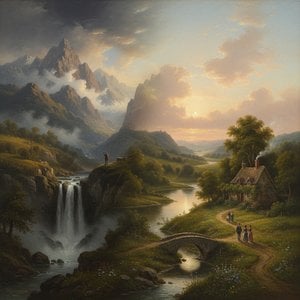
This evocative landscape by Caspar David Friedrich transports viewers to a serene yet subtly melancholic world. *neubrandenburg* is not merely a depiction of a town and its cathedral; it's an exploration of humanity’s place within the vastness of nature, a hallmark of the Romantic era. The painting presents a distant view of Neubrandenburg, dominated by the imposing spire of its cathedral, set against a dramatic skyscape.Style & Historical Context
Friedrich was a pivotal figure in the German Romantic movement (early 19th century), a period characterized by an emphasis on emotion, individualism, and the sublime power of nature. Rejecting the Enlightenment’s focus on reason, Romantics sought spiritual truth through experiencing the natural world. *neubrandenburg* exemplifies this ethos. The painting's style leans heavily into Romantic ideals – it isn’t a precise topographical rendering but rather an emotional response to the landscape. This was a time of significant societal shifts; the rise of industrialization and urbanization led many to yearn for a connection with the unspoiled beauty of nature, which Friedrich masterfully captures. His work often served as a counterpoint to the increasingly materialistic world.Composition & Technique
The composition is powerfully structured around horizontal lines – the horizon dividing the scene into foreground, middle ground and background. This reinforces the sense of expansive space. The small figures in the lower right corner are crucial; they provide a scale reference, emphasizing the immensity of the landscape and subtly suggesting human insignificance within it. Friedrich’s technique is characterized by loose brushstrokes and a muted color palette. He expertly employs atmospheric perspective – colors become paler and less saturated with distance – to create a convincing illusion of depth. The oil on canvas medium allows for rich texture and nuanced tonal variations, particularly in the swirling clouds that dominate the sky.Symbolism & Interpretation
The cathedral spire is arguably the focal point, rising above the town as a symbol of faith and spiritual aspiration. However, its distance and relative smallness within the vast landscape suggest a questioning of traditional religious authority. The dramatic sky, transitioning from dark greys to golden hues, can be interpreted as representing both hope and uncertainty – the transient nature of life itself. The figures in the foreground, seemingly lost in contemplation, invite viewers to share their quiet introspection. Friedrich frequently used landscapes not just as representations of places but as mirrors reflecting inner emotional states.Emotional Impact & Legacy
*neubrandenburg* evokes a sense of peaceful solitude and contemplative melancholy. It’s a painting that encourages viewers to pause, reflect, and connect with the natural world on a deeper level. The work's enduring appeal lies in its ability to tap into universal human emotions – awe, wonder, and a longing for something beyond the material realm. Friedrich’s influence can be seen in subsequent artistic movements, including Symbolism and Expressionism, and his landscapes continue to inspire artists and viewers alike today. A reproduction of this painting would bring a sense of tranquility and intellectual depth to any interior space.Pytania i odpowiedzi
Jaki dominujący odcień przenika „neubrandenburg” – Caspar David Friedrich?
Dominującym odcieniem dzieła „neubrandenburg” – Caspar David Friedrich jest Ochre to Sepia. Odcień ten stanowi bazową tonację palety barw.
Jaki poziom luminancji ma „neubrandenburg” – Caspar David Friedrich?
Kolory dzieła "neubrandenburg" charakteryzują się luminancją na poziomie Gentle Luminance.
Czy „neubrandenburg” – Caspar David Friedrich to portret, pejzaż czy kompozycja kwadratowa?
„neubrandenburg” – Caspar David Friedrich to kompozycja w formacie Portrait. Warto sprawdzić proporcje przed wyborem rozmiaru wydruku.
Podobne dzieła


Biografia artysty
Samotna Wizja
Urodzony w 1774 roku w bałtyckim porcie Greifswald, Caspar David Friedrich wczesne lata życia spędził w cieniu głębokiego poczucia straty. Śmierć matki i rodzeństwa rzuciła długi cień na jego młodość, kształtując wrażliwość na temat śmiertelności, która stała się centralnym motywem jego twórczości. Szkolenie artystyczne rozpoczął pod okiem brata Christiana, by później zgłębiać sztukę i teologię na Uniwersytecie w Lipsku. Choć nie ukończył żadnego ze studiów, to właśnie to podwójne zainteresowanie światem wizualnym i duchowym zdefiniowało jego artystyczną ścieżkę. Jego warsztat został dopracowany w Kopenhadze, gdzie zetknął się z tradycjami malarstwa pejzażowego, które ostatecznie przekształcił w medium służące do wyrażania wewnętrznych stanów emocjonalnych.
Jego podejście do pejzażu odbiegało od skrupulatnego detalu preferowanego przez jego poprzedników. Zamiast tego dążył do nasycenia sceny znaczeniem symbolicznym, wykorzystując elementy natury do reprezentowania ludzkiej duszy. Często stosował Rückenfiguren—postacie widziane od tyłu—aby zaprosić widza do wspólnego, kontemplacyjnego doświadczenia. Jego paleta, składająca się najczęściej z przygaszonych błękitów, szarości i brązów, potęgowała nastrój introspekcji i powagi, który przenika całe jego dzieło. Nie malował jedynie tego, co widział; malował wewnętrzną pogodę ludzkiego ducha.
Język Wzniosłości
Twórczość Friedricha kładzie nacisk na wzniosłość, poszukując duchowego połączenia poprzez ogrom świata naturalnego. Jego kompozycje często stawiają samotne figury na tle rozległego, często przytłaczającego krajobrazu. W obrazie "Wędrowiec nad morzem mgły" (ok. 1818) sylwetka postaci staje twarzą w twarz z wirującym morzem mgieł, ucieleśniając napięcie między ludzką obecnością a nieskończonością. "Morze lodowe" (1824) ukazuje mroźną, arktyczną pustkę, będącą przedstawieniem potęgi natury i jej obojętności wobec ludzkiego losu. Dzieła te odzwierciedlają fascynację kruchością istnienia oraz poszukiwaniem sensu wewnątrz krajobrazu.
W swoich obrazach artysta często wykorzystuje konkretne elementy, aby przekazać te wewnętrzne stany:
- "Opactwo w dębowym gaju" (1809-1810), gdzie ruiny kościelnego cmentarza i nagie drzewa sugerują śmiertelność i duchowy rozkład.
Dziedzictwo i Odrodzenie
Trajektoria kariery Friedricha nie była prostym, nieustannym wzrostem. Choć za życia zdobył uznanie, jego popularność zaczęła słabnąć wraz ze zmianą gustów artystycznych w stronę innych nurtów. Zmarł w Dreźnie w 1840 roku, a przez pewien czas jego nazwisko zniknęło z pierwszych stron świata sztuki. Jego reputacja przeszła jednak spektakularne odrodzenie pod koniec XX wieku, kiedy to uznano go za kluczową postać niemieckiego romantyzmu. Jego nacisk na subiektywne doświadczenie i ekspresję emocjonalną utorował drogę późniejszym nurtom, w tym symbolizmowi i surrealizmowi.
Wpływ artysty sięgał twórców poszukujących sposobów na eksplorację wewnętrznego świata za pomocą środków wizualnych. Odrzucając oświeceniowy racjonalizm na rzecz emocji i wyobraźni, uchwycił ducha epoki. Jego pejzaże służyły jako symbole tożsamości narodowej w okresie politycznego rozbicia Niemiec. Dziś jego twórczość wciąż rezonuje w odbiorcach, przypominając o głębokiej więzi między ludzkością a światem natury.

Caspar David Friedrich
1774 - 1840 , Niemcy
Krótka nota
- Artistic Movement Or Style: Romantyzm
- Artists Or Movements Influenced By This Artist:
- Symboliści
- Surrealiści
- Artists Who Influenced This Artist:
- Mistrzowie niderlandzcy
- J.C. Dahl
- Date Of Birth: 1774
- Date Of Death: 1840
- Full Name: Caspar David Friedrich
- Nationality: Niemiec
- Notable Artworks:
- Opactwo w dębinie
- Wędrowiec nad morzem mgły...
- Kreda na Rugii
- Morze lodowe
- Place Of Birth: Greifswald, Niemcy
Powiązane artykuły

Evoking Nature's Sublime: A Comprehensive Exploration of 19th-Century Landscape Painting
Explore the captivating world of 19th-century landscape painting! Discover renowned artists like Friedrich & Monet, key movements, and find the perfect artwork to bring nature's serenity into your home. Expert insights at ArtsDot.

Sublime i malowniczość w krajobrazie romantycznym: Emocje, natura i duchowość w sztuce XIX wieku
Odkryj fascynujący świat romantycznego krajobrazu! Poznaj filozofię Sublime, arcydzieła Friedricha i Turnera oraz wpływ tego nurtu na sztukę. Inspiracje i reprodukcje najwyższej jakości – ArtsDot.

Romantyczny Krajobraz w Malarstwie: 10 Arcydzieł, Które Zdefiniowały Epokę | ArtsDot.com
Odkryj 10 arcydzieł romantyzmu w malarstwie! Poznaj historie Caspara Davida Friedricha, Turnera i innych mistrzów. Inspiracje wnętrzarskie & reprodukcje obrazów najwyższej jakości na ArtsDot.com. Eksploruj kolekcję online!
Sublime i malownicze: Emocje i natura w romantycznym krajobrazie
Odkryj fascynujący świat romantyzmu w malarstwie! Poznaj Caspara Davida Friedricha, kategorię sublime i symbolikę krajobrazów. Inspiracje dla miłośników sztuki i dekoracji wnętrz – ArtsDot.

Caspar David Friedrich: Romanticism's Master of Landscape & the Sublimity of Inner Experience
Explore the profound landscapes of Caspar David Friedrich, a master of German Romanticism. Discover the symbolism, themes & enduring influence of this iconic artist. A deep dive into his life and work.


