


 Podgląd w skali 1:1
 Wyślij jako kartkę
 Udostępnij
 Szczegóły dzieła
 Przewodnik

 Pobierz obraz
 Podobne obiekty
 RTG
RTG Pokaz slajdów
 Q&A
Q&A Statystyki
St Andrew


 Rozwiń treść
Ręcznie malowana reprodukcja olejowa
Ręcznie malowany obraz olejny na płótnie, wykonany na zamówienie przez naszych artystów w wybranym przez Ciebie wymiarze i oprawie. ( Przełącz na wydania drukowane Przejdź do wersji cyfrowej)




P118B zł10

P118H zł10

P118W zł10

P438Z zł10

P508JH zł12

P508YH zł12

P805H zł10

P805Z zł10

P919BZ zł10

P919G zł10

P919XJ zł10

P959ZH zł10

P968JZ zł12

W106C zł8

W218G zł10

W218JH zł8

W218Y zł10

W307PJ zł10

W316G zł10

W316PJ zł8

W316Y zł10

W398PJ zł8

W4111J zł10

W500HY zł15

W500JH zł15

W692G zł12

W849H zł8

W940BG zł15

W953PJ zł8




Wybierz spośród naszych standardowych rozmiarów, które zachowują oryginalne proporcje dzieła sztuki.

Wpisz wymaganą szerokość i wysokość, aby obraz pasował do Twojej ramy lub ściany. Ponieważ jest to dzieło malowane ręcznie, w przypadku rozmiaru o innych proporcjach artysta może domalować nieco więcej wokół obrazu lub przyciąć jego fragmenty — wybór należy do Ciebie. Przed rozpoczęciem pracy prześlemy Ci cyfrową wizualizację do zatwierdzenia. Obraz widoczny na tej stronie nie przedstawia rzeczywistego efektu — jedynie wizualizacja oddaje realny rezultat.
Po złożeniu zamówienia zespół ArtsDot.com skontaktuje się z klientem drogą mailową w celu uzyskania instrukcji i prześle wizualizację projektu
Dostawa na całym świecie () w ciągu 3–4 tygodni zamiast standardowych 5 tygodni. (29 Październik). Bez kompromisów w kwestii jakości.

Bezpłatna ekspresowa wysyłka na cały świat

Wysokiej jakości płótno lniane

Pełne ubezpieczenie przesyłki

Gwarancja zwrotu należności celnych i podatków importowych

Gwarancja wiernego odwzorowania kolorów

100-dniowa polityka zwrotów (tylko w przypadku wad)

Gwarancja 100% zwrotu pieniędzy

Zniżka przy zakupie wielu sztuk
 Opcja ze szkłem jest dostępna wyłącznie w rozmiarach poniżej 110 cm

St Andrew
Technika reprodukcji
Wymiary reprodukcji
-


Cena całkowita
zł 1013
The Weight of Faith: Camillo Rusconi’s St Andrew
Camillo Rusconi's "St Andrew," completed in 1708-9 and residing within the magnificent Archbasilica of Saint John Lateran in Rome, is more than just a marble sculpture; it’s a profound meditation on martyrdom, faith, and the transition between the dynamism of the Baroque and the restrained elegance of Neoclassicism. Rusconi, a pivotal figure bridging these artistic movements, masterfully captures the apostle's final struggle – a potent image that speaks to enduring spiritual resilience. The sculpture isn’t merely a depiction of Andrew; it’s an embodiment of his unwavering devotion in the face of imminent death, radiating a palpable sense of both agony and profound serenity.
Rusconi inherited a rich artistic legacy, trained initially by Giuseppe Rusnati in Milan before finding his footing within Ercole Ferrata's workshop in Rome. This lineage instilled in him a deep understanding of both the expressive fervor of the late Baroque – particularly influenced by Bernini’s dramatic use of form and gesture – and the burgeoning emphasis on clarity and order championed by Carlo Maratta. “St Andrew” exemplifies this delicate balance; it retains the powerful physicality characteristic of Baroque sculpture while subtly incorporating elements that foreshadow the emerging Neoclassical style, notably in its carefully controlled composition and refined detailing.
A Study in Marble and Movement
The sculpture itself is a breathtaking achievement in marble carving. Rusconi’s skill lies not just in his technical mastery – evident in the incredibly detailed drapery, the meticulously rendered musculature of Andrew's body, and the luminous quality of the stone – but also in his ability to imbue the figure with life. Andrew is depicted in a dynamic pose, leaning forward as if bracing himself against an unseen force, his arm outstretched towards the heavy cross he struggles to bear. The folds of his garment ripple and flow around him, creating a sense of movement that contrasts sharply with the stillness of the marble.
Rusconi’s use of *contrapposto* – a technique where the figure's weight is shifted onto one leg – creates an inherent tension within the sculpture. This subtle imbalance contributes to the feeling of struggle and vulnerability, while simultaneously conveying Andrew’s strength and determination. The lighting, carefully considered during the original installation, would have further accentuated these effects, casting dramatic shadows that emphasized the contours of his body and the weight of the cross.
Symbolism and Spiritual Weight
Beyond its technical brilliance, “St Andrew” is rich in symbolic meaning. The cross, a central motif throughout Christian art, represents sacrifice, redemption, and the triumph over death. Andrew’s struggle to hold it aloft speaks to the arduous nature of faith – the constant effort required to maintain one's commitment even in the face of adversity. The apostle’s facial expression is particularly poignant; his brow furrowed in concentration, his eyes fixed on the cross, conveys a sense of intense inner turmoil mingled with unwavering resolve.
The setting within the niche – flanked by imposing columns adorned with intricate carvings – further enhances the sculpture's significance. This architectural context elevates Andrew to a position of honor and reverence, solidifying his role as a martyr and a symbol of Christian faith. The overall composition evokes a sense of solemnity and contemplation, inviting viewers to reflect on the themes of sacrifice, perseverance, and the enduring power of spiritual conviction.
A Legacy in Stone
“St Andrew” by Camillo Rusconi stands as a testament to the artist’s remarkable talent and his pivotal role in bridging the gap between Baroque and Neoclassical sculpture. It's a work that continues to resonate with viewers today, offering a powerful visual representation of faith, struggle, and the enduring legacy of one of Christianity’s most revered apostles. Reproductions of this iconic piece capture not only its aesthetic beauty but also the profound emotional depth that defines Rusconi’s masterpiece.
Pytania i odpowiedzi
Jaki rozmiar wydruku „St Andrew” – Camillo Rusconi będzie odpowiedni do zalecanego pomieszczenia?
Dla Living Room zalecany rozmiar wydruku dzieła „St Andrew” – Camillo Rusconi to Medium.
Jakie emocje przekazuje „St Andrew” – Camillo Rusconi?
„St Andrew” – Camillo Rusconi emanuje Reflective emocjonalnym nastrojem.
Jaką kolorystykę wykorzystuje "St Andrew"?
„St Andrew” – Camillo Rusconi wykorzystuje Earthy paletę barw, która definiuje ogólny charakter kolorystyczny dzieła.
Podobne dzieła


Biografia artysty
A Bridge Between Eras: The Life and Art of Camillo Rusconi
Camillo Rusconi, born in Milan in 1658 and passing away in Rome in 1728, occupies a fascinating position within the history of Italian sculpture. He wasn’t merely a practitioner of the late Baroque; he was an artist who subtly, yet decisively, nudged the style toward the emerging sensibilities of Neoclassicism. His career unfolded during a period of artistic transition, and his work reflects this beautifully—a compelling blend of dynamic energy tempered by a growing emphasis on clarity and restraint. Rusconi’s journey began with formative training in Milan under Giuseppe Rusnati, who himself had strong ties to the workshop of Ercole Ferrata in Rome. This early exposure proved crucial, laying the groundwork for his eventual success and stylistic development within the heart of Roman artistic life.From Milan to Rome: Forging a Sculptural Path
In 1685 or 1686, Rusconi made the pivotal move to Rome, entering the studio of Ercole Ferrata. Fate intervened swiftly; Ferrata’s untimely death shortly after Rusconi's arrival meant the young sculptor had to quickly establish himself independently. He did so with remarkable speed and talent. Early commissions arrived steadily, including a significant project for the Ludovisi Chapel in Sant'Ignazio—four plaster allegorical statues representing Prudence, Justice, Temperance, and Strength. These works already hinted at Rusconi’s emerging style: powerful figures imbued with Baroque drama, yet possessing an underlying sense of order and composure. He also collaborated with Pierre Le Gros on the sculpting of angels for the tympanum of the altar of Saint Ignatius in the Church of the Gesù, further solidifying his reputation within Roman artistic circles. These early successes weren’t simply about securing patronage; they were about honing his skills and defining a unique voice amidst the established masters.Influences and Artistic Development
Rusconi's style wasn’t born in isolation. He absorbed the lessons of those who came before him, acknowledging the giants upon whose shoulders he stood. The influence of Alessandro Algardi and Gian Lorenzo Bernini is palpable—he adopted elements of their expressive forms and grand manner, understanding the power of dramatic gesture and emotional intensity. However, it was his relationship with the painter Carlo Maratta that proved most transformative. Maratta’s emphasis on ordered composition, clear presentation of figures, and a refined aesthetic resonated deeply with Rusconi. He sought to translate Maratta's principles into sculptural form, striving for a balance between Baroque dynamism and Neoclassical clarity. This pursuit led contemporaries to describe him as “Carlo Maratta in marble,” a testament to his ability to capture the painter’s spirit within the solid medium of stone.Monumental Achievements and Lasting Legacy
Rusconi's career culminated in several monumental achievements that cemented his place in Roman art history. Perhaps most celebrated is the series of four larger-than-life apostle statues—Matthew, James the Great, Andrew, and John—created between 1708 and 1718 for the niches of the Archbasilica of St. John Lateran. This commission was a fiercely contested one, with Rusconi ultimately securing more work than his rivals, Le Gros and Pierre-Etienne Monnot, demonstrating the esteem in which he was held by patrons and fellow artists alike. The Tomb of Pope Gregory XIII, completed between 1715 and 1723 for St. Peter's Basilica, stands as another testament to his skill in creating monumental funerary sculpture—a powerful blend of Baroque grandeur and Neoclassical restraint. Beyond these major projects, Rusconi contributed architectural decoration to San Silvestro in Capite, San Salvatore in Lauro, and the Chiesa Nuova (Santa Maria in Vallicella), leaving an indelible mark on the Roman cityscape. He also created the tomb of Bartolomeo Corsino in San Giovanni in Laterano and the monument for Prince Alessandro Sobieski in Santa Maria della Concezione. Rusconi’s influence extended beyond his own artistic creations. He trained a number of successful sculptors, including Pietro Bracci, Giovanni Battista Maini, and Filippo della Valle, ensuring that his stylistic principles would continue to flourish. In 1727, he was honored with the title of Principe (Prince) of the Accademia di San Luca—a fitting recognition of his standing within the Roman artistic community. Camillo Rusconi’s legacy lies not only in the beauty and power of his sculptures but also in his role as a pivotal figure in the transition from the Baroque to Neoclassical styles, shaping the course of Roman sculpture for generations to come.
Camillo Rusconi
1658 - 1728 , Italy
Krótka nota
- Artistic Movement Or Style: Late Baroque, Neoclassicism
- Artists Or Movements Influenced By This Artist:
- Pietro Bracci
- Giovanni Maini
- Filippo della Valle
- Artists Who Influenced This Artist:
- Algardi
- Bernini
- Carlo Maratta
- Date Of Birth: 1658
- Date Of Death: 1728
- Full Name: Camillo Rusconi
- Nationality: Italian
- Notable Artworks:
- Apostles at St. John Lateran
- Tomb of Pope Gregory XIII
- St James the Great
- Fortitude
- St John the Baptist
- Place Of Birth: Milan, Italy
Powiązane artykuły

10 Legendarnych Brązów Rzeźbiarskich, Które Zmieniły Sztukę | ArtsDot
Odkryj 10 legendarnych rzeźb brązowych od Rodina, Degasa i innych mistrzów! Poznaj historię powstania arcydzieł sztuki i inspiruj się do dekoracji wnętrz. Reprodukcje najwyższej jakości na ArtsDot.com – zobacz kolekcję!

Trwałe Formy: Ewolucja Technik i Tematów w Rzeźbie Przez Wieki – Od Antyku do Renesansu
Poznaj fascynującą historię rzeźby od antyku do renesansu! Odkryj techniki, wybitnych artystów i wpływ na współczesną sztukę. Ekspercka analiza dla kolekcjonerów i miłośników.

Trwała Forma: Rzeźba w Historii – Technika i Rezonans Emocjonalny
Poznaj historię rzeźby od antyku do współczesności! Ekspercka analiza technik, stylów i emocjonalnego wpływu arcydzieł. Inspiracje dla kolekcjonerów i miłośników sztuki.
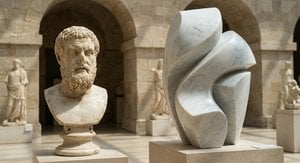
Urok marmuru w historii sztuki: od klasycznej rzeźby do nowoczesnej abstrakcji
Odkryj fascynującą historię rzeźby marmurowej – od klasycznych arcydzieł po nowoczesną abstrakcję. Poznaj techniki, artystów i wartość kolekcjonerską tego wyjątkowego medium. Ekspercka analiza dla miłośników sztuki.

Trwała Spuścizna Marmuru: Kompleksowa Eksploracja Technik, Symboliki i Wyrazu Artystycznego
Odkryj fascynujący świat rzeźby marmurowej! Poznaj historię, techniki i symbolikę tego wyjątkowego medium artystycznego. Inspiracje renesansowe, wybitni artyści i współczesne interpretacje – wszystko w jednym miejscu.