Zobacz w skali 1:1
 Wyślij
 Udostępnij
 Szczegóły
 Przewodnik

 Pobierz plik obrazu
 Podobne obiekty
 RTG
RTG Pokaz slajdów
 Statystyki
L'Hermitage

 Czytaj więcej
Giclée / Wydruk artystyczny
Wydruki giclée lub płótna o jakości muzealnej, szybka realizacja i szeroki wybór opcji wykończenia. ( Kup ręcznie malowany obraz Przełącz na wersję cyfrową)




P118B $10

P118H $10

P118W $10

P438Z $10

P508JH $12

P508YH $12

P805H $10

P805Z $10

P919BZ $10

P919G $10

P919XJ $10

P959ZH $10

P968JZ $12

W106C $8

W218G $10

W218JH $8

W218Y $10

W307PJ $10

W316G $10

W316PJ $8

W316Y $10

W398PJ $8

W4111J $10

W500HY $15

W500JH $15

W692G $12

W849H $8

W940BG $15

W953PJ $8




Wybierz spośród naszych standardowych rozmiarów, które zachowują oryginalne proporcje dzieła sztuki.

Możesz wprowadzić własne wymiary, aby dopasować dzieło do konkretnej ramy lub przestrzeni. Jeśli wybrany rozmiar nie będzie odpowiadał proporcjom oryginalnego obrazu, przytniecie dzieło lub rozszerzymy obraz za pomocą odbicia lustrzanego lub jednolitego wypełnienia krawędzi. Przed rozpoczęciem produkcji prześlemy cyfrową wizualizację do Twojej akceptacji.
Prosimy pamiętać, że podgląd na ekranie nie odzwierciedla faktycznego przycinania ani rozszerzania. Tylko wizualizacja dokładnie pokaże końcową kompozycję.
Mimo dostępności niestandardowych rozmiarów, zalecamy wybór wymiaru z listy zdefiniowanej, aby zachować oryginalne proporcje.
Dostawa na cały świat () w ciągu 2 tygodni zamiast standardowych 4/5 tygodni. (26 Wrzesień)

Bezpłatna ekspresowa wysyłka na cały świat

Wysokiej jakości płótno lniane

Pełne ubezpieczenie transportowe

Gwarancja zwrotu należności celnych i podatków importowych

Gwarancja idealnego odwzorowania barw

100-dniowy okres na zwrot dzieła w przypadku wykrycia wad produkcyjnych

Gwarancja 100% zwrotu pieniędzy

Oferta przy zakupie wielu sztuk
 Opcja ze szkłem jest dostępna wyłącznie w rozmiarach poniżej 110 cm

L'Hermitage
Giclée / Wydruk artystyczny
Rozmiar reprodukcji
-


Suma do zapłaty
$ 62
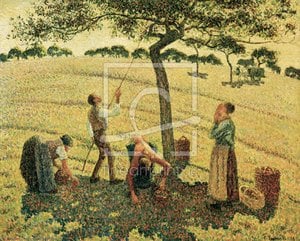
A Moment of Rural Tranquility: Camille Pissarro’s *L'Hermitage*
Camille Pissarro’s L’Hermitage offers a profound glimpse into the heart of Impressionism – a movement defined not just by its visual style, but by its dedication to capturing fleeting moments and subjective experiences. Painted around the turn of the 20th century, this idyllic scene transports us to a small European village bathed in the soft light of a clear afternoon. The artist’s masterful observation and skillful brushwork evoke a sense of peace and timelessness that continues to resonate with viewers today.
The Impressionist Vision
Pissarro was a pivotal figure in the development of Impressionism, initially associated with Corot and later leading his own group, “Société des Artistes Indépendants.” His approach differed subtly from Manet or Monet; he prioritized depicting the effects of light and atmosphere on everyday subjects – often rural landscapes – rather than grand historical narratives. *L’Hermitage* exemplifies this focus. The loose, visible brushstrokes, characteristic of Impressionism, aren't merely a stylistic choice but a deliberate attempt to record the transient quality of light and color. Notice how Pissarro uses short, broken strokes to render the foliage, creating an impression of shimmering movement rather than precise detail. This technique was revolutionary for its time, challenging the academic tradition of meticulously rendered realism.
Subject Matter and Symbolism
The scene itself is deceptively simple: a quiet village nestled on a hillside, a dirt road leading towards modest homes, and villagers engaged in their daily routines. However, Pissarro imbues this ordinary subject with profound meaning. The composition suggests a harmonious relationship between humanity and nature – a core theme within the Impressionist movement. The steeply pitched roofs of the houses, reminiscent of traditional European architecture, evoke a sense of history and continuity, while the lush greenery symbolizes fertility and abundance. The clear blue sky, dotted with fluffy white clouds, adds to the overall feeling of serenity and optimism. The title itself, *L’Hermitage* (meaning “the hermitage”), subtly suggests a retreat from the bustle of urban life, inviting the viewer to share in this tranquil space.
Color and Technique – A Symphony of Light
Pissarro's palette is dominated by earthy greens and browns, reflecting the natural surroundings. Yet, he skillfully introduces splashes of blue and white, creating a vibrant contrast that enhances the sense of depth and atmosphere. The use of complementary colors—particularly the juxtaposition of blues and oranges—is a hallmark of Impressionist technique, designed to heighten visual impact. The artist’s layering of thin glazes of paint allowed for luminous effects, capturing the way light interacts with surfaces. This meticulous attention to detail, combined with his loose brushwork, creates a remarkably realistic yet emotionally resonant image. The painting's texture invites the viewer to imagine the feel of the dirt road beneath their feet and the warmth of the sun on their skin.
Podobne dzieła


Biografia artysty
A Life Rooted in Observation: The World of Camille Pissarro
Camille Pissarro, a name synonymous with both the birth and evolution of Impressionism, was an artist whose life mirrored the shifting landscapes he so devotedly captured on canvas. Born Jacob Abraham Camille Pissarro on July 10, 1830, in Charlotte Amalie, St. Thomas – then part of the Danish West Indies, now the US Virgin Islands – his origins were as diverse and vibrant as the scenes that would later define his artistic vision. His father, a Portuguese Jewish merchant with French nationality, and his mother, from a French-Jewish family on the island, instilled in him a unique cultural heritage. This upbringing, somewhat unconventional due to familial complexities, fostered an early sensitivity to the world around him, a quality that would become the cornerstone of his artistic practice. His initial formal training at the Savary Academy near Paris provided a foundation in traditional techniques, but it was his return to St. Thomas and subsequent work as a cargo clerk that truly ignited his passion for observation. The bustling harbor, the vibrant local life, and the raw beauty of the Caribbean landscape became his first subjects, shaping an eye keenly attuned to the nuances of everyday existence.From Realism to Revolution: Artistic Development
Pissarro’s artistic journey was one of constant exploration and refinement. After a period assisting Danish painter Anton Melbye in Paris, he immersed himself in the works of masters like Gustave Courbet, Jean-Baptiste-Camille Corot, and Honoré Daumier – artists who championed realism and social commentary. He initially sought acceptance within the established art world, exhibiting at the Paris Salon, but soon found its constraints stifling. A pivotal moment came with his embrace of *plein air* painting—working outdoors directly from nature—a practice encouraged by Corot that would become central to Impressionism. This shift wasn’t merely technical; it represented a philosophical change, a desire to capture the fleeting effects of light and atmosphere, the very essence of a scene rather than its precise representation. He began experimenting with looser brushwork and brighter palettes, moving away from academic conventions towards a more subjective and expressive style. His early landscapes, though still grounded in realism, hinted at the revolutionary path he was about to forge. This period saw him grappling with finding his own voice amidst the burgeoning artistic ferment of Paris, a city undergoing rapid transformation that provided endless inspiration.The Father Figure of Impressionism
Camille Pissarro wasn’t simply *an* Impressionist; he was arguably its most steadfast and unifying force. Uniquely, he exhibited at all eight Paris Impressionist exhibitions between 1874 and 1886, acting as a stabilizing presence within a group often characterized by internal disagreements and individual ambitions. He wasn’t merely present—he actively encouraged his fellow artists, offering support, guidance, and a much-needed sense of camaraderie. This earned him the affectionate nickname “the father figure” of the movement. His commitment to artistic freedom and innovation was unwavering, even in the face of critical scorn and public indifference. He believed in the power of collective action and championed the idea of artists exhibiting independently from the Salon’s restrictive rules. Beyond his own work, Pissarro's influence extended to a younger generation of artists, including Paul Cézanne, Vincent van Gogh, and Paul Gauguin, whom he mentored and profoundly impacted. He provided them with not only technical advice but also a philosophical framework for their artistic explorations. His willingness to experiment led him briefly into Neo-Impressionism, influenced by Georges Seurat and Paul Signac’s pointillist techniques, before ultimately returning to a more personal style that blended his earlier influences with new discoveries.Landscapes of Life: Themes and Legacy
Pissarro's artistic output was remarkably diverse, yet consistently focused on the world around him. He is celebrated for his depictions of both rural and urban landscapes, often portraying scenes of everyday life—peasants working in fields, bustling Parisian streets, quiet village squares. His paintings weren’t simply picturesque views; they were social commentaries, reflecting his deep empathy for the working class and his commitment to depicting their lives with dignity and respect.- Landscapes: Renowned for capturing the beauty of both countryside and city life.
- Scenes of Parisian Life: Vivid portrayals of a rapidly changing metropolis.
- Peasant Life: Reflecting his social consciousness and empathy for the working class.

Kamille Pissarro
1830 - 1903 , Stany Zjednoczone Wyspy Dziewicze
Najważniejsze informacje
- Artistic Movement Or Style: Impresjonizm, Neo-Impresjonizm
- Artists Or Movements Influenced By This Artist:
- Cézanne
- Van Gogh
- Gauguin
- Artists Who Influenced This Artist:
- Courbet
- Corot
- Daubigny
- Date Of Birth: 10 lipca 1830
- Date Of Death: 13 listopada 1903
- Full Name: Camille Pissarro
- Nationality: Dansk-Francuz
- Notable Artworks:
- Boulevard Montmartre
- Norwood pod śniegiem
- Place Of Birth: Charlotte Amalie, Francja
Zobacz także powiązane artykuły
Paul Cézanne: 25 Arcydzieł, które Zrewolucjonizowały Świat Sztuki | ArtsDot
Odkryj 25 arcydzieł Paula Cézanne'a – od impresjonizmu po postimpresjonizm. Poznaj historie, techniki i inspiracje malarza, który zrewolucjonizował sztukę. Reprodukcje obrazów najwyższej jakości na ArtsDot.com!

Camille Pissarro: Pioneer of Impressionism & Father of Modern Art – A Legacy Explored
Explore the life & art of Camille Pissarro, a pivotal figure in Impressionism and Post-Impressionism. Discover his techniques, influences, and lasting legacy on modern painting. Learn more at ArtsDot.

10 Arcydzieł Impresjonizmu Krajobrazowego, Które Zdefiniowały Sztukę
Odkryj 10 arcydzieł impresjonizmu krajobrazowego! Poznaj historie Moneta, Renoir'a i Van Gogha. Inspiracje wnętrzarskie, techniki malarskie i piękne reprodukcje obrazów na ArtsDot.com. Eksploruj kolekcję online!

John Constable: 25 Najlepszych Obrazów Mistrza Angielskiego Krajobrazu | ArtsDot
Odkryj 25 arcydzieł Johna Constable'a – mistrza angielskiego krajobrazu! Poznaj romantyczne pejzaże, technikę malarską i inspiracje z Dedham Vale. Reprodukcje obrazów najwyższej jakości na ArtsDot.com. Eksploruj pełną kolekcję online!

Szmaragdowe Wizje: Symbolika i Estetyczny Wpływ Zieleni w Historii Sztuki
Odkryj fascynującą historię zieleni w sztuce! Poznaj symbolikę koloru od starożytności do współczesności, wpływ pigmentów i psychologię emocji. Ekspercka analiza dzieł sztuki na ArtsDot.