

 Podgląd w skali 1:1
 Wyślij jako kartkę
 Udostępnij
 Szczegóły dzieła
 Przewodnik

 Pobierz obraz
 Podobne obiekty
 RTG
RTG Pokaz slajdów
 Pytania i odpowiedzi
 Statystyki
Armchair

- 68.0 x 68.0 cm


 Rozwiń treść
Dzieło sztuki prezentowane na tej stronie podlega ochronie prawem autorskim, co oznacza, że nie mamy prawa do tworzenia ani sprzedaży jego identycznej reprodukcji. Ochrona ta jest egzekwowana na mocy umów międzynarodowych, takich jak Konwencja berneńska oraz przez przepisy prawa krajowego, w tym te określone w Prawo autorskie USA – Tytuł 17.
Metoda ta jest w pełni zgodna z przepisami prawa autorskiego, ponieważ nie polega na kopiowaniu ani powielaniu chronionego dzieła. Stanowi ona kreatywną reinterpretację – nowy obraz, który czerpie inspirację z oryginału, ale nie jest z nim tożsamy.
Giclée / Wydruk artystyczny
Wydruki giclée lub płótna o jakości muzealnej, szybka realizacja i szeroki wybór opcji wykończenia. ( Zamów ręcznie malowaną reprodukcję Przejdź do wersji cyfrowej)




P118B zł10

P118H zł10

P118W zł10

P438Z zł10

P508JH zł12

P508YH zł12

P805H zł10

P805Z zł10

P919BZ zł10

P919G zł10

P919XJ zł10

P959ZH zł10

P968JZ zł12

W106C zł8

W218G zł10

W218JH zł8

W218Y zł10

W307PJ zł10

W316G zł10

W316PJ zł8

W316Y zł10

W398PJ zł8

W4111J zł10

W500HY zł15

W500JH zł15

W692G zł12

W849H zł8

W940BG zł15

W953PJ zł8




Wybierz spośród naszych standardowych rozmiarów, które zachowują oryginalne proporcje dzieła sztuki.

Wpisz wymaganą szerokość i wysokość, aby dopasować grafikę do ramy lub ściany. Wydruk można jedynie przyciąć, nigdy nie powiększając go poza oryginalny obraz, dlatego format o innych proporcjach spowoduje utratę części kompozycji. Przed rozpoczęciem druku prześlemy Ci cyfrowy podgląd do zatwierdzenia. Obraz wyświetlany na tej stronie nie pokazuje rzeczywistego przycięcia — jedynie podgląd oddaje ten efekt.
Dostawa na cały świat () w ciągu 2 tygodni zamiast standardowych 4/5 tygodni. (5 Listopad)

Bezpłatna ekspresowa wysyłka na cały świat

Wysokiej jakości płótno lniane

Pełne ubezpieczenie przesyłki

Gwarancja zwrotu należności celnych i podatków importowych

Gwarancja wiernego odwzorowania kolorów

100-dniowa polityka zwrotów (tylko w przypadku wad)

Gwarancja 100% zwrotu pieniędzy

Zniżka przy zakupie wielu sztuk
 Opcja ze szkłem jest dostępna wyłącznie w rozmiarach poniżej 110 cm

Armchair
Giclée / Wydruk artystyczny
Wymiary reprodukcji
-


Cena całkowita
zł 246
A Testament to Functional Modernism: Bernardo Bernardi’s “Armchair”
Bernardo Bernardi's "Armchair," meticulously reproduced here in a generous 68 x 68 cm format, represents more than just a piece of furniture; it embodies a pivotal moment in Croatian design history and the burgeoning ideals of functional modernism. Crafted in 1961 for the “Moša Pijade” Workers’ University – now the Open University – this chair was conceived by Bernardi himself, reflecting his deep commitment to accessible design and the transformative potential of tertiary education. The work speaks volumes about a period defined by social reform, architectural innovation, and a conscious effort to reshape public spaces with thoughtful, utilitarian forms.
- Architectural Roots: Designed by R. Nikšić and N. Kučan, the chair’s form is intrinsically linked to the university's ethos – a space intended for intellectual exploration and social engagement.
- Bernardi’s Vision: Bernardi, a leading figure in Croatian architecture and furniture design, championed standardization and quality production, collaborating extensively with factories like TVIN in Virovitica.
- Contextual Significance: The creation of this armchair occurred during a period of significant social and political change in Yugoslavia, reflecting the nation’s ambition to modernize its education system and foster a more egalitarian society.
Form and Materiality – A Study in Austerity
The chair's aesthetic is strikingly austere, dominated by clean lines and a deliberately unadorned form. The primary material—black leather—conveys an immediate sense of sophistication and durability, while the wooden frame provides a grounding element, anchoring the piece to its functional purpose. Bernardi’s design eschews superfluous ornamentation in favor of pure geometric shapes, aligning with the principles of modernism that prioritized clarity and simplicity. The bowl-like silhouette, reminiscent of a shell or perhaps even a stylized echo of classical forms, introduces an unexpected layer of visual interest – a subtle nod to enduring artistic traditions within a decidedly contemporary context.
- Leather’s Significance: Black leather was a popular choice for high-end furniture in the mid-20th century, signifying status and durability.
- Wood as Foundation: The use of wood speaks to the craftsmanship and quality associated with traditional furniture making, blending seamlessly with the modern aesthetic.
- Geometric Harmony: The chair’s form is a testament to Bernardi's mastery of geometric principles, creating a visually balanced and harmonious composition.
Symbolism and Emotional Impact
Beyond its purely functional role, “Armchair” carries a subtle symbolic weight. As the piece was designed for an institution dedicated to learning and social progress, it can be interpreted as representing comfort, contemplation, and the potential for intellectual growth. The chair’s starkness invites introspection, encouraging viewers to consider their own place within the broader context of knowledge and society. The presence of two additional chairs in the photograph further emphasizes this theme – a collective space designed for dialogue and shared experience.
- Representation of Progress: The chair embodies the optimism and forward-thinking spirit of the 1960s, reflecting a desire to create a better future through education and design.
- Intimate Space: The armchair evokes feelings of comfort, relaxation, and personal reflection – qualities highly valued in modern interior design.
A Collector’s Piece – Reproduction Quality
This meticulously hand-painted reproduction captures the essence of Bernardi's original design with exceptional detail and fidelity. Utilizing archival quality materials and employing skilled artisans, ArtsDot.com ensures that this artwork faithfully replicates the chair’s form, texture, and color palette. It is a perfect addition to any collection of modern design or a statement piece for contemporary interiors.
Pytania i odpowiedzi
Czy kolory w „Armchair” – Bernardo Bernardi są nasycone czy stonowane?
Paleta dzieła "Armchair" charakteryzuje się Muted nasyceniem kolorów.
Jaki rozmiar i orientacja są zalecane dla wydruku dzieła „Armchair” – Bernardo Bernardi?
Rozmiar Medium, orientacja Square: to sugerowane parametry druku dla dzieła „Armchair” – Bernardo Bernardi.
Co przedstawia "Armchair"?
Tematyka dzieła "Armchair" to furniture design, croatia, bernardi, interior decor, workers university, leather chair, modern style.
Podobne dzieła


Biografia artysty
The Luminous World of Roberto Bernardi
Born in 1974 in the historic Italian town of Todi, Roberto Bernardi has emerged as a profound voice within the photorealist movement. His journey into the heart of visual precision began much earlier than his formal career, with his first artistic explorations dating back to the early 80s. After moving to Rome in 1993 following his high school graduation, Bernardi immersed himself in the delicate art of restoration, working at the church of San Francesco a Ripa. This intimate encounter with the preservation of beauty and the meticulous care required for historical artifacts undoubtedly laid the foundation for his later mastery of detail. By 1994, he transitioned into a full-time painter, moving away from initial forays into landscapes and portraits to embrace a contemporary still life that would define his legacy.
Bernardi’s work is a breathtaking meditation on the extraordinary hidden within the ordinary. As a master of photorealism, he possesses a singular ability to capture the exquisite beauty of everyday life through a sophisticated play of reflections and transparencies. His canvases often feature mundane objects—plates, glasses, kitchen appliances, dishwashers, and even colorful candies or lollipops—reimagined as subjects of intense light and complex optical phenomena. Through his brush, a simple glass becomes a vessel for light, and a kitchen surface transforms into a mirror of the surrounding world, inviting the viewer to rediscover the magic in the mundane.
Artistic Evolution and Collaborative Spirit
The development of Bernardi's style is marked by an increasing fascination with how light interacts with various surfaces. His technique allows for a startlingly realistic depiction of textures, from the cold sheen of metal to the translucent glow of sugar. This pursuit of precision was further enriched by his meeting in 1999 with Raphaella Spence, also a photorealist artist and his frequent collaborative partner. Together, they have occasionally ventured beyond the intimate scale of still life to create large-scale series representing expansive social scenes, such as the vibrant energy of crowds at football stadiums, adding a communal dimension to his otherwise quiet, contemplative subject matter.
His professional trajectory has been characterized by significant international recognition and prestigious commissions. From working on pieces for the Cutler Collection in Beijing to being commissioned by the Italian multinational Eni, Bernardi's reach extends far beyond the borders of Italy. His work has been showcased in renowned institutions across the globe, including:
- The Museum of Arts and Crafts
- Musei Capitolini, Rome
- Fort Wayne Museum of Art, USA
- New Britain Museum of American Art, USA
- Museum Frieder Burda, Germany
- Opera Gallery, Singapore
- Museo Thyssen-Bornemisza, Spain
Through this vast exhibition history, Bernardi has solidified his place in the contemporary art landscape. His ability to bridge the gap between the hyper-real and the poetic ensures that his paintings are not merely technical exercises in mimicry, but emotional invitations to pause and observe the shimmering, often overlooked wonders of our daily existence.

Bernardo Bernardi
1974 - , Italy
Krótka nota
- Full Name: Roberto Bernardi
- Notable Artworks:
- Armchair
- L'Edicola
- Place Of Birth: Todi, Italy
- Date Of Birth: 1974
Powiązane artykuły

Katsushika Hokusai: 25 Arcydzieł Sztuki Japońskiej dla Kolekcjonerów i Miłośników Dekoracji
Odkryj 25 arcydzieł Katsushika Hokusai, mistrza ukiyo-e! Poznaj historię Wielkiej Fali i innych ikonicznych drzeworytów. Inspiracje wnętrzarskie i reprodukcje obrazów najwyższej jakości na ArtsDot.com – sztuka japońska dla Twojego domu.

25 Arcydzieł Muzeum Sztuk Pięknych w Bostonie: Historia, Artyści i Inspiracje dla Domu
Odkryj 25 arcydzieł Muzeum Sztuk Pięknych w Bostonie! Poznaj historie słynnych artystów, impresjonizmu, Van Gogha i Maneta. Inspiracje wnętrzarskie & reprodukcje obrazów najwyższej jakości na ArtsDot.com
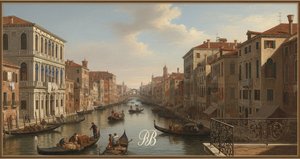
Bernardo Bellotto: Canaletto's Nephew & Master of Veduta Painting – A Comprehensive Exploration
Explore the life & art of Bernardo Bellotto, Canaletto’s nephew and a master of veduta painting. Discover his stunning cityscapes of Dresden & Warsaw, artistic techniques, and lasting legacy. Expert insights for collectors.

Geometria Sztuki: 10 Arcydzieł Abstrakcji Geometrycznej | ArtsDot.com
Odkryj 10 arcydzieł abstrakcji geometrycznej! Poznaj historię Mondriana, Kandinskiego i Maleвича. Inspiracje wnętrzarskie z malarstwem abstrakcyjnym – reprodukcje najwyższej jakości na ArtsDot.com. Eksploruj kolekcję online!

Piet Mondrian: Deconstructing Reality – A Study of Neo-Plasticism & Universal Harmony
Explore the revolutionary art of Piet Mondrian and the principles of Neo-Plasticism. Discover De Stijl's influence, iconic compositions like 'Composition with Red, Yellow and Blue,' and Mondrian’s lasting legacy on modern design.