

 Podgląd w skali 1:1
 Wyślij jako kartkę
 Udostępnij
 Szczegóły dzieła
 Przewodnik

 Pobierz obraz
 Podobne obiekty
 RTG
RTG Pokaz slajdów
 Pytania i odpowiedzi
 Statystyki
Ceiling decoration


 Rozwiń treść
Giclée / Wydruk artystyczny
Wydruki giclée lub płótna o jakości muzealnej, szybka realizacja i szeroki wybór opcji wykończenia. ( Zamów ręcznie malowaną reprodukcję Przejdź do wersji cyfrowej)




































Wybierz spośród naszych standardowych rozmiarów, które zachowują oryginalne proporcje dzieła sztuki.

Wpisz wymaganą szerokość i wysokość, aby dopasować grafikę do ramy lub ściany. Wydruk można jedynie przyciąć, nigdy nie powiększając go poza oryginalny obraz, dlatego format o innych proporcjach spowoduje utratę części kompozycji. Przed rozpoczęciem druku prześlemy Ci cyfrowy podgląd do zatwierdzenia. Obraz wyświetlany na tej stronie nie pokazuje rzeczywistego przycięcia — jedynie podgląd oddaje ten efekt.
Dostawa na cały świat () w ciągu 2 tygodni zamiast standardowych 4/5 tygodni. (14 Listopad)

Bezpłatna ekspresowa wysyłka na cały świat

Wysokiej jakości płótno lniane

Pełne ubezpieczenie przesyłki

Gwarancja zwrotu należności celnych i podatków importowych

Gwarancja wiernego odwzorowania kolorów

100-dniowa polityka zwrotów (tylko w przypadku wad)

Gwarancja 100% zwrotu pieniędzy

Zniżka przy zakupie wielu sztuk
 Opcja ze szkłem jest dostępna wyłącznie w rozmiarach poniżej 110 cm

Ceiling decoration
Giclée / Wydruk artystyczny
Wymiary reprodukcji
-


Cena całkowita
zł 245
Podobne dzieła


Biografia artysty
Bernardino Poccetti: Life and Legacy
Early Life and Training
Bernardino Poccetti (Florence, 1548 – 1612) was an Italian Mannerist painter and printmaker who flourished during the late Renaissance. Details regarding his early training remain somewhat scarce; however, it is known he began his artistic journey in Florence, a city brimming with artistic innovation at the time.
Major Works and Artistic Development
Poccetti’s career was marked by significant commissions, particularly in fresco painting. He secured important projects for religious institutions and aristocratic patrons throughout Tuscany. One of his most notable early achievements was frescoing scenes from the life of Cosimo I de' Medici as decoration within the Great Salon of the Pitti Palace. This commission established his reputation and demonstrated his skill in large-scale decorative work.
He also labored extensively for various charterhouses in Pisa and Siena, further solidifying his position as a sought-after artist. However, it is widely considered that his masterpiece lies within the Cappella del Giglio (also known as the Cappella Neri) in Santa Maria Maddalena dei Pazzi, Florence (1599). This chapel showcases his mature style and mastery of fresco technique.
The Counter-Maniera Movement
In his later career, Poccetti became a prominent figure within the so-called Counter-Maniera movement. This artistic trend represented a reaction against the highly stylized and often artificial qualities of late Mannerism. Artists associated with this movement – including Santi di Tito, Domenico Cresti (Il Passignano), Lodovico Cigoli, Jacopo Chimenti da Empoli, Andrea Boscoli, and Gregorio Pagani – sought to restore clarity, naturalism, and emotional resonance to their work.
Poccetti’s contribution to the Counter-Maniera was characterized by a simplification of forms, a greater emphasis on realistic depiction, and a renewed focus on narrative clarity. His frescoes in Santa Maria Maddalena dei Pazzi exemplify these characteristics.
Influences and Legacy
While specific influences are difficult to pinpoint definitively, Poccetti’s work demonstrates an awareness of the artistic trends prevalent in Florence during his lifetime. He likely studied the works of earlier masters such as Michelangelo and Pontormo, adapting their innovations to his own unique style.
Poccetti also trained or influenced a number of younger artists, most notably Michelangelo Cinganelli, ensuring that his artistic principles continued to be disseminated within Florentine art circles. His work represents an important transition between the Mannerist and Baroque periods, paving the way for the stylistic developments of the 17th century.
Notable Works
- Frescoes in the Great Salon, Palazzo Pitti
- Frescoes at various Charterhouses in Pisa & Siena
- Cappella del Giglio (Cappella Neri) – Santa Maria Maddalena dei Pazzi
- Capella Strozzi, Santa Trinità
- Villa di Artimino
- Foundation of Monastery of Monte Senario
Historical Significance
Bernardino Poccetti’s significance lies in his role as a key figure within the Counter-Maniera movement and his contribution to the evolution of Florentine painting. His frescoes remain important examples of late Renaissance art, showcasing both technical skill and artistic innovation.

Bernardino Poccetti
1548 - 1612 , Italy
Krótka nota
- Name: Bernardino Poccetti
- Movement: Mannerism, Counter-Maniera
- Birth Date: 1548
- Death Date: 1612
- Influenced: Michelangelo Cinganelli
- Birth Place: Florence, Italy
- Nationality: Italian
- Date Of Birth: 1548
- Date Of Death: 1612
- Notable Works: Frescoes at Palazzo Pitti & Santa Maria Maddalena dei Pazzi
- Place Of Birth: Florence, Italy
Powiązane artykuły

Proto-Renensans: 10 Arcydzieł, Które Zdefiniowały Sztukę – ArtsDot.com
Odkryj 10 arcydzieł proto-renesansu! Poznaj historię Giotta, Cimabue i innych mistrzów. ArtsDot.com oferuje reprodukcje obrazów najwyższej jakości – idealne do Twojego wnętrza. Eksploruj pełną kolekcję online!
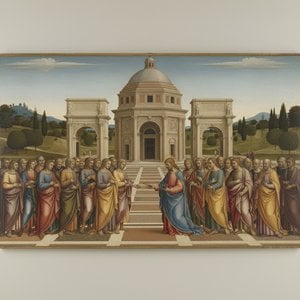
Pietro Perugino: Umbrian Master of Serenity & Precursor to Raphael's High Renaissance
Explore the life & art of Pietro Perugino, a pivotal Renaissance master and Raphael’s influential teacher. Discover his serene compositions, Sistine Chapel frescoes, and lasting legacy with ArtsDot.
10 Arcydzieł Renesansu: Obrazy, które Zdefiniowały Epokę | ArtsDot.pl
Odkryj 10 arcydzieł renesansu – od Mona Lisy po freski Michała Anioła! Poznaj historie, techniki i wpływ największych artystów. Reprodukcje najwyższej jakości na ArtsDot.com. Eksploruj kolekcję online!

Nowoczesny fresk sufitowy: Wprowadzenie nieba do wnętrz – odnowienie renesansowej sztuki
Odkryj sztukę fresków sufitowych! Inspiracje, techniki i praktyczne porady dla projektantów hoteli. Stwórz luksusowe wnętrza z .

Renesans: Odrodzenie Humanizmu i Kulturowa Transformacja XIV–XVI Wieku
Poznaj fascynujący świat renesansu! Ekspercka analiza humanizmu, sztuki i kulturowej transformacji XIV–XVI wieku. Odkryj dzieła mistrzów i ich trwały wpływ na współczesność.