

 Podgląd w skali
 Wyślij jako kartkę
 Udostępnij
 Szczegóły dzieła

 Pobierz
 Podobne obiekty
 RTG
RTG Pokaz slajdów
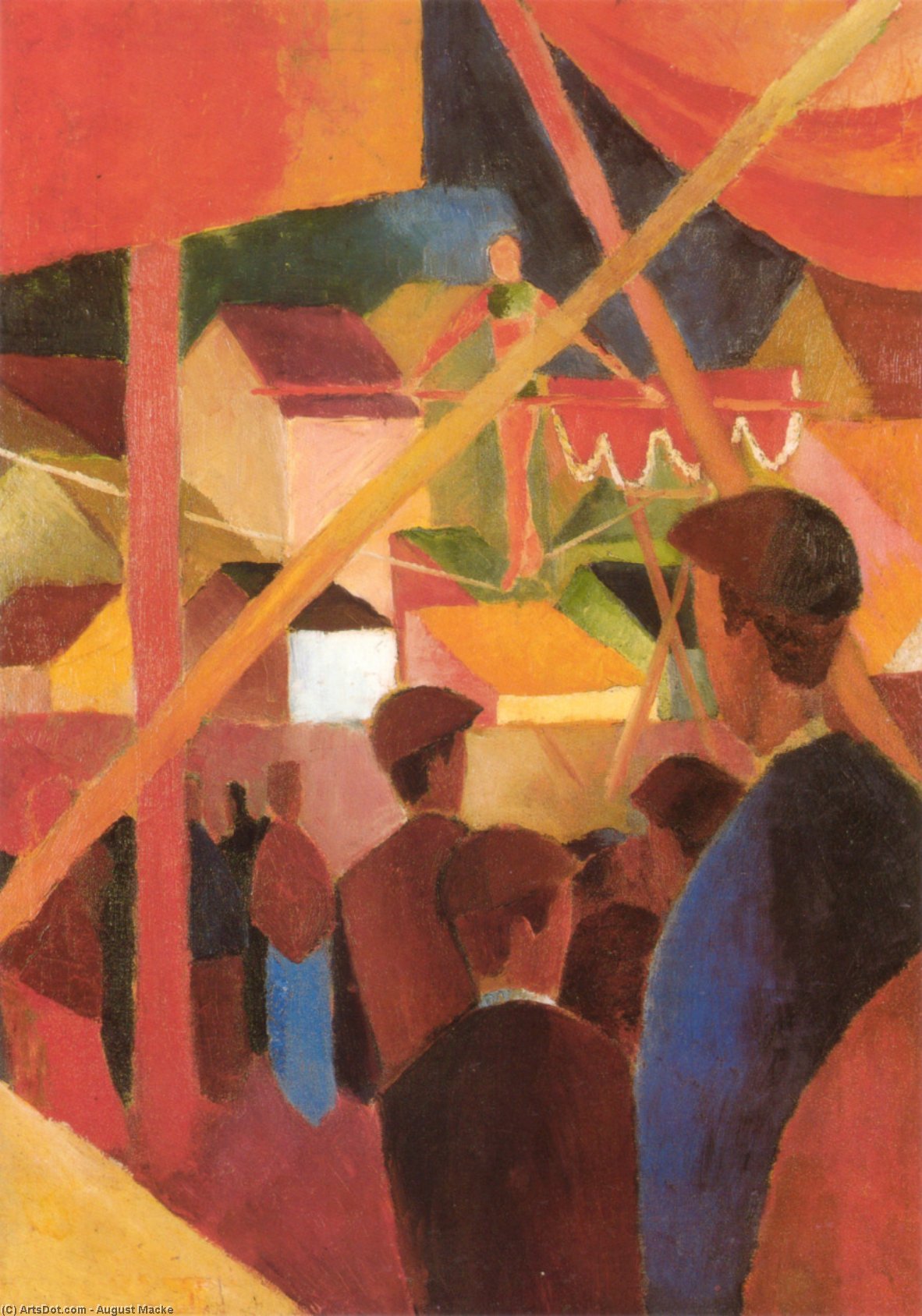
Tightrope walker
 Acrylic On Canvas
- WallArt
- Expressionism
 1914
1914 82.0 x 60.0 cm
 Kunstmuseum Bonn
 Rozwiń treść
Kup wysokiej rozdzielczości, ulepszony obraz cyfrowy o znacznie wyższej jakości niż podgląd online.
Każdy plik jest starannie przygotowywany przez naszych specjalistów przy użyciu zaawansowanych narzędzi oraz profesjonalnej, ręcznej retuszy. Dbamy o to, aby każdy obraz cechował się wyjątkową ostrością, precyzyjnym odwzorowaniem kolorów i subtelnymi detalami.
Ostateczny plik dostarczany jest drogą mailową w ciągu 72 godzin, zoptymalizowany do natychmiastowego wykorzystania w profesjonalnych zastosowaniach redakcyjnych i poligraficznych. To ta sama jakość, której ufają czołowe studia projektowe, wydawnictwa oraz galerie sztuki.
Obraz cyfrowy
Pobierz plik o wysokiej rozdzielczości do osobistego wyświetlania, druku oraz projektów kreatywnych. ( Zamów wydruk Zamów ręcznie malowaną reprodukcję)
W każdym zamówieniu na obraz cyfrowy znajduje się
Profesjonalna dostawa cyfrowa z gwarancją
Wybierając ArtsDot.com, nie otrzymujesz jedynie obrazu – otrzymujesz profesjonalnie udoskonalone cyfrowe dzieło sztuki, stworzone z najwyższą precyzją i objęte gwarancją satysfakcji. Oto wszystko, co automatycznie dołączane jest do Twojego zamówienia:

Błyskawiczna wysyłka e-mailowa
Plik z obrazem cyfrowym w wysokiej rozdzielczości zostanie przesłany na Twój adres e-mail w ciągu 72 godzin od złożenia zamówienia – gotowy do natychmiastowego użycia.

Plik cyfrowy wzbogacony przez AI
Twoja grafika została profesjonalnie zoptymalizowana przy użyciu zaawansowanych narzędzi AI oraz ręcznej edycji, co zapewnia maksymalną szczegółowość, klarowność i wierność kolorów.

Dożywotnia darmowa ponowna dostawa
Przypadkowo usunąłeś lub zgubiłeś swój plik? Bez obaw – prześlemy go Tobie ponownie w dowolnym momencie, bez żadnych opłat.

Bez opłat importowych – zawsze
Ciesz się swoją sztuką natychmiast, bez żadnych opłat celnych, należności ani kosztów dostawy – pliki cyfrowe są zawsze wolne od podatku.

Gwarancja wierności kolorów
Dzięki zastosowaniu profesjonalnych narzędzi i procesów zarządzania barwą zapewniamy, że Twoje cyfrowe zdjęcie odzwierciedla oryginalne kolory tak wiernie, jak to tylko możliwe.

60-dniowa gwarancja satysfakcji
Jeśli nie będziesz zadowolony ze swojego cyfrowego obrazu, dokonamy jego poprawki lub zwrócimy 100% kosztów w ciągu 60 dni – bez żadnych pytań.

100% Gwarancja zwrotu pieniędzy
Nie jesteś zadowolony? Otrzymaj pełny zwrot kosztów w ciągu 60 dni od otrzymania pliku cyfrowego – bez zbędnych pytań.

Rabaty przy zamówieniach hurtowych
Kup 3 obrazy, oszczędź 10% - Kup 5, oszczędź 15% - Kup 10+, oszczędź 20%. Idealne do projektów kreatywnych, galerii i agencji.
Opis kolekcjonerski
August Macke: A Symphony of Color Amidst Modern Anxiety
August Robert Ludwig Macke (1887-1914), a name etched in the annals of German Expressionism, embodies the poignant beauty born from fleeting moments and shadowed realities. His tragically premature demise during World War I robbed the art world of a prodigious talent—one who relentlessly pursued new artistic horizons while simultaneously grappling with profound existential questions. Macke’s journey began in Meschede, Westphalia, where he absorbed the influences of Impressionism and Post-Impressionism before decisively embracing Fauvist color palettes and Orphic abstraction, cementing his place as a pivotal figure within Der Blaue Reiter—a revolutionary artistic collective dedicated to exploring psychological landscapes and challenging conventional aesthetic norms.- Subject Matter: Macke’s canvases frequently depict scenes of rural life – farmers tending their fields, children playing outdoors – yet these seemingly idyllic subjects are imbued with an underlying tension reflecting the anxieties of a rapidly changing era. The tightrope walker embodies this duality; he performs his task with grace and precision against a backdrop of towering buildings, symbolizing humanity's precarious balance between tradition and progress.
- Style: Macke’s distinctive style is characterized by bold simplification and flattened perspective—techniques borrowed from Fauvist painters like Matisse. He eschewed meticulous detail in favor of expressive brushstrokes that prioritize color and tonal harmony, creating images brimming with vitality and emotional resonance.
Technique: Bold Color & Textured Surfaces
Macke’s masterful manipulation of pigment is central to his artistic vision. Utilizing thick impasto—a technique involving applying paint in textured layers—he achieved remarkable depth and luminosity, capturing the physicality of the subject matter with palpable immediacy. His color choices are deliberately vibrant and unrestrained, eschewing naturalistic hues for emotionally charged shades that convey mood and atmosphere. The use of complementary colors – blues against reds, yellows against greens – intensifies visual impact and contributes to the overall dynamism of his compositions.- Color Palette: Macke’s palette leans heavily into warm tones—ochres, reds, yellows—contrasting sharply with cooler blues and greens. This deliberate juxtaposition underscores the tension between stability and disruption inherent in the depicted environment.
- Brushwork: Macke's brushstrokes are loose and energetic, conveying movement and spontaneity. He employed a technique known as “Alla Prima,” applying paint directly onto the canvas without underpainting—a bold decision that maximized textural richness and expressive potential.
Historical Context & Symbolism: Facing Uncertainty
Macke’s artistic output coincided with the turbulent years leading up to World War I, a period marked by social unrest and intellectual ferment. The Expressionist movement sought to articulate the psychological realities of the time—the anxieties surrounding impending conflict, the disillusionment following Nietzschean philosophy—and Macke's work reflects this preoccupation. The tightrope walker itself serves as a potent symbol: representing precariousness, balance, and the constant struggle for survival amidst overwhelming forces. It speaks to the human condition – vulnerable yet striving for mastery – mirroring the broader anxieties of a society grappling with profound transformations.Emotional Impact & Legacy
“Tightrope walker” transcends mere visual representation; it resonates deeply with viewers through its evocative color palette and expressive brushwork. Macke’s ability to convey emotion—a palpable sense of tension mingled with beauty—solidifies his position as one of the most influential artists of his generation. His legacy continues to inspire contemporary painters and designers who appreciate the power of bold color and textural innovation, reminding us that art can illuminate not only what we see but also what we feel – a testament to Macke’s enduring artistic brilliance.Podobne dzieła


Biografia artysty
A Life Cut Short: The Vibrant World of August Macke
August Robert Ludwig Macke, a name inextricably linked to the brief but intensely vibrant flowering of German Expressionism, lived a life tragically curtailed by the horrors of the First World War. Born in 1887 in Meschede, a small town nestled within the Westphalian countryside, his artistic journey was one of rapid evolution and profound exploration – a relentless pursuit of capturing not just what he *saw*, but how he *felt* about it. Macke’s early years were marked by a restless spirit and an innate curiosity, leading him to abandon formal schooling at the age of seventeen to dedicate himself entirely to his artistic ambitions. He initially supplemented his income through stage design work in Bonn, honing his compositional skills and developing a keen eye for color – experiences that would prove invaluable as he navigated the complex landscape of early 20th-century art.Early Influences and Artistic Foundations
Macke’s formative years were deeply shaped by encounters with key artistic movements and individuals. His relocation to Bonn, alongside his family, provided a crucial foundation for his development. He immersed himself in the works of Hans Thuar, a fellow artist who fostered Macke's appreciation for Impressionism and its emphasis on capturing fleeting moments of light and color. Crucially, he also studied at the Düsseldorf Art Academy from 1904 to 1906 under Adolf Maennchen, though he found the academy’s rigid curriculum restrictive. Seeking a more liberating approach, Macke supplemented his formal training with independent study and travel, particularly a transformative trip to Paris in 1907. This experience exposed him to the revolutionary ideas of Impressionism, Post-Impressionism, and the burgeoning Fauvist movement – artists like Henri Matisse who were boldly experimenting with color and form. He was profoundly influenced by Matisse’s use of vibrant hues and simplified shapes, a departure from the traditional academic approach. Simultaneously, he developed a close friendship with Franz Marc, a fellow artist and a key figure in the influential group Der Blaue Reiter (The Blue Rider). Their shared interest in spirituality and their exploration of symbolism would profoundly impact Macke’s artistic vision.Der Blaue Reiter and the Embrace of Modernity
Macke's arrival in Munich in 1909 marked his full integration into the orbit of Der Blaue Reiter, a group dedicated to pushing the boundaries of art and exploring new modes of expression. This association proved pivotal, introducing him to Wassily Kandinsky and other avant-garde thinkers who championed abstraction and spiritual themes. He began experimenting with broken planes of color and increasingly simplified forms, moving away from strict representational accuracy towards a more emotive and subjective approach. The group’s emphasis on “inner necessity” – the driving force behind artistic creation – resonated deeply with Macke's own creative impulses. His style began to evolve rapidly, incorporating elements of Cubism, Orphism (influenced by Robert Delaunay’s exploration of simultaneous contrast), and even hints of Futurism’s dynamism. He wasn’t simply imitating these movements; he was synthesizing them into a uniquely personal language of color and form. His paintings became increasingly infused with a sense of movement, light, and atmosphere – capturing the essence of modern experience rather than merely depicting it.A Luminist Vision: Landscapes and Everyday Life
Despite his engagement with abstract tendencies, Macke remained fundamentally rooted in the observation of the natural world. He developed a distinctive style that he termed “luminism,” characterized by an intense focus on light, color, and atmosphere. His landscapes – particularly those depicting the Sauerland region of Westphalia – are imbued with a palpable sense of joy and vitality. Figures are often rendered as simplified silhouettes against vibrant backgrounds, creating a dreamlike quality. He also found inspiration in everyday life, capturing scenes of family gatherings, children at play, and intimate moments between lovers. These paintings, such as *Woman in a Green Jacket*, radiate warmth and optimism through their bold color palettes and confident brushwork. His ability to convey emotion through the subtle interplay of light and color was truly remarkable. The influence of Robert Delaunay’s “Orphism” is particularly evident in works like *Shop Windows*, where he employed broken planes of color to create a dazzling, kaleidoscopic effect.A Tragic Interruption: Death on the Western Front
The outbreak of World War I tragically cut short Macke's promising career. Driven by patriotic fervor, he enlisted as a soldier in 1914 and was killed in action near Champagne, France, on September 26th at the young age of 27. His final painting, *Farewell*, is a haunting testament to the horrors of war – a somber depiction of departing soldiers that foreshadows his own untimely demise. Despite his brief life, August Macke left behind a remarkable body of work that continues to captivate and inspire artists and art lovers alike. His paintings are celebrated for their vibrant colors, dynamic compositions, and enduring optimism—a testament to the power of art to transcend even the darkest of times.Exploring Macke’s World Today
Today, August Macke's works are held in prominent collections across Europe, including the Staatsgalerie Moderner Kunst in Munich, the Museum Ludwig in Cologne, and the Kunsthaus Zürich. Numerous museums dedicated to Expressionism showcase his paintings prominently, offering visitors a chance to experience the emotional intensity and visual brilliance of his art firsthand. The Westfälisches Landesmuseum Münster and the Kunstmuseum Bonn are particularly noteworthy for their extensive holdings of Macke’s oeuvre. His influence can be seen in the continued exploration of color and emotion by contemporary artists, solidifying his place as a pivotal figure in the history of modern art. Resources like Artnet and Wikipedia provide valuable biographical information and insights into his artistic development, allowing us to delve deeper into the life and legacy of this tragically short-lived but profoundly influential artist.
August Macke
1887 - 1914 , Niemcy
Krótka nota
- Artistic Movement Or Style: Ekspresjonizm
- Artists Or Movements Influenced By This Artist: ['Der Blaue Reiter']
- Artists Who Influenced This Artist:
- Robert Delaunay
- Franz Marc
- Date Of Birth: 3 stycznia 1887
- Date Of Death: 26 września 1914
- Full Name: August Robert Ludwig Macke
- Nationality: Niemiecki
- Notable Artworks:
- Bathing girls z miastem
- Woman in a Green Jacket
- Farewell
- Place Of Birth: Meschede, Niemcy

