


 Zobacz w skali 1:1
 Wyślij
 Udostępnij
 Szczegóły
 Przewodnik

 Pobierz plik obrazu
 Podobne obiekty
 RTG
RTG Pokaz slajdów
 Statystyki
Jonathan Sturges


 Czytaj więcej
Giclée / Wydruk artystyczny
Wydruki giclée lub płótna o jakości muzealnej, szybka realizacja i szeroki wybór opcji wykończenia. ( Kup ręcznie malowany obraz Przełącz na wersję cyfrową)




P118B zł10

P118H zł10

P118W zł10

P438Z zł10

P508JH zł12

P508YH zł12

P805H zł10

P805Z zł10

P919BZ zł10

P919G zł10

P919XJ zł10

P959ZH zł10

P968JZ zł12

W106C zł8

W218G zł10

W218JH zł8

W218Y zł10

W307PJ zł10

W316G zł10

W316PJ zł8

W316Y zł10

W398PJ zł8

W4111J zł10

W500HY zł15

W500JH zł15

W692G zł12

W849H zł8

W940BG zł15

W953PJ zł8




Wybierz spośród naszych standardowych rozmiarów, które zachowują oryginalne proporcje dzieła sztuki.

Wpisz wymaganą szerokość i wysokość, aby dopasować grafikę do ramy lub ściany. Wydruk można jedynie przyciąć, nigdy nie powiększając go poza oryginalny obraz, dlatego format o innym proporcji spowoduje utratę części kompozycji. Przed rozpoczęciem druku prześlemy Ci cyfrowy podgląd do zatwierdzenia. Obraz wyświetlany na tej stronie nie pokazuje rzeczywistego przycięcia — jedynie podgląd oddaje ten efekt.
Dostawa na cały świat () w ciągu 2 tygodni zamiast standardowych 4/5 tygodni. (22 Październik)

Bezpłatna ekspresowa wysyłka na cały świat

Wysokiej jakości płótno lniane

Pełne ubezpieczenie transportowe

Gwarancja zwrotu należności celnych i podatków importowych

Gwarancja idealnego odwzorowania barw

100-dniowy okres na zwrot dzieła w przypadku wykrycia wad produkcyjnych

Gwarancja 100% zwrotu pieniędzy

Oferta przy zakupie wielu sztuk
 Opcja ze szkłem jest dostępna wyłącznie w rozmiarach poniżej 110 cm

Jonathan Sturges
Giclée / Wydruk artystyczny
Rozmiar reprodukcji
-


Suma do zapłaty
zł 238
Jonathan Sturges – A Portrait Embodied in Luminism’s Quiet Dignity
Asher Brown Durand's *Jonathan Sturges*, painted around 1840, stands as a quintessential example of Hudson River School landscape painting—a movement that championed idealized depictions of the American wilderness and profoundly shaped the artistic sensibilities of its time. More than just a likeness of a gentleman, this portrait encapsulates the ethos of Luminism: an approach prioritizing atmospheric perspective and subtle tonal gradations to convey mood and grandeur. Durand’s meticulous attention to detail elevates Sturges beyond mere representation, transforming him into a symbol of American virtue and intellectual refinement.- Composition & Perspective: The painting's central focus is Sturges’ upper body, positioned slightly off-center within a dark, receding background—a deliberate tactic that establishes depth and directs the viewer’s gaze upwards. Durand skillfully employs tonal variations to simulate atmospheric perspective, creating an illusion of distance and reinforcing the grandeur of the landscape beyond the frame.
- Color Palette & Lighting: Predominantly grayscale, the palette utilizes nuanced shades of brown and grey to achieve remarkable realism. Soft, diffused light emanating from the left illuminates Sturges’ face and torso, casting gentle shadows that sculpt his features with precision. This lighting technique is characteristic of Luminism's desire to capture the sublime beauty of nature—a beauty imbued with spiritual significance.
- Technique & Materials: Durand executed *Jonathan Sturges* in oil paint on canvas using a layered approach—a hallmark of Hudson River School painting. Careful blending and meticulous brushwork ensure smooth transitions between tones, resulting in an image that radiates warmth despite its subdued color scheme. The artist’s mastery is evident in his ability to convey texture – from the smoothness of Sturges' skin to the subtle roughness of his clothing fabric.
Subject Matter & Symbolism: Representing American Ideal
Sturges himself embodies the aspirations of the era—a man of considerable intellect and social standing, dressed in attire indicative of wealth and respectability. The dark coat and white shirt symbolize dignity and purity, while the bow tie adds a touch of formality and sophistication. Beyond mere portraiture, Durand’s work speaks to broader themes of moral virtue and intellectual enlightenment – values central to the Hudson River School's vision of America as a beacon of republican ideals.Style & Artistic Influence: Luminism’s Legacy
Durand’s *Jonathan Sturges* firmly establishes itself within the Luminist tradition, championed by artists like Frederic Church and Thomas Cole. Unlike Romantic painters who prioritized dramatic emotion and expressive brushstrokes, Luminists sought to capture the serene majesty of nature—often depicting landscapes bathed in ethereal light—inspiring contemplation and conveying a sense of spiritual awe. Durand’s meticulous realism and masterful tonal manipulation cemented his place as one of America's foremost landscape painters and profoundly impacted subsequent generations of artists.Emotional Impact & Collector’s Appeal: A Window to Romantic Vision
The portrait’s quiet dignity—expressed through Sturges’ solemn gaze and dignified posture—resonates with viewers today, offering a glimpse into the aesthetic sensibilities of 19th-century America. *Jonathan Sturges* transcends its subject matter, becoming an emblem of intellectual virtue and artistic excellence – qualities that continue to captivate collectors and inspire interior designers seeking timeless elegance and understated beauty. Its reproduction allows for appreciation of Durand’s unparalleled skill in conveying mood and grandeur through masterful technique and luminous color palettes.Pytania i odpowiedzi
Który kolor najbardziej wyróżnia się w "Jonathan Sturges"?
Kolorem, który najbardziej wyróżnia się w "Jonathan Sturges", jest Espresso (#353535). Dominujący kolor jest pomocny przy dopasowywaniu dzieła sztuki do wnętrza.
Gdzie mogę znaleźć statystyki dotyczące „Jonathan Sturges” autorstwa Asher Brown Durand?
Dla dzieła „Jonathan Sturges” istnieje strona Statystyki. Przedstawia ona miesięczną liczbę odwiedzin tego dzieła oraz innych prac artysty, z podziałem na kraje i języki.
Jakie emocje wywołuje „Jonathan Sturges” autorstwa Asher Brown Durand?
„Jonathan Sturges” autorstwa Asher Brown Durand przekazuje Spokój uczucie w ramach ogólnego, Elegancki styl nastroju.
Podobne dzieła


Biografia artysty
A Life Rooted in the American Landscape
Asher Brown Durand, born August 21, 1796, in Maplewood, New Jersey, wasn’t initially destined for a life steeped in paint and canvas. His early years were shaped by the practical world of his father, a watchmaker and silversmith, instilling in him a meticulous attention to detail that would later profoundly influence his artistic approach. This foundation in craftsmanship led to an apprenticeship with engraver Peter Maverick in 1812, a path that initially seemed to define his career. Durand quickly proved himself exceptionally skilled, becoming a partner in the firm and establishing its New York City branch. His reputation as an engraver soared after completing the intricate reproduction of John Trumbull’s *The Declaration of Independence* in 1823 – a feat that cemented his standing within the artistic community. However, beneath the precision of engraving lay a burgeoning passion for capturing the raw beauty of the natural world, a calling that would ultimately lead him to become a pivotal figure in American art.From Engraving to Embracing Nature’s Palette
The transition from meticulous engraver to celebrated landscape painter wasn't immediate. Durand continued his engraving work while simultaneously exploring painting, initially focusing on portraiture and genre scenes. A crucial turning point arrived with the patronage of Luman Reed in the 1830s, who encouraged him to fully embrace his artistic inclinations. Reed’s support allowed Durand to dedicate himself more completely to painting, a pursuit further ignited by a transformative sketching expedition with his close friend, Thomas Cole, in the Adirondacks in 1837. This journey into the untamed wilderness proved pivotal; it was here that Durand truly discovered his calling – to capture the sublime grandeur of the American landscape. He began to spend summers immersed in nature, meticulously documenting the Catskills, Adirondacks, and White Mountains through countless drawings and oil sketches. These studies weren’t merely preparatory exercises but became integral to his artistic process, informing the compositions and details of his finished paintings. Durand's approach was rooted in a deep respect for observation; he believed that an artist should strive to capture nature as accurately as possible, without imposing personal interpretations or embellishments.A Founding Voice of the Hudson River School
Durand’s dedication to landscape painting aligned him with a growing circle of artists who shared a similar vision – a group that would become known as the Hudson River School. He was among its founding members, alongside Cole, and played a vital role in establishing the school’s distinctive aesthetic. The Hudson River School wasn't simply about depicting scenery; it was about imbuing landscapes with emotional resonance and spiritual significance. Durand's work embodies this philosophy, characterized by a meticulous realism combined with a romantic sensibility. He believed in observing nature with unwavering accuracy but also recognized its power to evoke feelings of awe, reverence, and the sublime. His paintings weren’t just representations of places; they were expressions of his deep connection to the American wilderness and a celebration of God's creation. The influence of Cole is particularly evident in Durand’s early works, as he adopted Cole’s emphasis on dramatic lighting, atmospheric perspective, and the depiction of vast, untamed landscapes.Major Achievements and Artistic Style
Durand achieved significant recognition throughout his career, becoming one of the most respected landscape painters of his time. He was elected to the National Academy of Design in 1845 and served as its president from 1845 to 1861, a period during which he played a crucial role in promoting American art and fostering artistic development. His paintings are characterized by their detailed realism, masterful use of light and shadow, and evocative depictions of the American wilderness. Notable works include *The Solitary Oak* (1838), a powerful image of resilience and solitude; *Sketch in the Woods* (1846), showcasing his ability to capture the intricate details of nature; and *Canoes in Rapids* (1853), a dynamic composition that conveys the energy and power of the river. Durand’s style evolved over time, moving from more formal, academic landscapes to looser, more expressive works inspired by the Romantic tradition. He was particularly adept at portraying trees, capturing their textures, forms, and patterns with remarkable precision.Legacy and Enduring Influence
Durand's influence extended beyond his own artistic output. He served as president of the National Academy of Design from 1845 to 1861, using his position to champion American art and nurture emerging talent. He also penned insightful “Letters on Landscape Painting” published in *The Crayon* – a significant art periodical – articulating his artistic principles and advocating for direct observation from nature. His commitment to realism and detailed representation set a high standard for subsequent generations of landscape painters. Works like *Kindred Spirits*, painted in 1849 as a tribute to Thomas Cole, became iconic representations of the Hudson River School aesthetic and continue to resonate with viewers today. The painting’s depiction of Cole and poet William Cullen Bryant amidst a serene woodland scene encapsulates the school's reverence for nature and its belief in the power of art to connect humanity with the divine. Durand’s paintings offer more than just picturesque views; they provide a window into 19th-century America, reflecting its evolving relationship with the natural world and its burgeoning sense of national identity. His legacy endures not only through his captivating canvases but also through his enduring influence on American landscape painting and his unwavering commitment to capturing the beauty and spiritual significance of the land.
Asher Brown Durand
1796 - 1886 , Stany Zjednoczone
Najważniejsze informacje
- Artistic Movement Or Style: Hudson River School
- Artists Or Movements Influenced By This Artist: ['Hudson River School']
- Artists Who Influenced This Artist: ['Thomas Cole']
- Date Of Birth: 21 sierpnia 1796
- Date Of Death: 17 września 1886
- Full Name: Asher Brown Durand
- Nationality: Amerykański
- Notable Artworks:
- Pokrewne dusze
- Krajobraz
- Place Of Birth: Nowy Jork, USA
Zobacz także powiązane artykuły

Szkoła Rzeki Hudson: 10 arcydzieł, które ukształtowały pejzaż amerykańskiej sztuki | ArtsDot
Odkryj 10 arcydzieł Szkoły Rzeki Hudson – malarstwo krajobrazowe Cole'a, Churcha i Bierstadta. Poznaj historię artystów i inspiracje romantyzmu amerykańskiego. Reprodukcje obrazów najwyższej jakości na ArtsDot.com! Eksploruj kolekcję online.

George Harvey: A Study in American Impressionism & the Poetics of Light
Explore the captivating world of George Harvey, a pivotal figure in American Impressionism & Luminism. Discover his stunning landscapes, artistic journey, and lasting influence on 19th-century art. Learn about provenance & appraisal.

Robert Spencer: Luminism, Narrative & the American Landscape Tradition
Explore the captivating world of Luminism & the Hudson River School with our expert analysis. Discover the history, artists, and enduring beauty of 19th-century American landscape painting. Find museum-quality reproductions at ArtsDot.
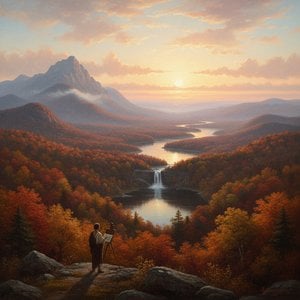
Sublime Krajobrazy: Narodziny Amerykańskiej Tożsamości Artystycznej i Rola Szkoły Hudson River
Odkryj fascynującą historię Szkoły Hudson River i narodziny amerykańskiej tożsamości artystycznej. Poznaj kluczowych artystów, techniki malarskie i inspiracje. Reprodukcje najwyższej jakości na ArtsDot.com!
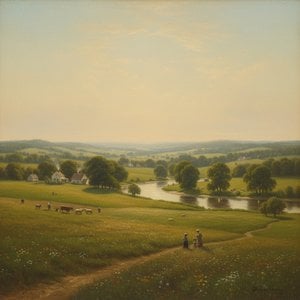
Thomas Worthington Whittredge: Capturing the American Pastoral Ideal with Luminist Light
Explore the luminous landscapes of Thomas Worthington Whittredge, a key figure in the Hudson River School and master of Luminism. Discover his captivating paintings & legacy with ArtsDot.

