


 Zobacz w skali 1:1
 Wyślij
 Udostępnij
 Szczegóły
 Przewodnik

 Pobierz plik obrazu
 Podobne obiekty
 RTG
RTG Pokaz slajdów
 Statystyki
God
 Oil On Canvas
- WallArt
- Hudson River School
 1852
1852- 19th Century
 154.0 x 128.0 cm
 Chrysler Museum of Art
 Czytaj więcej
Giclée / Wydruk artystyczny
Wydruki giclée lub płótna o jakości muzealnej, szybka realizacja i szeroki wybór opcji wykończenia. ( Kup ręcznie malowany obraz Przełącz na wersję cyfrową)




P118B $10

P118H $10

P118W $10

P438Z $10

P508JH $12

P508YH $12

P805H $10

P805Z $10

P919BZ $10

P919G $10

P919XJ $10

P959ZH $10

P968JZ $12

W106C $8

W218G $10

W218JH $8

W218Y $10

W307PJ $10

W316G $10

W316PJ $8

W316Y $10

W398PJ $8

W4111J $10

W500HY $15

W500JH $15

W692G $12

W849H $8

W940BG $15

W953PJ $8




Wybierz spośród naszych standardowych rozmiarów, które zachowują oryginalne proporcje dzieła sztuki.

Możesz wprowadzić własne wymiary, aby dopasować dzieło do konkretnej ramy lub przestrzeni. Jeśli wybrany rozmiar nie będzie odpowiadał proporcjom oryginalnego obrazu, przytniecie dzieło lub rozszerzymy obraz za pomocą odbicia lustrzanego lub jednolitego wypełnienia krawędzi. Przed rozpoczęciem produkcji prześlemy cyfrową wizualizację do Twojej akceptacji.
Prosimy pamiętać, że podgląd na ekranie nie odzwierciedla faktycznego przycinania ani rozszerzania. Tylko wizualizacja dokładnie pokaże końcową kompozycję.
Mimo dostępności niestandardowych rozmiarów, zalecamy wybór wymiaru z listy zdefiniowanej, aby zachować oryginalne proporcje.
Dostawa na cały świat () w ciągu 2 tygodni zamiast standardowych 4/5 tygodni. (26 Wrzesień)

Bezpłatna ekspresowa wysyłka na cały świat

Wysokiej jakości płótno lniane

Pełne ubezpieczenie transportowe

Gwarancja zwrotu należności celnych i podatków importowych

Gwarancja idealnego odwzorowania barw

100-dniowy okres na zwrot dzieła w przypadku wykrycia wad produkcyjnych

Gwarancja 100% zwrotu pieniędzy

Oferta przy zakupie wielu sztuk
 Opcja ze szkłem jest dostępna wyłącznie w rozmiarach poniżej 110 cm

God
Giclée / Wydruk artystyczny
Rozmiar reprodukcji
-


Suma do zapłaty
$ 62
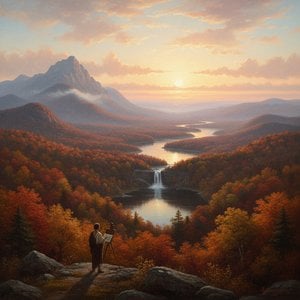
A Divine Encounter in the Catskill Wilderness
In the heart of the mid-19th century, as the American landscape began to capture the collective imagination of a young nation, Asher Brown Durand produced a work of profound spiritual and geological magnitude. "God's Judgment Upon Gog," completed in 1852, is far more than a mere depiction of the Catskill Mountains; it is a monumental dialogue between the earthly and the divine. The canvas presents a breathtaking panorama where the rugged textures of granite monoliths meet the ethereal softness of an approaching storm. At its center stands Gog, a towering presence that serves as both a geological landmark and a symbolic pillar of divine authority. Through his masterful command of scale, Durand invites the viewer to stand amidst the ancient oaks and rushing streams, feeling the weight of the atmosphere as dark clouds part to reveal a glimpse of celestial light.
The painting is a quintessential masterpiece of the Hudson River School, embodying the movement's deep-seated Romantic idealism. During this era, the American wilderness was viewed not just as untamed land, but as a sacred cathedral where the hand of the Creator was visible in every leaf and stone. Durand, transitioning from his early precision as an engraver to the expansive vision of a landscape painter, utilizes a pyramidal composition to instill a sense of eternal stability within the scene. This structural choice anchors the viewer's eye, guiding it from the vulnerable human figures nestled at the base of the mountains up toward the dramatic heavens. The interplay between the terrestrial valley and the celestial heights creates a narrative tension that is both unsettling and deeply peaceful.
The Mastery of Luminism and Atmospheric Light
To behold this work is to witness the pinnacle of Luminist technique. Unlike the fleeting, broken brushstrokes of the later Impressionists, Durand employed a meticulous, almost invisible application of paint to capture the subtle gradations of natural light. This approach allows for an unparalleled sense of clarity and depth, where the air itself feels palpable. The way the twilight glow reflects off the mountain streams and illuminates the moss-draped trees creates an immersive experience, pulling the observer into a state of quiet contemplation. This devotion to atmospheric truth—capturing the precise moment when light pierces through heavy clouds—transforms the landscape into a living, breathing entity.
For the discerning collector or interior designer, this piece offers an unparalleled emotional resonance. It brings a sense of tranquility, grandeur, and historical depth to any space. Whether placed in a library, a formal study, or a grand living area, a high-quality reproduction of this painting serves as a window into a lost era of spiritual reflection. The artwork does not merely decorate a wall; it commands the room, offering a focal point that inspires awe and invites long periods of meditative looking. It is an investment in a piece of American heritage, capturing the very essence of the sublime beauty found within the natural world.
Podobne dzieła


Biografia artysty
A Life Rooted in the American Landscape
Asher Brown Durand, born August 21, 1796, in Maplewood, New Jersey, wasn’t initially destined for a life steeped in paint and canvas. His early years were shaped by the practical world of his father, a watchmaker and silversmith, instilling in him a meticulous attention to detail that would later profoundly influence his artistic approach. This foundation in craftsmanship led to an apprenticeship with engraver Peter Maverick in 1812, a path that initially seemed to define his career. Durand quickly proved himself exceptionally skilled, becoming a partner in the firm and establishing its New York City branch. His reputation as an engraver soared after completing the intricate reproduction of John Trumbull’s *The Declaration of Independence* in 1823 – a feat that cemented his standing within the artistic community. However, beneath the precision of engraving lay a burgeoning passion for capturing the raw beauty of the natural world, a calling that would ultimately lead him to become a pivotal figure in American art.From Engraving to Embracing Nature’s Palette
The transition from meticulous engraver to celebrated landscape painter wasn't immediate. Durand continued his engraving work while simultaneously exploring painting, initially focusing on portraiture and genre scenes. A crucial turning point arrived with the patronage of Luman Reed in the 1830s, who encouraged him to fully embrace his artistic inclinations. Reed’s support allowed Durand to dedicate himself more completely to painting, a pursuit further ignited by a transformative sketching expedition with his close friend, Thomas Cole, in the Adirondacks in 1837. This journey into the untamed wilderness proved pivotal; it was here that Durand truly discovered his calling – to capture the sublime grandeur of the American landscape. He began to spend summers immersed in nature, meticulously documenting the Catskills, Adirondacks, and White Mountains through countless drawings and oil sketches. These studies weren’t merely preparatory exercises but became integral to his artistic process, informing the compositions and details of his finished paintings. Durand's approach was rooted in a deep respect for observation; he believed that an artist should strive to capture nature as accurately as possible, without imposing personal interpretations or embellishments.A Founding Voice of the Hudson River School
Durand’s dedication to landscape painting aligned him with a growing circle of artists who shared a similar vision – a group that would become known as the Hudson River School. He was among its founding members, alongside Cole, and played a vital role in establishing the school’s distinctive aesthetic. The Hudson River School wasn't simply about depicting scenery; it was about imbuing landscapes with emotional resonance and spiritual significance. Durand's work embodies this philosophy, characterized by a meticulous realism combined with a romantic sensibility. He believed in observing nature with unwavering accuracy but also recognized its power to evoke feelings of awe, reverence, and the sublime. His paintings weren’t just representations of places; they were expressions of his deep connection to the American wilderness and a celebration of God's creation. The influence of Cole is particularly evident in Durand’s early works, as he adopted Cole’s emphasis on dramatic lighting, atmospheric perspective, and the depiction of vast, untamed landscapes.Major Achievements and Artistic Style
Durand achieved significant recognition throughout his career, becoming one of the most respected landscape painters of his time. He was elected to the National Academy of Design in 1845 and served as its president from 1845 to 1861, a period during which he played a crucial role in promoting American art and fostering artistic development. His paintings are characterized by their detailed realism, masterful use of light and shadow, and evocative depictions of the American wilderness. Notable works include *The Solitary Oak* (1838), a powerful image of resilience and solitude; *Sketch in the Woods* (1846), showcasing his ability to capture the intricate details of nature; and *Canoes in Rapids* (1853), a dynamic composition that conveys the energy and power of the river. Durand’s style evolved over time, moving from more formal, academic landscapes to looser, more expressive works inspired by the Romantic tradition. He was particularly adept at portraying trees, capturing their textures, forms, and patterns with remarkable precision.Legacy and Enduring Influence
Durand's influence extended beyond his own artistic output. He served as president of the National Academy of Design from 1845 to 1861, using his position to champion American art and nurture emerging talent. He also penned insightful “Letters on Landscape Painting” published in *The Crayon* – a significant art periodical – articulating his artistic principles and advocating for direct observation from nature. His commitment to realism and detailed representation set a high standard for subsequent generations of landscape painters. Works like *Kindred Spirits*, painted in 1849 as a tribute to Thomas Cole, became iconic representations of the Hudson River School aesthetic and continue to resonate with viewers today. The painting’s depiction of Cole and poet William Cullen Bryant amidst a serene woodland scene encapsulates the school's reverence for nature and its belief in the power of art to connect humanity with the divine. Durand’s paintings offer more than just picturesque views; they provide a window into 19th-century America, reflecting its evolving relationship with the natural world and its burgeoning sense of national identity. His legacy endures not only through his captivating canvases but also through his enduring influence on American landscape painting and his unwavering commitment to capturing the beauty and spiritual significance of the land.
Asher Brown Durand
1796 - 1886 , Stany Zjednoczone
Najważniejsze informacje
- Artistic Movement Or Style: Hudson River School
- Artists Or Movements Influenced By This Artist: ['Hudson River School']
- Artists Who Influenced This Artist: ['Thomas Cole']
- Date Of Birth: 21 sierpnia 1796
- Date Of Death: 17 września 1886
- Full Name: Asher Brown Durand
- Nationality: Amerykański
- Notable Artworks:
- Pokrewne dusze
- Krajobraz
- Place Of Birth: Nowy Jork, USA
Zobacz także powiązane artykuły

Robert Spencer: Luminism, Narrative & the American Landscape Tradition
Explore the captivating world of Luminism & the Hudson River School with our expert analysis. Discover the history, artists, and enduring beauty of 19th-century American landscape painting. Find museum-quality reproductions at ArtsDot.

Szkoła Rzeki Hudson: 10 arcydzieł, które ukształtowały pejzaż amerykańskiej sztuki | ArtsDot
Odkryj 10 arcydzieł Szkoły Rzeki Hudson – malarstwo krajobrazowe Cole'a, Churcha i Bierstadta. Poznaj historię artystów i inspiracje romantyzmu amerykańskiego. Reprodukcje obrazów najwyższej jakości na ArtsDot.com! Eksploruj kolekcję online.
Sublime Krajobrazy: Narodziny Amerykańskiej Tożsamości Artystycznej i Rola Szkoły Hudson River
Odkryj fascynującą historię Szkoły Hudson River i narodziny amerykańskiej tożsamości artystycznej. Poznaj kluczowych artystów, techniki malarskie i inspiracje. Reprodukcje najwyższej jakości na ArtsDot.com!

Echo Epoki: Nostalgia i Przemiana w Krajobrazach Hudson River School
Odkryj fascynujący świat Szkoły Hudson River! Poznaj historię, artystów i wpływ tego amerykańskiego ruchu romantycznego na sztukę. Ekskluzywne analizy i inspiracje dla kolekcjonerów.

Asher Brown Durand: Luminism, Landscape & the American Ideal – A Comprehensive Exploration
Explore the life & art of Asher Brown Durand, a founding member of the Hudson River School. Discover his masterful landscapes, Luminist techniques, and lasting impact on American painting. Learn about key works like 'Kindred Spirits' & collecting Durand today.

