

- 38.0 x 50.0 cm


Obraz dostosowuje się do Twoich wyborów: , .
Opis obiektu
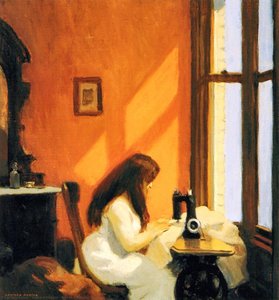
Arthur Garfield Dove’s ‘Hand Sewing Machine’ (1927) – a surreal expressionist mixed-media piece featuring linen & aluminum. Explore this evocative, melancholic work of American Modernism.
 Rozwiń treść
Biografia artysty
Arthur Garfield Dove – pionier amerykańskiego abstrakcjonizmu. Jego obrazy, charakteryzujące się wyrazistymi kolorami i geometrycznymi formami, odważnie odchodzą od tradycyjnej reprezentacji, kształtując nowoczesne sztuki wizualne w USA.
Ręcznie malowana reprodukcja olejowa
Ręcznie malowany obraz olejny na płótnie, wykonany na zamówienie przez naszych artystów w wybranym przez Ciebie wymiarze i oprawie. ( Przełącz na wydania drukowane Przejdź do wersji cyfrowej)
Więcej o tym obrazie
 Podgląd w skali 1:1
 Wyślij jako kartkę
 Udostępnij
 Szczegóły dzieła
 Przewodnik

 Pobierz obraz
 Podobne obiekty
 RTG
RTG Pokaz slajdów
 Pytania i odpowiedzi
 Statystyki
Zamów swój obraz w czterech prostych krokach
Nie spiesz się. Możesz zmienić każdą odpowiedź; cena w Twoim koszyku będzie aktualizowana po każdym wyborze.
1 Pierwszy z czterech kroków
Który rozmiar wybierasz?
Te rozmiary zachowują proporcje oryginalnego obrazu. Rysunek przedstawia wybrany przez Ciebie format na ścianie, nad dwumetrową sofą.
lub podaj własne wymiary
Wybierz spośród naszych standardowych rozmiarów, które zachowują oryginalne proporcje dzieła sztuki.

Wpisz wymaganą szerokość i wysokość, aby obraz pasował do Twojej ramy lub ściany. Ponieważ jest to dzieło malowane ręcznie, w przypadku rozmiaru o innych proporcjach artysta może domalować nieco więcej wokół obrazu lub przyciąć jego fragmenty — wybór należy do Ciebie. Przed rozpoczęciem pracy prześlemy Ci cyfrową wizualizację do zatwierdzenia. Obraz widoczny na tej stronie nie przedstawia rzeczywistego efektu — jedynie wizualizacja oddaje realny rezultat.
2 Drugi z czterech kroków
W jaki sposób przygotować dzieło: w formie tuby, na krosnach czy w ramie?
Poniższe ceny dotyczą rozmiaru wybranego w pierwszym kroku.
Wybierz krawędzie płótna naciągniętego na ramę
Wybierz ramę

Białe krawędzie zł1

rozmyte krawędzie zł1

Przedłużony zł1

P118B zł10

P118H zł10

P118W zł10

P438Z zł10

P508JH zł12

P508YH zł12

P805H zł10

P805Z zł10

P919BZ zł10

P919G zł10

P919XJ zł10

P959ZH zł10

P968JZ zł12

W106C zł8

W218G zł10

W218JH zł8

W218Y zł10

W307PJ zł10

W316G zł10

W316PJ zł8

W316Y zł10

W398PJ zł8

W4111J zł10

W500HY zł15

W500JH zł15

W692G zł12

W849H zł8

W940BG zł15

W953PJ zł8

H24-GOLD zł30

H24-SILVER zł30

H36-GOLD zł45

H36-SILVER zł45
W oprawie
Profil: . Wymiar całkowity w ramie: .
3 Trzeci z czterech kroków
Czy chcieliby Państwo wprowadzić jakieś zmiany w obrazie?
Większość osób odpowiada przecząco. Ponieważ każdy obraz jest tworzony ręcznie, nasz artysta może również dostosować go do Twoich potrzeb.
Po złożeniu zamówienia zespół ArtsDot.com skontaktuje się z klientem drogą mailową w celu uzyskania instrukcji i prześle podgląd projektu
4 Krok czwarty z czterech
Kilka opcji wykończenia
Wszystkie są opcjonalne. Wybrane już odpowiedzi nie wiążą się z żadnymi dodatkowymi kosztami.
Kto jest autorem?
Dostawa na całym świecie () w ciągu 3–4 tygodni zamiast standardowych 5 tygodni. (7 Listopad). Bez kompromisów w kwestii jakości.
Tabliczka informacyjna, jak w muzeum?
Szczegóły grawerowanej brązowej tabliczki
This elegant plaque features the artist's name and the title of the artwork, finely engraved for a timeless presentation.
It is made from bronze with a refined, elegant finish. The text is precisely laser-engraved for a sharp and permanent result. Measuring 9x2 cm, the plaque is compact yet easy to read. It's built to be durable and scratch-resistant, offering a professional, museum-quality look. Mounting is simple thanks to the included adhesive backing.
Szczegóły przezroczystej tabliczki akrylowej
The plaque includes essential engraved details such as the artist's name, the title of the artwork, the date it was created, the type of media used-like oil on canvas or watercolor-a brief description of the piece, and a QR code that links to the complete artwork information.
It is crafted from clear acrylic, offering a sleek, modern appearance. The text is UV-engraved in black to ensure strong visual contrast. With a size of 10x15 cm, it ensures optimal readability. It comes equipped with two metal hooks for secure wall mounting. The plaque is designed to be weather-resistant, making it suitable for various environments, and it includes interactive features that work seamlessly with smartphone scanning.
Szczegóły czarnej tabliczki akrylowej
This elegant plaque includes engraved information such as the artist's name, the title of the artwork, the date it was created, the type of media used (like oil on canvas or watercolor), a short description of the artwork, and a QR code for quick access to more information.
The plaque itself is made from refined black acrylic with a premium finish. The text is laser-engraved in white for high contrast and readability. Its size is 10x15 cm, designed to be easy to read. It comes with two metal hooks for professional mounting. The design is sleek and fits any interior style. It is also weather-resistant and durable, with built-in digital integration for mobile compatibility.
Werniks ochronny?
Kiedy potrzebujesz dostawy?
✓ Sprawdź i zamów
Twoje dzieło, dokładnie tak, jak zamówiłeś

Hand Sewing Machine
Technika reprodukcji
Wymiary reprodukcji
-

Wybitny mistrz artystyczny
Większa szczegółowość, finezja i dodatkowy czas na realizację
-

Opcje oprawy reprodukcji
-
-
W przypadku dzieł sztuki lub reprodukcji, których którykolwiek z boków przekracza 105 cm (około 41 cali), rama zostanie wysłana w formie zestawu do samodzielnego montażu. Metoda ta zapewnia bezpieczną dostawę i zapobiega uszkodzeniom podczas transportu.
Wymagany profesjonalny montaż – nie jest to produkt typu DIY.
Zestaw musi zostać złożony, a płótno naciągnięte przez doświadczonego profesjonalnego ramiarza, przy użyciu kleju do drewna (brak w zestawie), kleszczy do naciągania płótna oraz ścisków, które utrzymają krosna w równej pozycji podczas schnięcia kleju. Nieprawidłowy montaż lub nierównomierne napięcie płótna może trwale uszkodzić dzieło sztuki i nie podlega naszej gwarancji.
 W przypadku dzieł sztuki lub reprodukcji, których którykolwiek z boków przekracza 105 cm (około 41 cali), rama zostanie wysłana w formie zestawu do samodzielnego montażu. Metoda ta zapewnia bezpieczną dostawę i zapobiega uszkodzeniom podczas transportu.
W zestawie znajdują się wszystkie listwy z litego drewna, precyzyjnie docięte do wymiarów.
Montaż odbywa się przy użyciu dołączonych wkrętów oraz kleju do drewna do łączenia narożników, którego zestaw nie zawiera i który musi zostać dostarczony przez ramiarza.
Wymagane są profesjonalne narzędzia, których nie ma w zestawie: kleszcze do naciągania płótna (napinacz) oraz zaciski, które pozwolą utrzymać listwy w równej pozycji podczas schnięcia kleju.
Ważne:
Do połączenia narożników niezbędny jest klej do drewna, listwy należy unieruchomić za pomocą ścisków do momentu całkowitego wyschnięcia kleju, a naciągnięcie płótna na złożoną ramę wymaga użycia kleszczy do naciągania płótna. Żaden z tych elementów nie jest dołączony do zestawu. Przed zamówieniem tego rozmiaru zalecamy konsultację z doświadczonym ramiarzem.

Etykieta obiektu
-
-

Lakier ochronny
Lakier z połyskiem (pogłębia kolory, chroni przed światłem i wilgocią)
-

Personalizacja dzieła
Przykłady możliwości personalizacji: zastąp twarz zdjęciem klienta; dodaj zwierzę domowe (np. zamień kota na psa); umieść ukrytą wiadomość w tle; zmień krajobraz lub elementy tła.
-

Ekspresowa
Dostawa na cały świat () w ciągu 3–4 tygodni zamiast standardowych 5 tygodni. (7 Listopad). Bez kompromisów w kwestii jakości.
-
Przesyłka ekspresowa
Dostawa na cały świat () w ciągu 5 tygodni. (14 Listopad).
W cenie
Cena całkowita
zł 1029
Opcja ze szkłem jest dostępna wyłącznie w rozmiarach poniżej 110 cm
W każdym zamówieniu
- Bezpłatna ekspresowa wysyłka na cały świat
- Wysokiej jakości płótno lniane
- Pełne ubezpieczenie przesyłki
- Gwarancja zwrotu należności celnych i podatków importowych
- Gwarancja wiernego odwzorowania kolorów
- 100-dniowa polityka zwrotów (tylko w przypadku wad)
- Gwarancja 100% zwrotu pieniędzy
- Zniżka przy zakupie wielu sztuk


Pytania i odpowiedzi
Jaki jest format dzieła "Hand Sewing Machine"?
„Hand Sewing Machine” – Arthur Garfield Dove to kompozycja w formacie Landscape. Warto sprawdzić proporcje przed wyborem rozmiaru wydruku.
Czy kolory w „Hand Sewing Machine” – Arthur Garfield Dove są nasycone czy stonowane?
Paleta dzieła "Hand Sewing Machine" charakteryzuje się Muted nasyceniem kolorów.
Na którym etapie kariery Arthur Garfield Dove znajduje się dzieło „Hand Sewing Machine”, biorąc pod uwagę jego datę powstania?
Data powstania dzieła (1927) sytuuje "Hand Sewing Machine" w 1920s Art Deco rozwoju twórczości Arthur Garfield Dove.
Podobne dzieła


Arthur Garfield Dove
1880 - 1946, Stany Zjednoczone
Biografia artysty
A Pioneer of American Abstraction: The Life and Art of Arthur Garfield Dove
Arthur Garfield Dove, born in 1880 in Canandaigua, New York, occupies a pivotal position in the narrative of American modern art. He wasn’t merely an artist who embraced abstraction; he was arguably its first true champion on American soil, forging a path away from representational painting and towards a uniquely personal visual language. His very name—Arthur Garfield, bestowed upon him by parents captivated by the political fervor of the 1880 presidential election—hints at a life lived amidst shifting currents and bold new directions. Dove’s early years were steeped in privilege, yet his artistic inclinations set him apart from expectations. A childhood filled with piano lessons, baseball, and painting foreshadowed a multifaceted creative spirit that would ultimately reject conventional boundaries. After studying at Hobart and Cornell Universities, he initially pursued commercial illustration in New York City, a pragmatic choice that nonetheless provided valuable experience while fueling an underlying desire for more profound artistic expression.From Illustration to Innovation: The European Awakening
The turning point in Dove’s artistic journey arrived with his move to Paris in 1907. Immersed in the vibrant atmosphere of the European art capital, he encountered the burgeoning modernist movements that would irrevocably shape his aesthetic vision. He befriended Alfred Henry Maurer, another American expatriate artist experimenting with radical new styles, and was profoundly influenced by the Fauvist works of Henri Matisse. The bold colors and expressive brushwork of Matisse liberated Dove from academic constraints, encouraging him to explore the emotional power of pure form and color. Exhibiting at the Salon d’Automne in 1908 and 1909, he began to develop a style that moved away from direct representation towards an increasingly subjective interpretation of nature. This period wasn't simply about adopting new techniques; it was about discovering a personal artistic voice—a quest for authenticity that would define his career. He sought not to *depict* the world but to convey its underlying essence, its emotional resonance. Dove’s early work during this time shows an interest in capturing the feeling of light and color, rather than precise representation.Extraction and Essence: Defining an American Abstract Style
Upon returning to America, Dove embarked on a period of intense experimentation, developing what he termed “extraction.” This wasn’t about simply simplifying forms; it was a deliberate process of distilling the fundamental elements of a scene—the shapes, colors, and rhythms—to reveal its underlying structure. He worked across a diverse range of media, often combining them in unconventional ways: oil, tempera, watercolor, pastels, even incorporating materials like wood and fabric into his compositions. His paintings weren’t merely abstract; they were deeply rooted in the natural world, reflecting his lifelong fascination with landscapes, plants, and marine life. Works like *Me and the Moon* (1937) exemplify this approach—a lyrical composition that evokes a sense of vastness and tranquility through abstracted forms and luminous colors. He wasn’t interested in photographic realism; he aimed to capture the feeling of being immersed in nature, the sensation of light and air, the subtle shifts in mood and atmosphere. His technique often involved layering paints, creating textured surfaces that added depth and complexity to his compositions. Dove's process was influenced by the writings of Henri Bergson, who emphasized a mystical understanding of the world, which he sought to translate into visual form.Collaboration and Legacy: A Champion of Modernism
Dove’s artistic development was significantly shaped by his relationship with Alfred Stieglitz, the influential photographer and gallery owner who championed modern art in America. Stieglitz provided Dove with crucial exposure, hosting his first solo exhibition at the 291 gallery in 1912—a landmark event that marked a turning point in American art history. Through Stieglitz’s support, Dove gained recognition and connected with other progressive artists and collectors. The patronage of Duncan Phillips, founder of the Phillips Collection, was also instrumental to Dove's career, providing financial stability and critical encouragement during challenging times. Despite facing resistance from a public largely unfamiliar with abstract art, Dove remained steadfast in his artistic vision. His influence extended beyond his own paintings; he inspired a generation of American artists, including Georgia O’Keeffe, who acknowledged his profound impact on her work. Dove's commitment to abstraction and his willingness to challenge conventional notions of representation made him a key figure in the development of modern art in America.A Lasting Impact: The Enduring Relevance of Arthur Dove
Arthur Garfield Dove died in 1946, leaving behind a body of work that continues to resonate with audiences today. His pioneering spirit and unwavering commitment to artistic innovation cemented his place as a central figure in the development of American modernism. He wasn’t simply an imitator of European trends; he forged a uniquely American abstract style—one that was deeply connected to the natural world, infused with emotional intensity, and characterized by a remarkable sense of freedom and experimentation. His paintings can be found in major museums around the world, serving as a testament to his enduring legacy. Dove’s work reminds us that true artistic expression requires courage, vision, and an unwavering belief in the power of abstraction to reveal deeper truths about ourselves and the world around us. He dared to look beyond appearances, to extract the essence of things, and to create something entirely new—a visual language that continues to inspire and challenge us today.Powiązane artykuły

Unlocking Emotion: A Beginner's Guide to the Raw Power of Symbolic Expressionism Art
Discover the raw emotion of Symbolic Expressionism. Our expert guide explores how masters like Munch use color and form to convey inner feelings, offering inspiration for collectors looking to bring powerful, soulful art into their modern homes.

Ekspresjonizm: Surowa Emocja i Trwały Wpływ na Sztukę XX Wieku
Odkryj fascynujący świat ekspresjonizmu! Analiza historii, charakterystyki i wpływu tego przełomowego ruchu artystycznego. Poznaj arcydzieła Muncha, van Gogha i Kirchnera na ArtsDot.com.
10 Arcydzieł Kubizmu Ekspresjonistycznego, które Zdefiniowały Sztukę | ArtsDot
Odkryj 10 arcydzieł kubizmu ekspresjonistycznego! Poznaj historię Picasso, Braque'a i innych mistrzów. Inspiracje wnętrzarskie i reprodukcje obrazów najwyższej jakości na ArtsDot.com – sztuka dla Twojego domu.