

- 122.0 x 150.0 cm


The picture follows your choices: , .
Opis obiektu
Capturing a moment of frozen, statue-like stillness, Antonio Donghi's Neoclassical masterpiece The Baptism portrays a family with hauntingly neutral expressions, inviting you to explore this serene work of art.
 Rozwiń treść
Biografia artysty
Discover Antonio Donghi's neoclassical paintings! Explore his refined style, populist subjects & Italian heritage. Learn about this influential 20th-century artist.
Ręcznie malowana reprodukcja olejowa
Ręcznie malowany obraz olejny na płótnie, wykonany na zamówienie przez naszych artystów w wybranym przez Ciebie wymiarze i oprawie. ( Przełącz na wydania drukowane Przejdź do wersji cyfrowej)
Ten utwór podlega ochronie prawem autorskim
Dzieło sztuki prezentowane na tej stronie podlega ochronie prawem autorskim, co oznacza, że nie mamy prawa do tworzenia ani sprzedaży jego identycznej reprodukcji. Ochrona ta jest egzekwowana na mocy umów międzynarodowych, takich jak Konwencja berneńska oraz przez przepisy prawa krajowego, w tym te określone w Prawo autorskie USA – Tytuł 17.
Jako pełną szacunku i legalną alternatywę oferujemy personalizowane, malowane ręcznie dzieła sztuki inspirowane oryginałem. Nasi wykwalifikowani i profesjonalni artyści starannie analizują styl, nastrój oraz artystyczną esencję pierwowzoru, aby stworzyć nowe, unikalne dzieło, które przywołuje te same emocje – pozostając jednocześnie w pełni oryginalną kreacją.
Metoda ta jest w pełni zgodna z przepisami prawa autorskiego, ponieważ nie polega na kopiowaniu ani powielaniu chronionego dzieła. Stanowi ona kreatywną reinterpretację – nowy obraz, który czerpie inspirację z oryginału, ale nie jest z nim tożsamy.
More about this painting
 Podgląd w skali 1:1
 Wyślij jako kartkę
 Udostępnij
 Szczegóły dzieła
 Przewodnik

 Pobierz obraz
 Podobne obiekty
 RTG
RTG Pokaz slajdów
 Q&A
Q&A Statystyki
Order your painting in four simple steps
Take your time. You can change any answer; the price in your order card follows each choice.
1 Step one of four
Which size would you like?
These sizes keep the proportions of the original painting. The drawing shows your choice on a wall, above a two-metre sofa.
Or give your own measurements
Wybierz spośród naszych standardowych rozmiarów, które zachowują oryginalne proporcje dzieła sztuki.

Wpisz wymaganą szerokość i wysokość, aby obraz pasował do Twojej ramy lub ściany. Ponieważ jest to dzieło malowane ręcznie, w przypadku rozmiaru o innych proporcjach artysta może domalować nieco więcej wokół obrazu lub przyciąć jego fragmenty — wybór należy do Ciebie. Przed rozpoczęciem pracy prześlemy Ci cyfrową wizualizację do zatwierdzenia. Obraz widoczny na tej stronie nie przedstawia rzeczywistego efektu — jedynie wizualizacja oddaje realny rezultat.
2 Step two of four
How should it be prepared: rolled, stretched or framed?
The prices below are for the size you chose in step one.
Choose the edges of the stretched canvas
Choose your frame

White zł1

Blurside zł1

Extended zł1

P118B zł10

P118H zł10

P118W zł10

P438Z zł10

P508JH zł12

P508YH zł12

P805H zł10

P805Z zł10

P919BZ zł10

P919G zł10

P919XJ zł10

P959ZH zł10

P968JZ zł12

W106C zł8

W218G zł10

W218JH zł8

W218Y zł10

W307PJ zł10

W316G zł10

W316PJ zł8

W316Y zł10

W398PJ zł8

W4111J zł10

W500HY zł15

W500JH zł15

W692G zł12

W849H zł8

W940BG zł15

W953PJ zł8

H24-GOLD zł30

H24-SILVER zł30

H36-GOLD zł45

H36-SILVER zł45
W oprawie
Moulding: . Overall size with the frame: .
3 Step three of four
Would you like anything changed in the painting?
Most people answer no. Because each painting is made by hand, our artist can also adapt it for you.
After order, ArtsDot.com team will email client for instructions and provide a mockup preview
4 Step four of four
A few finishing options
All of them are optional. The answers already selected cost nothing extra.
Who paints it?
Dostawa na całym świecie () w ciągu 3–4 tygodni zamiast standardowych 5 tygodni. (3 Listopad). Bez kompromisów w kwestii jakości.
A nameplate, as in a museum?
Szczegóły grawerowanej brązowej tabliczki
This elegant plaque features the artist's name and the title of the artwork, finely engraved for a timeless presentation.
It is made from bronze with a refined, elegant finish. The text is precisely laser-engraved for a sharp and permanent result. Measuring 9x2 cm, the plaque is compact yet easy to read. It's built to be durable and scratch-resistant, offering a professional, museum-quality look. Mounting is simple thanks to the included adhesive backing.
Szczegóły przezroczystej tabliczki akrylowej
The plaque includes essential engraved details such as the artist's name, the title of the artwork, the date it was created, the type of media used-like oil on canvas or watercolor-a brief description of the piece, and a QR code that links to the complete artwork information.
It is crafted from clear acrylic, offering a sleek, modern appearance. The text is UV-engraved in black to ensure strong visual contrast. With a size of 10x15 cm, it ensures optimal readability. It comes equipped with two metal hooks for secure wall mounting. The plaque is designed to be weather-resistant, making it suitable for various environments, and it includes interactive features that work seamlessly with smartphone scanning.
Szczegóły czarnej tabliczki akrylowej
This elegant plaque includes engraved information such as the artist's name, the title of the artwork, the date it was created, the type of media used (like oil on canvas or watercolor), a short description of the artwork, and a QR code for quick access to more information.
The plaque itself is made from refined black acrylic with a premium finish. The text is laser-engraved in white for high contrast and readability. Its size is 10x15 cm, designed to be easy to read. It comes with two metal hooks for professional mounting. The design is sleek and fits any interior style. It is also weather-resistant and durable, with built-in digital integration for mobile compatibility.
A protective varnish?
When do you need it?
✓ Check and order
Your painting, as you ordered it

The Baptism
Technika reprodukcji
Wymiary reprodukcji
-

Wybitny mistrz artystyczny
Większa szczegółowość, finezja i dodatkowy czas na realizację
-

Opcje oprawy reprodukcji
-
-
W przypadku dzieł sztuki lub reprodukcji, których którykolwiek z boków przekracza 105 cm (około 41 cali), rama zostanie wysłana w formie zestawu do samodzielnego montażu. Metoda ta zapewnia bezpieczną dostawę i zapobiega uszkodzeniom podczas transportu.
Wymagany profesjonalny montaż – nie jest to produkt typu DIY.
Zestaw musi zostać złożony, a płótno naciągnięte przez doświadczonego profesjonalnego ramiarza, przy użyciu kleju do drewna (brak w zestawie), kleszczy do naciągania płótna oraz ścisków, które utrzymają krosna w równej pozycji podczas schnięcia kleju. Nieprawidłowy montaż lub nierównomierne napięcie płótna może trwale uszkodzić dzieło sztuki i nie podlega naszej gwarancji.
 W przypadku dzieł sztuki lub reprodukcji, których którykolwiek z boków przekracza 105 cm (około 41 cali), rama zostanie wysłana w formie zestawu do samodzielnego montażu. Metoda ta zapewnia bezpieczną dostawę i zapobiega uszkodzeniom podczas transportu.
W zestawie znajdują się wszystkie listwy z litego drewna, precyzyjnie docięte do wymiarów.
Montaż odbywa się przy użyciu dołączonych wkrętów oraz kleju do drewna do łączenia narożników, którego zestaw nie zawiera i który musi zostać dostarczony przez ramiarza.
Wymagane są profesjonalne narzędzia, których nie ma w zestawie: kleszcze do naciągania płótna (napinacz) oraz zaciski, które pozwolą utrzymać listwy w równej pozycji podczas schnięcia kleju.
Ważne:
Do połączenia narożników niezbędny jest klej do drewna, listwy należy unieruchomić za pomocą ścisków do momentu całkowitego wyschnięcia kleju, a naciągnięcie płótna na złożoną ramę wymaga użycia kleszczy do naciągania płótna. Żaden z tych elementów nie jest dołączony do zestawu. Przed zamówieniem tego rozmiaru zalecamy konsultację z doświadczonym ramiarzem.

Etykieta obiektu
-
-

Lakier ochronny
Lakier z połyskiem (pogłębia kolory, chroni przed światłem i wilgocią)
-

Personalizacja dzieła
Przykłady możliwości personalizacji: zastąp twarz zdjęciem klienta; dodaj zwierzę domowe (np. zamień kota na psa); umieść ukrytą wiadomość w tle; zmień krajobraz lub elementy tła.
-

Ekspresowa
Dostawa na cały świat () w ciągu 3–4 tygodni zamiast standardowych 5 tygodni. (3 Listopad). Bez kompromisów w kwestii jakości.
-
Przesyłka ekspresowa
Dostawa na cały świat () w ciągu 5 tygodni. (10 Listopad).
W cenie
Cena całkowita
zł 1024
Opcja ze szkłem jest dostępna wyłącznie w rozmiarach poniżej 110 cm
Included with every order
- Bezpłatna ekspresowa wysyłka na cały świat
- Wysokiej jakości płótno lniane
- Pełne ubezpieczenie przesyłki
- Gwarancja zwrotu należności celnych i podatków importowych
- Gwarancja wiernego odwzorowania kolorów
- 100-dniowa polityka zwrotów (tylko w przypadku wad)
- Gwarancja 100% zwrotu pieniędzy
- Zniżka przy zakupie wielu sztuk


A Moment Frozen in Time
In The Baptism, Antonio Donghi achieves something truly extraordinary: he captures a fragment of middle-class life and suspends it in a state of eternal, quietude. The painting presents a family scene featuring three central figures, where a man in a suit and tie and a woman cradling a baby are set within a space that feels simultaneously real and profoundly abstract. There is a haunting quality to the composition; the individuals appear almost as immobile wax statues on a podium, their expressions neutral and strangely detached from the joyous occasion they are celebrating. This sense of emotional distance creates a tension between the sacred nature of the ritual and the stoic, almost frozen presence of the participants, as if they are waiting for a ritual photograph that will never quite capture their true essence.
< p>The atmosphere is charged with an unreal lack of familiarity, driven by an adamant painting style and a fixed, absorbed light that illuminates the scene with surgical precision. Donghi’s mastery lies in his ability to use light not just to reveal form, but to create a sense of mystery. The figures are set in a minimal environment that strips away the distractions of the modern world, leaving only the essential elements of the event. This deliberate reduction of detail allows the viewer to focus on the subtle interplay of texture and shadow, making the painting feel less like a mere depiction of an event and more like a dreamlike meditation on existence itself.The Artistry of Neoclassical Precision
Technically, The Baptism is a triumph of the Neoclassical movement, showcasing Donghi’s refined ability to marry meticulous detail with a powerful, structured composition. His attention to the clothing of the subjects—a skill perhaps inherited from his father, a fabric dealer—serves a deeper purpose than mere ornamentation; it functions as a way to socially characterize the roles of those portrayed. Every fold in the fabric and every sharp line in the attire contributes to the painting's sense of social order and permanence. The spatial clarity is remarkable, with each element occupying its place with absolute certainty, reminiscent of the architectural stability found in the works of Renaissance masters like Piero della Francesca.
For the discerning collector or interior designer, this work offers a unique aesthetic value. It possesses a Magical Realism that avoids the chaotic energy of much modern art, offering instead a sense of profound, meditative calm. The painting’s ability to evoke both the mundane and the monumental makes it a captivating centerpiece for any sophisticated space. Whether one is drawn to its smooth, polished surfaces or its enigmatic, quiet dignity, The Baptism stands as a testament to the power of stillness. It invites the observer to pause, to look closely, and to find beauty in the silent resonance of a single, captured moment.
Pytania i odpowiedzi
Z której epoki pochodzi "The Baptism"?
"The Baptism" pochodzi z epoki Modern.
W jaki sposób "The Baptism" balansuje światło i cień?
Jasność dzieła „The Baptism” – Antonio Donghi wynosi shadow, przy luminancji na poziomie Dark.
Jaki poziom kontrastu prezentuje „The Baptism” – Antonio Donghi?
Poziom kontrastu dzieła „The Baptism” – Antonio Donghi wynosi Balanced.
Podobne dzieła


Antonio Donghi
1897 - 1963, Włochy
Biografia artysty
Antonio Donghi: The Quiet Master of Neoclassicism
Antonio Donghi (March 16, 1897 – July 16, 1963) was an Italian painter who achieved renown for his meticulous depictions of everyday life and landscapes rendered in a distinctly neoclassical style. Born in Rome, he embarked on a formative artistic journey at the Instituto di Belle Arti before serving during World War I, experiences that profoundly shaped his worldview and artistic sensibilities. Donghi’s distinctive approach—characterized by serene compositions, precise spatial representation, and an understated elegance—established him as one of Italy's foremost figures within the neoclassical movement that flourished in the 1920s.Early Life and Artistic Training
Donghi’s formal education began at the Instituto di Belle Arti in Rome where he honed his skills in drawing and painting under influential instructors. This foundational training instilled a disciplined technique and an appreciation for classical ideals—traits that would permeate throughout his oeuvre. He absorbed inspiration from masters like Piero della Francesca and Henri Rousseau, cultivating a sensitivity to form and color that would become hallmarks of his later work. These formative years nurtured a profound understanding of artistic principles – a cornerstone of Donghi’s enduring legacy.The Neoclassical Movement and Artistic Style
Donghi’s artistic career gained momentum during the neoclassical movement, which sought to revive the grandeur and clarity of antiquity while retaining a modern sensibility. Critics noted striking parallels between Donghi's paintings and those of Seurat, praising his ability to capture subtle nuances of emotion and atmosphere—a characteristic that distinguished him from many of his contemporaries. His technique was remarkably consistent: he favored meticulous brushwork, achieving remarkable spatial depth and tonal gradation. Donghi’s subjects often revolved around scenes of rural life – laundresses, circus performers, musicians – depicted with a quiet dignity and understated realism. Notably, Donghi's still lifes—particularly those featuring vases of flowers—were imbued with the serene symmetry of naive art, reflecting his fascination with simplicity and natural beauty. He skillfully blended classical ideals with contemporary observation, creating images that resonated deeply with viewers.Recognition and Awards
Donghi’s artistic talent garnered considerable acclaim during his lifetime. He secured First Prize at an International Exhibit held at Carnegie Institute in Pittsburgh in 1927, cementing his reputation as a significant contributor to the Italian art scene. This recognition propelled him into the spotlight of European avant-garde circles and solidified his position within the burgeoning magic realism trend championed by Franz Roh. Donghi’s unwavering dedication to artistic excellence ensured that he remained active throughout his career, consistently exhibiting his work and engaging with fellow artists.Later Years and Legacy
Donghi's artistic focus shifted towards landscapes in his later years, where he continued to explore linear patterns and tonal harmonies—techniques honed during his initial training. Although Donghi’s prominence waned somewhat after World War II, he persevered in pursuing his craft until his death in Rome in 1963. His paintings reside primarily in Italian collections, notably the Museo di Roma, where they serve as enduring reminders of a masterful artist who captured the essence of both tradition and modernity. Donghi’s legacy resides in his ability to convey profound emotion through restrained visual language—a testament to the power of quiet contemplation and unwavering artistic conviction. Explore Antonio Donghi's page at ArtsDot to learn more about his life and work.Powiązane artykuły

The Enduring Legacy of Family Portraiture: A Historical & Artistic Exploration
Explore the rich history of family portraiture with ArtsDot. Discover artistic styles, symbolism & collecting insights. Commission a custom oil painting or appraise your existing artwork today!

Raphael: 25 Arcydzieł Mistrza Renesansu - Obrazy i Dekoracje ArtsDot.com
Odkryj 25 arcydzieł Raphaela – od Madonn po freski Watykanu. Poznaj historię, technikę i piękno renesansowego malarstwa. Reprodukcje obrazów najwyższej jakości na ArtsDot.com. Eksploruj kolekcję online!
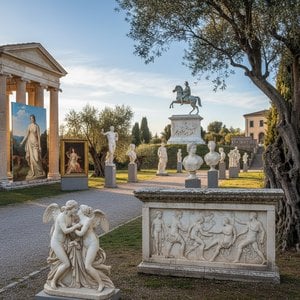
Neoklasycyzm: 10 Arcydzieł, Które Zdefiniowały Epokę | ArtsDot.com
Odkryj 10 arcydzieł neoklasycyzmu! Poznaj historie Davida, Ingresa i Canovy. Malarstwo i rzeźba pełne harmonii i elegancji. Reprodukcje najwyższej jakości na ArtsDot.com – inspiracje dla Twojego wnętrza. Eksploruj kolekcję online!