


The picture follows your choices: , .
Opis obiektu
Marvel at Antonio Canova's 'Venus and Mars,' a neoclassical sculpture celebrating peace & harmony. This iconic marble masterpiece, commissioned by the Prince Regent, embodies love and war’s union.
 Rozwiń treść
Biografia artysty
Antonio Canova – wybitny rzeźbiarz klasycyzmu, znany z arcydzieł takich jak "Wenus" i "Cupid i Psyche". Jego prace charakteryzują elegancja, idealizacja i inspiracja starożytną Grecją i Rzymem.
Ręcznie malowana reprodukcja olejowa
Ręcznie malowany obraz olejny na płótnie, wykonany na zamówienie przez naszych artystów w wybranym przez Ciebie wymiarze i oprawie. ( Przełącz na wydania drukowane Przejdź do wersji cyfrowej)
More about this painting
 Wyślij jako kartkę
 Udostępnij
 Szczegóły dzieła
 Przewodnik

 Pobierz obraz
 Podobne obiekty
 Pokaz slajdów
 Q&A
Q&A Statystyki
Order your painting in four simple steps
Take your time. You can change any answer; the price in your order card follows each choice.
1 Step one of four
Which size would you like?
These sizes keep the proportions of the original painting. The drawing shows your choice on a wall, above a two-metre sofa.
Or give your own measurements
Wybierz spośród naszych standardowych rozmiarów, które zachowują oryginalne proporcje dzieła sztuki.

Wpisz wymaganą szerokość i wysokość, aby obraz pasował do Twojej ramy lub ściany. Ponieważ jest to dzieło malowane ręcznie, w przypadku rozmiaru o innych proporcjach artysta może domalować nieco więcej wokół obrazu lub przyciąć jego fragmenty — wybór należy do Ciebie. Przed rozpoczęciem pracy prześlemy Ci cyfrową wizualizację do zatwierdzenia. Obraz widoczny na tej stronie nie przedstawia rzeczywistego efektu — jedynie wizualizacja oddaje realny rezultat.
2 Step two of four
How should it be prepared: rolled, stretched or framed?
The prices below are for the size you chose in step one.
Choose the edges of the stretched canvas
Choose your frame

White zł1

Blurside zł1

Extended zł1

P118B zł10

P118H zł10

P118W zł10

P438Z zł10

P508JH zł12

P508YH zł12

P805H zł10

P805Z zł10

P919BZ zł10

P919G zł10

P919XJ zł10

P959ZH zł10

P968JZ zł12

W106C zł8

W218G zł10

W218JH zł8

W218Y zł10

W307PJ zł10

W316G zł10

W316PJ zł8

W316Y zł10

W398PJ zł8

W4111J zł10

W500HY zł15

W500JH zł15

W692G zł12

W849H zł8

W940BG zł15

W953PJ zł8

H24-GOLD zł30

H24-SILVER zł30

H36-GOLD zł45

H36-SILVER zł45
W oprawie
Moulding: . Overall size with the frame: .
3 Step three of four
Would you like anything changed in the painting?
Most people answer no. Because each painting is made by hand, our artist can also adapt it for you.
After order, ArtsDot.com team will email client for instructions and provide a mockup preview
4 Step four of four
A few finishing options
All of them are optional. The answers already selected cost nothing extra.
Who paints it?
Dostawa na całym świecie () w ciągu 3–4 tygodni zamiast standardowych 5 tygodni. (2 Listopad). Bez kompromisów w kwestii jakości.
A nameplate, as in a museum?
Szczegóły grawerowanej brązowej tabliczki
This elegant plaque features the artist's name and the title of the artwork, finely engraved for a timeless presentation.
It is made from bronze with a refined, elegant finish. The text is precisely laser-engraved for a sharp and permanent result. Measuring 9x2 cm, the plaque is compact yet easy to read. It's built to be durable and scratch-resistant, offering a professional, museum-quality look. Mounting is simple thanks to the included adhesive backing.
Szczegóły przezroczystej tabliczki akrylowej
The plaque includes essential engraved details such as the artist's name, the title of the artwork, the date it was created, the type of media used-like oil on canvas or watercolor-a brief description of the piece, and a QR code that links to the complete artwork information.
It is crafted from clear acrylic, offering a sleek, modern appearance. The text is UV-engraved in black to ensure strong visual contrast. With a size of 10x15 cm, it ensures optimal readability. It comes equipped with two metal hooks for secure wall mounting. The plaque is designed to be weather-resistant, making it suitable for various environments, and it includes interactive features that work seamlessly with smartphone scanning.
Szczegóły czarnej tabliczki akrylowej
This elegant plaque includes engraved information such as the artist's name, the title of the artwork, the date it was created, the type of media used (like oil on canvas or watercolor), a short description of the artwork, and a QR code for quick access to more information.
The plaque itself is made from refined black acrylic with a premium finish. The text is laser-engraved in white for high contrast and readability. Its size is 10x15 cm, designed to be easy to read. It comes with two metal hooks for professional mounting. The design is sleek and fits any interior style. It is also weather-resistant and durable, with built-in digital integration for mobile compatibility.
A protective varnish?
When do you need it?
✓ Check and order
Your painting, as you ordered it

Venus and Mars
Technika reprodukcji
Wymiary reprodukcji
-

Wybitny mistrz artystyczny
Większa szczegółowość, finezja i dodatkowy czas na realizację
-

Opcje oprawy reprodukcji
-
-
W przypadku dzieł sztuki lub reprodukcji, których którykolwiek z boków przekracza 105 cm (około 41 cali), rama zostanie wysłana w formie zestawu do samodzielnego montażu. Metoda ta zapewnia bezpieczną dostawę i zapobiega uszkodzeniom podczas transportu.
Wymagany profesjonalny montaż – nie jest to produkt typu DIY.
Zestaw musi zostać złożony, a płótno naciągnięte przez doświadczonego profesjonalnego ramiarza, przy użyciu kleju do drewna (brak w zestawie), kleszczy do naciągania płótna oraz ścisków, które utrzymają krosna w równej pozycji podczas schnięcia kleju. Nieprawidłowy montaż lub nierównomierne napięcie płótna może trwale uszkodzić dzieło sztuki i nie podlega naszej gwarancji.
 W przypadku dzieł sztuki lub reprodukcji, których którykolwiek z boków przekracza 105 cm (około 41 cali), rama zostanie wysłana w formie zestawu do samodzielnego montażu. Metoda ta zapewnia bezpieczną dostawę i zapobiega uszkodzeniom podczas transportu.
W zestawie znajdują się wszystkie listwy z litego drewna, precyzyjnie docięte do wymiarów.
Montaż odbywa się przy użyciu dołączonych wkrętów oraz kleju do drewna do łączenia narożników, którego zestaw nie zawiera i który musi zostać dostarczony przez ramiarza.
Wymagane są profesjonalne narzędzia, których nie ma w zestawie: kleszcze do naciągania płótna (napinacz) oraz zaciski, które pozwolą utrzymać listwy w równej pozycji podczas schnięcia kleju.
Ważne:
Do połączenia narożników niezbędny jest klej do drewna, listwy należy unieruchomić za pomocą ścisków do momentu całkowitego wyschnięcia kleju, a naciągnięcie płótna na złożoną ramę wymaga użycia kleszczy do naciągania płótna. Żaden z tych elementów nie jest dołączony do zestawu. Przed zamówieniem tego rozmiaru zalecamy konsultację z doświadczonym ramiarzem.

Etykieta obiektu
-
-

Lakier ochronny
Lakier z połyskiem (pogłębia kolory, chroni przed światłem i wilgocią)
-

Personalizacja dzieła
Przykłady możliwości personalizacji: zastąp twarz zdjęciem klienta; dodaj zwierzę domowe (np. zamień kota na psa); umieść ukrytą wiadomość w tle; zmień krajobraz lub elementy tła.
-

Ekspresowa
Dostawa na cały świat () w ciągu 3–4 tygodni zamiast standardowych 5 tygodni. (2 Listopad). Bez kompromisów w kwestii jakości.
-
Przesyłka ekspresowa
Dostawa na cały świat () w ciągu 5 tygodni. (9 Listopad).
W cenie
Cena całkowita
zł 1023
Opcja ze szkłem jest dostępna wyłącznie w rozmiarach poniżej 110 cm
Included with every order
- Bezpłatna ekspresowa wysyłka na cały świat
- Wysokiej jakości płótno lniane
- Pełne ubezpieczenie przesyłki
- Gwarancja zwrotu należności celnych i podatków importowych
- Gwarancja wiernego odwzorowania kolorów
- 100-dniowa polityka zwrotów (tylko w przypadku wad)
- Gwarancja 100% zwrotu pieniędzy
- Zniżka przy zakupie wielu sztuk


A Moment of Divine Union: Antonio Canova’s “Venus and Mars”
Antonio Canova's "Venus and Mars," completed in 1822, is more than just a sculpture; it’s a carefully orchestrated tableau of opposing forces achieving an unexpected harmony. This magnificent marble work, currently residing within the Royal Collection at Buckingham Palace, offers a profound meditation on love, war, peace, and the enduring power of artistic creation. Commissioned by Prince Regent George IV during his visit to London, the sculpture represents a pivotal moment in Canova’s career – a bold departure from the rigid formality of Neoclassicism while firmly rooted in classical ideals.
The subject matter itself is strikingly original for its time. Rather than depicting Venus and Mars engaged in battle or mythological drama, as was common in earlier representations, Canova presents them in an intimate embrace. The goddess Venus, a figure synonymous with beauty, fertility, and love, is rendered with exquisite sensuality – her flesh soft and yielding, her limbs draped in delicate folds of fabric that hint at both vulnerability and power. Her gaze is directed towards Mars, the god of war, creating a dynamic tension within the composition. Mars, traditionally portrayed as a stern and imposing figure, stands powerfully upright, his musculature meticulously sculpted to convey strength and resolve. He holds his spear firmly in one hand, a symbol of his dominion over conflict, yet his posture suggests a willingness to yield to the allure of Venus’s affection.
The Neoclassical Masterstroke: Technique and Form
Canova's mastery of marble carving is immediately evident. The sheer scale of “Venus and Mars” – standing nearly two meters tall – commands attention, while the intricate detail of each muscle fiber, wrinkle, and drapery fold speaks to his unparalleled skill. The sculpture exemplifies the Neoclassical style, drawing inspiration from the idealized forms and balanced compositions of ancient Greek and Roman art. However, Canova transcends mere imitation; he infuses these classical elements with a profound sense of emotion and psychological depth. The smooth, polished surface of the marble creates an illusion of life, capturing the subtle nuances of human expression and movement.
The technique employed is particularly noteworthy. Canova utilized a subtractive method, carefully removing material from a larger block of Carrara marble to reveal the desired form. This process demanded immense patience and precision, allowing him to achieve an astonishing level of realism and anatomical accuracy. The subtle gradations in tone – achieved through meticulous polishing and shading – further enhance the sculpture’s three-dimensionality, creating a captivating interplay of light and shadow.
A Symbol of Reconciliation: Historical Context and Meaning
The creation of “Venus and Mars” coincided with the Congress of Vienna (1814–1815), an international conference that reshaped Europe after Napoleon’s defeat. The sculpture, therefore, can be interpreted as a potent symbol of reconciliation – a visual representation of the end of war and the dawn of a new era of peace. Venus, representing love and harmony, gently embraces Mars, signifying the triumph of diplomacy over conflict. This theme resonated deeply with Prince George IV, who commissioned the work to celebrate the restored stability of Europe.
Furthermore, Canova’s choice of depicting the figures in the nude was a deliberate artistic statement. In classical art, nudity served as a means of celebrating human beauty and virtue, stripping away artificial conventions to reveal the inherent dignity of the human form. By presenting Venus and Mars unclothed, Canova elevates their union to a realm of pure emotion and spiritual significance.
An Enduring Legacy: Emotional Impact and Artistic Significance
“Venus and Mars” continues to captivate viewers with its profound emotional resonance. The sculpture’s inherent tension – the interplay between love and war, beauty and strength – invites contemplation on the complexities of human nature. The figures' embrace is not merely a physical gesture; it represents a merging of opposing forces, suggesting that even the most seemingly irreconcilable elements can find harmony within themselves.
Beyond its historical and symbolic significance, “Venus and Mars” stands as a testament to Canova’s artistic genius. It remains one of his most celebrated works, admired for its technical brilliance, emotional depth, and enduring beauty. Reproductions of this iconic sculpture offer an opportunity to experience the power and grace of Canova's vision in any setting – a timeless reminder of the transformative potential of art.
Pytania i odpowiedzi
Z jakiego kraju pochodzi dzieło Neoclassical Sculpture pt. "Venus and Mars"?
"Venus and Mars" powstało dzięki Antonio Canova, urodzonemu w Włochy, w ramach nurtu Neoclassical Sculpture. Pochodzenie artysty wiąże to dzieło z Neoclassical Sculpture w wydaniu twórców z Włochy.
Na jaką okazję „Venus and Mars” – Antonio Canova jest polecane jako prezent?
Jako prezent polecamy „Venus and Mars” – Antonio Canova dla Wedding. Doskonale sprawdzi się on również przy innych okazjach.
Czy istnieją dzieła podobne do „Venus and Mars”?
Dzieła podobne do „Venus and Mars” – Antonio Canova można znaleźć na stronie Podobne dzieła danego dzieła.
Podobne dzieła


Antonio Canova
1757 - 1822, Włochy
Biografia artysty
Antonio Canova: Życie wykute w marmurze
- Urodzony: Possagno, Włochy (1757)
- Zmarł: 1822
Antonio Canova jawi się jako monumentalna postać w historii sztuki zachodniej, powszechnie uznawany za najwybitniejszego rzeźbiarza klasycyzmu. Jego mistrzostwo w obróbce marmuru oraz niezwykła zdolność do tchnięcia głębokich emocji w klasyczne formy zapewniły mu miejsce wśród największych artystów wszech czasów. Urodzony w Possagno we Włoszech, jako syn kamieniarza Pietro Canovy, od najmłodszych lat dorastał w otoczeniu sztuki, która ukształtowała jego wrażliwość.
Wczesne lata i kształcenie
- Wczesny rozwój artystyczny: Jeszcze przed dziesiątym rokiem życia Canova wykazywał niezwykłe umiejętności, tworząc małe marmurowe sanktuaria, które stanowiły dowód jego wrodzonego daru. Szlifował swój kunszt jako uczeń Giuseppe Bernardiego (zwanego „Torretto”) oraz Giovanniego Ferrariego.
- Studia akademickie: Jego studia w Accademia di Belle Arti w Wenecji zaowocowały licznymi nagrodami, co umocniło jego reputację obiecującego młodego artysty. Pracownia mieszcząca się w klasztorze dała mu przestrzeń niezbędną do rozwoju rzemiosła.
- Pierwsze zlecenia: Wczesne prace, takie jak posągi Orfeusza i Eurydyki dla senatora Giovanniego Faliera (1775-1777), prezentowały rodzący się styl rokoko, będący zapowiedzią późniejszej, klasycystycznej subtelności.
Wzlot do sławy i styl neoklasyczny
- Definicja klasycyzmu: Twórczość Canovy charakteryzuje się eleganckimi formami, idealizacją postaci oraz powrotem do estetycznych zasad starożytnej Grecji i Rzymu. Po mistrzowsku unikał melodramatyzmu baroku, jednocześnie stawiając opór chłodności, która często towarzyszyła wcześniejszym próbom odrodzenia antyku.
- Kluczowe dzieła i uznanie: Rzeźby takie jak Amor i Psyche (ok. 1787-1793), Pokutująca Magdalena oraz Herakles i Lichas ugruntowały jego sławę w całej Europie. Jego prace cieszyły się ogromnym pożądaniem wśród królów i arystokracji.
- Budowanie reputacji: Canova strategicznie promował swoją karierę poprzez publikację rycin swoich dzieł oraz tworzenie marmurowych wersji gipsowych odlewów, co zapewniło szerokie rozprzestrzenienie jego sztuki.
Wielkie dzieła i dziedzictwo
- Wybitne rzeźby: Poza wspomnianymi wcześniej arcydziełami, do najważniejszych prac Canovy należą Wenus Italica, Muza Polihymnia, Trzy Gracje w tańcu oraz przejmujące przedstawienie Eurydyki.
- Monumentalne zlecenia: Otrzymywał prestiżowe zamówienia na grobowce, z których najsłynniejszym jest bogato zdobiony Grobowiec papieża Klemensa XIII w Bazylice św. Piotra w Rzymie – świadectwo jego biegłości zarówno w rzeźbie, jak i projektowaniu architektonicznym.
- Gipsoteca Antonio Canova: Muzeum Gipsoteca Antonio Canova skrywa najistotniejszą kolekcję jego dzieł, oferując bezcenną wgląd w proces twórczy i ewolucję artystyczną mistrza.
- Wpływ na kolejne pokolenia: Wpływ Canovy wykraczał daleko poza jego własne życie, kształtując bieg rzeźby neoklasycznej i inspirując kolejne pokolenia artystów swoją techniczną maestrią i siłą wyrazu.
Znaczenie historyczne
- Ucieleśnienie klasycyzmu: Imię Antonio Canova stało się synonimem ruchu neoklasycznego, uosabiając jego ideały ładu, klarowności i powrotu do antyku.
- Rzeźbiarz dworski i dyplomata: Pozycja rzeźbiarza dworskiego wielu europejskich władców zapewniła mu znaczące wpływy polityczne i pozwoliła kształtować gusta artystyczne na całym kontynencie.
- Innowacja techniczna: Niezrównana umiejętność pracy w marmurze przesuwała granice tego, co uważano za możliwe, ustanawiając nowy standard doskonałości rzeźbiarskiej.
- Trwałe dziedzictwo artystyczne: Jego rzeźby nieustannie zachwycają widzów na całym świecie, utwierdzając jego miejsce jako jednego z najważniejszych i najbardziej wpływowych artystów w historii.
Powiązane artykuły
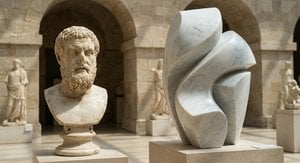
Urok marmuru w historii sztuki: od klasycznej rzeźby do nowoczesnej abstrakcji
Odkryj fascynującą historię rzeźby marmurowej – od klasycznych arcydzieł po nowoczesną abstrakcję. Poznaj techniki, artystów i wartość kolekcjonerską tego wyjątkowego medium. Ekspercka analiza dla miłośników sztuki.

Trwałe Formy: Ewolucja Technik i Tematów w Rzeźbie Przez Wieki – Od Antyku do Renesansu
Poznaj fascynującą historię rzeźby od antyku do renesansu! Odkryj techniki, wybitnych artystów i wpływ na współczesną sztukę. Ekspercka analiza dla kolekcjonerów i miłośników.

Antonio Canova: Neoclassical Sculpture & the Pursuit of Emotional Perfection
Explore the life & art of Antonio Canova, the greatest Neoclassical sculptor. Discover his masterpieces, innovative techniques, and lasting influence on fine art collecting. Expert insights for discerning investors.