


Obraz dostosowuje się do Twoich wyborów: , .
Opis obiektu
André Derain’s vibrant Fauvist landscape, ‘Mountains at Collioure,’ explodes with bold colors and expressive brushstrokes—a captivating glimpse into early 20th-century Impressionism. Explore this masterpiece by Derain and immerse yourself in the serene beauty of Provence.
 Rozwiń treść
Biografia artysty
André Derain (1880-1954): pionier fowizmu, znany z odważnych kolorów i ekspresyjnego stylu. Odkryj jego ikoniczne obrazy londyńskie oraz ewolucję w kierunku klasycizmu.
Ręcznie malowana reprodukcja olejowa
Ręcznie malowany obraz olejny na płótnie, wykonany na zamówienie przez naszych artystów w wybranym przez Ciebie wymiarze i oprawie. ( Przełącz na wydania drukowane Przejdź do wersji cyfrowej)
Więcej o tym obrazie
 Podgląd w skali 1:1
 Wyślij jako kartkę
 Udostępnij
 Szczegóły dzieła
 Przewodnik

 Pobierz obraz
 Podobne obiekty
 RTG
RTG Pokaz slajdów
 Pytania i odpowiedzi
 Statystyki
Zamów swój obraz w czterech prostych krokach
Nie spiesz się. Możesz zmienić każdą odpowiedź; cena w Twoim koszyku będzie aktualizowana po każdym wyborze.
1 Pierwszy z czterech kroków
Który rozmiar wybierasz?
Te rozmiary zachowują proporcje oryginalnego obrazu. Rysunek przedstawia wybrany przez Ciebie format na ścianie, nad dwumetrową sofą.
lub podaj własne wymiary
Wybierz spośród naszych standardowych rozmiarów, które zachowują oryginalne proporcje dzieła sztuki.

Wpisz wymaganą szerokość i wysokość, aby obraz pasował do Twojej ramy lub ściany. Ponieważ jest to dzieło malowane ręcznie, w przypadku rozmiaru o innych proporcjach artysta może domalować nieco więcej wokół obrazu lub przyciąć jego fragmenty — wybór należy do Ciebie. Przed rozpoczęciem pracy prześlemy Ci cyfrową wizualizację do zatwierdzenia. Obraz widoczny na tej stronie nie przedstawia rzeczywistego efektu — jedynie wizualizacja oddaje realny rezultat.
2 Drugi z czterech kroków
W jaki sposób przygotować dzieło: w formie tuby, na krosnach czy w ramie?
Poniższe ceny dotyczą rozmiaru wybranego w pierwszym kroku.
Wybierz krawędzie płótna naciągniętego na ramę
Wybierz ramę

Białe krawędzie zł1

rozmyte krawędzie zł1

Przedłużony zł1

P118B zł10

P118H zł10

P118W zł10

P438Z zł10

P508JH zł12

P508YH zł12

P805H zł10

P805Z zł10

P919BZ zł10

P919G zł10

P919XJ zł10

P959ZH zł10

P968JZ zł12

W106C zł8

W218G zł10

W218JH zł8

W218Y zł10

W307PJ zł10

W316G zł10

W316PJ zł8

W316Y zł10

W398PJ zł8

W4111J zł10

W500HY zł15

W500JH zł15

W692G zł12

W849H zł8

W940BG zł15

W953PJ zł8

H24-GOLD zł30

H24-SILVER zł30

H36-GOLD zł45

H36-SILVER zł45
W oprawie
Profil: . Wymiar całkowity w ramie: .
3 Trzeci z czterech kroków
Czy chcieliby Państwo wprowadzić jakieś zmiany w obrazie?
Większość osób odpowiada przecząco. Ponieważ każdy obraz jest tworzony ręcznie, nasz artysta może również dostosować go do Twoich potrzeb.
Po złożeniu zamówienia zespół ArtsDot.com skontaktuje się z klientem drogą mailową w celu uzyskania instrukcji i prześle podgląd projektu
4 Krok czwarty z czterech
Kilka opcji wykończenia
Wszystkie są opcjonalne. Wybrane już odpowiedzi nie wiążą się z żadnymi dodatkowymi kosztami.
Kto jest autorem?
Dostawa na całym świecie () w ciągu 3–4 tygodni zamiast standardowych 5 tygodni. (10 Listopad). Bez kompromisów w kwestii jakości.
Tabliczka informacyjna, jak w muzeum?
Szczegóły grawerowanej brązowej tabliczki
This elegant plaque features the artist's name and the title of the artwork, finely engraved for a timeless presentation.
It is made from bronze with a refined, elegant finish. The text is precisely laser-engraved for a sharp and permanent result. Measuring 9x2 cm, the plaque is compact yet easy to read. It's built to be durable and scratch-resistant, offering a professional, museum-quality look. Mounting is simple thanks to the included adhesive backing.
Szczegóły przezroczystej tabliczki akrylowej
The plaque includes essential engraved details such as the artist's name, the title of the artwork, the date it was created, the type of media used-like oil on canvas or watercolor-a brief description of the piece, and a QR code that links to the complete artwork information.
It is crafted from clear acrylic, offering a sleek, modern appearance. The text is UV-engraved in black to ensure strong visual contrast. With a size of 10x15 cm, it ensures optimal readability. It comes equipped with two metal hooks for secure wall mounting. The plaque is designed to be weather-resistant, making it suitable for various environments, and it includes interactive features that work seamlessly with smartphone scanning.
Szczegóły czarnej tabliczki akrylowej
This elegant plaque includes engraved information such as the artist's name, the title of the artwork, the date it was created, the type of media used (like oil on canvas or watercolor), a short description of the artwork, and a QR code for quick access to more information.
The plaque itself is made from refined black acrylic with a premium finish. The text is laser-engraved in white for high contrast and readability. Its size is 10x15 cm, designed to be easy to read. It comes with two metal hooks for professional mounting. The design is sleek and fits any interior style. It is also weather-resistant and durable, with built-in digital integration for mobile compatibility.
Werniks ochronny?
Kiedy potrzebujesz dostawy?
✓ Sprawdź i zamów
Twoje dzieło, dokładnie tak, jak zamówiłeś

Mountains at Collioure
Technika reprodukcji
Wymiary reprodukcji
-

Wybitny mistrz artystyczny
Większa szczegółowość, finezja i dodatkowy czas na realizację
-

Opcje oprawy reprodukcji
-
-
W przypadku dzieł sztuki lub reprodukcji, których którykolwiek z boków przekracza 105 cm (około 41 cali), rama zostanie wysłana w formie zestawu do samodzielnego montażu. Metoda ta zapewnia bezpieczną dostawę i zapobiega uszkodzeniom podczas transportu.
Wymagany profesjonalny montaż – nie jest to produkt typu DIY.
Zestaw musi zostać złożony, a płótno naciągnięte przez doświadczonego profesjonalnego ramiarza, przy użyciu kleju do drewna (brak w zestawie), kleszczy do naciągania płótna oraz ścisków, które utrzymają krosna w równej pozycji podczas schnięcia kleju. Nieprawidłowy montaż lub nierównomierne napięcie płótna może trwale uszkodzić dzieło sztuki i nie podlega naszej gwarancji.
 W przypadku dzieł sztuki lub reprodukcji, których którykolwiek z boków przekracza 105 cm (około 41 cali), rama zostanie wysłana w formie zestawu do samodzielnego montażu. Metoda ta zapewnia bezpieczną dostawę i zapobiega uszkodzeniom podczas transportu.
W zestawie znajdują się wszystkie listwy z litego drewna, precyzyjnie docięte do wymiarów.
Montaż odbywa się przy użyciu dołączonych wkrętów oraz kleju do drewna do łączenia narożników, którego zestaw nie zawiera i który musi zostać dostarczony przez ramiarza.
Wymagane są profesjonalne narzędzia, których nie ma w zestawie: kleszcze do naciągania płótna (napinacz) oraz zaciski, które pozwolą utrzymać listwy w równej pozycji podczas schnięcia kleju.
Ważne:
Do połączenia narożników niezbędny jest klej do drewna, listwy należy unieruchomić za pomocą ścisków do momentu całkowitego wyschnięcia kleju, a naciągnięcie płótna na złożoną ramę wymaga użycia kleszczy do naciągania płótna. Żaden z tych elementów nie jest dołączony do zestawu. Przed zamówieniem tego rozmiaru zalecamy konsultację z doświadczonym ramiarzem.

Etykieta obiektu
-
-

Lakier ochronny
Lakier z połyskiem (pogłębia kolory, chroni przed światłem i wilgocią)
-

Personalizacja dzieła
Przykłady możliwości personalizacji: zastąp twarz zdjęciem klienta; dodaj zwierzę domowe (np. zamień kota na psa); umieść ukrytą wiadomość w tle; zmień krajobraz lub elementy tła.
-

Ekspresowa
Dostawa na cały świat () w ciągu 3–4 tygodni zamiast standardowych 5 tygodni. (10 Listopad). Bez kompromisów w kwestii jakości.
-
Przesyłka ekspresowa
Dostawa na cały świat () w ciągu 5 tygodni. (17 Listopad).
W cenie
Cena całkowita
zł 1033
Opcja ze szkłem jest dostępna wyłącznie w rozmiarach poniżej 110 cm
W każdym zamówieniu
- Bezpłatna ekspresowa wysyłka na cały świat
- Wysokiej jakości płótno lniane
- Pełne ubezpieczenie przesyłki
- Gwarancja zwrotu należności celnych i podatków importowych
- Gwarancja wiernego odwzorowania kolorów
- 100-dniowa polityka zwrotów (tylko w przypadku wad)
- Gwarancja 100% zwrotu pieniędzy
- Zniżka przy zakupie wielu sztuk


A Symphony of Untamed Color
In the annals of modern art, few moments capture the raw, unbridled energy of a revolution quite like André Derain’s Mountains at Collioure. Painted during the feverish summer of 1905, this masterpiece serves as a vibrant manifesto of the Fauvist movement, a period when color was liberated from the shackles of reality to serve the needs of pure emotion. As one gazes upon this canvas, the eye is immediately swept into a Mediterranean dreamscape where the boundaries between earth and sky dissolve into a rhythmic dance of pigment. The coastal town of Colli andoure, nestled against the rugged French coastline, is transformed here from a mere geographical location into an emotional landscape, pulsating with the warmth of Provençal sunlight and the wild spirit of the Fauves—the "wild beasts" of the art world.
The technique employed by Derain in this work is nothing short of audacious. Eschewing the delicate, blended transitions of traditional Impressionism, he utilized thick, confident impasto strokes that lend a sculptural quality to the surface. Each application of paint feels spontaneous and urgent, as if the artist were racing to capture the fleeting brilliance of the light before it vanished. The palette is a riotous celebration of contrast: deep, lush greens and earthy tones in the foreground trees clash beautifully against a sky of jade and turquoise, while flashes of mauve, pink, and brilliant yellow dance across the mountain ridges. This deliberate use of non-naturalistic color does not merely describe the scene; it intensifies it, creating a visual texture that feels alive to the touch.
Historical Resonance and Emotional Depth
To understand Mountains at Collioure is to understand a pivotal turning point in art history. Created during a period of intense collaboration with Henri Matisse, the painting reflects a shared rebellion against the perceived limitations of realism. Derain was part of a generation that sought to express the internal sensation of a landscape rather than its external accuracy. This shift toward abstraction and the simplification of form mirrors the broader cultural anxieties and rapid transformations of the early 20th century. The mountains themselves, rendered with long, parallel brushstrokes, stand as monumental symbols of permanence amidst the swirling, energetic colors that suggest the transient nature of human perception.
For the discerning collector or interior designer, this painting offers more than just aesthetic beauty; it provides a profound emotional anchor for any space. The composition possesses a unique ability to command attention through its sheer vibrancy while simultaneously offering a sense of serene, sun-drenched escapism. Whether placed in a contemporary gallery setting or as a bold focal point in a sophisticated residential interior, a high-quality reproduction of this work brings with it the historical weight of the Fauvist revolution and the timeless allure of the Mediterranean. It is an invitation to experience the world not as it appears, but as it is felt—bold, bright, and infinitely beautiful.
Pytania i odpowiedzi
Jaki nastrój wprowadzi Mountains at Collioure do wnętrza?
„Mountains at Collioure” – André Derain ma Serene atmosferę i jest polecane do Living Room. Nastrój to to, co dzieło wnosi do otaczającej je przestrzeni.
Do którego etapu twórczości André Derain należy dzieło „Mountains at Collioure”?
"Mountains at Collioure" reprezentuje Mature Period twórczości André Derain.
Jak mogę pobrać obraz „Mountains at Collioure” – André Derain?
„Mountains at Collioure” – André Derain można pobrać ze strony Pobierz plik cyfrowy dzieła jako wysokiej rozdzielczości cyfrowe zdjęcie do pobrania.
Podobne dzieła


André Derain
1880 - 1954, Francja
Biografia artysty
Early Life and the Seeds of Fauvism
André Derain, born in 1880 in the charming village of Chatou near Paris, wasn’t initially destined for a life steeped in paint and canvas. Contrary to some narratives suggesting an immediate artistic awakening through encounters with fellow painters like Vlaminck or Matisse, Derain embarked on his artistic journey independently around 1895. These early explorations were often undertaken alongside Father Jacomin and his sons during countryside excursions—a formative experience that instilled a deep appreciation for the natural world. He briefly pursued engineering at the Académie Camillo in 1898, where fatefully, he crossed paths with Henri Matisse, initiating a pivotal artistic partnership. Further studies under Eugène Carrière honed his foundational skills, but it was military service from 1901 to 1904 that temporarily interrupted his burgeoning career. Upon his return, persuaded by the unwavering belief of Matisse, Derain decisively abandoned engineering and fully committed himself to painting, continuing his education at the Académie Julian. This commitment marked a turning point, setting him on a path toward becoming a central figure in one of modern art’s most revolutionary movements.The Explosive Birth of Color: Fauvism
The summer of 1905 proved to be an explosive moment for Derain and Matisse as they collaborated in the sun-drenched coastal village of Collioure. This period birthed works like “Mountains at Collioure,” characterized by a radical departure from representational color. The landscapes weren’t merely depictions of places; they were expressions of feeling, rendered through intensely vibrant, non-naturalistic hues. When their work was exhibited at the Salon d'Automne that same year, it provoked outrage and astonishment. Critic Louis Vauxcelles famously dubbed them “Les Fauves”—the wild beasts—a name initially intended as derisive but ultimately embraced by the artists themselves. Derain’s contribution to this movement wasn’t merely stylistic; he possessed a unique ability to translate emotional intensity into pure color. In 1906, Ambroise Vollard commissioned him to paint London, resulting in a series of striking canvases depicting the Thames and Tower Bridge. These weren't conventional cityscapes; they were bold interpretations, capturing the energy and atmosphere of London through an unconventional lens—a testament to Derain’s innovative vision. Influenced by artists like Van Gogh and Cézanne, he pushed the boundaries of color and form, laying the groundwork for future generations of expressionist painters.Beyond Fauvism: A Shifting Aesthetic
The initial fervor of Fauvism didn't define Derain’s entire artistic trajectory. Around 1907, his style began a significant evolution, moving away from the unrestrained chromatic exuberance toward more subdued tones and an increased emphasis on form. This period, often referred to as his “gothic” phase (1911-1914), reflected a growing interest in structure and composition. He immersed himself in the study of Old Masters, incorporating elements of Cubism while simultaneously seeking inspiration from classical forms. This wasn’t a rejection of his earlier work but rather an expansion of his artistic vocabulary. Derain's versatility extended beyond painting; in 1919, he designed the ballet “La Boutique Fantasque” for Sergei Diaghilev’s Ballets Russes, demonstrating his aptitude for theatrical design and further showcasing his diverse talents. Key works from this era, such as "Harlequin and Pierrot" and the monumental mural "Return of Ulysses," exemplify this stylistic shift—a move toward a more controlled and intellectually rigorous approach to artmaking.Major Achievements and Legacy
André Derain’s legacy is firmly rooted in his pivotal role in establishing Fauvism and his subsequent exploration of diverse artistic styles. His early London paintings, characterized by their bold color palettes and dynamic compositions, remain iconic examples of the movement's revolutionary spirit. Beyond this, he made significant contributions to Cubist development alongside Picasso and Braque, demonstrating a remarkable ability to adapt and synthesize various influences. His work as a set designer for the Ballets Russes showcased his versatility and artistic vision beyond the canvas. Despite facing controversy later in life due to his association with Nazi Germany during World War II, Derain’s impact on 20th-century art is undeniable. His paintings are held in major museums worldwide, including the Musée d'Orsay in Paris, the Metropolitan Museum of Art in New York, and the Tate Gallery in London—testaments to his enduring artistic significance.Key Works
Here are some of André Derain’s most celebrated works:- Mountains at Collioure (1905-06)
- Harlequin and Pierrot (1906)
- The Cup of Tea (1907)
- London Paintings (series, 1906-07) – including "Big Ben" and “Most London”
- Return of Ulysses (1914)


Powiązane artykuły

Łodzie w sztuce: Top 10 arcydzieł i inspiracje do wnętrz
Odkryj 10 arcydzieł sztuki, które celebrują piękno łodzi! Od Monet po Van Gogha – poznaj historie artystów i inspiracje malarstwa morskiego. Reprodukcje obrazów najwyższej jakości na ArtsDot.com. Eksploruj kolekcję online!

The Architecture of Nature: Paul Cézanne’s Structural Revolution in Color and Form
Explore how Paul Cezanne revolutionized art through color and form. Discover the roots of modern abstraction now.
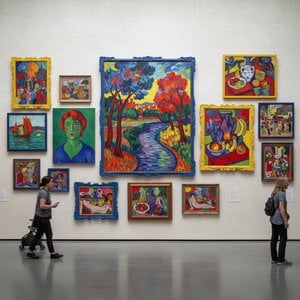
Fauwiści: 10 arcydzieł, które zrewolucjonizowały malarstwo | ArtsDot.com
Poznaj 10 arcydzieł Fauwyzmu! Odkryj historię Matisse'a, Deraina i innych artystów tego rewolucyjnego ruchu. Żywe kolory, ekspresja i inspiracje wnętrzarskie czekają. Reprodukcje obrazów najwyższej jakości na ArtsDot.com