

 Podgląd w skali 1:1
 Wyślij jako kartkę
 Udostępnij
 Szczegóły dzieła
 Przewodnik

 Pobierz obraz
 Podobne obiekty
 RTG
RTG Pokaz slajdów
 Pytania i odpowiedzi
 Statystyki
(30)

 Rozwiń treść
Giclée / Wydruk artystyczny
Wydruki giclée lub płótna o jakości muzealnej, szybka realizacja i szeroki wybór opcji wykończenia. ( Zamów ręcznie malowaną reprodukcję Przejdź do wersji cyfrowej)




P118B zł10

P118H zł10

P118W zł10

P438Z zł10

P508JH zł12

P508YH zł12

P805H zł10

P805Z zł10

P919BZ zł10

P919G zł10

P919XJ zł10

P959ZH zł10

P968JZ zł12

W106C zł8

W218G zł10

W218JH zł8

W218Y zł10

W307PJ zł10

W316G zł10

W316PJ zł8

W316Y zł10

W398PJ zł8

W4111J zł10

W500HY zł15

W500JH zł15

W692G zł12

W849H zł8

W940BG zł15

W953PJ zł8




Wybierz spośród naszych standardowych rozmiarów, które zachowują oryginalne proporcje dzieła sztuki.

Wpisz wymaganą szerokość i wysokość, aby dopasować grafikę do ramy lub ściany. Wydruk można jedynie przyciąć, nigdy nie powiększając go poza oryginalny obraz, dlatego format o innych proporcjach spowoduje utratę części kompozycji. Przed rozpoczęciem druku prześlemy Ci cyfrowy podgląd do zatwierdzenia. Obraz wyświetlany na tej stronie nie pokazuje rzeczywistego przycięcia — jedynie podgląd oddaje ten efekt.
Dostawa na cały świat () w ciągu 2 tygodni zamiast standardowych 4/5 tygodni. (15 Listopad)

Bezpłatna ekspresowa wysyłka na cały świat

Wysokiej jakości płótno lniane

Pełne ubezpieczenie przesyłki

Gwarancja zwrotu należności celnych i podatków importowych

Gwarancja wiernego odwzorowania kolorów

100-dniowa polityka zwrotów (tylko w przypadku wad)

Gwarancja 100% zwrotu pieniędzy

Zniżka przy zakupie wielu sztuk
 Opcja ze szkłem jest dostępna wyłącznie w rozmiarach poniżej 110 cm

(30)
Giclée / Wydruk artystyczny
Wymiary reprodukcji
-


Cena całkowita
zł 245
Alphonse Mucha’s “The Violinist”: A Symphony of Art Nouveau
“The Violinist,” a captivating work by the master of Art Nouveau, Alphonse Mucha, transports us to a realm of delicate beauty and profound emotion. This painting, depicting a woman lost in the music she creates with her violin, is more than just a portrait; it’s an embodiment of Mucha's signature style – a harmonious blend of organic forms, flowing lines, and idealized femininity. The scene unfolds with a grace that speaks to the era’s fascination with nature, mythology, and the pursuit of aesthetic perfection. Mucha’s ability to capture movement and mood is particularly striking here; the violinist isn’t merely playing an instrument but seems utterly consumed by the experience, inviting the viewer into her world of sound.
A Masterclass in Art Nouveau Technique
Mucha's technique is instantly recognizable. Notice the meticulous rendering of fabric – the flowing robes ripple with a life of their own, achieved through layered washes and subtle gradations of color. The use of gold leaf, a hallmark of Mucha’s work, adds an ethereal quality to the piece, illuminating the woman’s face and highlighting the intricate details of her dress. The composition itself is carefully constructed, employing a pyramidal arrangement that draws the eye upwards towards the violinist's head, emphasizing her importance as the focal point. The cello, strategically placed in the background, isn’t just an accessory; it contributes to the depth and complexity of the scene, suggesting a performance setting or perhaps even a moment of reflection on the musician’s part.
Symbolism and the Idealized Woman
Mucha frequently employed symbolism within his Art Nouveau works, often drawing inspiration from classical mythology and folklore. The woman in “The Violinist” embodies many of these themes – she represents beauty, grace, and artistic expression. Her pose, with her head tilted slightly downwards as if lost in thought, is a common motif in Mucha’s paintings, conveying a sense of introspection and vulnerability. The flowing lines of her dress echo the natural world, reinforcing the connection between art and nature that was central to the Art Nouveau movement. The inclusion of the cello itself can be interpreted symbolically – music as a source of solace, inspiration, or even spiritual awakening.
Historical Context: Mucha’s Parisian Influence
Created during Mucha's time in Paris (1887-1910), “The Violinist” reflects the vibrant artistic and cultural landscape of the city at the turn of the 20th century. Mucha was deeply influenced by artists like Pierre-Auguste Renoir, known for his depictions of Parisian life, and Gustave Moreau, a leading figure in the Symbolist movement. His work directly challenged the prevailing academic styles of the time, advocating for a new aesthetic that prioritized beauty, emotion, and decorative elements. This painting exemplifies Mucha’s contribution to the rise of Art Nouveau as a distinct artistic style, one that would profoundly influence graphic design, illustration, and interior decoration worldwide.
A Timeless Piece for Your Collection
This hand-painted reproduction captures the essence of Mucha's genius, offering a stunning addition to any art collection or interior space. Its elegant composition, masterful technique, and rich symbolism ensure that “The Violinist” will continue to captivate viewers for generations to come. Whether you are an admirer of Art Nouveau, a collector of fine art, or simply seeking a piece of beauty to enhance your surroundings, this reproduction provides a unique opportunity to own a work by one of the most influential artists of the late 19th and early 20th centuries.
Pytania i odpowiedzi
Jaki klimat wnosi „(30)” – Alfons Mucha do wnętrza?
„(30)” – Alfons Mucha ma Romantic atmosferę i jest polecane do Living Room. Nastrój to to, co dzieło wnosi do otaczającej je przestrzeni.
Jaki kolor dominuje w kompozycji „(30)” – Alfons Mucha?
Dominującym kolorem dzieła „(30)” – Alfons Mucha jest Walnut (#612a1f).
Czy mogę zobaczyć „(30)” – Alfons Mucha w różnym oświetleniu?
Strona Analiza rentgenowska dzieła „(30)” – Alfons Mucha to interaktywny podgląd, który pozwala na przeglądanie jedenastu warstw optycznych obrazu, w tym widoku w stylu rentgenowskim.


Biografia artysty
Wczesne Lata i Edukacja
Alphonse Maria Mucha urodził się 15 lipca 1860 roku w Ivancice, małym miasteczku w Morawskiej Brandenburgii (dzisiejsza Czechia). Już od najmłodszych lat wykazując talent artystyczny, Mucha fascynował się malarstwem i dekoracjami. Początkowo uczył się rysunku samodzielnie, a następnie studiował na Akademii Sztuk Pięknych w Pradze, choć szybko znużyło go tradycyjne podejście do sztuki. W 1887 roku przeniósł się do Paryża, aby realizować swoje własne wizje artystyczne i odnaleźć swój unikalny styl.
Styl Artystyczny i Znaczące Dzieła
Muchy twórczość charakteryzuje się wyjątkowym stylem Art Nouveau – secesją, który łączy w sobie eleganckie linie, organiczne formy i wrażenie ruchu. Był pod wpływem takich artystów jak Pierre-Auguste Renoir i Gustave Moreau, a jego prace często odzwierciedlają piękno i delikatność, które były popularne w tamtych czasach. Jednym z najbardziej rozpoznawalnych elementów jego stylu jest przedstawianie idealizowanych kobiet w płynnych szatach, otoczonych bujnymi kwiatami i liśćmi – symbolami kobiecości, natury i piękna. Mucha był mistrzem w tworzeniu kompozycji, które emanowały harmonią i subtelnym wdziękiem.
Do jego najważniejszych dzieł należą:
- Powstanie Słowiańskie – obraz, który łączy tradycyjne motywy słowiańskie z nowoczesnymi elementami Art Nouveau, ukazując bogatą historię i kulturę regionu.
- Salon des Cent – monumentalna instalacja wystawowa, która zapoczątkowała jego międzynarodową karierę.
- Obrazy inspirowane dziełami Gustava Moreau, takimi jak Córki Tespia i Szaleńczą Drużynę Gobelinów – świadectwo jego fascynacji symbolizmem i literaturą.
- Ilustracje oparte na obrazie Młyniarki Leniny autorstwa Sir Huberta von Herkomera – przykład połączenia sztuki i codziennego życia.
Sukces z Sarah Bernhardt
Przełom w karierze Muchy nastąpił dzięki współpracy z słynną aktorką Sarah Bernhardt. W 1894 roku zaprojektował dla niej plakat do spektaklu Gismonda, który natychmiast stał się hitem i zapewnił mu uznanie publiczne oraz możliwość dalszej pracy z Bernhardt. Wraz z aktorką stworzył serię efektownych plakatów, które stały się synonimem Art Nouveau w Paryżu. Współpraca ta nie tylko przyniosła mu sławę, ale także otworzyła drogę do realizacji ambitnych projektów artystycznych.
Wsparcie Charlesa Richarda Crane’a i Slav Epic
W 1903 roku Mucha otrzymał wsparcie finansowe od amerykańskiego przemysłowca Charlesa Richarda Crane'a, który był pasjonatem kultury słowiańskiej. Dzięki temu mógł podjąć się monumentalnego projektu – stworzenia serii 20 obrazów przedstawiających epikę słowiańską, znanej jako Slav Epic (1912-1930). Praca nad tymi dziełami zajęła mu wiele lat i stała się jego najważniejszym osiągnięciem artystycznym. Slav Epic to nie tylko monumentalne dzieło sztuki, ale także świadectwo pasji Muchy do historii i kultury swojego regionu.
Późniejsze Lata i Dziedzictwo
Po I wojnie światowej Mucha kontynuował swoją twórczość, projektując znaczki pocztowe, banknoty oraz dokumenty rządowe dla nowo powstałej Czechosłowacji. Zmarł 14 lipca 1939 roku w Pradze, pozostawiając po sobie bogate dziedzictwo artystyczne i wpływ na rozwój Art Nouveau. Jego prace znajdują się w muzeach i kolekcjach na całym świecie, a jego styl inspiruje kolejne pokolenia artystów.

Alfons Mucha
1860 - 1939 , Czechy
Krótka nota
- Artistic Movement Or Style: Secesja, Art Nouveau
- Artists Or Movements Influenced By This Artist:
- Pro-Rafaelská škola
- Rossetti
- Artists Who Influenced This Artist:
- Renoir
- Moreau
- Date Of Birth: 15 lipca 1860
- Full Name: Alphonse Maria Mucha
- Nationality: Czeski
- Notable Artworks:
- Slavský vzpour
- Salon des Cent
- Dcery Tespia
- La Ribambelle des Gobelins
- Rozklaďáci
- Place Of Birth: Brno, Czechy
Powiązane artykuły

Płynąca Linia i Kwitnące Formy: Dziedzictwo Estetyczne Secesji
Odkryj fascynujący świat secesji! Poznaj historię, charakterystyczne cechy i wpływ tego wyjątkowego stylu na architekturę, sztukę i design. Ekspercka analiza i inspiracje dla miłośników estetyki.

Simon Vouet: A Baroque Master's Journey from Italian Influence to French Classicism
Explore the life & art of Simon Vouet, a pivotal French Baroque painter who introduced Italian styles to France. Discover his masterpieces and lasting influence on 17th-century art.

Pierre-Auguste Renoir: 25 Arcydzieł Pełnych Światła i Uroków | ArtsDot.com
Odkryj 25 najpiękniejszych obrazów Pierre’a-Auguste Renoir! Poznaj historię impresjonizmu, światło w jego malarstwie i arcydzieła takie jak 'Taniec w Le Moulin de la Galette'. Reprodukcje najwyższej jakości na ArtsDot.com – inspiracje dla Twojego wnętrza.
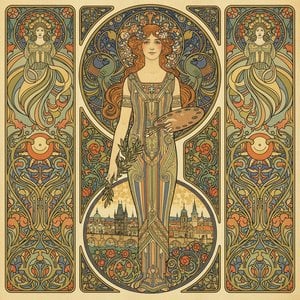
Alphonse Mucha: A Comprehensive Exploration of Art Nouveau's Master of Decorative Symbolism
Explore the life & art of Alphonse Mucha, master of Art Nouveau! Discover his iconic posters, stunning illustrations, and the monumental Slav Epic. A comprehensive guide for collectors & enthusiasts.

Ivan Bilibin: A Synthesis of Folklore, Modernism & National Identity in Russian Illustration
Explore the enchanting world of Ivan Bilibin, a master Russian illustrator who synthesized folklore, Art Nouveau & national identity. Discover his iconic fairy tale illustrations and legacy with ArtsDot.
