


 Podgląd w skali 1:1
 Wyślij jako kartkę
 Udostępnij
 Szczegóły dzieła
 Przewodnik

 Pobierz obraz
 Podobne obiekty
 RTG
RTG Pokaz slajdów
 Statystyki
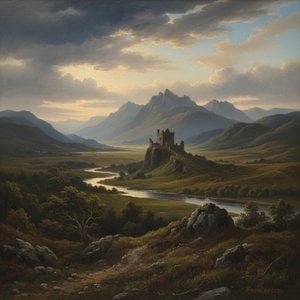
Penarth Head
 Romanticism
 1833
1833 73.0 x 122.0 cm
 Rozwiń treść
Ręcznie malowana reprodukcja olejowa
Ręcznie malowany obraz olejny na płótnie, wykonany na zamówienie przez naszych artystów w wybranym przez Ciebie wymiarze i oprawie. ( Przełącz na wydania drukowane Przejdź do wersji cyfrowej)




































Wybierz spośród naszych standardowych rozmiarów, które zachowują oryginalne proporcje dzieła sztuki.

Wpisz wymaganą szerokość i wysokość, aby obraz pasował do Twojej ramy lub ściany. Ponieważ jest to dzieło malowane ręcznie, w przypadku rozmiaru o innych proporcjach artysta może domalować nieco więcej wokół obrazu lub przyciąć jego fragmenty — wybór należy do Ciebie. Przed rozpoczęciem pracy prześlemy Ci cyfrową wizualizację do zatwierdzenia. Obraz widoczny na tej stronie nie przedstawia rzeczywistego efektu — jedynie wizualizacja oddaje realny rezultat.
Po złożeniu zamówienia zespół ArtsDot.com skontaktuje się z klientem drogą mailową w celu uzyskania instrukcji i prześle wizualizację projektu
Dostawa na całym świecie () w ciągu 3–4 tygodni zamiast standardowych 5 tygodni. (28 Październik). Bez kompromisów w kwestii jakości.

Bezpłatna ekspresowa wysyłka na cały świat

Wysokiej jakości płótno lniane

Pełne ubezpieczenie przesyłki

Gwarancja zwrotu należności celnych i podatków importowych

Gwarancja wiernego odwzorowania kolorów

100-dniowa polityka zwrotów (tylko w przypadku wad)

Gwarancja 100% zwrotu pieniędzy

Zniżka przy zakupie wielu sztuk
 Opcja ze szkłem jest dostępna wyłącznie w rozmiarach poniżej 110 cm

Penarth Head
Technika reprodukcji
Wymiary reprodukcji
-


Cena całkowita
zł 1203
Podobne dzieła


Biografia artysty
The Weaver of Words and Wings
The story of Alexander Wilson is one of profound transformation, a journey that began in the rhythmic clatter of Scottish looms and culminated in the breathtaking discovery of the American wilderness. Born in Paisley, Scotland, in 1766, Wilson’s early years were steeped in the grit and toil of the Industrial Revolution. As a young man apprenticed to the weaving trade, his spirit was not merely occupied by the mechanical precision of cloth, but by the lyrical beauty of verse. Heavily influenced by the soulful dialect poetry of Robert Burns, Wilson found his voice in the struggles of his community. His early literary works were far from gentle; they were sharp, satirical, and often dangerous. The publication of poems that critiqued the harsh realities of mill life led to legal turbulence and even imprisonment, a period of upheaval that ultimately acted as the catalyst for his departure from his homeland.
In 1794, driven by a desire for new horizons and perhaps a reprieve from the shadows of controversy, Wilson emigrated to America. This migration marked the transition from a poet of social unrest to a pioneer of natural science. Settling in Pennsylvania, he initially sought stability through teaching, yet his true calling lay in the observation of the living world around him. It was during this period that the seeds of ornithology began to germinate. Influenced by the legendary naturalist William Bartram, Wilson moved beyond the written word of poetry into the visual and scientific documentation of North American fauna. He possessed a rare duality of talent: the meticulous eye of a scientist and the evocative soul of an artist, allowing him to perceive the intricate details of avian life with unprecedented clarity.
A Legacy in Ink and Feather
The true magnitude of Wilson’s contribution to science and art is crystallized in his monumental achievement, American Ornithology. This ambitious nine-volume work, published between 1808 and 1814, stands as a cornerstone of natural history. Unlike many of his predecessors, Wilson did not merely describe birds; he brought them to life through a combination of rigorous field observation and exquisite illustration. His travels across the vast American continent were driven by an insatiable hunger to document species that were previously unknown to European science. Through his painstaking efforts, he successfully described dozens of new species, providing a foundational text that would later inspire even more famous figures like John James Audubon.
The significance of Wilson's work extends far beyond the boundaries of biological classification. His illustrations served as a bridge between the raw, untamed frontier of the New World and the established scientific academies of Europe. In his plates, one finds a marriage of accuracy and aesthetic grace, where the texture of a feather or the curve of a beak is rendered with such devotion that the viewer feels the pulse of the living creature. His life’s work represents a pivotal moment in the development of American identity—a period when the continent began to define its own natural heritage through the eyes of those who lived within it.
Reflecting on his enduring impact, several key elements define his historical importance:
- The Father of American Ornithology: His systematic documentation established the groundwork for all subsequent avian studies in North America.
- Artistic and Scientific Synthesis: He pioneered a method of combining detailed biological description with high-quality visual art, setting a new standard for natural history publications.
- Cultural Bridge: His transition from a Scottish weaver to an American naturalist symbolizes the transformative power of the immigrant experience and the expansion of scientific frontiers.
- Literary Roots: The precision and passion found in his scientific work were deeply informed by his early training in the emotive and rhythmic traditions of Scottish poetry.

Alexander Wilson
1766 - 1813 , United Kingdom
Krótka nota
- Full Name: Alexander Wilson
- Nationality: Scottish-American
- Date Of Birth: 1766
- Date Of Death: 1813
- Place Of Birth: Paisley, United Kingdom
- Notable Artworks:
- Cardiff from the North Road
- Penarth Head
- Aberdare
- Artistic Movement Or Style: Romanticism
- Artists Who Influenced This Artist:
- Robert Burns
- William Bartram
Powiązane artykuły

John Varley I: Intimate Observation & the British Romantic Landscape
Explore the serene landscapes of John Varley I, a key figure in British Romanticism. Discover his unique watercolour style, collaboration with William Blake & lasting artistic legacy. Learn about collecting Varley's work.
Alexander Nasmyth: Picturing Scotland's Romantic Landscape – Innovation & Identity
Explore the life & art of Alexander Nasmyth, a pivotal figure in Scottish Romantic landscape painting. Discover his iconic works, including portraits of Robert Burns, and learn about his lasting influence on national identity. Fine art reproductions available.

Romantyczny Krajobraz w Malarstwie: 10 Arcydzieł, Które Zdefiniowały Epokę | ArtsDot.com
Odkryj 10 arcydzieł romantyzmu w malarstwie! Poznaj historie Caspara Davida Friedricha, Turnera i innych mistrzów. Inspiracje wnętrzarskie & reprodukcje obrazów najwyższej jakości na ArtsDot.com. Eksploruj kolekcję online!

Richard Wilson: Deconstructing Landscape & Memory in Contemporary Installation Art
Explore Richard Wilson's groundbreaking landscape paintings & his enduring influence on contemporary installation art. Discover investment opportunities, provenance insights & the materiality of memory in this expert analysis.

Evoking Nature's Sublime: A Comprehensive Exploration of 19th-Century Landscape Painting
Explore the captivating world of 19th-century landscape painting! Discover renowned artists like Friedrich & Monet, key movements, and find the perfect artwork to bring nature's serenity into your home. Expert insights at ArtsDot.