


 Zobacz w skali 1:1
 Wyślij
 Udostępnij
 Szczegóły
 Przewodnik

 Pobierz plik obrazu
 Podobne obiekty
 RTG
RTG Pokaz slajdów
 Statystyki
A Rustic Mill


 Czytaj więcej
Giclée / Wydruk artystyczny
Wydruki giclée lub płótna o jakości muzealnej, szybka realizacja i szeroki wybór opcji wykończenia. ( Kup ręcznie malowany obraz Przełącz na wersję cyfrową)




P118B zł10

P118H zł10

P118W zł10

P438Z zł10

P508JH zł12

P508YH zł12

P805H zł10

P805Z zł10

P919BZ zł10

P919G zł10

P919XJ zł10

P959ZH zł10

P968JZ zł12

W106C zł8

W218G zł10

W218JH zł8

W218Y zł10

W307PJ zł10

W316G zł10

W316PJ zł8

W316Y zł10

W398PJ zł8

W4111J zł10

W500HY zł15

W500JH zł15

W692G zł12

W849H zł8

W940BG zł15

W953PJ zł8




Wybierz spośród naszych standardowych rozmiarów, które zachowują oryginalne proporcje dzieła sztuki.

Wpisz wymaganą szerokość i wysokość, aby dopasować grafikę do ramy lub ściany. Wydruk można jedynie przyciąć, nigdy nie powiększając go poza oryginalny obraz, dlatego format o innym proporcji spowoduje utratę części kompozycji. Przed rozpoczęciem druku prześlemy Ci cyfrowy podgląd do zatwierdzenia. Obraz wyświetlany na tej stronie nie pokazuje rzeczywistego przycięcia — jedynie podgląd oddaje ten efekt.
Dostawa na cały świat () w ciągu 2 tygodni zamiast standardowych 4/5 tygodni. (19 Październik)

Bezpłatna ekspresowa wysyłka na cały świat

Wysokiej jakości płótno lniane

Pełne ubezpieczenie transportowe

Gwarancja zwrotu należności celnych i podatków importowych

Gwarancja idealnego odwzorowania barw

100-dniowy okres na zwrot dzieła w przypadku wykrycia wad produkcyjnych

Gwarancja 100% zwrotu pieniędzy

Oferta przy zakupie wielu sztuk
 Opcja ze szkłem jest dostępna wyłącznie w rozmiarach poniżej 110 cm

A Rustic Mill
Giclée / Wydruk artystyczny
Rozmiar reprodukcji
-


Suma do zapłaty
zł 236
A Symphony of Serenity: The Enchanted World of A Rustic Mill
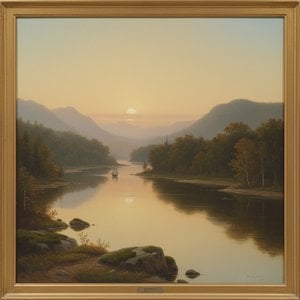
In the quietude of 1855, Albert Bierstadt captured a moment of profound stillness that transcends the boundaries of time. A Rustic Mill is not merely a landscape; it is an invitation into a sanctuary of natural grace. At its heart lies a weathered mill, nestled deeply within the verdant embrace of a lush forest. The composition is anchored by a magnificent, sprawling tree in the foreground, its vibrant green leaves acting as a gateway through which the viewer enters this secluded realm. As the eye wanders through the dappled light and shadow, it discovers the gentle presence of two figures, wandering aimlessly through the glade. Their small scale relative to the towering flora serves as a poignant reminder of the grandeur of nature, suggesting a harmonious coexistence between humanity and the wild, untamed beauty of the earth.
Bierstadt, a luminary of the Hudson River School, utilizes his masterful command of light to breathe life into this woodland scene. His technique, refined through rigorous training in the Düsseldorf tradition, allows for an exquisite attention to detail that borders on the miraculous. One can almost feel the humidity of the forest air and hear the soft rustle of leaves underfoot. The artist employs a sophisticated understanding of atmosphere, using subtle gradations of color and light to create depth and a sense of luminous clarity. This mastery of luminism ensures that every element—from the textured bark of the ancient trees to the soft, filtered sunlight piercing through the canopy—contributes to an immersive, three-dimensional experience that pulls the observer into the very soul of the forest.
A Timeless Legacy for the Discerning Collector
Beyond its technical brilliance, A Rustic Mill carries a deep emotional resonance that makes it a profound choice for art enthusiasts and interior designers alike. The painting evokes a sense of nostalgia for a simpler, more pastoral era, offering a meditative escape from the frenetic pace of modern existence. For those seeking to curate a space of tranquility and sophistication, this piece serves as a focal point of peace. Its rich, organic palette of deep greens, earthy browns, and golden light integrates seamlessly into various high-end decor styles, from classical estates to contemporary retreats that celebrate natural elements.
Owning a high-quality reproduction of this Bierstadt masterpiece is an opportunity to possess a fragment of American art history. It is more than a decorative element; it is a window into the sublime. Whether placed in a sunlit study or a grand living hall, the painting brings with it the enduring spirit of the American wilderness and the quiet majesty of the natural world. For the collector, it represents an investment in beauty and a lifelong connection to the romanticism of the nineteenth century, ensuring that the serene atmosphere of this rustic woodland continues to inspire generations to come.
Pytania i odpowiedzi
Z jakiego kraju pochodzi dzieło Hudson River School pt. "A Rustic Mill"?
"A Rustic Mill" zostało stworzone przez Albert Bierstadt, urodzonego w Niemcy, w ramach nurtu Hudson River School. Pochodzenie artysty wiąże to dzieło z Hudson River School w wydaniu twórców z Niemcy.
Jaki jest dominujący kolor w „A Rustic Mill” autorstwa Albert Bierstadt?
Dominującym kolorem dzieła „A Rustic Mill” autorstwa Albert Bierstadt jest Phthalo Green (#251d0e).
Czy dzieło „A Rustic Mill” autorstwa Albert Bierstadt znajduje się w domenie publicznej i dlaczego?
Status praw autorskich do dzieła „A Rustic Mill” – stanowi domenę publiczną – autorskie prawa majątkowe wygasły – wynika z daty śmierci artysty, która przypada na 1902.
Podobne dzieła


Biografia artysty
A Pioneer of the American West: The Life and Art of Albert Bierstadt
Albert Bierstadt’s story is deeply intertwined with the very formation of America's identity – a journey from Prussian roots to becoming one of the most celebrated painters of the American West. Born in Solingen, Germany, in 1830, his early life was marked by an emigration to New Bedford, Massachusetts, when he was just a toddler, setting the stage for a lifelong fascination with the landscapes that would ultimately define his artistic legacy. Initially self-taught, sketching with crayons as a youth, Bierstadt quickly recognized the need for formal training and embarked on studies in Düsseldorf, Germany, in 1853 – an experience that profoundly shaped his technical skills and understanding of light and atmosphere. It wasn’t merely replication he sought; it was to capture the *feeling* of these vast landscapes, a way to convey their sublime power and beauty.Capturing the Majesty: The Hudson River School and Beyond
Upon returning to the United States in 1857, Bierstadt swiftly became associated with the Hudson River School – a group of artists dedicated to portraying the American landscape with both accuracy and romantic idealism. While sharing this reverence for nature, Bierstadt distinguished himself through his ambitious scale and dramatic compositions. He wasn’t content with simply painting pretty pictures; he aimed to create immersive experiences that transported viewers directly into the heart of the wilderness. His breakthrough came in 1858 with a Swiss landscape exhibited at the National Academy of Design in New York City, earning him immediate acclaim and honorary membership. However, it was his subsequent expeditions westward – beginning with land surveyor Frederick W. Lander in 1859, and later with author Fitz Hugh Ludlow in 1863 to Yosemite Valley – that truly ignited his artistic vision. These journeys weren’t merely observational; they were deeply immersive experiences, allowing Bierstadt to absorb the grandeur of the Rocky Mountains, the vastness of the plains, and the awe-inspiring scale of canyons and waterfalls. He meticulously documented these scenes, translating them onto canvas with a remarkable ability to evoke emotion and wonder.The Painter of Empires: Shaping Perceptions of the West
Bierstadt’s paintings weren't simply landscapes; they were statements about national identity and Manifest Destiny. His canvases – often enormous in size – depicted the American West not as a harsh, untamed frontier, but as a land of promise, abundance, and divine beauty. The Rocky Mountains, Lander’s Peak, completed in 1863 and purchased for an astonishing $25,000 (equivalent to nearly $400,000 today), exemplifies this approach. The painting isn't a precise topographical rendering; it’s a carefully constructed vision of idealized grandeur, bathed in golden light and imbued with a sense of spiritual significance. This ability to evoke emotion, to inspire awe, made Bierstadt immensely popular during his lifetime. He wasn’t just an artist; he was a cultural ambassador, shaping how Americans – and the world – perceived the West. His work fueled westward expansion by presenting it as a noble and divinely ordained undertaking. The dramatic lighting, often referred to as *luminism*, played a crucial role in creating this effect, emphasizing the majesty of nature and suggesting a connection to the divine.Technique and Style: A Master of Light and Detail
Bierstadt’s artistic style was characterized by meticulous detail, a masterful understanding of light and shadow, and an ambitious scale that rivaled classical history paintings. He employed a technique known as *atmospheric perspective*, creating a sense of depth and distance through subtle variations in color and tone. His brushwork was often loose and expressive, yet always controlled and deliberate. Bierstadt’s use of color was particularly noteworthy – he favored warm, saturated hues to evoke the golden light of the setting sun or the vibrant colors of wildflowers. He also paid close attention to detail, meticulously rendering every tree, rock, and stream in his paintings. This combination of technical skill and artistic vision allowed him to create landscapes that were both visually stunning and emotionally resonant. His work was heavily influenced by the Düsseldorf School of painting, which emphasized realism and a deep understanding of light and color.Legacy and Influence: A Lasting Impression
While Bierstadt’s popularity waned somewhat in the late 19th century as artistic tastes shifted towards Impressionism and photography gained prominence, his influence on American landscape painting remains undeniable. He demonstrated the power of large-scale canvases to create immersive experiences – a technique later adopted by many artists. His meticulous attention to detail and masterful use of light continue to inspire painters today. Beyond his technical achievements, Bierstadt’s work serves as a valuable historical document, offering insights into the evolving perceptions of the American West during a period of rapid change and expansion. He captured a moment in time – a vision of pristine wilderness before it was irrevocably altered by human intervention. His paintings are not just beautiful images; they are windows into a pivotal era in American history, reminding us of both the promise and the cost of westward expansion. His legacy endures, ensuring that his breathtaking landscapes will continue to captivate and inspire generations to come.
Albert Bierstadt
1830 - 1902 , Niemcy
Najważniejsze informacje
- Artistic Movement Or Style: Szkoła Hudsona
- Artists Or Movements Influenced By This Artist: ['Renesans']
- Artists Who Influenced This Artist: ['Düsseldorf']
- Date Of Birth: 7 stycznia 1830
- Date Of Death: 18 lutego 1902
- Full Name: Albert Bierstadt
- Nationality: Niemiecko-amerykański
- Notable Artworks:
- Krajobraz zachodni
- Scena wybrzeża
- Place Of Birth: Solingen, Niemcy
Zobacz także powiązane artykuły

Szkoła Rzeki Hudson: 10 arcydzieł, które ukształtowały pejzaż amerykańskiej sztuki | ArtsDot
Odkryj 10 arcydzieł Szkoły Rzeki Hudson – malarstwo krajobrazowe Cole'a, Churcha i Bierstadta. Poznaj historię artystów i inspiracje romantyzmu amerykańskiego. Reprodukcje obrazów najwyższej jakości na ArtsDot.com! Eksploruj kolekcję online.

Robert Spencer: Luminism, Narrative & the American Landscape Tradition
Explore the captivating world of Luminism & the Hudson River School with our expert analysis. Discover the history, artists, and enduring beauty of 19th-century American landscape painting. Find museum-quality reproductions at ArtsDot.
David Johnson: A Luminist Master of the Hudson River School & Beyond
Explore the captivating landscapes of David Johnson, a key figure in the Hudson River School & Luminism movement. Discover his artistic evolution, legacy, and how to collect his works with ArtsDot.

Szmaragdowe Wizje: Symbolika i Estetyczny Wpływ Zieleni w Historii Sztuki
Odkryj fascynującą historię zieleni w sztuce! Poznaj symbolikę koloru od starożytności do współczesności, wpływ pigmentów i psychologię emocji. Ekspercka analiza dzieł sztuki na ArtsDot.

Sublime Krajobrazy: Narodziny Amerykańskiej Tożsamości Artystycznej i Rola Szkoły Hudson River
Odkryj fascynującą historię Szkoły Hudson River i narodziny amerykańskiej tożsamości artystycznej. Poznaj kluczowych artystów, techniki malarskie i inspiracje. Reprodukcje najwyższej jakości na ArtsDot.com!


