
 Obraz olejny na płótnie
- Sztuka ścienna
- Renaissance Mannerism
 1530
1530 105.0 x 100.0 cm
 Galleria degli Uffizi

The picture follows your choices: , .
Opis obiektu
Kontemplacyjna reprodukcja „Pieta” Agnolo Bronzino – klasycznej maestri renesansowej przedstawiającej Lamentację nad ciałem Chrystusa. Eleganckie szczegóły i delikatne kolory w stylu Mannerizmu.
 Rozwiń treść
Biografia artysty
Agnolo Bronzino – włoski malarz Mannerizmu, słynący z eleganckich portretów i złożonych alegorycznych dzieł sztuki. Jego twórczość wpisała się na karty historii Renesansu Florentyjskiego.
Ręcznie malowana reprodukcja olejowa
Ręcznie malowany obraz olejny na płótnie, wykonany na zamówienie przez naszych artystów w wybranym przez Ciebie wymiarze i oprawie. ( Przełącz na wydania drukowane Przejdź do wersji cyfrowej)
More about this painting
 Podgląd w skali 1:1
 Wyślij jako kartkę
 Udostępnij
 Szczegóły dzieła
 Przewodnik

 Pobierz obraz
 Podobne obiekty
 RTG
RTG Pokaz slajdów
 Q&A
Q&A Statystyki
Order your painting in four simple steps
Take your time. You can change any answer; the price in your order card follows each choice.
1 Step one of four
Which size would you like?
These sizes keep the proportions of the original painting. The drawing shows your choice on a wall, above a two-metre sofa.
Or give your own measurements
Wybierz spośród naszych standardowych rozmiarów, które zachowują oryginalne proporcje dzieła sztuki.

Wpisz wymaganą szerokość i wysokość, aby obraz pasował do Twojej ramy lub ściany. Ponieważ jest to dzieło malowane ręcznie, w przypadku rozmiaru o innych proporcjach artysta może domalować nieco więcej wokół obrazu lub przyciąć jego fragmenty — wybór należy do Ciebie. Przed rozpoczęciem pracy prześlemy Ci cyfrową wizualizację do zatwierdzenia. Obraz widoczny na tej stronie nie przedstawia rzeczywistego efektu — jedynie wizualizacja oddaje realny rezultat.
2 Step two of four
How should it be prepared: rolled, stretched or framed?
The prices below are for the size you chose in step one.
Choose the edges of the stretched canvas
Choose your frame

White zł1

Blurside zł1

Extended zł1

P118B zł10

P118H zł10

P118W zł10

P438Z zł10

P508JH zł12

P508YH zł12

P805H zł10

P805Z zł10

P919BZ zł10

P919G zł10

P919XJ zł10

P959ZH zł10

P968JZ zł12

W106C zł8

W218G zł10

W218JH zł8

W218Y zł10

W307PJ zł10

W316G zł10

W316PJ zł8

W316Y zł10

W398PJ zł8

W4111J zł10

W500HY zł15

W500JH zł15

W692G zł12

W849H zł8

W940BG zł15

W953PJ zł8

H24-GOLD zł30

H24-SILVER zł30

H36-GOLD zł45

H36-SILVER zł45
W oprawie
Moulding: . Overall size with the frame: .
3 Step three of four
Would you like anything changed in the painting?
Most people answer no. Because each painting is made by hand, our artist can also adapt it for you.
After order, ArtsDot.com team will email client for instructions and provide a mockup preview
4 Step four of four
A few finishing options
All of them are optional. The answers already selected cost nothing extra.
Who paints it?
Dostawa na całym świecie () w ciągu 3–4 tygodni zamiast standardowych 5 tygodni. (29 Październik). Bez kompromisów w kwestii jakości.
A nameplate, as in a museum?
Szczegóły grawerowanej brązowej tabliczki
This elegant plaque features the artist's name and the title of the artwork, finely engraved for a timeless presentation.
It is made from bronze with a refined, elegant finish. The text is precisely laser-engraved for a sharp and permanent result. Measuring 9x2 cm, the plaque is compact yet easy to read. It's built to be durable and scratch-resistant, offering a professional, museum-quality look. Mounting is simple thanks to the included adhesive backing.
Szczegóły przezroczystej tabliczki akrylowej
The plaque includes essential engraved details such as the artist's name, the title of the artwork, the date it was created, the type of media used-like oil on canvas or watercolor-a brief description of the piece, and a QR code that links to the complete artwork information.
It is crafted from clear acrylic, offering a sleek, modern appearance. The text is UV-engraved in black to ensure strong visual contrast. With a size of 10x15 cm, it ensures optimal readability. It comes equipped with two metal hooks for secure wall mounting. The plaque is designed to be weather-resistant, making it suitable for various environments, and it includes interactive features that work seamlessly with smartphone scanning.
Szczegóły czarnej tabliczki akrylowej
This elegant plaque includes engraved information such as the artist's name, the title of the artwork, the date it was created, the type of media used (like oil on canvas or watercolor), a short description of the artwork, and a QR code for quick access to more information.
The plaque itself is made from refined black acrylic with a premium finish. The text is laser-engraved in white for high contrast and readability. Its size is 10x15 cm, designed to be easy to read. It comes with two metal hooks for professional mounting. The design is sleek and fits any interior style. It is also weather-resistant and durable, with built-in digital integration for mobile compatibility.
A protective varnish?
When do you need it?
✓ Check and order
Your painting, as you ordered it

Pieta
Technika reprodukcji
Wymiary reprodukcji
-

Wybitny mistrz artystyczny
Większa szczegółowość, finezja i dodatkowy czas na realizację
-

Opcje oprawy reprodukcji
-
-
W przypadku dzieł sztuki lub reprodukcji, których którykolwiek z boków przekracza 105 cm (około 41 cali), rama zostanie wysłana w formie zestawu do samodzielnego montażu. Metoda ta zapewnia bezpieczną dostawę i zapobiega uszkodzeniom podczas transportu.
Wymagany profesjonalny montaż – nie jest to produkt typu DIY.
Zestaw musi zostać złożony, a płótno naciągnięte przez doświadczonego profesjonalnego ramiarza, przy użyciu kleju do drewna (brak w zestawie), kleszczy do naciągania płótna oraz ścisków, które utrzymają krosna w równej pozycji podczas schnięcia kleju. Nieprawidłowy montaż lub nierównomierne napięcie płótna może trwale uszkodzić dzieło sztuki i nie podlega naszej gwarancji.
 W przypadku dzieł sztuki lub reprodukcji, których którykolwiek z boków przekracza 105 cm (około 41 cali), rama zostanie wysłana w formie zestawu do samodzielnego montażu. Metoda ta zapewnia bezpieczną dostawę i zapobiega uszkodzeniom podczas transportu.
W zestawie znajdują się wszystkie listwy z litego drewna, precyzyjnie docięte do wymiarów.
Montaż odbywa się przy użyciu dołączonych wkrętów oraz kleju do drewna do łączenia narożników, którego zestaw nie zawiera i który musi zostać dostarczony przez ramiarza.
Wymagane są profesjonalne narzędzia, których nie ma w zestawie: kleszcze do naciągania płótna (napinacz) oraz zaciski, które pozwolą utrzymać listwy w równej pozycji podczas schnięcia kleju.
Ważne:
Do połączenia narożników niezbędny jest klej do drewna, listwy należy unieruchomić za pomocą ścisków do momentu całkowitego wyschnięcia kleju, a naciągnięcie płótna na złożoną ramę wymaga użycia kleszczy do naciągania płótna. Żaden z tych elementów nie jest dołączony do zestawu. Przed zamówieniem tego rozmiaru zalecamy konsultację z doświadczonym ramiarzem.

Etykieta obiektu
-
-

Lakier ochronny
Lakier z połyskiem (pogłębia kolory, chroni przed światłem i wilgocią)
-

Personalizacja dzieła
Przykłady możliwości personalizacji: zastąp twarz zdjęciem klienta; dodaj zwierzę domowe (np. zamień kota na psa); umieść ukrytą wiadomość w tle; zmień krajobraz lub elementy tła.
-

Ekspresowa
Dostawa na cały świat () w ciągu 3–4 tygodni zamiast standardowych 5 tygodni. (29 Październik). Bez kompromisów w kwestii jakości.
-
Przesyłka ekspresowa
Dostawa na cały świat () w ciągu 5 tygodni. (5 Listopad).
W cenie
Cena całkowita
zł 1205
Opcja ze szkłem jest dostępna wyłącznie w rozmiarach poniżej 110 cm
Included with every order
- Bezpłatna ekspresowa wysyłka na cały świat
- Wysokiej jakości płótno lniane
- Pełne ubezpieczenie przesyłki
- Gwarancja zwrotu należności celnych i podatków importowych
- Gwarancja wiernego odwzorowania kolorów
- 100-dniowa polityka zwrotów (tylko w przypadku wad)
- Gwarancja 100% zwrotu pieniędzy
- Zniżka przy zakupie wielu sztuk


Pieta – A Silent Testament to Grief and Grace
Agnolo Bronzino’s “Pieta,” painted circa 1530, stands as a cornerstone of Florentine Mannerism—a stylistic movement that prioritized refined elegance and psychological complexity over the idealized beauty championed by its predecessors. More than just a depiction of biblical sorrow, this monumental artwork embodies a profound meditation on faith, loss, and maternal devotion, capturing an emotion rarely achieved with such subtlety and restraint. The painting’s muted palette – dominated by earthy browns, serene blues, and delicate ochres – immediately establishes a contemplative atmosphere, inviting viewers to contemplate the solemn scene unfolding before them.Composition and Technique: A Masterclass in Renaissance Precision
Bronzino meticulously crafted “Pieta” utilizing oil paint on canvas, demonstrating unparalleled skill in capturing anatomical detail and conveying nuanced emotion through masterful brushwork. The horizontal format emphasizes stability while simultaneously drawing attention to the central figure—Mary Magdalene kneeling before Christ’s lifeless body. Lines delineate the contours of each form with remarkable accuracy, softened by a deliberate blurring that lends an air of ethereal beauty. Bronzino's technique is characterized by layering pigments and blending tones seamlessly, creating textures that mimic the folds of drapery and the smoothness of skin—a testament to his dedication to realism within the framework of Mannerist aesthetics. The distant landscape serves as a grounding element, providing visual depth without distracting from the emotional core of the composition.Historical Context: Florentine Court Influence and Artistic Innovation
Created during the reign of Cosimo I Medici in Florence, “Pieta” reflects the prevailing artistic sensibilities of its time—a period marked by intellectual curiosity and a fascination with exploring psychological states. Bronzino’s patronage ensured access to resources and fostered an environment conducive to experimentation, propelling him to become one of the most influential portraitists of his era. He honed his craft under the mentorship of Jacopo Pontormo and Andrea del Sarto, absorbing stylistic influences from Michelangelo and Leonardo da Vinci—figures who had fundamentally reshaped artistic conventions. Bronzino’s work exemplifies Mannerism's rejection of linear perspective and idealized forms, favoring instead a stylized representation that prioritizes expressive gesture and psychological depth.Symbolism: Grief, Faith, and Maternal Sacrifice
The Pieta transcends mere visual depiction; it is laden with symbolic significance. Mary Magdalene’s posture embodies humility and sorrow as she cradles Christ's body—a poignant reminder of maternal compassion and unwavering faith. The draped cloth symbolizes burial and underscores the solemnity of the occasion. Bronzino skillfully employs light and shadow to heighten emotional impact, emphasizing the grief etched upon the faces of the mourners and conveying a sense of profound spiritual contemplation. The halo surrounding Mary’s head signifies her holiness and elevates her role as protector of Christendom—a visual affirmation of Christian dogma.Emotional Resonance: A Timeless Reflection on Suffering and Redemption
“Pieta” continues to resonate with viewers centuries after its creation, eliciting feelings of empathy and reverence. Bronzino's masterful execution captures the essence of human grief while simultaneously conveying a message of hope—the promise of resurrection and eternal life. It stands as an enduring testament to the power of art to communicate profound spiritual truths and remains a captivating subject for interior designers seeking pieces that inspire contemplation and evoke emotion. Its serene beauty, combined with its poignant narrative, secures its place among the greatest achievements of Renaissance art.Pytania i odpowiedzi
Jakie umiejscowienie najlepiej pasuje do formatu dzieła „Pieta” – Agnolo Bronzino?
Format (Orientacja pionowa) oraz rekomendowana przestrzeń (Salon lub strefa dzienna) to dwa parametry dotyczące rozmieszczenia dzieła „Pieta” – Agnolo Bronzino.
Ilu użytkowników ogląda "Pieta"?
Dla dzieła „Pieta” dostępna jest strona Statystyki wyświetleń. Przedstawia ona miesięczną liczbę odwiedzin tego dzieła oraz innych prac artysty, z podziałem na kraje i języki.
Kto jest autorem i jaki styl reprezentuje "Pieta"?
Agnolo Bronzino stworzył "Pieta", reprezentujące nurt Renaissance Mannerism.
Podobne dzieła


Agnolo Bronzino
1503 - 1572, Włochy
Biografia artysty
Agnolo Bronzino – Florentine Mannerist Master & Court Painter to the Medici
Agnolo di Cosimo, known to history as Bronzino, emerged from the vibrant artistic landscape of Renaissance Florence in 1503, a period already brimming with genius. Born the son of a butcher, his path diverged sharply from familial trade, guided instead by an innate talent that would see him become one of the most sought-after portraitists of his era and a defining figure of Mannerism. His early training began with Raffaellino del Garbo, but it was under the tutelage of Jacopo da Pontormo that Bronzino’s artistic sensibilities truly took shape. While absorbing Pontormo's innovative style—characterized by expressive emotion and dynamic composition—he ultimately forged his own distinct voice—one characterized by a cool composure and refined detail markedly different from his teacher’s often emotionally charged works. This early period was also influenced by studies with Andrea del Sarto, exposing him to the legacies of Michelangelo and Leonardo da Vinci, foundational influences that would subtly permeate his mature style. The young Bronzino quickly demonstrated an aptitude for capturing not just physical likeness but a certain psychological depth, even in his earliest commissions.Early Influences & Artistic Formation
Bronzino’s formative years were marked by exposure to the artistic currents of Florence under Pontormo and Sarto. Pontormo's dramatic use of color and distorted perspective—particularly evident in *Joseph with Jacob in Egypt*—challenged conventional aesthetic norms, pushing boundaries of representation and fostering a spirit of experimentation. Bronzino absorbed these lessons diligently, adapting Pontormo’s expressive style to create his own brilliant, precisely linear style—a stylistic hallmark that would distinguish him from his teacher's emotionally turbulent canvases. Simultaneously, Sarto instilled in him an understanding of classical ideals and anatomical accuracy, grounding his artistic vision in the humanist tradition. These influences combined to shape Bronzino’s aesthetic sensibilities, preparing him for a career dedicated to mastering both technique and psychological insight. His early portraits already hinted at the refined elegance that would become synonymous with his name—a deliberate restraint that served as counterpoint to the fervor of other Florentine artists of the time.Ascension at the Medici Court
Bronzino’s fortunes dramatically shifted when he secured patronage from Cosimo I de’ Medici, Duke of Tuscany. This relationship solidified after Bronzino contributed to the lavish decorations celebrating Cosimo’s wedding to Eleonora di Toledo in 1539—a project that showcased his artistic prowess and cemented his position as the official court painter for much of his life. It was a role he fulfilled with unwavering dedication and remarkable skill, crafting images of royalty that projected power, prestige, and dynastic ambition. Cosimo and Eleonora themselves became frequent subjects, immortalized in paintings that exude an aristocratic aloofness and polished elegance—works designed not merely to depict physical resemblance but to embody enduring symbols of Medici authority. The meticulous detail and refined technique evident in these portraits established Bronzino as the preeminent artist of Florence’s court, shaping the visual language of power for generations to come. He skillfully navigated the complexities of royal commissions, producing masterpieces that reflected both artistic innovation and political considerations.The Mannerist Style & Artistic Innovation
Bronzino's distinctive style—characterized by elongated figures, stylized poses, and a cool detachment—represented a decisive break from the High Renaissance’s emphasis on naturalism and harmonious balance. He embraced Mannerism as a deliberate aesthetic choice, rejecting the conventions of his predecessors in favor of a more cerebral and intellectually stimulating approach. His figures are rarely caught in moments of spontaneous action; instead, they appear carefully posed, almost sculptural in their stillness—a stylistic hallmark that distinguishes him from artists like Pontormo who prioritized emotional expression. This meticulous attention to detail—the textures of fabrics, the gleam of jewels, the subtle nuances of emotion—was rendered with an almost enamel-like precision—a technique perfected by Bronzino and admired throughout Europe. His masterful use of color—often muted and subtly blended—further enhanced his artistic vision, creating images that conveyed a sense of serene contemplation rather than turbulent passion.- Notable Works: *Venus, Cupid, Folly & Time*, Portraits of Cosimo I de’ Medici and Eleonora di Toledo
Legacy & Enduring Influence
Bronzino's legacy extends far beyond his prolific output as a painter—he was a pivotal figure in the Florentine artistic community. He served as a founding member of the Accademia delle Arti del Disegno in 1563, an institution dedicated to promoting the study of art and fostering artistic excellence—a testament to his commitment to intellectual inquiry and artistic innovation. His influence permeated European court portraiture for decades after his death in 1572, shaping aesthetic standards and establishing a precedent for stylistic control and psychological subtlety. Scholars now recognize Bronzino’s profound contribution to Mannerist art—his ability to capture not just likeness but also the essence of power and status ensuring his enduring place in art history. His meticulous technique and refined style continue to inspire artists today, demonstrating that beauty can reside in restraint and intellectual complexity.


Powiązane artykuły

Święte Opowieści na Płótnie: Badanie Scen Religijnych i Ich Trwałego Wpływu
Odkryj fascynujący świat malarstwa religijnego! Poznaj historię ikon, symbolikę sakralną i techniki wykonania dzieł sztuki. Ekspercka analiza dla kolekcjonerów i miłośników historii.
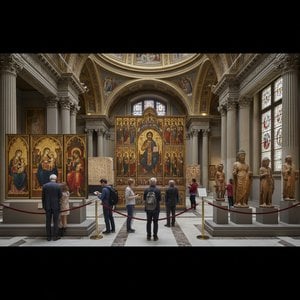
Sacred Narratives Embodied: A Comprehensive Exploration of Religious Iconography in Art History
Explore the rich history of religious iconography in art! Discover symbolism, movements & masterpieces from Byzantine to Renaissance periods. Expert insights for collectors and enthusiasts at ArtsDot.

Echa Wiary: Oddanie jako Centralny Motyw w Historii Zachodniej Sztuki
Odkryj fascynującą historię malarstwa religijnego! Analizujemy kluczowe dzieła, ikonografię i ewolucję oddania w sztuce od starożytności po współczesność. Ekspercka wiedza dla miłośników historii i kultury.