

 Podgląd w skali 1:1
 Wyślij jako kartkę
 Udostępnij
 Szczegóły dzieła
 Przewodnik

 Pobierz obraz
 Podobne obiekty
 RTG
RTG Pokaz slajdów
 Pytania i odpowiedzi
 Statystyki
Barbier

 Rozwiń treść
Giclée / Wydruk artystyczny
Wydruki giclée lub płótna o jakości muzealnej, szybka realizacja i szeroki wybór opcji wykończenia. ( Zamów ręcznie malowaną reprodukcję Przejdź do wersji cyfrowej)




P118B zł10

P118H zł10

P118W zł10

P438Z zł10

P508JH zł12

P508YH zł12

P805H zł10

P805Z zł10

P919BZ zł10

P919G zł10

P919XJ zł10

P959ZH zł10

P968JZ zł12

W106C zł8

W218G zł10

W218JH zł8

W218Y zł10

W307PJ zł10

W316G zł10

W316PJ zł8

W316Y zł10

W398PJ zł8

W4111J zł10

W500HY zł15

W500JH zł15

W692G zł12

W849H zł8

W940BG zł15

W953PJ zł8




Wybierz spośród naszych standardowych rozmiarów, które zachowują oryginalne proporcje dzieła sztuki.

Wpisz wymaganą szerokość i wysokość, aby dopasować grafikę do ramy lub ściany. Wydruk można jedynie przyciąć, nigdy nie powiększając go poza oryginalny obraz, dlatego format o innych proporcjach spowoduje utratę części kompozycji. Przed rozpoczęciem druku prześlemy Ci cyfrowy podgląd do zatwierdzenia. Obraz wyświetlany na tej stronie nie pokazuje rzeczywistego przycięcia — jedynie podgląd oddaje ten efekt.
Dostawa na cały świat () w ciągu 2 tygodni zamiast standardowych 4/5 tygodni. (5 Listopad)

Bezpłatna ekspresowa wysyłka na cały świat

Wysokiej jakości płótno lniane

Pełne ubezpieczenie przesyłki

Gwarancja zwrotu należności celnych i podatków importowych

Gwarancja wiernego odwzorowania kolorów

100-dniowa polityka zwrotów (tylko w przypadku wad)

Gwarancja 100% zwrotu pieniędzy

Zniżka przy zakupie wielu sztuk
 Opcja ze szkłem jest dostępna wyłącznie w rozmiarach poniżej 110 cm

Barbier
Giclée / Wydruk artystyczny
Wymiary reprodukcji
-


Cena całkowita
zł 245
Podobne dzieła


Biografia artysty
The Chronicler of Seventeenth-Century Splendor
Abraham Bosse stands as a pivotal figure in French Baroque art, celebrated primarily for his groundbreaking etchings that captured the vibrant tapestry of seventeenth-century Paris and its aristocratic circles. Born to Huguenot parents in Tours, France—a city scarred by religious conflict—Bosse’s formative years instilled within him a profound appreciation for detail and observation, qualities that would define his artistic vision throughout his prolific career. His father was a tailor, providing Bosse with an early understanding of craftsmanship and meticulous rendering, skills he would later translate into the exacting precision of his prints.
The trajectory of his life took a decisive turn when he moved toward greater horizons, embarking on a formal apprenticeship with Melchior Tavernier, an Antwerp-born engraver and publisher, around 1620. This partnership proved instrumental in establishing his reputation as one of the era's foremost printmakers. Tavernier’s influence extended beyond mere technical guidance; he fostered Bosse’s burgeoning fascination with artistic innovation and encouraged him to explore diverse subjects. Early etchings, notably those produced under Tavernier’s patronage, demonstrated a nascent stylistic sensibility rooted in Dutch and Flemish art traditions—a deliberate choice that simultaneously honored established precedents while subtly injecting them with distinctly French nuances.
Technical Mastery and the Callot Influence
A pivotal encounter with Jacques Callot in Paris around 1630 irrevocably altered Bosse's artistic trajectory. Callot’s revolutionary etching techniques—characterized by a remarkable level of textural detail and a masterful manipulation of tonal gradation—became an immediate inspiration for Bosse, who enthusiastically adopted these innovations. This embrace of Callot’s approach resulted in prints that possessed an unparalleled realism, allowing Bosse to render the delicate textures of lace, the sheen of silk, and the complex architectural perspectives of Parisian interiors with breathtaking clarity.
Bosse's work often transcended simple documentation, moving into the realm of social commentary and allegorical depth. His ability to weave together the mundane and the magnificent is evident in several key themes of his oeuvre:
- The Elegance of Social Ritual: Through works like Musical Society (1635), he captured the lively, sophisticated gatherings of the Parisian elite, documenting the era's social etiquette and musical culture.
- Sensory Allegories: In masterpieces such as The Five Senses: Hearing (1635), Bosse utilized his technical prowess to explore human perception, blending scenes of musicians and historical drama into a singular, evocative composition.
- Narrative Grandeur: His engravings, including Roger Showing a Gallery of Paintings to Several Cardinals (1656), demonstrated his capacity for dramatic storytelling, utilizing intricate detail to depict biblical figures amidst courtly intrigue.
Legacy and Historical Significance
Beyond the copperplate, Bosse’s impact on the art world was institutional and enduring. As a founding member of the Académie Royale, he helped shape the formal standards of French art, ensuring that the precision and observational rigor he championed would become hallmarks of the national style. His meticulous attention to fashion and interior design has made his work an invaluable primary source for historians seeking to understand the material culture of the 17th century.
The influence of Bosse’s unique blend of realism and technical innovation extended far beyond the borders of France, reaching later masters such as William Hogarth. By bridging the gap between the meticulous traditions of Northern Europe and the burgeoning grandeur of the French Baroque, Abraham Bosse created a visual language that remains as captivating today as it was during the reign of Louis XIV. His legacy lives on in every fine line of his etchings, which continue to breathe life into the vanished world of old Paris.

Abraham Bosse
1604 - 1676 , France
Krótka nota
- Full Name: Abraham Bosse
- Nationality: French
- Date Of Birth: 1604
- Date Of Death: 1676
- Place Of Birth: Tours, France
- Notable Artworks:
- The Five Senses: Hearing
- Barbier
- Roger Showing a Gallery of Paintings
- Artistic Movement Or Style: Baroque
- Artists Who Influenced This Artist:
- Jacques Bellange
- Jacque Callot
- Artists Or Movements Influenced By This Artist: ['William Hogarth']
Powiązane artykuły

Georges Barbier: A Synthesis of Art Nouveau Elegance & Early 20th-Century Fashion Illustration
Explore the exquisite world of Georges Barbier, a leading Art Nouveau illustrator celebrated for his opulent fashion designs & masterful pochoir technique. Discover his legacy and find collectible art at ArtsDot.

The Intricate World of Etching: A Historical Survey of Technique, Aesthetic Evolution, and Enduring Artistic Impact
Explore the rich history of etching, from its origins to modern practice. Discover techniques, key artists like Rembrandt, and insights for collectors. A comprehensive guide by ArtsDot.
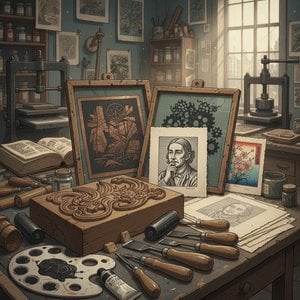
The Enduring Legacy of Printmaking: Techniques, Themes & Artistic Innovation Across Centuries
Explore the rich history of printmaking with ArtsDot. Discover techniques from intaglio to lithography, learn about collecting valuable prints & find museum-quality reproductions. Expert insights for art enthusiasts and collectors.

Rytownictwo artystyczne: Historia, techniki i trwałe dziedzictwo w sztuce
Poznaj historię i techniki grafiki artystycznej – od drzeworytu po litografię. Ekspercka analiza, wpływ na ikonografię i współczesną sztukę. Odkryj trwałe dziedzictwo rytownictwa!

10 Legendarnych Rycin, Które Zrewolucjonizowały Sztukę | ArtsDot
Odkryj 10 legendarnych rycin Rembrandta, Dürera i Goi! Poznaj historię mistrzów grafiki, ich techniki i wpływ na sztukę. Reprodukcje najwyższej jakości – idealne do Twojego wnętrza. ArtsDot.com