

 Podgląd w skali 1:1
 Wyślij jako kartkę
 Udostępnij
 Szczegóły dzieła
 Przewodnik

 Pobierz obraz
 Podobne obiekty
 RTG
RTG Pokaz slajdów
 Pytania i odpowiedzi
 Statystyki
Kultur


 Rozwiń treść
Dzieło sztuki prezentowane na tej stronie podlega ochronie prawem autorskim, co oznacza, że nie mamy prawa do tworzenia ani sprzedaży jego identycznej reprodukcji. Ochrona ta jest egzekwowana na mocy umów międzynarodowych, takich jak Konwencja berneńska oraz przez przepisy prawa krajowego, w tym te określone w Prawo autorskie USA – Tytuł 17.
Metoda ta jest w pełni zgodna z przepisami prawa autorskiego, ponieważ nie polega na kopiowaniu ani powielaniu chronionego dzieła. Stanowi ona kreatywną reinterpretację – nowy obraz, który czerpie inspirację z oryginału, ale nie jest z nim tożsamy.
Giclée / Wydruk artystyczny
Wydruki giclée lub płótna o jakości muzealnej, szybka realizacja i szeroki wybór opcji wykończenia. ( Zamów ręcznie malowaną reprodukcję Przejdź do wersji cyfrowej)




































Wybierz spośród naszych standardowych rozmiarów, które zachowują oryginalne proporcje dzieła sztuki.

Wpisz wymaganą szerokość i wysokość, aby dopasować grafikę do ramy lub ściany. Wydruk można jedynie przyciąć, nigdy nie powiększając go poza oryginalny obraz, dlatego format o innych proporcjach spowoduje utratę części kompozycji. Przed rozpoczęciem druku prześlemy Ci cyfrowy podgląd do zatwierdzenia. Obraz wyświetlany na tej stronie nie pokazuje rzeczywistego przycięcia — jedynie podgląd oddaje ten efekt.
Dostawa na cały świat () w ciągu 2 tygodni zamiast standardowych 4/5 tygodni. (12 Listopad)

Bezpłatna ekspresowa wysyłka na cały świat

Wysokiej jakości płótno lniane

Pełne ubezpieczenie przesyłki

Gwarancja zwrotu należności celnych i podatków importowych

Gwarancja wiernego odwzorowania kolorów

100-dniowa polityka zwrotów (tylko w przypadku wad)

Gwarancja 100% zwrotu pieniędzy

Zniżka przy zakupie wielu sztuk
 Opcja ze szkłem jest dostępna wyłącznie w rozmiarach poniżej 110 cm

Kultur
Giclée / Wydruk artystyczny
Wymiary reprodukcji
-


Cena całkowita
zł 246
Podobne dzieła


Biografia artysty
A Legacy Carved in Resilience: The Life of Aaron J. Goodelman
Aaron J. Goodelman was far more than a mere sculptor; he was a visual chronicler of the human struggle, an artist whose hands shaped the heavy truths of the twentieth century. Born in 1890 in Ataki, Bessarabia—a land now known as Moldova—his early years were shadowed by the specter of antisemitic violence and pogroms that swept through Eastern Europe. This atmosphere of instability prompted his migration to the United States in 1904, a journey that would transplant his creative soul from the turbulent landscapes of Ukraine to the vibrant, industrial pulse of New York City. His formative education at the Odessa Art School provided the foundational bedrock upon which he would later build a sophisticated, international aesthetic, blending the classical rigor of European traditions with a modern, socially conscious urgency. As his artistic identity matured, Goodelman sought the highest levels of formal training, attending the prestigious Cooper Union and the National Academy of Design in New York. His pursuit of excellence eventually led him to Paris by 1914, where he immersed himself in the legendary Beaux-Arts tradition under the tutelage of Jean Antoine Injalbert. However, the onset of World War I severed his European apprenticeship, forcing a return to America. This period of transition marked the beginning of a profound stylistic evolution, as the classical elegance he learned in Paris began to collide with the raw, industrial realities of American life.The Intersection of Art and Activism
During the 1920s and 1930s, Goodelman’s work became inextricably linked to his political convictions. To sustain himself amidst the economic hardships of the era, he worked as a machinist—a vocation that likely deepened his intimate understanding of texture, weight, and the physical properties of metal and stone. This period of labor coincided with his involvement in the Communist Party, an affiliation that channeled his creative energy into powerful social commentaries. His sculptures from this era were not merely aesthetic objects but were potent instruments of protest and political expression. One of his most significant contributions to the discourse of social justice was his participation in the 1935 New York anti-lynching exhibitions. Through his sculptural medium, he confronted the horrific reality of racial violence in the United States, using form to denounce the systemic racism that plagued the nation. This commitment to the marginalized is perhaps best exemplified by his striking work Kultur (1940). A masterful piece of pearwood incorporating found iron shackles and chains, this sculpture serves as a dual indictment: it condemns both the lynchings of African Americans and the rising tide of Nazi-driven racial superiority in Germany. In such works, Goodelman achieved a rare synthesis of geometric abstraction and visceral, symbolic storytelling.Memory, Trauma, and Final Reflections
In the wake of World War II, the trajectory of Goodelman’s art shifted once more, moving toward the profound and somber themes of the Holocaust. Having witnessed the devastation of the very landscapes from which he emerged, his later works became vessels for remembrance and the processing of collective trauma. His ability to translate the unspeakable horrors of history into tangible, emotive forms solidified his reputation as a sculptor of immense psychological depth. He did not merely depict tragedy; he sculpted the weight of memory itself. Beyond his studio, Goodelman remained a vital figure in the American art community, co-founding the Society of American Sculptors and serving as an art editor for the Yiddish Culture Association (YKUF). His later years were spent sharing his vast knowledge as an instructor at the City College of New York, ensuring that his dedication to both craft and conscience would endure in future generations. Today, the works of Aaron J. Goodelman—ranging from the contemplative Man with Wheelbarrow to the textured, Cubist-inspired Untitled (Man at Machine)—stand as enduring monuments to a life spent navigating the complexities of justice, identity, and the indomitable human spirit.
Krótka nota
- Artistic Movement Or Style: Communist Art
- Artists Or Movements Influenced By This Artist: ['Holocaust']
- Artists Who Influenced This Artist: ['Jean Antoine Injalbert']
- Date Of Death: 1978
- Full Name: Aaron J. Goodelman
- Nationality: American
- Notable Artworks: ['Kultur']
- Place Of Birth: Ataki, Moldova
Powiązane artykuły

Trwała Forma: Rzeźba w Historii – Technika i Rezonans Emocjonalny
Poznaj historię rzeźby od antyku do współczesności! Ekspercka analiza technik, stylów i emocjonalnego wpływu arcydzieł. Inspiracje dla kolekcjonerów i miłośników sztuki.

10 Legendarnych Brązów, Które Zrewolucjonizowały Sztukę | ArtsDot
Odkryj 10 legendarnych rzeźb brązowych, które zrewolucjonizowały sztukę! Poznaj historie Rodina, Donatello i innych mistrzów. Inspiracje wnętrzarskie & reprodukcje najwyższej jakości na ArtsDot.com.

Trwałe Formy: Ewolucja Technik i Tematów w Rzeźbie Przez Wieki – Od Antyku do Renesansu
Poznaj fascynującą historię rzeźby od antyku do renesansu! Odkryj techniki, wybitnych artystów i wpływ na współczesną sztukę. Ekspercka analiza dla kolekcjonerów i miłośników.
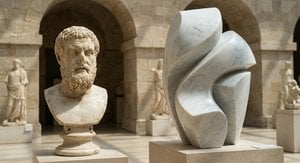
Urok marmuru w historii sztuki: od klasycznej rzeźby do nowoczesnej abstrakcji
Odkryj fascynującą historię rzeźby marmurowej – od klasycznych arcydzieł po nowoczesną abstrakcję. Poznaj techniki, artystów i wartość kolekcjonerską tego wyjątkowego medium. Ekspercka analiza dla miłośników sztuki.

10 Legendarnych Brązów Rzeźbiarskich, Które Zmieniły Sztukę | ArtsDot
Odkryj 10 legendarnych rzeźb brązowych od Rodina, Degasa i innych mistrzów! Poznaj historię powstania arcydzieł sztuki i inspiruj się do dekoracji wnętrz. Reprodukcje najwyższej jakości na ArtsDot.com – zobacz kolekcję!