

 Forhåndsvisning
 Send
Send Del
Del
 Vis detaljer
 Utskriftsvennlig guide

 Last ned bilde
 Liknende objekter
 Røntgenundersøkelse
 Lysbildefremvisning
 Spørsmål og svar
 Statistikk
Work

- 136.0 x 136.0 cm


 Vis hele teksten
Kunstverket som vises på denne siden er beskyttet av opphavsretten, noe som betyr at vi ikke har juridisk tillatelse til å lage eller selge identiske reproduksjoner. Denne beskyttelsen håndheves i henhold til internasjonale avtaler som for eksempel Bernerkonvensjonen og av nasjonale lover, inkludert de som er fastsatt i Amerikansk lov om opphavsrett – Tittel 17.
Denne metoden er i fullt samsvar med opphavsrettslige regler, da den ikke innebærer kopiering eller duplisering av det beskyttede kunstverket. I stedet er det snakk om en kreativ nytolkning – et nytt maleri som er inspirert av originalen, men ikke identisk med den.
Giclée / Kunsttrykk
Giclée- eller lerretsprint av museumskvalitet med rask produksjon og fleksible valgmuligheter for etterbehandling. ( Kjøp håndmalt maleri Bytt til digitalt bilde)




































Velg mellom våre forhåndsdefinerte størrelser som bevarer kunstverkets opprinnelige proporsjoner.

Skriv inn ønsket bredde og høyde for å tilpasse trykket til din ramme eller vegg. Et trykk kan kun beskjæres, aldri skaleres opp utover motivets opprinnelige størrelse, noe som betyr at et format med andre proporsjoner vil føre til tap av deler av bildet. Vi sender deg en digital mockup for godkjenning før vi starter trykkeprosessen. Bildet som vises på denne siden viser ikke den faktiske beskjæringen — det er kun mockuppen som viser dette.
Verdensomspennende levering () på 2 uker i stedet for standard 4/5 uker. (21 November)

Gratis ekspressfrakt over hele verden

Lerretsduk av lin av høy kvalitet

Full transportforsikring

Garanti for refusjon av toll og importavgifter

Garantert fargegjengivelse

100 dagers returrett ved fabrikasjonsfeil

100% pengene tilbake-garanti

Rabatt ved flere kjøp
 Glassalternativet er kun tilgjengelig i størrelser under 110 cm

Work
Giclée / Kunsttrykk
Størrelse på reproduksjon
-


Totalpris for valgte alternativer
Nkr 589
Lignende kunstverk


Om kunstneren
A Pioneer of Korean Abstraction: The Life and Art of Yoo Youngkuk
Yoo Youngkuk, a name now inextricably linked to the birth of abstract art in Korea, stands as a pivotal figure during a period defined by profound social and political upheaval. Born in 1916 in the serene coastal town of Uljin, nestled within the majestic Taebaek Mountains, his artistic journey was one of relentless exploration—a quest to forge a new visual language for a nation grappling with its identity and embracing modernity. From his earliest years, immersed in the breathtaking beauty of the Korean landscape – particularly those towering mountains that would become a recurring motif throughout his career – Yoo developed an intimate connection to nature, a sentiment subtly woven into even his most rigorously geometric compositions. This formative experience instilled within him a deep-seated desire not merely to represent the external world but to distill its very essence into pure form and color. Yoo’s path toward abstraction began with formal training at Bunka Gakuin University in Tokyo, where he graduated from the oil painting department in 1938. It was here that he encountered the burgeoning currents of Western abstract movements and engaged in stimulating dialogues with pioneering Japanese artists like Murai Masanari and Hasegawa Saburo—figures who profoundly shaped his early experimentation and solidified his commitment to non-representational art.Forging a New Path: Sinsasil-pa and Early Experimentation
Returning to Korea in 1943 amidst the turmoil of World War II, Yoo faced formidable challenges in pursuing his artistic vision. The war years were marked by hardship and disruption, forcing him to sustain himself through various means while maintaining an unwavering dedication to his art. Despite these difficulties, with the liberation of Korea and the subsequent establishment of the Republic of Korea, a new era dawned for the nation’s artistic community. In 1948, Yoo Youngkuk joined forces with Kim Whanki and Lee Kyusang to form *Sinsasil-pa* (New Realism Group)—a watershed moment in Korean art history. This collective represented the first organized attempt to break free from traditional representational styles and embrace the possibilities of modern abstraction—a bold move that challenged conventional artistic norms and ignited debate within the Korean art world. The group’s manifesto called for an art that reflected the realities of post-war Korea, interpreted through a lens of abstraction—a truly innovative approach. Yoo's early works during this period are characterized by a dynamic interplay between color fields and emerging geometric forms, hinting at the direction his style would take in later years. He also briefly shared his expertise as a professor at Seoul National University for two years, nurturing the next generation of artists and shaping the future of Korean art.The Mountain Within: Evolution of Style and Symbolic Resonance
Throughout the 1950s and early 60s, Yoo Youngkuk’s artistic style underwent a significant transformation. While his earlier works explored color field painting, he gradually began to incorporate more defined geometric shapes, influenced by his ongoing engagement with nature and his personal experiences. This period witnessed the emergence of what would become his signature motif: the mountain. Often referred to as “the painter of mountains,” Yoo didn’t depict these majestic peaks in a literal sense; rather, he abstracted their essence—their solidity, their grandeur, their spiritual resonance—into powerful compositions of color and form. The mountain became a potent symbol of Korea itself, representing resilience, endurance, and the enduring spirit of the nation. He sought to capture not just the visual appearance of the mountains but also the feeling they evoked – a sense of stability amidst chaos, a connection to something larger than oneself. This symbolic depth is what elevates his work beyond mere landscape painting. Following his participation in the São Paulo Biennial in 1963, Yoo experienced a period of artistic consolidation, withdrawing from group activities to focus on solo exhibitions held every other year for two decades. This allowed him to refine his unique style, pushing the boundaries of geometric abstraction and exploring increasingly complex relationships between color, line, and space.A Legacy of Innovation: Recognition and Enduring Influence
Yoo Youngkuk’s contributions to Korean modern art were widely recognized during his lifetime, culminating in a survey by *Monthly Art* magazine that hailed him as the most outstanding artist among over a hundred of his contemporaries. His work has been exhibited extensively both domestically and internationally, solidifying his position as a leading figure in the global abstract art scene. His legacy extends beyond his paintings; he paved the way for subsequent generations of Korean artists to explore abstraction and experiment with new forms of expression. Yoo’s unwavering commitment to artistic innovation, coupled with his deep connection to Korean culture and landscape, continues to inspire artists today. His ability to translate the emotional and spiritual qualities of nature into a purely abstract visual language remains a testament to his profound artistry and enduring influence. Exploring Yoo Youngkuk's masterpieces – such as “Mountain” or “Work”– at platforms like ArtsDot.com offers a glimpse into the mind of a true pioneer, an artist who dared to break with tradition and forge a new path for Korean art. His work stands as a powerful reminder of the transformative power of abstraction and its ability to capture the essence of both the external world and the inner self.Key Facts
* **Artistic Movement/Style:** Abstract Painting * **Influenced by:** Kim Whanki * **Influenced by:** Murai Masanari, Hasegawa Saburo * **Date of Birth:** 1916 * **Date of Death:** 2002 * **Full Name:** Yoo Youngkuk * **Nationality:** Korean * **Notable Works:** Mountain, Work
Yoo Youngkuk
1916 - 2002 , Korea
Kort om kunstneren
- Artistic Movement Or Style: Geometric abstraksjon
- Artists Or Movements Influenced By This Artist:
- Russian Constructivism
- Suprematism
- Artists Who Influenced This Artist:
- Murai Masanari
- Hasegawa Saburo
- Date Of Birth: 1916
- Full Name: Yoo Youngkuk
- Nationality: Korean
- Notable Artworks:
- Mountain
- Work
- Place Of Birth: Uljin-gun, Korea
Relaterte artikler
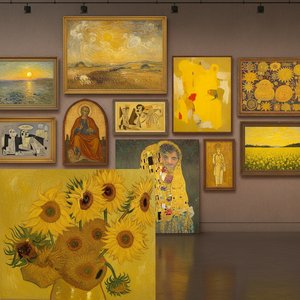
Gylne Mesterverk: Topp 10 Maler Dominert av Kromgul – Kunst og Interiørinspirasjon
Oppdag topp 10 malerier dominert av kromgul! Fra Van Goghs solsikker til Monets stråfelt – utforsk historien, teknikken og skjønnheten bak ikoniske kunstverk. Finn museumskvalitets reproduksjoner & interiørinspirasjon på ArtsDot.com.

Neoplasticism: A Radical Geometry of Utopian Vision – Origins, Principles, and Enduring Influence
Explore the revolutionary Neoplasticism movement – De Stijl – with ArtsDot. Discover Mondrian & van Doesburg's principles, influence on modern art, and how to collect key works. Expert insights for discerning art enthusiasts.

Beyond Form & Color: Geometric Abstraction's Enduring Legacy in Art History
Explore the captivating world of geometric abstraction! Discover its origins, key artists like Malevich & Mondrian, and why this movement remains highly valued by art collectors today. Expert insights at ArtsDot.

Geometrisk Abstraksjon: Topp 10 Mesterverk for Kunstelskere – ArtsDot.com
Utforsk de 10 mest innflytelsesrike verkene innen geometrisk abstraksjon! Oppdag historiene bak Mondrian, Kandinsky og Malevich. Finn inspirasjon til interiøret med ArtsDot.coms eksklusive reproduksjoner – museumskvalitet for ditt hjem. Utforsk samlingen online!

25 Must-See Masterpieces at Statens Museum For Kunst, Copenhagen
Explore 25 iconic masterpieces from Statens Museum For Kunst. From Nordic art to the Renaissance, discover them all on ArtsDot.com.