Forhåndsvisning
 Send
Send Del
Del
 Vis detaljer
 Utskriftsvennlig guide

 Last ned bilde
 Liknende objekter
 Røntgenundersøkelse
 Lysbildefremvisning
 Spørsmål og svar
 Statistikk
The Pumpkin Patch


 Vis hele teksten
Giclée / Kunsttrykk
Giclée- eller lerretsprint av museumskvalitet med rask produksjon og fleksible valgmuligheter for etterbehandling. ( Kjøp håndmalt maleri Bytt til digitalt bilde)




P118B Nkr10

P118H Nkr10

P118W Nkr10

P438Z Nkr10

P508JH Nkr12

P508YH Nkr12

P805H Nkr10

P805Z Nkr10

P919BZ Nkr10

P919G Nkr10

P919XJ Nkr10

P959ZH Nkr10

P968JZ Nkr12

W106C Nkr8

W218G Nkr10

W218JH Nkr8

W218Y Nkr10

W307PJ Nkr10

W316G Nkr10

W316PJ Nkr8

W316Y Nkr10

W398PJ Nkr8

W4111J Nkr10

W500HY Nkr15

W500JH Nkr15

W692G Nkr12

W849H Nkr8

W940BG Nkr15

W953PJ Nkr8




Velg mellom våre forhåndsdefinerte størrelser som bevarer kunstverkets opprinnelige proporsjoner.

Skriv inn ønsket bredde og høyde for å tilpasse trykket til din ramme eller vegg. Et trykk kan kun beskjæres, aldri skaleres opp utover motivets opprinnelige størrelse, noe som betyr at et format med andre proporsjoner vil føre til tap av deler av bildet. Vi sender deg en digital mockup for godkjenning før vi starter trykkeprosessen. Bildet som vises på denne siden viser ikke den faktiske beskjæringen — det er kun mockuppen som viser dette.
Verdensomspennende levering () på 2 uker i stedet for standard 4/5 uker. (11 November)

Gratis ekspressfrakt over hele verden

Lerretsduk av lin av høy kvalitet

Full transportforsikring

Garanti for refusjon av toll og importavgifter

Garantert fargegjengivelse

100 dagers returrett ved fabrikasjonsfeil

100% pengene tilbake-garanti

Rabatt ved flere kjøp
 Glassalternativet er kun tilgjengelig i størrelser under 110 cm

The Pumpkin Patch
Giclée / Kunsttrykk
Størrelse på reproduksjon
-


Totalpris for valgte alternativer
Nkr 600
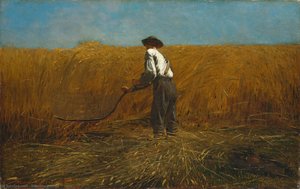
A Moment Frozen in Time: The Significance of Winslow Homer’s “The Pumpkin Patch”
Winslow Homer's "The Pumpkin Patch," painted in 1878, isn’t merely a depiction of autumnal labor; it’s a poignant snapshot of rural America at the cusp of profound change. This watercolor masterpiece, currently residing within the Canajoharie Library and Art Gallery, invites us into a scene brimming with quiet industry, community spirit, and a subtle undercurrent of nostalgia for a disappearing way of life. Homer, a master of capturing the essence of everyday American experience, skillfully employs his signature technique—a delicate balance between observation and expressive brushwork—to create an atmosphere both warm and deeply resonant.
The painting immediately draws the eye to the group of figures engaged in the harvest – men and women working together with a shared purpose. Their postures, rendered with remarkable sensitivity, suggest not just physical exertion but also a sense of camaraderie and mutual respect. Homer’s use of earthy tones—russets, ochres, and deep greens—dominates the palette, mirroring the landscape itself and grounding the scene in the tangible realities of rural life. The soft, diffused light, characteristic of his watercolor style, lends an almost dreamlike quality to the composition, softening the edges and creating a sense of intimacy.
The Artist’s Approach: Watercolor as a Vehicle for Emotion
Homer's choice of watercolor is crucial to understanding the painting’s impact. Unlike the bolder strokes of oil paint, watercolor allows for a remarkable degree of transparency and luminosity. This technique perfectly suits Homer’s aim—to capture not just the appearance of the scene but also its emotional atmosphere. The subtle gradations of color, achieved through layering washes and delicate brushstrokes, evoke a sense of warmth and comfort, while simultaneously hinting at the hard work involved in the harvest.
Furthermore, Homer’s meticulous attention to detail—the individual pumpkins scattered across the field, the worn clothing of the workers, the subtle expressions on their faces—adds layers of complexity to the scene. He doesn't shy away from depicting the realities of rural labor, yet he does so with a remarkable degree of empathy and respect for his subjects.
A Window into 19th-Century America
"The Pumpkin Patch" offers a valuable glimpse into American life during the late 19th century. It reflects a period of rapid industrialization and urbanization, which were fundamentally altering the social fabric of the nation. The painting celebrates the enduring values of community, hard work, and self-sufficiency—qualities that were increasingly threatened by these changes. The scene speaks to a time when agriculture remained central to American identity, and families relied on each other for support and sustenance.
Beyond its immediate depiction of rural labor, the painting also carries symbolic weight. The abundance of pumpkins – a symbol of harvest, prosperity, and gratitude – suggests a celebration of the bounty of the land. The collective effort of the workers underscores the importance of community and shared responsibility. It’s a quiet testament to the dignity of honest work and the beauty of simple living.
Bringing Homer's Vision Home: High-Quality Reproductions
ArtsDot offers meticulously crafted, handmade oil paintings reproductions of “The Pumpkin Patch,” allowing art lovers to experience the artistry and emotional depth of this iconic American painting in their own homes. Our skilled artists utilize only the finest materials—traditional oils on canvas—to faithfully recreate every detail of Homer’s original work. We strive to preserve not just the visual appearance but also the spirit and atmosphere of the painting, ensuring that it remains a timeless treasure for generations to come.
Explore the full beauty of “The Pumpkin Patch” – and discover other exceptional reproductions by Winslow Homer – at ArtsDot.com. Let this evocative image transport you back to a simpler time, reminding us of the enduring values that shaped American culture.
Spørsmål og svar
Har "The Pumpkin Patch" sterke lys-mørke-kontraster?
Kontrastnivået i "The Pumpkin Patch" av Winslow Homer er Beskrivelse.
Hvilken orientering har "The Pumpkin Patch" av Winslow Homer?
"The Pumpkin Patch" av Winslow Homer er en Liggende format komposisjon. Det er lurt å sjekke proporsjonene før du velger trykkstørrelse.
Hvem er opphavspersonen til "The Pumpkin Patch", og hvilket år ble det laget?
"The Pumpkin Patch" ble skapt av Winslow Homer i 1878.
Lignende kunstverk


Om kunstneren
Livet og opprinnelsen til Winslow Homer
Winslow Homer ankom Boston, Massachusetts, den 24. februar 1836. Han var den andre av tre sønner født av Charles Savage Homer og Henrietta Maria Benson. Hans far, en kjøpmann, forlot til slutt familien for å søke lykken under gullrushet i California. Dette fraværet førte til at hjemmet ble formet av hans mor, Henrietta Maria Benson Homer. Hun var en begavet amatørakvarellist som ble hans første lærer, og hun overførte en unik måte å se verden på gjennom fargenes delikate anvendelse.
Gutten vokste opp i et hjem hvor kunstens stille arbeid var et kjent nærvær. Mens faren jaktet på fjerne muligheter, forble innflytelsen fra morens akvareller en konstant kraft. Denne tidlige eksponeringen for mediet bidro til å legge fundamentet for hans senere virke. Barndommen i det landlige Cambridge, Massachusetts, utgjorde en bakgrunn av et stødig og iakttakende liv, før han beveget seg mot det mer hektiske tempoet i det kommersielle arbeidslivet.
Tidlig liv, familie og opplæring
Oppveksten i de landlige områdene i Cambridge, Massachusetts, utgjorde en stille kulisse for hans tidlige år. Allerede i en alder av elleve år begynte han å skissere, og fant sin vei gjennom den enkle handlingen det er å tegne. Hans mor, en akvarellmaler som utførte studier av planter og blomster, ble hans første læremester. De hadde et nært forhold, og hun overførte både sitt kunstneriske talent og et bestemt temperament til ham. Hans far, en kjøpmann, var en rastløs mann som til slutt forlot familien for å søke lykken under gullrushet i California, og senere i Europa.
Som nittenåring begynte han i et toårig læretid hos J. H. Bufford, en kommersiell litograf i Boston. Det var en repetitiv og rutinepreget tilværelse. Dagene ble tilbrakt med arbeid på omslag til noter, en oppgave som krevde en helt særegen disiplin og en stødig hånd. Denne perioden med kommersielt arbeid bidro til å utvikle den klarheten og detaljrikdommen som senere skulle definere hans kunstneriske visjon. Han beveget seg etter hvert mot formell utdanning og gikk på kurs ved National Academy of Design frem til 1863. I løpet av denne tiden tilbrakte han også en kort periode som elev hos Frederic Rondel.
Den frilansende illustratøren og krigskorrespondenten
Innen 1857 var veien mot en uavhengig karriere som frilanser allerede lagt, etter en beslutning om å takke nei til en stilling hos Harper's Weekly. Han åpnet sitt eget atelier i Boston og tilbrakte nesten tjue år som illustratør. Hans tegninger dukket opp i en rekke publikasjoner, deriblant Ballou's Pictorial. I 1859 flyttet han til New York City, et skifte som plasserte ham midt i hjertet av landets utgiveraktivitet.
Utbruddet av den amerikanske borgerkrigen endret selve karakteren av hans observasjoner. Mellom 1861 og 1865 sendte Harper's ham til frontlinjene. Som "spesialkunstner" fikk han i oppgave å dokumentere livene til unionssoldatene i Virginia. Han tilbrakte tiden sin med å skissere de rå realitetene i leirlivet og de dramatiske scenene fra slagmarken. Disse skissene var ikke bare enkle tegninger; de var levende nedtegnelser av bevegelse og de stille, ofte tunge øyeblikkene som soldatene opplevde.
- Sharpshooter on Picket Duty (1862)
- Home, Sweet Home (1863)
- Prisoners from the Front (1866)
Kunstnerisk utvikling i New York og Europa
I 1859 flyttet Homer til New York City og åpnet et atelier i Tenth Street Studio Building. Denne flyttingen markerte et vendepunkt fra hans tidligere frilansarbeid mot en mer målrettet satsing på malerkunsten. Han viet tid til studier ved National Academy of Design frem til 1863, hvor han tok timer hos Frédéric Rondel. I løpet av disse årene begynte han å bevege seg bort fra de enkle omrissene i sine kommersielle graveringer og mot oljemalingens tyngde og dybde. Verkene fra denne perioden tematiserte ofte samtidens realiteter, inkludert krigens ringvirkninger på hjemmefronten.
De påfølgende årene brakte ham på reise gjennom delstaten New York, Virginia og Massachusetts. I 1867 tilbrakte han et år i Frankrike og besøkte Europa, en erfaring som sammenfalt med hans voksende interesse for landskapet. Innen 1870-tallet hadde fokuset hans skiftet mot skildringer av barndom og unge kvinner, noe som reflekterte en viss nostalgi for en enklere tid. Han var i ferd med å utvikle en stil som var objektiv og tro mot det han observerte, og han unngikk de polerte forfinelsene som man ofte fant ved datidens akademier.
I 1881 begynte han et toårig opphold i England, hvor han bodde i Cullercoats, nær Newcastle. Denne perioden med liv ved kysten skulle komme til å prege måten han tilnærmet seg havet på i sine senere år. Han var ikke lenger bare en illustratør av sosiale scener; han var i ferd med å bli en maler av selve elementene.
Maine-årene og de tropiske reisene
I 1884 flyttet Homer til Prout's Neck i Maine. Han ble værende der de neste tre tiårene, hvor han levde og malte i et atelier som hadde blitt utvidet og tilpasset for å møte hans kunstneriske behov. Bygningen lå ved en kyststrekning der Atlanterhavet var en uunngåelig og konstant tilstedeværelse. Han tilbrakte mye av sin tid der, og malte ofte fra en balkong med utsikt over det urolige vannet, selv i de harde vintermånedene.
De tunge og nådeløse vintrene i Maine inspirerte til en endring i omgivelsene. Mellom 1884 og 1905 foretok han flere reiser fra kysten i Maine og mot de varme tropene. Han reiste til Bahamas, Florida, Cuba og Bermuda. Disse utfluktene førte ham til Karibia og Adirondack-fjellene, samt gjennom Canada. I disse varmere strøkene tok han i bruk akvarellen for å fange det unike lyset og de varierte teksturene i det fremmede landskapet.
- Natural Bridge, Bahamas (1898)
- Woman Standing by a Gate, Bahamas (1885)
- Spanish Moss at Tampa (1886)
Teknikk, stil og kunstnerisk mesterskap
Hans tidlige arbeid med kommersielle graveringer hvilte på rene konturer og forenklede former. Han benyttet dramatiske kontraster mellom lys og mørke for å definere sine motiver, en grafisk klarhet som han senere tok med seg inn i sine malerier. I hans store atelierverk i olje bærer malingen med seg en følelse av tyngde og tetthet. Han tok ofte i bruk chiaroscuro, hvor samspillet mellom lys og skygge ble brukt til å skulpturere form og bygge opp en dyp atmosfære på lerretet.
Han var like produktiv med akvarell. Hans tilnærming til dette mediet var flytende og direkte. Da han malte fra Karibia, utnyttet han akvarellens iboende transparens for å gjenskape den krystallklare renheten i det bahamanske havet. Denne evnen til å mestre både den tunge påføringen av oljemaling og de delikate vaskene i akvarell, gjorde det mulig for ham å fange naturens mange og ulike ansikter.
Nøkkelverk og mesterverk
Hans tidlige arbeider viser et intenst fokus på de små detaljene i det hverdagslige livet. I Lady Wearing Spectacles, malt rundt 1840, ser vi motivet sitte i en stol, mens brillene fanger lyset på en subtil måte. Denne perioden i hans kunstneriske virke reflekterer en stille og ettertenksom observasjon av menneskene rundt ham. Etter hvert som årene gikk og han beveget seg mot frontlinjene under den amerikanske borgerkrigen, gjennomgikk motivene en drastisk endring. Han skapte verk som Sharpshooter on Picket Duty i 1862 og Home, Sweet Home i 1863, malerier og skisser som fanget krigens brutale realitet med en dyp menneskelig nerve.
Havet ble en konstant og uunngåelig tilstedeværelse i hans senere år. Breezing Up, malt rundt 1876, fanger bevegelsen i en båt som fanger en gunstig vind, og utstråler en unik energi. Innen 1885 hadde fokuset hans skiftet mot fiskerens kamp for tilværelsen i The Fog Warning, Halibut Fishing. Han vendte ofte tilbake til den værbitte kysten i Maine, hvor malingens tyngde og lerretets tekstur speilet den tunge, saltmettede atmosfæren i Atlanterhavet. I 1896 presenterte The Lookout - "All's Well" et perspektiv fra landets ytterkant, med blikket rettet utover mot den uendelige horisonten.
Hans siste år ble tilbrakt med å betrakte tidevannet og naturens voldsomme krefter. The Gulf Stream, skapt i 1906, viser et menneske som står ansikt til ansikt med havets enorme uendelighet. Hans siste fullførte verk, Driftwood, ble malt i 1909. Disse sene maleriene bærer med seg en nesten taktil følelse av den fysiske verden – vannets sprut, sandens grovhet og havstrømmenes nådeløse kraft.
- Lady Wearing Spectacles, ca. 1840
- Sharpshooter on Picket Duty, 1862
- Home, Sweet Home, 1863
- Breezing Up, ca. 1876
- The Fog Warning, Halibut Fishing, 1885
- The Lookout - "All's Well", 1896
De siste årene og hans bortgang
Atelieret i Prout's Neck ble selve sentrum i hans verden. Fra 1884 og helt til hans siste tid, levde og malte han innenfor disse veggene, i et rom som var blitt utvidet og omformet for å tjene hans kunstneriske behov. Han tilbrakte sine siste tiår her, hvor han arbeidet gjennom årstidene og fant en egen rytme i det skiftende kystlyset. Bygningen, en toetasjes struktur på rundt 200 kvadratmeter, rommet hans liv og hans virke med en stille og urokkelig tilstedeværelse.
Han gikk bort i Maine i 1910. Slutten kom i hans eget atelier den 30. september 1910. Han var en mann som hadde viet hele sitt liv til å observere havets bevegelser og luftens tyngde, og han forble i dette rommet helt til det siste. Hans levninger ble stedt til hvile ved Mount Auburn, på parsell 563 langs Lily Path.
Arv og historisk betydning
Homer forblir en sentral skikkelse i utviklingen av amerikansk realisme. Hans verker fungerer som et vindu inn i det 19. århundrets amerikanske erfaring, og fanger en nasjon midt i en periode med raske endringer. Han søkte ikke de polerte, akademiske stilene fra Europa, men fokuserte i stedet på de ærlige og ofte vanskelige realitetene i sitt eget land. Denne forpliktelsen til å se ting nøyaktig slik de var – fra ettervirkningene av borgerkrigen til kystens skiftende landskap – sikrer hans plass blant de viktigste kunstnerne i den amerikanske tradisjonen.
Hans evne til å dokumentere spenningen mellom menneskelivet og den naturlige verden fortsetter å påvirke hvordan samtidige kunstnere tilnærmer seg sine motiver. Han beveget seg bort fra ungdomstidens idylliske scener for å konfrontere havets elementære krefter og den stille motstandskraften hos mennesker som møter motgang. Dette skiftet fra pastorale utsikter til en mer direkte, observasjonsbasert stil bidro til å definere en unikt amerikansk måte å se på. Hans malerier tilbyr ingen romantisert versjon av historien; de tilbyr et vitnesbyrd om den.
- The Gulf Stream (1906)
- Breezing Up (1876)
- The Fog Warning (1885)
- Undertow (1886)
- Driftwood (1909)
Hvor du kan se verkene i dag
Å spore den fysiske tilstedeværelsen av hans kunstneriske arv krever en reise mellom flere av de største institusjonene i USA. Metropolitan Museum of Art i New York rommer hele 26 av hans verk. Like i nærheten holder Brooklyn Museum i New York City en samling på 17 verk. For de som søker mot hovedstaden, innehar National Gallery of Art i Washington 23 malerier og tegninger.
I det nordøstlige hjørnene av landet finner vi Museum of Fine Arts i Boston, som bevarer 16 verk i sin samling. Lenger sør, ved Sterling and Francine Clark Art Institute i Williamsburg, finnes 12 utvalgte stykker. Disse samlingene gir en unik mulighet til å vitne utviklingen i hans penselstrøk, fra de tidlige, rå skissene fra borgerkrigen til de dype, teksturerte lagene fra hans senere år.
- The Fog Warning, Halibut Fishing (1885)
- The Gulf Stream (1906)
- Driftwood (1909)
- Breezing Up (A Fair Wind) (1876)
- Old Settlers (1892)

Winslow Homer
1836 - 1910 , USA
Kort om kunstneren
- Artistic Movement Or Style: Amerikansk realisme
- Artists Or Movements Influenced By This Artist: ['Amerikansk realisme']
- Artists Who Influenced This Artist:
- Courbet
- Millet
- Date Of Birth: 1836
- Date Of Death: 1910
- Full Name: Winslow Homer
- Nationality: Amerikansk
- Notable Artworks:
- Breezing Up (A Fair Wind)
- The Gulf Stream
- Innocence
- Man of Science
- The Fog Warning
- Place Of Birth: Boston, USA
Relaterte artikler

Winslow Homer: Topp 25 Kunstverk – Malerier som Fanger Amerikas Ånd | ArtsDot.no
Oppdag de 25 mest ikoniske maleriene av Winslow Homer! Utforsk amerikansk kunst, realistisk stil og vakre landskap. Finn inspirasjon til interiørdesign & kjøp eksklusive reproduksjoner på ArtsDot.com.

1800-tallets Mesterverk: 10 Kunstverk som Definerer Epoken – ArtsDot.no
Opplev 1800-tallets kunst gjennom 10 ikoniske mesterverk! Fra romantikk til impresjonisme – lær om Munch, Van Gogh og Monet. Finn museumskvalitets reproduksjoner & interiørinspirasjon på ArtsDot.com. Utforsk samlingen online!

American Realism: Social Commentary & Artistic Representation in Early 20th-Century Painting
Explore the powerful social commentary & artistic representation of American Realism. Discover key artists like Bellows & Sloan, and understand the movement's lasting impact on 20th-century art history.

10 Masterpieces of American Impressionism That Captured Light and Motion
Experience the light of American Impressionism through 10 iconic works. Explore the full collection online at ArtsDot.com.
Utover Trykket: Hvorfor Eksklusive Rom Velger Håndmalte Reproduksjoner – Tekstur, Dybde og Kunstnerisk Verdi i en Luksuriøs Kontekst
Utforsk håndmalte reproduksjoner av museumskvalitet hos ArtsDot. Eksklusive kunstverk, skreddersydd tilpassning og ekspertise for kresne samlere. Invester i varig skjønnhet og autentisk kvalitet.