


Bildet følger dine valg: , .
Beskrivelse av objektet
Explore Winslow, River, Logging by Winslow Homer! A stunning watercolor capturing nature & rustic life. Admire its realism, impressionistic touch & serene beauty.
 Vis hele teksten
Om kunstneren
Winslow Homer (1836-1910): Amerikansk realistisk kunstner kjent for sine kraftfulle bilder av hav og landskap! Opplev klassiske verk som Breezing Up og Gulf Stream.
Håndlaget oljereproduksjon
Håndmalt olje på lerret i din valgte størrelse og ramme, laget på bestilling av våre kunstnere. ( Bytt til trykk Bytt til digitalt bilde)
Les mer om dette maleriet
 Forhåndsvisning
 Send
Send Del
Del
 Vis detaljer
 Utskriftsvennlig guide

 Last ned bilde
 Liknende objekter
 Røntgenundersøkelse
 Lysbildefremvisning
 Spørsmål og svar
 Statistikk
Bestill maleriet ditt i fire enkle trinn
Ta deg god tid. Du kan endre alle svar; prisen i handlekurven din oppdateres etter hvert valg.
1 Trinn én av fire
Hvilken størrelse ønsker du?
Disse størrelsene bevarer de originale proporsjonene til maleriet. Tegningen viser ditt valg på en vegg, over en to meter lang sofa.
Eller oppgi egne mål
Velg mellom våre forhåndsdefinerte størrelser som bevarer kunstverkets opprinnelige proporsjoner.

Skriv inn ønsket bredde og høyde for å tilpasse bildet til din ramme eller vegg. Siden dette er håndmalt, kan kunstneren male litt mer rundt motivet eller beskjære det noe dersom du velger et annet format — valget er ditt. Vi sender deg en digital mockup til godkjenning før maleriet påbegynnes. Bildet som vises på denne siden representerer ikke det faktiske resultatet — kun mockuppen viser det endelige uttrykket.
2 Trinn to av fire
Hvordan skal det klargjøres: rullet, strukket eller innrammet?
Prisene nedenfor gjelder for størrelsen du valgte i trinn én.
Velg kantutførelse på lerretet
Velg din ramme

Hvit kant Nkr1

Uskarp kantfinish Nkr1

Fortsatt motiv Nkr1

P118B Nkr10

P118H Nkr10

P118W Nkr10

P438Z Nkr10

P508JH Nkr12

P508YH Nkr12

P805H Nkr10

P805Z Nkr10

P919BZ Nkr10

P919G Nkr10

P919XJ Nkr10

P959ZH Nkr10

P968JZ Nkr12

W106C Nkr8

W218G Nkr10

W218JH Nkr8

W218Y Nkr10

W307PJ Nkr10

W316G Nkr10

W316PJ Nkr8

W316Y Nkr10

W398PJ Nkr8

W4111J Nkr10

W500HY Nkr15

W500JH Nkr15

W692G Nkr12

W849H Nkr8

W940BG Nkr15

W953PJ Nkr8

H24-GOLD Nkr30

H24-SILVER Nkr30

H36-GOLD Nkr45

H36-SILVER Nkr45
Innrammet
Profil: . Total størrelse med ramme: .
3 Trinn tre av fire
Ønsker du at noe skal endres i maleriet?
De fleste svarer nei. Siden hvert maleri er håndlaget, kan kunstneren vår også tilpasse det for deg.
Etter bestilling vil ArtsDot.com-teamet sende e-post til kunden for instruksjoner og sende et utkast som forhåndsvisning
4 Trinn fire av fire
Noen valgmuligheter for finish
Alle er valgfrie. Svarene som allerede er valgt, medfører ingen ekstra kostnad.
Hvem har malt det?
Verdensomspennende levering () på 3–4 uker i stedet for standard 5 uker. (8 November). Ingen kompromisser med kvaliteten.
En navneplate, som på et museum?
Detaljer om gravert bronseplate
This elegant plaque features the artist's name and the title of the artwork, finely engraved for a timeless presentation.
It is made from bronze with a refined, elegant finish. The text is precisely laser-engraved for a sharp and permanent result. Measuring 9x2 cm, the plaque is compact yet easy to read. It's built to be durable and scratch-resistant, offering a professional, museum-quality look. Mounting is simple thanks to the included adhesive backing.
Detaljer om gjennomsiktig akrylplate
The plaque includes essential engraved details such as the artist's name, the title of the artwork, the date it was created, the type of media used-like oil on canvas or watercolor-a brief description of the piece, and a QR code that links to the complete artwork information.
It is crafted from clear acrylic, offering a sleek, modern appearance. The text is UV-engraved in black to ensure strong visual contrast. With a size of 10x15 cm, it ensures optimal readability. It comes equipped with two metal hooks for secure wall mounting. The plaque is designed to be weather-resistant, making it suitable for various environments, and it includes interactive features that work seamlessly with smartphone scanning.
Detaljer om plakett i svart akryl
This elegant plaque includes engraved information such as the artist's name, the title of the artwork, the date it was created, the type of media used (like oil on canvas or watercolor), a short description of the artwork, and a QR code for quick access to more information.
The plaque itself is made from refined black acrylic with a premium finish. The text is laser-engraved in white for high contrast and readability. Its size is 10x15 cm, designed to be easy to read. It comes with two metal hooks for professional mounting. The design is sleek and fits any interior style. It is also weather-resistant and durable, with built-in digital integration for mobile compatibility.
En beskyttende lakk?
Når trenger du det?
✓ Kontroller og bestill
Ditt maleri, slik du bestilte det

Hudson River, Logging
Trykkmetode
Størrelse på reproduksjon
-

Utvalgte mesterkunstnere
Mer detaljrikdom, finesse og ekstra produksjonstid
-

Innramming av reproduksjon
-
-
For kunstverk eller reproduksjoner som er større enn 105 cm (ca. 41 tommer) på noen side, vil rammen bli sendt som et sett som må monteres. Denne metoden sikrer trygg levering og forhindrer skader under transport.
Krever profesjonell montering – dette er ikke et DIY-produkt.
Settet må monteres og lerretet strammes av en erfaren profesjonell rammelegger, ved bruk av trelim (følger ikke med), en lerretstang og klemmer for å holde rammelisten vinkelrett mens limet tørker. Feilaktig montering eller ujevn stramming av lerretet kan påføre kunstverket permanente skader og er
 For kunstverk eller reproduksjoner som er større enn 105 cm (ca. 41 tommer) på noen side, vil rammen bli sendt som et sett som må monteres. Denne metoden sikrer trygg levering og forhindrer skader under transport.
Alle massive trelister er inkludert, presist tilpasset i størrelse.
Monteres med de medfølgende skruene, samt trelim til hjørnene, som ikke er inkludert og må anskaffes av din rammehandler.
Profesjonelt verktøy er nødvendig og er ikke inkludert: en lerretstang (strammer) og klemmer for å holde rammene vinkelrette mens limet tørker.
Viktig:
Hjørnene krever trelim, listene må holdes på plass med tvinger til limet er helt tørt, og stramming av lerretet på den ferdige rammen krever en lerretstang. Ingen av disse produktene er inkludert i settet. Vennligst sørg for tilgang til en erfaren profesjonell rammehandler før du bestiller denne størrelsen.

Navneskilt
-
-

Beskyttende ferniss
Blank lakk (forsterker farger, beskytter mot lys og fuktighet)
-

Tilpass mitt kunstverk
Eksempler på hva som kan endres: Erstatt ansikt med bilde av kunden; Legg til kjæledyr (f.eks. bytt ut katt med hund); Inkluder en skjult melding i bakgrunnen; Endre bakgrunnslandskap eller elementer.
-

Ekspresslevering
Verdensomspennende levering () på 3–4 uker i stedet for standard 5 uker. (8 November). Ingen kompromisser med kvaliteten.
-
Ekspresslevering
Verdensomspennende levering til innen 5 uker. (15 November).
Inkludert frakt
Totalpris for valgte alternativer
Nkr 2754
Glassalternativet er kun tilgjengelig i størrelser under 110 cm
Inkludert med hver bestilling
- Gratis ekspressfrakt over hele verden
- Lerretsduk av lin av høy kvalitet
- Full transportforsikring
- Garanti for refusjon av toll og importavgifter
- Garantert fargegjengivelse
- 100 dagers returrett ved fabrikasjonsfeil
- 100% pengene tilbake-garanti
- Rabatt ved flere kjøp


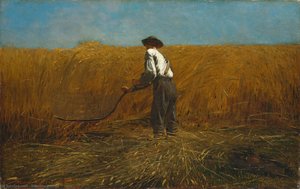
A Moment Suspended: Winslow Homer’s “Hudson River, Logging”
Winslow Homer's 1897 watercolor, “Hudson River, Logging,” is more than just a depiction of industry; it’s a poignant meditation on humanity’s relationship with the American landscape. The scene unfolds along the majestic Hudson River, showcasing a lone figure skillfully maneuvering a log amidst a backdrop of towering trees and distant mountains. This artwork, currently housed at the Corcoran Gallery of Art, exemplifies Homer's mastery of capturing both the physical beauty and the quiet drama of everyday life.Decoding the Scene: Subject & Composition
The painting centers on a man – likely a lumberjack or riverman – poised atop a substantial log, using an oar to guide its descent downriver. The composition is carefully balanced; the figure and log command attention in the foreground, while the expansive vista of trees and mountains provides depth and context. Homer doesn’t present a bustling scene of industrial activity, but rather a solitary moment of focused labor. This deliberate choice emphasizes the individual's connection to nature and the scale of the surrounding environment. The river itself acts as a visual pathway, drawing the viewer’s eye into the heart of the landscape.Homer’s Watercolor Mastery: Style & Technique
“Hudson River, Logging” is a testament to Homer's exceptional skill with watercolor – a medium he elevated to new heights. His technique is characterized by loose, fluid brushwork and delicate washes of color that create an atmospheric effect. The transparency of the watercolors allows light to permeate the layers, lending a luminous quality to the scene. Notice how Homer uses varying degrees of saturation to suggest depth; distant mountains are rendered in paler tones, creating a sense of atmospheric perspective. The subtle blending of blues and greens evokes the coolness of the water and the lushness of the surrounding foliage.Historical Context: The Logging Industry & American Identity
Painted during a period of significant industrial growth in America, “Hudson River, Logging” reflects both the economic importance and the environmental impact of the logging industry. The Hudson River Valley was a crucial transportation route for timber, fueling the nation’s burgeoning cities and industries. However, Homer doesn't offer a celebratory portrayal of progress. Instead, he presents a more nuanced view – one that acknowledges the labor involved and hints at the potential cost to the natural world. The painting can be seen as part of a broader artistic trend in the late 19th century that sought to capture the essence of American identity through depictions of its landscapes and working people.Symbolism & Emotional Resonance
While seemingly straightforward, “Hudson River, Logging” carries subtle symbolic weight. The lone figure can be interpreted as representing the individual’s struggle against – or harmony with – the forces of nature. The river itself symbolizes the passage of time and the relentless flow of life. *The overall mood is one of quiet contemplation and understated power.* Homer avoids dramatic flourishes, instead relying on subtle details and atmospheric effects to evoke a sense of emotional resonance. The painting invites viewers to reflect on their own relationship with the natural world and the enduring human spirit.Collecting & Interior Design
A reproduction of “Hudson River, Logging” would be a stunning addition to any art collection or interior space. Its muted color palette and serene subject matter make it particularly well-suited for living rooms, studies, or bedrooms. The painting’s timeless quality ensures that it will remain a source of inspiration and beauty for years to come. Its landscape focus complements both traditional and contemporary décor styles, adding a touch of American heritage and artistic sophistication.- Style: American Realism, Landscape Painting
- Medium: Watercolor on paper
- Key Themes: Nature, Industry, Labor, American Identity
- Emotional Impact: Serene, Contemplative, Evocative
Spørsmål og svar
Er "Hudson River, Logging" av Winslow Homer et lyst eller mørkt kunstverk?
Når det gjelder oppfattet lysstyrke, er "Hudson River, Logging" av Winslow Homer bright.
Hvem har skapt "Hudson River, Logging"?
"Hudson River, Logging" tilskrives Winslow Homer.
Hvilken farge dominerer komposisjonen i "Hudson River, Logging" av Winslow Homer?
Den dominerende fargen i "Hudson River, Logging" av Winslow Homer er Gray (#5b6274).
Lignende kunstverk


Winslow Homer
1836 - 1910, USA
Om kunstneren
A Brush with the American Spirit: The Life and Art of Winslow Homer
Winslow Homer, born in Boston in 1836, wasn’t sculpted by the traditional European art academies that shaped so many of his contemporaries. Instead, he emerged from a distinctly American experience, one rooted in practicality and observation. His journey began not with grand historical canvases, but as a commercial illustrator at the tender age of twelve for Harper's Weekly. This early apprenticeship was formative, honing an exceptional ability to capture scenes with clarity and detail – skills that would become hallmarks of his mature work. He wasn’t learning perspective in Paris; he was learning to *see* America, its people, and its unfolding story. The bustling streets of Boston, the quiet dignity of rural New England life, these were his first subjects, rendered with a precision born of necessity for the demands of print media. This foundation allowed him to transition into painting, initially in watercolor, before fully embracing the expressive potential of oil paints.From Pastoral Scenes to the Raw Power of Nature
Homer’s early paintings often depicted idyllic scenes – children playing, farmers tending their fields, quiet moments of domesticity. These works, while charming, hinted at a deeper artistic sensibility waiting to be unleashed. The catalyst for this transformation was undoubtedly the Civil War. As a war correspondent for Harper's Weekly, Homer witnessed firsthand the brutal realities of conflict. He didn’t focus on heroic battles or grand strategies; instead, he documented the everyday lives of soldiers and civilians, the quiet moments of grief and resilience amidst chaos. This experience profoundly altered his artistic vision. The pastoral scenes gave way to more challenging subjects: veterans grappling with trauma, freed slaves navigating a new world, and the stark beauty of landscapes touched by hardship. He began to explore themes of struggle, isolation, and humanity’s precar He wasn't interested in imitating European styles; he wanted to create an art that was uniquely American, reflecting its landscapes, its people, and its challenges. His style also evolved, becoming bolder and more direct, reflecting the raw emotional impact of what he had witnessed. Breezing Up (A Fair Wind), painted in 1876, exemplifies this skill – a quintessential depiction of American maritime life, brimming with energy and movement. The Gulf Stream, created decades later, is perhaps his most iconic work, a powerful and symbolic portrayal of a lone man battling the forces of nature, a metaphor for human struggle against overwhelming odds. He wasn’t simply painting what he saw; he was conveying a feeling, an emotional truth about the human condition.Mastering Light, Texture, and the American Landscape
Winslow Homer's artistic technique is immediately recognizable for its solidity and texture. He wasn’t interested in fleeting impressions; he wanted to build up a sense of tangible reality on the canvas. His oil paintings are characterized by a direct painting approach – layers of paint applied with confidence, creating depth and luminosity. He possessed an extraordinary ability to capture light, whether it was the dazzling glare of the sun on the ocean or the soft glow of twilight over a rural landscape. This mastery extended to his watercolors, where he achieved remarkable atmospheric effects through vibrant colors and delicate washes. He admired European artists like those of the Barbizon school – known for their realistic depictions of rural life – and acknowledged influences from Courbet and Millet, but he ultimately forged his own distinctly American path.A Legacy Forged in American Realism
Winslow Homer's art offers a profound window into 19th-century America, providing invaluable insights into the social, political, and cultural landscape of his time. His paintings are not merely beautiful representations; they are powerful statements about human resilience, the beauty and power of nature, and the complexities of the American experience. He died in 1910, leaving behind a prolific body of work that continues to resonate with audiences today. His ability to depict America with honesty and authenticity – without romanticizing or idealizing it – ensures his place as one of America’s most important and enduring artists. His influence can be seen in the work of later American painters who sought to depict their own country with similar directness and emotional depth.- His work continues to inspire contemporary artists.
- Homer remains a pivotal figure in the development of American Realism.




Relaterte artikler

Winslow Homer: Topp 25 Kunstverk – Malerier som Fanger Amerikas Ånd | ArtsDot.no
Oppdag de 25 mest ikoniske maleriene av Winslow Homer! Utforsk amerikansk kunst, realistisk stil og vakre landskap. Finn inspirasjon til interiørdesign & kjøp eksklusive reproduksjoner på ArtsDot.com.

The Sublime Landscape: Exploring the Hudson River School Movement
Explore the captivating world of the Hudson River School! Discover the history, artists, and defining characteristics of this iconic American art movement. Learn about Romanticism's influence & find inspiration for your collection.

Hudson River School: Topp 10 Malerverk som Definerte en Epoke – Kunst og Dekorasjon
Opplev Hudson River School! Utforsk 10 ikoniske malerier av Thomas Cole, Frederic Church og andre mestere. Lær om romantikkens landskapskunst og finn inspirasjon til din interiørdesign på ArtsDot.com – museumskvalitet reproduksjoner online.