

 Send
Send Del
Del
 Vis detaljer
 Utskriftsvennlig guide

 Last ned bilde
 Liknende objekter
 Lysbildefremvisning
 Spørsmål og svar
 Statistikk
Apollo

- 120.0 x 142.0 cm


 Vis hele teksten
Giclée / Kunsttrykk
Giclée- eller lerretsprint av museumskvalitet med rask produksjon og fleksible valgmuligheter for etterbehandling. ( Kjøp håndmalt maleri Bytt til digitalt bilde)




































Velg mellom våre forhåndsdefinerte størrelser som bevarer kunstverkets opprinnelige proporsjoner.

Skriv inn ønsket bredde og høyde for å tilpasse trykket til din ramme eller vegg. Et trykk kan kun beskjæres, aldri skaleres opp utover motivets opprinnelige størrelse, noe som betyr at et format med andre proporsjoner vil føre til tap av deler av bildet. Vi sender deg en digital mockup for godkjenning før vi starter trykkeprosessen. Bildet som vises på denne siden viser ikke den faktiske beskjæringen — det er kun mockuppen som viser dette.
Verdensomspennende levering () på 2 uker i stedet for standard 4/5 uker. (7 November)

Gratis ekspressfrakt over hele verden

Lerretsduk av lin av høy kvalitet

Full transportforsikring

Garanti for refusjon av toll og importavgifter

Garantert fargegjengivelse

100 dagers returrett ved fabrikasjonsfeil

100% pengene tilbake-garanti

Rabatt ved flere kjøp
 Glassalternativet er kun tilgjengelig i størrelser under 110 cm

Apollo
Giclée / Kunsttrykk
Størrelse på reproduksjon
-


Totalpris for valgte alternativer
Nkr 603
A Vision of Neoclassical Serenity
In the quiet halls of the Museo Vela in Switzerland, there exists a marble masterpiece that captures the very essence of the late Enlightenment era. Attributed to the skilled hands of Vincenzo Pacetti, the sculpture Apollo serves as a profound testament to the Classical Revival. Executed in 1783, this work is far more than a mere depiction of a deity; it is an embodiment of Neoclassical ideals, seeking to resurrect the grandeur, rationality, and grace of ancient Greece and Rome. As one approaches the sculpture, the serene presence of the figure commands immediate attention, inviting the viewer into a state of deep contemplation regarding themes of divine beauty and intellectual pursuit.
The composition centers on Apollo, the revered Greek god of music, poetry, healing, and prophecy. Rather than portraying him in a moment of athletic prowess or divine intervention, Pacetti presents him in a state of profound introspection. Seated upon a simple bench, Apollo gazes upward, his expression lost in thought. This posture creates an emotional resonance that transcends the stone itself, evoking a sense of peace and scholarly devotion. The sculpture’s arrangement is rich with symbolic weight: beside the god rests a book, representing the vastness of knowledge and erudition, while a scale sits nearby to signify balance and precision—virtues held in the highest regard by the artists of this era.
Mastery of Form and Material
The technical execution of Apollo showcases Pacetti’s remarkable ability to breathe life into cold marble. The artist employs classical proportions and idealized forms, drawing upon the monumental sculptural traditions established by masters such as Michelangelo and Bernini. Every detail is meticulously rendered, from the intricate carvings that adorn the figure to the soft, lifelike textures of the stone. The choice of marble is particularly significant; its inherent ability to reflect light beautifully lends a luminous quality to the sculpture, enhancing the sense of solidity and permanence that defines the work.
For the discerning collector or interior designer, this piece offers an unparalleled opportunity to introduce an element of timeless elegance into a space. The interplay of light upon the polished surfaces and the dignified posture of the figure provide a focal point that is both intellectually stimulating and aesthetically soothing. Whether viewed as a study in Neoclassical technique or as a symbolic representation of the pursuit of virtue through reasoned observation, Apollo remains an enduring icon of artistic excellence, perfect for those seeking to surround themselves with the profound beauty of history.
Spørsmål og svar
Hvilken stemning formidler "Apollo" av Vincenzo Pacetti?
"Apollo" av Vincenzo Pacetti formidler en Calm emosjonell tone.
Hvilket museum har det originale verket "Apollo"?
Originalen av "Apollo" av Vincenzo Pacetti oppbevares i Galleria Borghese, Roma, Italy. En reproduksjon gjør det mulig å stille ut verket i eget hjem.
Hvordan henger fargene i "Apollo" av Vincenzo Pacetti sammen med verkets emosjonelle uttrykk?
"Apollo" av Vincenzo Pacetti kombinerer en Earthy fargepalett med en Calm stemning.
Lignende kunstverk


Om kunstneren
Vincenzo Pacetti: Life and Legacy
Early Life and Training
- Born: Rome, Italy in 1746.
- Vincenzo Pacetti began his artistic journey at the Accademia del Nudo, honing his skills in anatomical study and figure drawing.
- He furthered his training from 1766 to 1772 under the tutelage of sculptor-restorer Pietro Pacili. Upon Pacili’s death, Vincenzo took over his studio.
Career and Artistic Development
- Pacetti quickly established himself as an independent sculptor and was accepted into the Accademia di San Luca, serving as its director – a testament to his growing reputation.
- Bartolomeo Cavaceppi, another prominent sculptor-restorer, held Pacetti in high regard, even naming him as executor of his will.
- Pacetti’s work evolved around the intersection of sculpture and restoration. He wasn't merely a copier; he actively *completed* fragmented classical works, sometimes adding significant portions based on his artistic judgment.
Major Achievements & Notable Works
- The Barberini Faun (1799): Perhaps Pacetti’s most celebrated work. He restored and completed this iconic sculpture, adding a new right leg, now housed in the Glyptothek, Munich.
- Hope Dionysus: Currently residing in the Metropolitan Museum of Art, this piece exemplifies Pacetti's skill in completing ancient fragments.
- Athena of Velletri (1797): Now located in the Louvre, this sculpture showcases his ability to bring classical forms back to life.
- Extensive work at the Galleria Borghese, including reliefs and stucchi for the Sala degli Imperatori – notably “The Goat Amanthea” and “Perseus freeing Andromeda”. He also contributed to rooms housing Bernini’s masterpieces.
- Other works can be found in churches like San Salvatore in Lauro, Santo Spirito in Sassia, Santi Michele e Magno, and the Palazzo Carpegna.
Patronage and Later Life
- Lucien Bonaparte became a significant patron later in Pacetti’s career. He commissioned numerous plaster casts of famous antique sculptures for his villa at Canino.
- Pacetti's diary, covering the years 1773–1803, and his correspondence provide invaluable insights into the Roman art market during that period.
- Died: Rome in 1820.
Historical Significance & Legacy
- Vincenzo Pacetti occupies a unique position in art history as both a sculptor and a restorer. His work raises questions about authenticity, artistic intervention, and the interpretation of classical forms.
- He played a crucial role in shaping the understanding and appreciation of ancient sculpture during the Neoclassical period.
- His diaries remain an essential resource for scholars studying the art market and restoration practices of 18th and 19th-century Rome.

Vincenzo Pacetti
1746 - 1820 , Italy
Kort om kunstneren
- Name: Vincenzo Pacetti
- Movement: Neoclassical
- Birth Date: 1746
- Death Date: 1820
- Birth Place: Rome, Italy
- Nationality: Italian
- Date Of Birth: 1746
- Date Of Death: 1820
- Influenced By: Pietro Pacili, Bartolomeo Cavaceppi
- Notable Works:
- Barberini Faun
- Hope Dionysus
- Athena of Velletri
- Place Of Birth: Rome, Italy
Relaterte artikler

Bronseklassikere: 10 skulpturer som revolusjonerte kunsten | ArtsDot
Utforsk 10 legendariske bronseskulpturer som formet kunsthistorien! Fra Rodin til Michelangelo – oppdag historiene, teknikkene og skjønnheten bak tidløse mesterverk. Finn din perfekte veggkunst eller interiørdekor på ArtsDot.com.

The Enduring Form: Sculpture Across History, Technique & Emotional Resonance
Explore the rich history of sculpture with ArtsDot. Discover key techniques, influential artists & investment potential for discerning collectors. Expert insights into valuing and collecting timeless masterpieces.

The Enduring Form: Exploring Themes & Techniques in Sculpture Across Historical Periods
Explore the rich history of sculpture from ancient masterpieces to contemporary innovations. Discover key techniques, influential artists & investment potential for discerning art collectors.

Bronzens Mesterverk: 10 Skulpturer Som Forandret Kunsthistorien | ArtsDot
Oppdag 10 legendariske bronse skulpturer som revolusjonerte kunsthistorien! Fra Michelangelo til Rodin – lær om teknikker, historier og tidløs skjønnhet. Finn museumskvalitets reproduksjoner & interiørinspirasjon på ArtsDot.com.
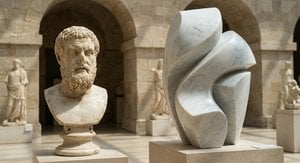
The Enduring Allure of Marble in Art History: From Classical Sculpture to Modern Abstraction
Explore the captivating history of marble sculpture from ancient Greece to modern art. Discover renowned artists like Canova & Michelangelo, carving techniques, and investment insights at ArtsDot.