

 Forhåndsvisning
 Send
Send Del
Del
 Vis detaljer
 Utskriftsvennlig guide

 Last ned bilde
 Liknende objekter
 Røntgenundersøkelse
 Lysbildefremvisning
 Spørsmål og svar
 Statistikk
Venus and Adonis

- 180.0 x 207.0 cm


 Vis hele teksten
Giclée / Kunsttrykk
Giclée- eller lerretsprint av museumskvalitet med rask produksjon og fleksible valgmuligheter for etterbehandling. ( Kjøp håndmalt maleri Bytt til digitalt bilde)




P118B Nkr10

P118H Nkr10

P118W Nkr10

P438Z Nkr10

P508JH Nkr12

P508YH Nkr12

P805H Nkr10

P805Z Nkr10

P919BZ Nkr10

P919G Nkr10

P919XJ Nkr10

P959ZH Nkr10

P968JZ Nkr12

W106C Nkr8

W218G Nkr10

W218JH Nkr8

W218Y Nkr10

W307PJ Nkr10

W316G Nkr10

W316PJ Nkr8

W316Y Nkr10

W398PJ Nkr8

W4111J Nkr10

W500HY Nkr15

W500JH Nkr15

W692G Nkr12

W849H Nkr8

W940BG Nkr15

W953PJ Nkr8




Velg mellom våre forhåndsdefinerte størrelser som bevarer kunstverkets opprinnelige proporsjoner.

Skriv inn ønsket bredde og høyde for å tilpasse trykket til din ramme eller vegg. Et trykk kan kun beskjæres, aldri skaleres opp utover motivets opprinnelige størrelse, noe som betyr at et format med andre proporsjoner vil føre til tap av deler av bildet. Vi sender deg en digital mockup for godkjenning før vi starter trykkeprosessen. Bildet som vises på denne siden viser ikke den faktiske beskjæringen — det er kun mockuppen som viser dette.
Verdensomspennende levering () på 2 uker i stedet for standard 4/5 uker. (4 November)

Gratis ekspressfrakt over hele verden

Lerretsduk av lin av høy kvalitet

Full transportforsikring

Garanti for refusjon av toll og importavgifter

Garantert fargegjengivelse

100 dagers returrett ved fabrikasjonsfeil

100% pengene tilbake-garanti

Rabatt ved flere kjøp
 Glassalternativet er kun tilgjengelig i størrelser under 110 cm

Venus and Adonis
Giclée / Kunsttrykk
Størrelse på reproduksjon
-


Totalpris for valgte alternativer
Nkr 602
A Symphony of Color and Myth: Exploring Titian’s Venus and Adonis
Titian’s Venus and Adonis, completed in 1554, is more than just a painting; it's an immersion into the heart of Renaissance sensuality and classical mythology. Housed within the hallowed halls of the Museo del Prado in Madrid, this oil on canvas masterpiece continues to exert a powerful pull on viewers centuries after its creation. The scene unfolds with a captivating immediacy – Venus, radiant and poised, embraces Adonis, a young hunter rendered in exquisite detail, amidst a verdant landscape teeming with life. It’s a tableau of burgeoning desire, tender vulnerability, and the poignant beauty of fleeting youth, all captured through Titian's masterful command of color and form.
The painting draws heavily from Ovid’s *Metamorphoses*, specifically the tale of Venus’s relentless pursuit of Adonis. Venus, goddess of love, is depicted not as a cold, distant deity but as a passionate, almost fiercely protective figure. Her crimson gown, shimmering with an inner light, contrasts dramatically with the earthy tones of Adonis's hunting attire and the lush greenery surrounding them. This deliberate use of color immediately establishes a dynamic tension – the vibrancy of Venus representing unbridled desire against the more subdued palette of the natural world and the young man’s mortal existence. The dogs present are not merely decorative; they symbolize loyalty, protection, and perhaps even the primal instincts that drive both characters.
The Venetian Master at Work: Technique and Innovation
Titian was a revolutionary figure in the history of painting, and Venus and Adonis exemplifies his groundbreaking approach. He moved away from the meticulous detail favored by earlier Renaissance artists, embracing instead a looser, more expressive brushstroke – a technique that would become synonymous with his style. Notice how he builds up layers of color, creating an illusion of depth and texture through subtle variations in tone and hue. The dappled light filtering through the foliage is rendered with remarkable sensitivity, suggesting movement and atmosphere. Titian’s use of *sfumato*, a technique borrowed from Leonardo da Vinci, softens the edges of the figures, lending them an ethereal quality and contributing to the painting's overall sense of dreamlike beauty.
Furthermore, Titian’s mastery of color is truly astonishing. He employs a rich, almost jewel-toned palette – deep reds, vibrant greens, and shimmering golds – that imbue the scene with an intoxicating intensity. He doesn’t simply depict colors; he *feels* them, conveying their emotional weight through their sheer brilliance. The way he captures the interplay of light and shadow is particularly noteworthy, creating a sense of volume and realism that was unprecedented for its time.
A Renaissance Dialogue: Symbolism and Context
Beyond the immediate depiction of the mythological narrative, Venus and Adonis offers a profound meditation on themes of love, mortality, and the passage of time. Adonis’s youthfulness is juxtaposed with Venus's eternal beauty, highlighting the fleeting nature of earthly existence. The setting itself – a wild, untamed landscape – speaks to the inherent dangers and uncertainties of life. The presence of the dogs can be interpreted as representing both the protective instincts of love and the primal urges that often accompany desire.
Painted during a period of immense artistic innovation in Venice, Venus and Adonis reflects the city’s flourishing cultural scene. Titian was deeply influenced by classical antiquity, but he also embraced the sensual and emotional qualities of the Venetian Renaissance. His work stands as a bridge between the idealized forms of the High Renaissance and the more expressive style that would emerge in the Baroque period. It's a testament to his ability to synthesize diverse influences into a uniquely personal and compelling vision.
Bringing Titian’s Vision Home: Reproductions for Collectors
ArtsDot offers meticulously crafted, hand-painted reproductions of Venus and Adonis that capture the essence of this iconic masterpiece. Our artists replicate Titian's masterful use of color, texture, and brushwork with unparalleled accuracy, ensuring that your reproduction will be a stunning addition to any interior space. Whether you’re an art enthusiast, a collector seeking to expand your collection, or simply someone who appreciates exquisite beauty, our reproductions provide a remarkable opportunity to experience the enduring power of Titian's vision. Explore our selection today and bring the drama and romance of Venus and Adonis into your home.
Spørsmål og svar
Er fargene i "Venus and Adonis" av Titian mettede eller dempede?
"Venus and Adonis" av Titian er gjengitt med en Subtle Color metning.
Hvordan kan "Venus and Adonis" av Titian brukes i interiøret?
"Venus and Adonis" anbefales til Statement, og det anbefalte rommet er et Living Room.
Kan man se en lysbildefremvisning av "Venus and Adonis" av Titian?
Se lysbildefremvisningen her: Bildekarusell for "Venus and Adonis" av Titian.
Lignende kunstverk
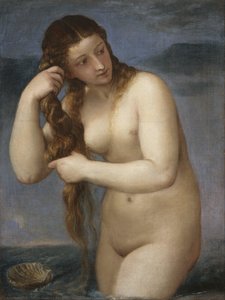


Om kunstneren
The Venetian Titan: A Life in Color and Canvas
Tiziano Vecellio, kjent verden over som Titian, står som en monumental figur i den italienske Renessansen – kanskje dens mest kjente kolorist og en mester som omdefinerte mulighetene for oljemaleri. Han ble født rundt 1490 i Pieve di Cadore, gjemt mellom de dramatiske landskapene i de venetianske Alpene, og hans reise fra ydmyke begynnelser til internasjonal anerkjennelse er et vitnesbyrd om enestående talent og en urokkelig dedikasjon til kunstnerisk innovasjon. Detaljene rundt Titian’s tidlige liv forblir delvis skjulte i mystikk, men vi vet at han var en av flere barn født til Gregorio Vecellio, en militærmann, og Lucia. Familien innså deres sønners potensial og arrangerte for at både Tiziano og hans bror Francesco skulle lære hos en kunstner i Venezia – et valg som uunngåelig endret kunsthistorien. Venezia ved begynnelsen av 1500-tallet var et pulserende knutepunkt for handel, kultur og kunstnerisk fermentering. Titian’s første opplæring fant sted i verkstedet til Sebastiano Zuccato, en mosaikkartist, etterfulgt av korte perioder under veiledning av Gentile Bellini og, viktigst av alt, hans bror Giovanni. Det var imidlertid hans forbindelse med Giorgione – en annen venetiansk maler hvis arbeid besaatte en eterisk poetisk kvalitet – som viste seg å være mest formative. De to kunstnerne samarbeidet om flere prosjekter, inkludert de ytre freskoppene for Fondaco dei Tedeschi, en travel handelsplass for tyskere. Selv i disse tidlige verkene var Titian’s eksepsjonelle ferdigheter åpenbare, og han fikk anerkjennelse blant sine samtidige og varslet om den kommende glansen som snart ville blomstre.A Master's Evolving Style
Titian’s kunstneriske utvikling kan karakteriseres ved en bemerkelsesverdig allsidighet og en kontinuerlig utforsking av malerteknikker. Hans tidlige verk, sterkt påvirket av Giorgione, viser en delikat lyrisme og en mesterlig bruk av farger for å skape atmosfæriske effekter. Malerier som *A Man with a Quilted Sleeve* (ca. 1509) demonstrerer hans fremvoksende talent for portrettkunst, og fanger ikke bare motivets fysiske likhet, men også deres indre karakter. Etter hvert som han modnet seg, begynte Titian å avvike fra Giorgione’s subtile nyanser og omfavne en mer dristig og dramatisk tilnærming til farge. *The Visitation of Mary and Elizabeth* (nå i Accademia, Venezia) illustrerer denne overgangen, og viser hans økende selvtillit i å håndtere komplekse komposisjoner og livlige farger. Han eksperimenterte med forskjellige penselstrøk – fra glatte, blandede overflater til løse, uttrykksfulle markeringer – og utviklet en unik teknikk for å lagre farger for å skape lystfulle effekter. Hans portretter ble kjent for sin psykologiske dybde og realistisk fremstilling av teksturer og stoffer. Samtidig utmerket han seg i mytologiske og religiøse motiver, og innpreget dem med sensualitet og dramatisk intensitet som fengslet publikum. Et eksempel er *Venus of Urbino*, et mesterverk som omdefinerte fremstillingen av den nakne kvinnen og etablerte Titian som en ledende figur i venetiansk maleri.Patronage, Prestige and Lasting Influence
Titian’s talent tiltrakk seg oppmerksomheten til mektige mecenater over hele Europa. Han tjente som hoffmaler for keiser Karl V, kong Filip II av Spania og pave Paul III, blant andre. Denne mecenatgirigheten ga ham ikke bare økonomisk sikkerhet, men tillot ham også å skape monumentale verk som viste hans kunstneriske dyktighet på et storslått nivå. Hans evne til å tilpasse sin stil til smakene til forskjellige palasser samtidig som han opprettholdt sin egen distinkte stemme er et vitnesbyrd om hans eksepsjonelle ferdigheter og diplomatiske finesse. Titian døde i Venezia i 1576, og etterlot seg en ekstraordinær mengde verk som fortsatt inspirerer beundring og ærbødighet. Hans malerier finnes på museer rundt om i verden, inkludert Galleria Palatina i Firenze, Prado-museet i Madrid og National Gallery i London. Å oppleve en Titian er å møte en mesterkunstner på sitt mest kraftfulle – en maler som besaatte en uovertruffen evne til å fange skjønnheten, dramaet og kompleksiteten i den menneskelige tilstand.Exploring Further
- Museums & Collections: Discover Titian’s works at the Scuola del Santo in Padua and San Salvador in Venice, both showcasing his breathtaking frescoes.
- Related Artists: Explore the influence of Giorgione on Titian's early style and the later impact of Titian on artists like Rubens and Delacroix.
- Historical Context: Immerse yourself in the world of the Italian Renaissance and Venetian painting to fully appreciate Titian’s artistic achievements.

Titian
1490 - 1576 , Italia
Kort om kunstneren
- Artistic Movement Or Style: Venetiansk maleri
- Artists Or Movements Influenced By This Artist: ['Senere italienske kunstnere']
- Artists Who Influenced This Artist:
- Giovanni Bellini
- Giorgione
- Date Of Birth: c. 1490
- Date Of Death: 1576
- Full Name: Tiziano Vecellio
- Nationality: Italiensk
- Notable Artworks:
- Mann med quiltet erme
- Venus av Urbino
- Place Of Birth: Pieve di Cadore, Italia
Relaterte artikler

The Enduring Power of Painting: A Historical & Contemporary Exploration of Form and Emotion
Explore the rich history & enduring techniques of oil painting with ArtsDot. Discover masterpieces, learn about art collecting, and find authentic handmade reproductions crafted by skilled artists.

Titian: Innovation, Technique & the Venetian Renaissance Portrait Tradition
Explore the revolutionary techniques & enduring legacy of Titian, the master of Venetian Renaissance portraiture. Discover insights for collectors & appreciate his impact on art history.

Oil on Canvas: A Historical & Technical Exploration of a Timeless Artistic Medium
Explore the rich history & enduring techniques of oil painting on canvas. Discover the science behind its longevity, conservation practices, and contemporary relevance. Expert insights for art enthusiasts.

The Enduring Legacy of Oil on Canvas: Technique, History & Aesthetic Impact
Explore the rich history & techniques of oil painting – from Renaissance masters to Impressionism. Discover pigments, layering methods, and why this timeless medium endures. Expert insights for artists & art enthusiasts.

Oljemaleriets varige arv: Teknikk, historie og samtidspraksis
Utforsk oljemaleriets fascinerende historie og teknikker! Lær om mestere, materialer og samtidspraksis. Få ekspertråd og inspirasjon for ditt neste kunstprosjekt.


