


 Forhåndsvisning
 Send
Send Del med andre
 Vis detaljer

 Last ned bildet
 Liknende objekter
 Røntgenundersøkelse
 Lysbildefremvisning
 Stats
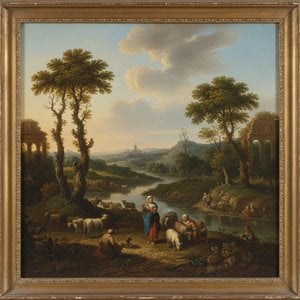
StatsCattle Piece
 Dutch Golden Age
 1843
1843 64.0 x 83.0 cm
 The Shire Hall Gallery
 Vis hele teksten
Håndlaget oljereproduksjon
Håndmalt olje på lerret i din valgte størrelse og ramme, laget på bestilling av våre kunstnere. ( Switch to Print Switch to Digital Image)




































Velg mellom våre forhåndsdefinerte størrelser som bevarer kunstverkets opprinnelige proporsjoner.

Du kan angi egne mål for å tilpasse en spesifikk ramme eller plass. Dersom den valgte størrelsen ikke samsvarer med originalbildets proporsjoner, vil vi enten beskjære kunstverket eller utvide maleriet med ytterligere håndmalte elementer. En digital mockup vil bli sendt til din godkjenning før produksjonen starter.
Vennligst merk at forhåndsvisningen på skjermen ikke gjenspeiler den faktiske beskjæringen eller utvidelsen. Kun mockuppen vil vise den endelige komposisjonen nøyaktig.
Selv om tilpassede størrelser er tilgjengelige, anbefaler vi å velge et mål fra den forhåndsdefinerte listen for å bevare de originale proporsjonene.
Etter bestilling vil ArtsDot.com-teamet sende e-post til kunden for instruksjoner og sende et utkast (mockup) som forhåndsvisning.
Verdensomspennende levering () på 3–4 uker i stedet for standard 5 uker. (7 September). Ingen kompromisser med kvaliteten.

Gratis ekspressfrakt over hele verden

Lerretsduk av høykvalitets lin

Full forsikring under transport

Garanti for refusjon av toll og importavgifter

Garantert korrekt fargegjengivelse

100 dagers returrett (kun ved mangler)

100% pengene tilbake-garanti

Rabatt ved flere kjøp
 Glassalternativet er kun tilgjengelig i størrelser under 110 cm

Cattle Piece
Teknikk for reproduksjon
Størrelse på reproduksjon
-


Endelig pris
$ 288
Lignende kunstverk


Om kunstneren
The Brief, Luminous Life of Thomas Peploe Wood
In the quiet corners of Staffordshire, where the rolling hills and ancient woodlands meet the soft light of the English Midlands, there once lived a talent as fleeting as the morning mist. Thomas Peploe Wood (1817–1845) was an artist whose life was tragically truncated by tuberculosis, yet in his brief twenty-eight years, he managed to capture the very soul of the landscape he called home. Born in Great Haywood to a toll gate keeper and a shoemaker, Wood’s journey from a provincial upbringing to the prestigious galleries of London is a testament to raw, unbridled passion. Though largely self-taught, his eye for beauty was sharpened by the mentorship of the architect Thomas Trubshaw, who recognized that this young man possessed a rare ability to translate the textures of nature onto paper and canvas.
Wood’s ascent into the wider art world was propelled by connections that bridged the gap between the rural heartlands and the metropolitan elite. Through Trubshaw’s guidance, Wood found himself introduced to luminaries such as the print dealer Dominic Charles Colnagiente and the renowned sculptor Sir Francis Chantrey. These encounters provided him with a window into the sophisticated artistic circles of London, allowing his work to reach audiences far beyond the borders of Staffordshire. His talent eventually earned him the patronage of William Salt, a prominent banker and antiquary, who commissioned Wood to document the architectural and natural splendor of the region for an ambitious historical project. This relationship ensured that while Wood’s life was short, his visual legacy became inextricably linked to the historical identity of his native county.
A Romantic Vision in Watercolor and Oil
The artistry of Thomas Peploe Wood is deeply rooted in the Romantic movement, an era defined by an emotional reverence for the sublime power of nature. His work often reflects the influence of masters like Claude Lorrain and Joshua Reynolds, particularly in his sophisticated use of atmospheric perspective. By manipulating light and shadow, Wood could create a profound sense of depth, inviting the viewer to wander through misty valleys or stand beneath the heavy boughs of ancient trees. He possessed a singular ability to capture the ephemeral—the way sunlight filters through autumn leaves or the soft, damp glow of a riverbank after rain.
While his mastery extended to the rich, textured surfaces of oil painting, it was in the delicate medium of watercolor that Wood truly found his voice. The fluidity of watercolor allowed him to execute luminous washes and subtle tonal gradations that perfectly mirrored the shifting moods of the Staffordshire countryside. His repertoire was diverse, ranging from the pastoral serenity of Cattle Piece to the more dramatic, architectural focus seen in his depictions of Ilam Hall and Manley Hall. Whether he was rendering the rugged beauty of a landscape or the quiet dignity of an animal, his brushwork remained imbued with a sense of reverence for the natural world.
A Legacy Etched in Stone and Canvas
Though history has occasionally overlooked Wood, favoring the more enduring figures of the Victorian era, his contributions to British landscape art remain significant. His works are not merely aesthetic objects but historical documents that preserve the vanished vistas of 19th-century England. Today, his paintings can be found in some of the most prestigious collections in the United Kingdom, including:
- The British Museum, where his precision and vision are preserved for scholars and enthusiasts alike.
- The Victoria and Albert Museum, highlighting his place within the broader narrative of British decorative and fine arts.
- Staffordshire County Museum, serving as a cornerstone of local heritage and regional pride.
- The William Salt Library, where his commissioned works continue to tell the story of Staffordshire’s architectural history.
The tragedy of Wood's early death at age twenty-eight leaves us with a sense of "what might have been." Yet, in the surviving sixty or so works, there is no sense of incompleteness, only a concentrated burst of brilliance. Even his family’s grief was transformed into art; his younger brother, Samuel Peploe Wood, a talented sculptor, erected an elaborate memorial cross for Thomas in the churchyard of St. Michael and All Angels. In this way, the memory of the artist remains physically anchored to the very earth he so lovingly painted, ensuring that the "Forgotten Romantic" will never truly fade into obscurity.

thomas peploe wood
1817 - 1845
Kort om kunstneren
- Artistic Movement Or Style: Landscape Painting
- Artists Or Movements Influenced By This Artist: ['Dutch Golden Age']
- Artists Who Influenced This Artist: ['Thomas Trubshaw']
- Date Of Birth: 1 January 1817
- Date Of Death: 4 April 1845
- Full Name: Thomas Peploe Wood
- Nationality: English
- Notable Artworks:
- Ilam Hall
- Cattle Piece
- Gypsy Scene
- Place Of Birth: Great Haywood, Staffordshire
Relaterte artikler

Charles Leickert: Capturing the Dutch Golden Age Light – A Comprehensive Study of Technique, Context, and Legacy
Explore the captivating winter landscapes of Charles Leickert, a master of Dutch Golden Age light & atmosphere. Discover his techniques, symbolism, and lasting legacy – a comprehensive study for art enthusiasts and collectors.

De 10 Mesterverkene som Definerte den Nederlandsk Gyldne Tidsalder – Kunst & Interiør
Oppdag de 10 ikoniske mesterverkene fra den nederlandske gullalderen! Lær om Rembrandt, Vermeer og andre store kunstnere. Finn inspirasjon til klassisk interiørdekorasjon og kjøp museumskvalitets reproduksjoner på ArtsDot.com.

Golden Light & Dutch Skies: Bringing the Magic of Dutch Golden Age Landscapes into Your Home
Transform your home with the breathtaking light of Dutch Golden Age landscapes. Discover how hand-painted oil reproductions of masterworks like Ruisdael and Vermeer bring timeless elegance, atmosphere, and soulful texture to modern interiors. Elevate your space with museum-quality art.
Nicolaes Berchem: Dutch Golden Age Pastoralism & the Evolution of Landscape Painting
Explore the captivating world of Nicolaes Berchem, a leading Dutch Golden Age painter. Discover his idyllic landscapes, masterful technique & lasting influence on art history. Learn more at ArtsDot.

Golden Age Reflections: Dutch Baroque Painting & Cultural Innovation
Explore the Dutch Golden Age of painting! Discover key artists like Vermeer & ter Borch, their innovative techniques, and the rich cultural context behind these Baroque masterpieces. Learn about collecting & appreciating this iconic art period.