

 Forhåndsvisning
 Send
Send Del
Del
 Vis detaljer
 Utskriftsvennlig guide

 Last ned bilde
 Liknende objekter
 Røntgenundersøkelse
 Lysbildefremvisning
 Spørsmål og svar
 Statistikk
Window


 Vis hele teksten
Giclée / Kunsttrykk
Giclée- eller lerretsprint av museumskvalitet med rask produksjon og fleksible valgmuligheter for etterbehandling. ( Kjøp håndmalt maleri Bytt til digitalt bilde)




P118B Nkr10

P118H Nkr10

P118W Nkr10

P438Z Nkr10

P508JH Nkr12

P508YH Nkr12

P805H Nkr10

P805Z Nkr10

P919BZ Nkr10

P919G Nkr10

P919XJ Nkr10

P959ZH Nkr10

P968JZ Nkr12

W106C Nkr8

W218G Nkr10

W218JH Nkr8

W218Y Nkr10

W307PJ Nkr10

W316G Nkr10

W316PJ Nkr8

W316Y Nkr10

W398PJ Nkr8

W4111J Nkr10

W500HY Nkr15

W500JH Nkr15

W692G Nkr12

W849H Nkr8

W940BG Nkr15

W953PJ Nkr8




Velg mellom våre forhåndsdefinerte størrelser som bevarer kunstverkets opprinnelige proporsjoner.

Skriv inn ønsket bredde og høyde for å tilpasse trykket til din ramme eller vegg. Et trykk kan kun beskjæres, aldri skaleres opp utover motivets opprinnelige størrelse, noe som betyr at et format med andre proporsjoner vil føre til tap av deler av bildet. Vi sender deg en digital mockup for godkjenning før vi starter trykkeprosessen. Bildet som vises på denne siden viser ikke den faktiske beskjæringen — det er kun mockuppen som viser dette.
Verdensomspennende levering () på 2 uker i stedet for standard 4/5 uker. (20 November)

Gratis ekspressfrakt over hele verden

Lerretsduk av lin av høy kvalitet

Full transportforsikring

Garanti for refusjon av toll og importavgifter

Garantert fargegjengivelse

100 dagers returrett ved fabrikasjonsfeil

100% pengene tilbake-garanti

Rabatt ved flere kjøp
 Glassalternativet er kun tilgjengelig i størrelser under 110 cm

Window
Giclée / Kunsttrykk
Størrelse på reproduksjon
-


Totalpris for valgte alternativer
Nkr 589
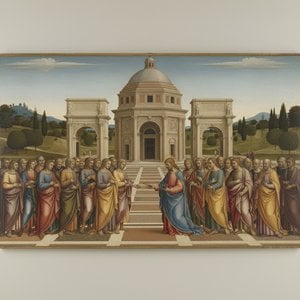
Simone Martini’s Window: A Fragment of Siena’s Gothic Soul
The painting “Window” by Simone Martini—a masterpiece executed in 1312—isn't merely an image; it’s a portal into the artistic fervor and spiritual contemplation of Siena during its zenith as a medieval principality. More than just depicting a simple architectural element, Martini transforms this commonplace feature into a vehicle for profound symbolism and masterful execution, embodying the very essence of International Gothic style. Its unassuming appearance belies the intricate artistry that defines it.- Subject Matter: The composition centers around a stained glass window—a motif prevalent in Sienese churches at the time—illuminated by diffused light. Within its frame are meticulously rendered figures, including human forms and avian creatures – doves symbolizing peace and divine grace – creating a harmonious blend of earthly and celestial realms.
- Style: Martini’s work exemplifies International Gothic style, characterized by delicate lines, luminous colors, and an emphasis on elegance and refinement. Unlike the harsher realism championed by Giotto di Bondone, Martini prioritizes beauty and expressive detail, prioritizing visual impact over strict anatomical accuracy. This stylistic choice reflects Siena's cultural aspirations during a period marked by papal patronage and artistic innovation.
- Technique: Martini employed tempera paint on panel—a technique favored for its vibrancy and durability—allowing him to achieve astonishing levels of color saturation and textural nuance. The artist’s meticulous layering of glaze, combined with painstaking attention to detail in rendering drapery folds and facial expressions, speaks volumes about his dedication to craftmanship.
Historical Context: Siena Under Papal Influence
Siena flourished as a center of papal diplomacy and artistic production during the early 14th century. The papacy actively encouraged artistic endeavors, fostering a competitive environment where artists like Martini sought to elevate their reputations through ambitious commissions—particularly those honoring religious saints. This patronage fueled stylistic experimentation and ensured that Siena’s art would resonate across Europe. Martini's "Window" stands as testament to this era of cultural dynamism and papal ambition.Symbolism: Light, Faith, and Divine Harmony
The window itself serves as a potent symbol—representing divine illumination and the gateway to spiritual understanding. The doves adorning the composition reinforce this theme, symbolizing purity, peace, and the Holy Spirit’s presence. Martini skillfully integrates these visual cues into a carefully balanced composition that reflects Siena's devout Catholic faith. The artist’s deliberate use of color—particularly blues and golds—further enhances the painting’s spiritual aura, conveying grandeur and transcendence.Emotional Impact: A Moment Frozen in Time
“Window” transcends mere representation; it evokes a feeling of serene contemplation and wonder. Martini's masterful rendering captures not only the visual beauty of the stained glass but also its emotional resonance—a reflection of Siena’s artistic spirit and its unwavering belief in divine grace. Viewing this artwork is akin to stepping back into a moment frozen in time, allowing oneself to be transported by the artistry and symbolism of a bygone era. It remains an enduring emblem of Gothic elegance and a captivating glimpse into the soul of medieval Siena.Spørsmål og svar
Når og med hvilke materialer ble "Window" laget?
"Window" av Simone Martini er utført i Acrylic On Canvas og er datert 1312.
Hvordan er fargekomposisjonen i "Window" av Simone Martini bygget opp?
Fargeanalysen av "Window" av Simone Martini viser en Gentle kontrast og en Softly Mixed Palette harmoni.
Hvor harmonisk er fargebruken i "Window" av Simone Martini?
Fargeharmonien i "Window" er beskrevet som Softly Mixed Palette.
Lignende kunstverk


Om kunstneren
Livet og identiteten til Simone Martini
Født i Siena, Italia, rundt 1284, levde Simone Martini et liv som speilet de skiftende strømningene i sin egen epoke. Også kjent som Simone di Martino, var han en sentral skikkelse i utviklingen av det tidlige italienske maleriet. Hans tilstedeværelse i kunstverdenen ble følt fra hjertet av Toscana til de pavelige hoffene i Frankrike, noe som markerte ham som en mann hvis rekkevidde strakte seg langt utover hans fødested. Han var en maler som forsto sin tids språk, og han beveget seg gjennom Europas religiøse og sivile sentre med en stødig og målrettet hånd.
Hans identitet var dypt knyttet til byen Siena, et sted preget av både handel og dyp religiøs hengivenhet. Dette miljøet bidro til å forme en mann som kunne navigere både i kirkens hellige krav og i de sofistikerte smakene ved et kongelig hoff. Han var ingen ensom skikkelse som arbeidet i isolasjon; hans liv var vevd inn i det sosiale og intellektuelle stoffet i det fjortende århundre. Hans forbindelser strakte seg helt til den berømte poeten Petrarca, noe som antyder et liv tilbrakt blant tidens tenkere og ledere.
Omfanget av hans liv kan forstås gjennom de ulike byene der han satte sitt preg, inkludert:
- Siena, Italia
- Napoli, Italia
- Orvieto, Italia
- Assisi, Italia
- Avignon, Frankrike
Tidlig liv, familie og opplæring
Simone Martini ble født i Siena i Italia rundt år 1284, og vokste opp i en by der kunsten fungerte som selve språket for både tro og borgerlig stolthet. Selv om de nøyaktige detaljene fra barndommen hans er noe skjult av tidens tann, ser hans vei inn i malerkunsten ut til å ha blitt ledet av mesternes egne hender. Han var sannsynligvis en elev av Duccio di Buoninsegna, Sienas fremste kunstner, hvis innflytelse bidro til å forme den tidlige sanseligheten til den unge mannen som til slutt skulle redefinere den sienesiske stilen.
Familiebånd spilte en avgjørende rolle i hans liv og profesjonelle krets. Som bror av Donato ble hans sosiale og kunstneriske bånd ytterligere styrket gjennom ekteskapet. I 1324 giftet han seg med Giovanna, datteren til Memmo di Filippuccio. Denne foreningen førte ham inn i et tettvevd nettverk av skapere, ettersom hans svoger var kunstneren Lippo Memmi. Disse relasjonene ga trolig mer enn bare selskap; de tilbød et felles teknisk språk og en samarbeidsånd som kom til å prege mye av den kunstneriske aktiviteten i Siena i denne epoken.
Kunstnerisk virke i Siena og Toscana
Innen 1315 hadde Simone Martini allerede satt sitt uutslettelige preg på det sivile livet i Siena. Dette året malte han fresken Maestà for Palazzo Pubblico, selve hjertet i byens styre. Dette verket plasserte ham midt i det offentlige liv i Siena, der han arbeidet i de samme salene som byens mektigste ledere. Hans tilstedeværelse i regionen vokste stødig etter hvert som han beveget seg mellom selve byen og de omkringliggende territoriene, og han etablerte et rykte som snart ville føre ham langt utenfor Sienas murer.
Hendene hans var i arbeid med en rekke ulike oppdrag gjennom det påfølgende tiåret. I 1319 fullførte han Polyptyken av St. Catharina av Alexandria Polyptych i Pisa. Etter hvert som karrieren skred frem, strakte hans innflytelse seg til andre toscanske byer, inkludert Orvieto, hvor han var aktiv i 1320. Disse årene var preget av en konstant bevegelse og en uavbrutt produksjon, mens han navigerte mellom de ulike behovene til religiøse og sivile mæcener over hele landskapet.
Kunsten han skapte i denne perioden reflekterte en økende forståelse for de spesifikke kravene fra hans oppdragsgivere. Rundt 1324 fikk han i oppdrag å male Blessed Agostino Novello Altarpiece. Denne livsfasen var definert av en jevn rytme av reiser og skapende kraft, idet han vandret gjennom Toscanas bølgende åser og dype daler, og etterlot seg et spor av malte flater som vitnet om hans dype tilstedeværelse i regionen.
Mesterens oppdrag, verksted og beskyttere
Simone Martinis karriere ble formet av de skiftende maktsentrene som preget både Italia og Frankrike. I hans tidlige år arbeidet han tett med regjeringen «De ni» i Siena, hvor han dekorerte salene i det storslåtte Palazzo Pubblico. Denne borgerlige forbindelsen ga et solid fundament for hans voksende rykte, og hans kunstneriske rekkevidde strakte seg etter hvert helt til de kongelige hoffene, slik som da han i 1317 mottok et oppdrag fra Anjou-slekten i Napoli. Disse tidlige rollene gjorde det mulig for ham å bevege seg sømløst mellom det religiøse og det politiske, og han fant oppdrag som krevde både åndelig dybde og en følelse av hoffaktig eleganse.
Hans rykte for raffinement førte ham til slutt til de høyeste nivåene av europeisk mesenatvirksomhet. I 1336 aksepterte han et betydelig oppdrag fra pave Benedikt XII, en utnevnelse som førte ham til Avignon. Her fikk han i oppgave å skape fresker til det pavelige palasset. Ved å leve i hjertet av det pavelige hoffet, beveget han seg i en intellektuell sirkel som inkluderte den berømte poeten Petrarca. Denne perioden i hans liv ble preget av en overgang fra de lokale tradisjonene i Toscana til den sofistikerte, internasjonale smaken som definerte det franske hoffet.
- Saint Louis of Toulouse Crowning His Brother Robert of Anjou, 1317
- Maestà, 1315
Kunstnerisk stil og teknikk
Simone Martini arbeidet med en delikat sensitivitet som foretrakk ynde fremfor de tunge, monumentale formene man fant i Firenze. Han var en eleganseens arkitekt, med et intenst fokus på hvordan en linje kunne flyte over en flate for å skape en følelse av bevegelse. Hans komposisjoner var ofte preget av langstrakte figurer og myke, dekorative detaljer som ga verkene hans en hoffpreget raffinement. Denne estetikken ble formet av de franske impulser som kom med Via Francigena, spesielt de intrikate mønstrene fra bokmalerier og de fine teksturene i elfenbensutskjæringer. Han adopterte ikke bare disse fremmede stilene; han smeltet dem sammen med de sienesiske tradisjonene for å skape et visuelt språk som føltes både sofistikert og dypt åndelig.
For å oppnå fargenes lysende kvalitet, støttet Martini seg til temperateknikken. Han brukte eggeplomme som bindemiddel for pigmentene, en metode som muliggjorde et presist og fint penselarbeid med en varig klarhet. Denne tekniske presisjonen var avgjørende for den intrikate ornamentikken han foretrakk. I hans malerier ble samspillet mellom lys og farge brukt til å formidle emosjoner gjennom subtile skift i holdning og gestikulasjon, snarere enn gjennom dramatisk skala. Hans evne til å balansere disse dekorative elementene med en følelse av narrativ klarhet, gjorde det mulig for ham å skildre komplekse religiøse scener med en stille, poetisk intensitet.
- The Annunciation with St. Margaret and St. Ansanus, 1333
- Saint Louis of Toulouse Crowning His Brother Robert of Anjou, 1317
- Maestà, 1315
Viktige verk og mesterverk
Simone Martini var i stadig bevegelse, og hans reiser etterlot seg spor i form av kunstverk som reflekterer de skiftende behovene til hans ulike mæcener. I 1317 arbeidet han med Alteret for St. Ludvig av Toulouse, et verk som skildrer helgenen sammen med sin bror, Robert av Anjou. Dette mesterverket, som i dag befinner seg i Museo Nazionale di Capodimonte i Napoli, fanger et øyeblikk av dyp familiær og åndelig forbindelse. Hans evne til å formidle komplekse fortellinger kom også tydelig til uttrykk i Polyptykon av St. Katarina av Alexandria, som han ferdigstilte i 1319.
Etter hvert som hans rykte vokste, endret også motivene karakter, fra det storslåtte til det intime. I 1333 malte han Bebudelsen med St. Margrethe og St. Ansanus, et verk som i dag er bevart i Galleria degli Uffizi i Firenze. Dette verket er et vitnesbyrd om hans unike evne til å balansere dyp religiøs hengivenhet med en følelse av hoffaktig eleganse. Selv i hans senere år forble penselstrøkene urokkelige; i 1342 fullførte han Kristus oppdaget i tempelet, et maleri som i dag kan beundres i Walker Art Gallery i Liverpool.
Blant hans mest fremtredende verk finner vi:
- Saint Louis of Toulouse Crowning His Brother Robert of Anjou, 1317
- Saint Catherine of Alexandria Polyptych, 1319
- Annunciation with St. Margaret and St. Ansanus, 1333
- Christ Discovered in the Temple, 1342
De siste årene og døden
De siste årene av Martini sitt liv var preget av et betydelig skifte i både geografi og sosiale kretser. Rundt 1334 eller 1335 forlot han det kjente toscanske landskapet til fordel for Avignon i Frankrike. Denne overgangen plasserte ham midt i et europeisk maktens sentrum, hvor han arbeidet tett med det pavelige hoffet. Hans tilstedeværelse i Avignon gjorde det mulig for ham å bevege seg i høyt intellektuelle kretser, noe som førte til et vennskap med den humanistiske poeten Petrarca. Denne forbindelsen mellom de visuelle kunstartene og den fremvoksende humanismen i samtiden ble et definerende trekk ved hans tid i Frankrike.
Mens han befant seg i Avignon, fortsatte arbeidet hans å reflektere de sofistikerte smakene til hans mæcener. Enkelte beretninger antyder at han til og med malte et portrett av Laura de Noves, kvinnen som fungerte som Petrarcas livslange muse, selv om dette spesifikke verket har gått tapt for historien. Hans tid ved det franske hoffet var en periode med engasjement på høyeste nivå, langt unna det provinsielle livet fra hans tidlige læretid. Han forble aktiv i dette kosmopolitiske miljøet frem til sin død i juli 1344. Han gikk bort i Avignon, og etterlot seg et kunstnerskap som allerede hadde begynt å bygge bro mellom ulike europeiske tradisjoner.
Arv og varig innflytelse
Simone Martini bidro til å bygge bro mellom middelalderen og renessansen. Hans tilstedeværelse i kunstverdenen signaliserte et skifte mot en ny måte å se verden på, en bevegelse bort fra fortidens tunge og monumentale former. Ved å bringe den sienesiske stilen over fjellene, bidro han til at malerkunsten fra Siena trengte inn i fransk territorium, noe som lot hans spesifikke estetikk slå rot i nye landområder. Denne bevegelsen var med på å spre den internasjonale gotiske stilen over hele Europa, og påvirket hvordan kunstnere over hele kontinentet tilnærmet seg linjer og dekorasjon.
Omfanget av hans arbeid strakte seg langt utover hans egen levetid. Generasjoner av kunstnere fulgte stiene han hadde trådt opp, og de adopterte den yndefulle og raffinerte detaljrikdommen som definerte hans håndverk. Hans evne til å smelte sammen det åndelige med en viss hoffaktig eleganse satte dype spor i utviklingen av det europeiske maleriet. Selv når stilartene endret seg, forble måten han brukte farger og silhuetter på et referansepunkt for dem som fulgte i hans fotspor.
Saint Louis of Toulouse Crowning His Brother Robert of Anjou, 1317
Annunciation with St. Margaret and St. Ansanus, 1333
Christ Discovered in the Temple, 1342
Hvor man kan oppleve verkene i dag
For å møte den fysiske tilstedeværelsen av Simone Martini sin kunst, må man legge ut på en reise gjennom det italienske landskapet og langt utover dets grenser. I Siena vokter Palazzo Pubblico over fresken Maestà, et mesterverk som har prydet sine vegger helt siden 1315. Å stå ansikt til ansikt med dette verket i selve setet for byens styre, gir en dyp forståelse for den monumentale skalaen og den enorme sivile betydningen hans malerier en gang innehadde. I Napoli bevarer Museo di Capodimonte alteret til St. Ludvig av Toulouse, et verk som på vakkert vis reflekterer kunstnerens evne til å formidle komplekse religiøse fortellinger gjennom et subtilt samspill mellom farge og form.
Hans kunstneriske rekkevidde strakte seg langt utenfor Toscanas grenser. I Firenze finner vi i Galleria degli Uffizi Bebudelsen med St. Margrethe og St. Ansanus, malt i 1333. Dette verket gir et unikt innblikk i de delikate, flytende linjene som definerte hans stil i hans mest produktive år. For de reisende som søker mot Storbritannia, huser Walker Art Gallery i Liverpool Kristus oppdaget i tempelet, et verk fra 1342 som vitner om hans uforminsket tekniske mesterskap selv i hans senere år.
Her er en oversikt over flere av hans betydningsfulle verk og hvor de befinner seg i dag:
- 1308: Madonna og barnet - Pinacoteca Nazionale, Siena
- 1317: St. Ludvig av Frankrike og St. Ludvig av Toulouse - Museo di Capodimonte, Napoli
- 1321: Orvieto-polyptykon - Museo dell'Opera del Duomo, Orvieto
- 1326: St. Andreas - Metropolitan Museum of Art, New York
- 1330: St. Johannes Evangelisten - Barber Institute of Fine Arts, Birmingham

Simone Martini
1284 - 1344 , Italia
Kort om kunstneren
- Artistic Movement Or Style: Internasjonal gotikk
- Artists Or Movements Influenced By This Artist: ['Internasjonal gotikk']
- Artists Who Influenced This Artist:
- Duccio di Buoninsegna
- Giotto
- Date Of Birth: 1284
- Date Of Death: 1344
- Full Name: Simone Martini
- Nationality: Italiensk
- Notable Artworks:
- Maestà
- Sankt Ludvig av Toulouse kroner sin bror
- Forkynnelsen med St. Margrethe og St. Ansanus
- Miraklet med det oppstandne barnet
- Kristus i tempelet
- Place Of Birth: Siena, Italia
Relaterte artikler
Pietro Perugino: Umbrian Master of Serenity & Precursor to Raphael's High Renaissance
Explore the life & art of Pietro Perugino, a pivotal Renaissance master and Raphael’s influential teacher. Discover his serene compositions, Sistine Chapel frescoes, and lasting legacy with ArtsDot.

Illuminating Belief: Faith & Symbolism Across Art History's Canvas
Explore the rich history of faith through art! Discover religious symbolism, Renaissance masterpieces & iconic artists. Expert analysis for collectors & enthusiasts. Learn more at ArtsDot.

Emosjonell Transmutasjon i Visuell Kunst: Affektiv Representasjon Gjennom Farge, Form og Tekstur
Utforsk hvordan farge, form og tekstur skaper emosjonell dybde i kunsten. Dypdykk i kunsthistorien og oppdag affektive representasjoner – en guide for samlere og entusiaster.

Simone Martini: Innovation, Spirituality & Courtly Refinement in Sienese Painting
Explore the captivating world of Simone Martini, a pivotal figure in Sienese painting & the International Gothic style. Discover his innovative techniques, spiritual depth, and lasting influence on early Renaissance art.

Sacred Visions: Exploring Faith & Devotion in Religious Art Across Cultures
Explore the rich history of religious art across cultures! Discover symbolism, Renaissance masterpieces & the power of color in devotional works. Expert insights for collectors and enthusiasts.


