


 Se i rommet
 Del som digitalt kort
 Del
Del
 Detaljer
 Studentguide

 Last ned
 Liknende objekter
 Røntgen
 Lysbildefremvisning
 Besøksstatistikk
Untitled
 Oil On Canvas
- WallArt
- Contemporary Realism
 Modern
 108.0 x 122.0 cm
 Kerala Museum
 Les mer
Kunstverket som vises på denne siden er beskyttet av opphavsretten, noe som betyr at vi ikke har juridisk tillatelse til å lage eller selge identiske reproduksjoner. Denne beskyttelsen håndheves i henhold til internasjonale avtaler som for eksempel Bernerkonvensjonen og av nasjonale lover, inkludert de som er fastsatt i Amerikansk opphavsrettslov – Tittel 17.
Denne metoden er i fullt samsvar med opphavsrettslige regler, da den ikke innebærer kopiering eller duplisering av det beskyttede kunstverket. I stedet er det snakk om en kreativ nytolkning – et nytt maleri som er inspirert av originalen, men ikke identisk med den.
Giclée / Kunsttrykk
Giclée- eller lerretsprint av museumskvalitet med rask produksjon og fleksible valgmuligheter for etterbehandling. ( Bestill håndmalt reproduksjon Gå til digitalt bilde)




P118B Nkr10

P118H Nkr10

P118W Nkr10

P438Z Nkr10

P508JH Nkr12

P508YH Nkr12

P805H Nkr10

P805Z Nkr10

P919BZ Nkr10

P919G Nkr10

P919XJ Nkr10

P959ZH Nkr10

P968JZ Nkr12

W106C Nkr8

W218G Nkr10

W218JH Nkr8

W218Y Nkr10

W307PJ Nkr10

W316G Nkr10

W316PJ Nkr8

W316Y Nkr10

W398PJ Nkr8

W4111J Nkr10

W500HY Nkr15

W500JH Nkr15

W692G Nkr12

W849H Nkr8

W940BG Nkr15

W953PJ Nkr8




Velg mellom våre forhåndsdefinerte størrelser som bevarer kunstverkets opprinnelige proporsjoner.

Skriv inn bredden og høyden du trenger, slik at den passer til din ramme eller vegg. Et trykk kan kun beskjæres, aldri gjøres større enn bildet, så et format med en annen form vil miste en del av motivet. Vi sender deg en digital mockup for godkjenning før vi trykker noe som helst. Bildet som vises på denne siden viser ikke den faktiske beskjæringen — det er kun mockuppen som gjør det.
Verdensomspennende levering () på 2 uker i stedet for standard 4/5 uker. (23 October)

Gratis ekspressfrakt over hele verden

Lerretsduk av høykvalitets lin

Full transportforsikring

Garanti for refusjon av toll og importavgifter

Garantert fargeekthet

100 dagers returrett ved fabrikasjonsfeil

100% pengene tilbake-garanti

Mengderabatt
 Glassalternativet er kun tilgjengelig i størrelser under 110 cm

Untitled
Giclée / Kunsttrykk
Format på reproduksjon
-


Totalpris
Nkr 589
Spørsmål og svar
Hvilket museum har det originale verket "Untitled"?
Du kan se originalen av "Untitled" på Kerala Museum, Kochi, India.
Hvilken metning og intensitet har "Untitled" av Prabha Agge?
"Untitled" av Prabha Agge er gjengitt med en Clear Color Presence metning og en Vivid intensitet.
Hvor intens er fargebruken i "Untitled" av Prabha Agge?
Fargene i "Untitled" av Prabha Agge har en Vivid intensitet.
Relaterte kunstverk


Kunstnerbiografi
The Silent Resonance of Rural Grace
In the vast and vibrant tapestry of Indian modernism, few voices resonate with as much quiet, poignant dignity as that of Prabha Agge. Born in 1933 in the small village of Bela, near Nagpur, Maharashtra, Agge emerged during a transformative era when the foundations of contemporary Indian art were being laid. Her journey was one of profound empathy, moving from the intimate landscapes of her childhood to the prestigious halls of the Sir J.J. School of Art in Bombay. It was within this academic crucible that she refined a style that would eventually become instantly recognizable across the globe—a style defined not by grand, sweeping gestures, but by the soulful, elongated silhouettes of women navigating the complexities of rural existence.
The artistic soul of Agge was deeply nurtured by the pioneering spirit of Amrita Sher-Gil. Much like her predecessor, Agge looked toward the marginalized and the everyday, finding extraordinary beauty in the pensive expressions of those often overlooked by history. This influence manifested in a technique that favored emotional depth over mere anatomical precision. Her canvases became stages for solitary figures, rendered with a graceful simplicity that captured the weight of existence. Through her eyes, the rural Indian woman was not merely a subject of study, but a symbol of resilience and quiet strength, standing as a testament to a life lived with unyielding dignity amidst hardship.
A Symphony of Single Hues and Social Truths
To encounter a painting by B. Prabha is to enter a world of meditative stillness. Her mastery of oil on canvas allowed her to experiment with a unique chromatic language, where each composition was often dominated by a single, powerful hue. Whether it was the warmth of an earthy ochre or the somber depth of terracotta, these monochromatic foundations served to intensify the emotional atmosphere of her work. This deliberate use of color did more than just decorate; it enveloped her subjects in a specific mood, mirroring the internal landscapes of the women she portrayed. Her figures, characterized by their elegant, elongated forms, seemed to emerge from these colored veils, caught in moments of profound contemplation.
Beyond the aesthetic beauty of her portraits, Agge’s work was deeply rooted in a compassionate social realism. She did not shy away from the harsher realities of the Indian countryside, using her brush to address the pressing issues of drought, hunger, and homelessness. There was a haunting honesty in her observation; she famously remarked in an interview that she had yet to see one truly happy woman, a sentiment that echoed through the weary but resolute eyes of her subjects. Her landscapes, while occasionally serving as serene backdrops, often functioned as extensions of this social narrative, reflecting the environmental and economic pressures that shaped the lives of the rural communities she so tenderly documented.
Legacy and the Enduring Impression
The career of Prabha Agge was marked by a prolific output and an unwavering commitment to her vision. By the time of her passing in 2001, her work had been showcased in over fifty exhibitions, securing her place in the pantheon of significant Indian modernists. Her legacy is preserved within some of the most prestigious institutions in India, ensuring that her depictions of rural life continue to inspire future generations of artists and scholars alike. Her contributions include:
- Institutional Recognition: Her masterpieces are held in esteemed collections such as the National Gallery of Modern Art, the TIFR Art Collection, and the Air India Art Collection.
- Stylistic Innovation: The development of a signature aesthetic involving elongated figures and monochromatic emotional landscapes.
- Social Advocacy: A lifelong dedication to representing the marginalized through a lens of dignity rather than pity.
Ultimately, the significance of Prabha Agge lies in her ability to transform the mundane into the monumental. She took the quiet, often invisible struggles of rural women and elevated them to the realm of high art, creating a visual language that speaks across borders and generations. Her work remains a profound meditation on the human condition, reminding us that within the simplest of forms and the most singular of colors, there lies an infinite depth of emotion.

Prabha Agge
1933 - 2001 , India
Kort om kunstneren
- Full Name: prabha agge
- Nationality: Indian
- Date Of Birth: 1933
- Date Of Death: 2001
- Place Of Birth: Belo Horizonte, India
- Notable Artworks: ['Untitled']
- Artistic Movement Or Style: Oil on canvas; Modern Indian art
- Artists Who Influenced This Artist: Amrita Sher-Gil
Relaterte artikler

Raja Ravi Varma: Bridging Tradition & Modernity in 19th-Century Indian Art
Explore the life & art of Raja Ravi Varma, a pioneer who fused European techniques with Indian iconography. Discover his iconic paintings, lasting legacy, and influence on modern Indian art at ArtsDot.
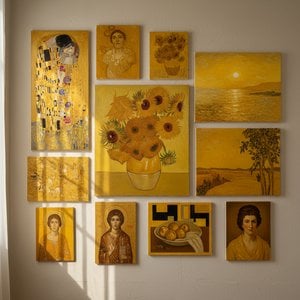
Gylne mesterverk: Topp 10 malerier dominert av okergult – ArtsDot.no
Utforsk 10 ikoniske malerier dominert av varmt okergult! Fra Van Gogh til Monet – lær historien bak mesterverkene og finn inspirasjon for ditt hjem. Museumskvalitet kunsttrykk på ArtsDot.com. Oppdag hele samlingen online!

The Enduring Muse: Women as Subject & Symbol in Art History
Explore the rich history of women in art – from iconic muses to groundbreaking artists. Discover feminist movements, global perspectives & reclaim female narratives with ArtsDot.
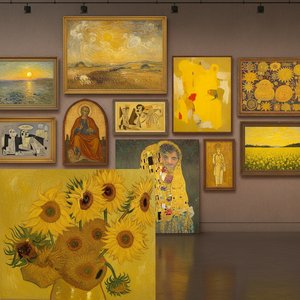
Gylne Mesterverk: Topp 10 Maler Dominert av Kromgul – Kunst og Interiørinspirasjon
Oppdag topp 10 malerier dominert av kromgul! Fra Van Goghs solsikker til Monets stråfelt – utforsk historien, teknikken og skjønnheten bak ikoniske kunstverk. Finn museumskvalitets reproduksjoner & interiørinspirasjon på ArtsDot.com.

The Golden Hue: Exploring Symbolism & Emotion in Yellow Art
Explore the rich symbolism & emotional power of yellow in art history! From Van Gogh to Kandinsky, discover how artists used this vibrant hue. Expert analysis & high-quality reproductions at ArtsDot.