
- Forsiden

- Trykk på lerret
- Pieter de Hooch
- A Mother Delousing her Child
 Bestill maleri Kjøp digitalt bilde
 Send
Send
 Del med andre
 Details
 Legg til i favoritter

 Last ned bildet
 Liknende objekter
 X-Ray
X-Ray
 Lysbildefremvisning
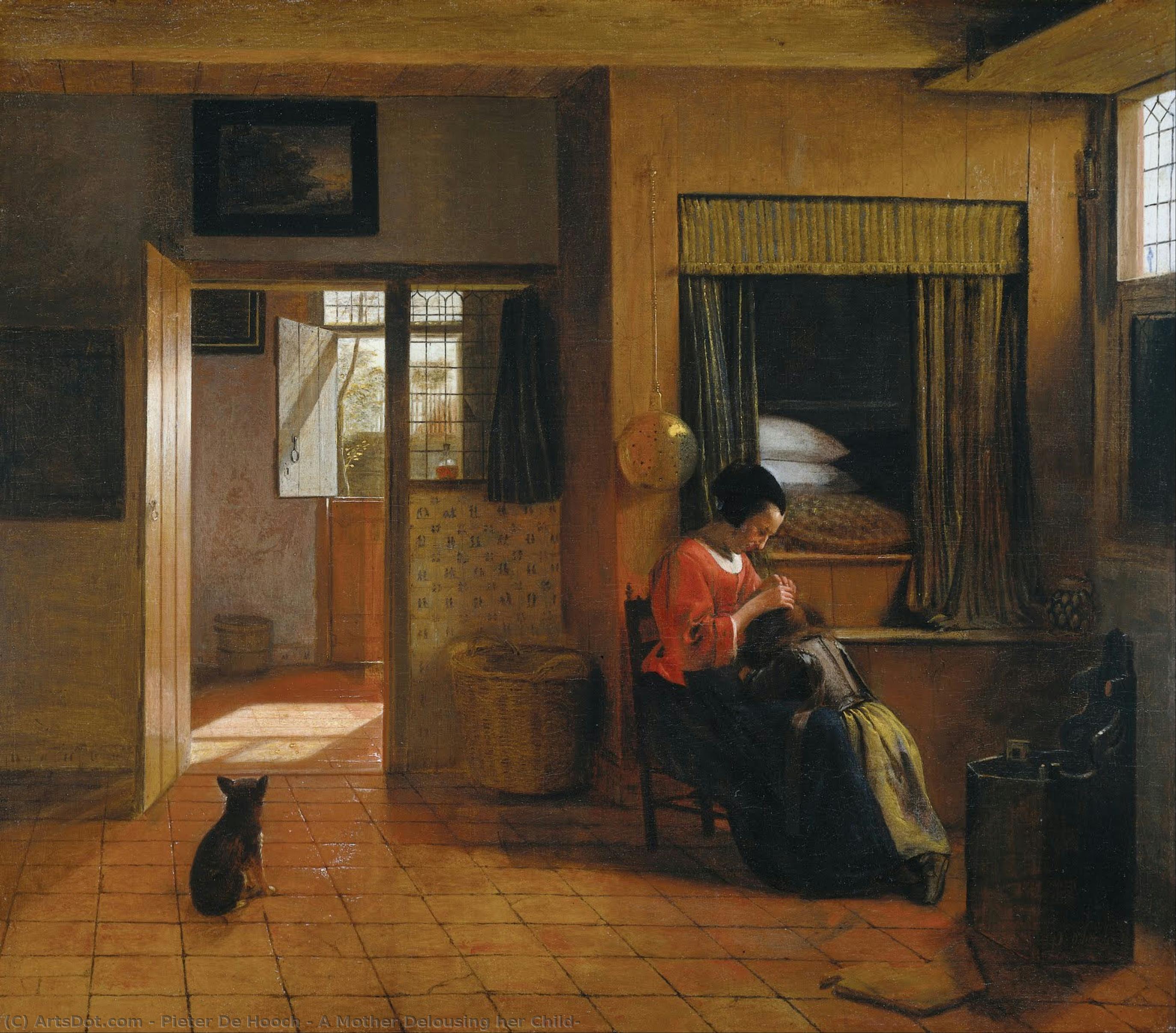
A Mother Delousing her Child
 Acrylic On Canvas
- WallArt
 1660
1660- Early Modern
 61.0 x 52.0 cm
 Rijksmuseum
Giclée / Kunsttrykk
Giclée- eller lerretsprint av museumskvalitet med rask produksjon og fleksible valgmuligheter for etterbehandling.
 Les mer om dette



P118B $10

P118H $10

P118W $10

P438Z $10

P508JH $12

P508YH $12

P805H $10

P805Z $10

P919BZ $10

P919G $10

P919XJ $10

P959ZH $10

P968JZ $12

W106C $8

W218G $10

W218JH $8

W218Y $10

W307PJ $10

W316G $10

W316PJ $8

W316Y $10

W398PJ $8

W4111J $10

W500HY $15

W500JH $15

W692G $12

W849H $8

W940BG $15

W953PJ $8




Velg mellom våre forhåndsdefinerte størrelser som bevarer kunstverkets opprinnelige proporsjoner.

Du kan oppgi egne mål for å tilpasse en spesifikk ramme eller et bestemt område. Dersom den valgte størrelsen ikke samsvarer med det originale bildets proporsjoner, vil vi enten beskjære kunstverket eller utvide bildet med en speilet eller ensfarget kant. En digital mockup vil bli sendt til din godkjenning før produksjonen starter.
Vennligst merk at forhåndsvisningen på skjermen ikke gjenspeiler den faktiske beskjæringen eller utvidelsen. Kun mockuppen vil vise den endelige komposisjonen nøyaktig.
Selv om tilpassede størrelser er tilgjengelige, anbefaler vi å velge et mål fra den forhåndsdefinerte listen for å bevare de originale proporsjonene.
Verdensomspennende levering () på 2 uker i stedet for standard 4/5 uker. (1 July)

Gratis ekspressfrakt over hele verden

Lerretsduk av høykvalitets lin

Full forsikring under transport

Garanti for refusjon av toll og importavgifter

Garantert korrekt fargegjengivelse

60 dagers returrett (kun ved feil)

100% pengene tilbake-garanti

Rabatt ved flere kjøp
 Glassalternativet er kun tilgjengelig i størrelser under 110 cm

A Mother Delousing her Child
Giclée / Kunsttrykk
Størrelse på reproduksjon
-


Endelig pris
-
Beskrivelse av samleobjektet
A Moment of Domesticity: Pieter de Hooch’s “A Mother Delousing Her Child”
Pieter de Hooch's "A Mother Delousing Her Child," painted circa 1660, is more than just a depiction of a mundane household task; it’s a poignant window into the burgeoning middle-class life of 17th-century Holland. This intimate scene, now housed within the Rijksmuseum in Amsterdam, captures a fleeting moment of vulnerability and care amidst the bustling world of the Dutch Golden Age. The painting, measuring just 61 x 52 cm, belies its small scale with an astonishingly detailed portrayal of everyday life – a testament to de Hooch’s mastery of light, shadow, and the subtle nuances of human emotion. It's a work that speaks volumes about family, hygiene, and the quiet dignity of domesticity.The Scene Unfolds: Composition and Setting
The composition is remarkably restrained, drawing the viewer’s eye immediately to the central figures – a mother diligently examining her child’s head for lice. The setting is a modestly furnished interior, likely a bedroom or sitting room, rendered with meticulous attention to detail. Delft blue tiles adorn the floor, hinting at the wealth and status of the household, while a simple bed stands in the background, partially obscured by a curtain. A dining table holds a bowl, suggesting a recent meal, and a ‘kakstoel’ – a small potty chair – adds an element of realism to the scene, grounding it firmly within the realities of daily life. The inclusion of a cat, calmly observing from beneath the woman's feet, introduces a touch of domestic tranquility and perhaps even a subtle commentary on observation and vigilance. The doorway glimpsed in the background offers a tantalizing suggestion of another room, expanding the spatial awareness of the scene without disrupting its intimate focus.Technique and Style: De Hooch’s Signature Approach
De Hooch was a master of *doorway paintings*, a technique he perfected during his time in Haarlem under Nicolaes Berchem. This style is characterized by an ambiguous space, often featuring a partially visible doorway or window that invites the viewer to imagine what lies beyond. In “A Mother Delousing Her Child,” this technique serves not only as a compositional device but also as a metaphor for the hidden complexities of domestic life. De Hooch’s brushwork is remarkably delicate and precise, creating an illusion of depth through subtle variations in light and shadow. He employed a muted palette – predominantly browns, creams, and blues – to evoke a sense of quietness and understated elegance. The lighting, diffused and naturalistic, further enhances the painting's realism, casting soft shadows that accentuate the figures’ forms and textures. Notably, de Hooch was known for his ability to capture the fleeting expressions on his subjects’ faces, imbuing each scene with a sense of lived experience.Symbolism and Context: A Reflection of Dutch Society
The act of delousing itself carries significant symbolic weight within the context of 17th-century Holland. Lice were a persistent and widespread problem, particularly in densely populated urban areas, and meticulous hygiene was considered essential for maintaining health and social standing. The mother’s focused attention on her child underscores the importance placed on family care and the responsibility of parents to protect their offspring. Furthermore, the scene reflects the growing emphasis on domesticity within the emerging middle class – a shift away from the more overtly public life of merchants and artisans towards a greater focus on home and family. The painting’s realism—the inclusion of everyday objects like the ‘kakstoel’—demonstrates de Hooch's commitment to portraying the lives of ordinary people, capturing a slice of Dutch society that was increasingly valued for its quiet dignity and understated beauty.Emotional Resonance: A Quiet Moment of Connection
Despite its seemingly simple subject matter, “A Mother Delousing Her Child” possesses a remarkable emotional resonance. The mother’s expression is one of focused determination mingled with tenderness, conveying both the burden of responsibility and the deep affection she feels for her child. The scene evokes a sense of intimacy and vulnerability, reminding us of the fundamental human need for connection and care. It's a painting that invites contemplation on themes of family, health, and the quiet moments of everyday life—moments often overlooked but profoundly meaningful. ArtsDot’s hand-painted reproductions offer an unparalleled opportunity to experience the beauty and subtlety of this iconic work by Pieter de Hooch, bringing its timeless charm into your home or studio.Lignende kunstverk


Om kunstneren
Early Life and Training
Pieter de Hooch, en prominent figur i den nederlandske gullalderen, ble født i Rotterdam den 20. desember 1629. Han var eldste barnet til Hendrick Hendricksz de Hooch, en murmester, og Annetje Pieters, en jordmor. Lite er kjent om hans barndom, men det antas at han arbeidet i Rotterdam, Delft og Amsterdam. De Hoochs kunstneriske utdannelse fant sted i Haarlem under landskapsmaleren Nicolaes Berchem, sammen med Jacob Ochtervelt. Denne perioden la grunnlaget for hans fremtidige suksess som maler av rolige hjemmemiljøer med et åpent vindu. Han ble sett på som en elev av Berchem, og det er antatt at han lærte mye av hans stil og teknikker.Artistic Style and Themes
De Hoochs kunst er preget av sin oppmerksomhet på detaljer, naturalisme og bruk av lys. Hans malerier skildret ofte hverdagsliv, og reflekterte verdiene og ambisjonene til den nye middelklassen. Et tydelig eksempel på denne stilen er "Courtyard of a House in Delft" (1658), som viser hans evne til å fange de vanlige detaljene i dagliglivet. Hans verk deler også temaer og komposisjoner med Emanuel de Witte, men fokuset hans på mennesker og deres relasjoner skiller ham ut. Dette er tydelig i "Woman Nursing" (1658) og "Woman with a Baby on Her Lap" (1658), som demonstrerer hans interesse for hjemmemiljøer. Han var spesielt interessert i å fange lysets spill og hvordan det påvirket overflater og rom, noe som er tydelig i mange av hans mest kjente arbeider.Notable Works and Legacy
Noen av De Hoochs mest kjente verk inkluderer:- "The Merry Drinker" (ca. 1650)
- "Cardplayers in a Sunlit Room" (1658)
- "A Woman Preparing Bread and Butter for a Boy" (1661)
Museums and Collections
De Hoochs verk kan finnes i flere museer, inkludert det kongelige kunstmuséet i Antwerpen, Belgia, som har en omfattende samling av europeisk kunst fra 1500-tallet til 1900-tallet. Hans malerier er verdifulle eksempler på den nederlandske gullalderens kunst og forteller historier om hverdags livet i det gamle Nederland.
Pieter de Hooch
1629 - 1694 , Nederland
Kort om kunstneren
- Artistic Movement Or Style: Dutch Gouden Eeuw
- Artists Or Movements Influenced By This Artist: ['Johannes Vermeer']
- Artists Who Influenced This Artist: ['Nicolaes Pieterszoon Berchem']
- Date Of Birth: 20. desember 1629
- Date Of Death: etter 1684
- Full Name: Pieter Hendricksz de Hooch
- Nationality: Nederlands
- Notable Artworks:
- The Empty Glass
- A Dutch Courtyard
- Woman and Child in a Courtyard
- Place Of Birth: Rotterdam, Nederland
Relaterte artikler

De 10 Mesterverkene som Definerte den Nederlandsk Gyldne Tidsalder – Kunst & Interiør
Oppdag de 10 ikoniske mesterverkene fra den nederlandske gullalderen! Lær om Rembrandt, Vermeer og andre store kunstnere. Finn inspirasjon til klassisk interiørdekorasjon og kjøp museumskvalitets reproduksjoner på ArtsDot.com.


Golden Age Reflections: Dutch Baroque Painting & Cultural Innovation
Explore the Dutch Golden Age of painting! Discover key artists like Vermeer & ter Borch, their innovative techniques, and the rich cultural context behind these Baroque masterpieces. Learn about collecting & appreciating this iconic art period.
Illuminating Realism: Exploring the Dutch Golden Age of Painting (1600-1700)
Explore the Dutch Golden Age of painting (1600-1700) with ArtsDot. Discover Rembrandt, Vermeer & other masters. Learn about techniques, history & find museum-quality reproductions.

Willem van de Velde the Elder: Master of Maritime Painting & Chronicler of the Dutch Golden Age
Discover the captivating maritime paintings of Willem van de Velde the Elder, a master chronicler of the Dutch Golden Age. Explore his unparalleled realism and lasting influence on naval art history.

Jan Jansz Wijnants: A Study in Dutch Golden Age Still Life & Floral Transience
Explore the captivating world of Jan Wijnants and Dutch Golden Age still life painting. Discover symbolism, masterful techniques & lasting influence on floral art history. Learn more!



