

 Forhåndsvisning
 Send
Send Del
Del
 Vis detaljer
 Utskriftsvennlig guide

 Last ned bilde
 Liknende objekter
 Røntgenundersøkelse
 Lysbildefremvisning
 Spørsmål og svar
 Statistikk
Number 23, 1951

- 148.0 x 119.0 cm


 Vis hele teksten
Giclée / Kunsttrykk
Giclée- eller lerretsprint av museumskvalitet med rask produksjon og fleksible valgmuligheter for etterbehandling. ( Kjøp håndmalt maleri Bytt til digitalt bilde)




P118B Nkr10

P118H Nkr10

P118W Nkr10

P438Z Nkr10

P508JH Nkr12

P508YH Nkr12

P805H Nkr10

P805Z Nkr10

P919BZ Nkr10

P919G Nkr10

P919XJ Nkr10

P959ZH Nkr10

P968JZ Nkr12

W106C Nkr8

W218G Nkr10

W218JH Nkr8

W218Y Nkr10

W307PJ Nkr10

W316G Nkr10

W316PJ Nkr8

W316Y Nkr10

W398PJ Nkr8

W4111J Nkr10

W500HY Nkr15

W500JH Nkr15

W692G Nkr12

W849H Nkr8

W940BG Nkr15

W953PJ Nkr8




Velg mellom våre forhåndsdefinerte størrelser som bevarer kunstverkets opprinnelige proporsjoner.

Skriv inn ønsket bredde og høyde for å tilpasse trykket til din ramme eller vegg. Et trykk kan kun beskjæres, aldri skaleres opp utover motivets opprinnelige størrelse, noe som betyr at et format med andre proporsjoner vil føre til tap av deler av bildet. Vi sender deg en digital mockup for godkjenning før vi starter trykkeprosessen. Bildet som vises på denne siden viser ikke den faktiske beskjæringen — det er kun mockuppen som viser dette.
Verdensomspennende levering () på 2 uker i stedet for standard 4/5 uker. (12 November)

Gratis ekspressfrakt over hele verden

Lerretsduk av lin av høy kvalitet

Full transportforsikring

Garanti for refusjon av toll og importavgifter

Garantert fargegjengivelse

100 dagers returrett ved fabrikasjonsfeil

100% pengene tilbake-garanti

Rabatt ved flere kjøp
 Glassalternativet er kun tilgjengelig i størrelser under 110 cm

Number 23, 1951
Giclée / Kunsttrykk
Størrelse på reproduksjon
-


Totalpris for valgte alternativer
Nkr 599
The Raw Nerve: Paul Jackson Pollock’s Black Pouring
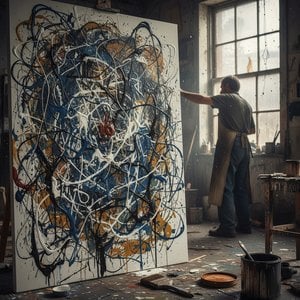
Paul Jackson Pollock's "Number 23, 1951" isn’t merely a painting; it’s an immersion. Created during a pivotal period of his artistic evolution – the “black pourings” – this work represents a deliberate retreat from the vibrant, all-over drips that initially defined his fame and a profound exploration into the subconscious. It's a piece that vibrates with a potent energy, a visual manifestation of anxiety, introspection, and a burgeoning interest in surrealist imagery and psychological depth. The stark monochrome palette immediately commands attention, stripping away any pretense of representational art and forcing the viewer to confront the raw materiality of paint itself.
- The Technique: Pollock’s method here is strikingly precise yet utterly chaotic. He thinned enamel paint – a material he experimented with extensively – to an almost liquid consistency, then employed a large basting syringe to fling and squirt it onto the unprimed canvas. This wasn't a spontaneous act of abandon; rather, it was a carefully orchestrated process, resulting in swirling patterns that seem to both coalesce and disintegrate before your eyes. The slow drying time allowed for an unexpected merging of colors and textures, creating a layered effect reminiscent of geological strata or even the shifting sands of memory.
- The Figures: Embedded within this turbulent field are enigmatic figures – faces, breasts, hands—fragments that emerge from the swirling chaos with a disconcerting immediacy. These aren’t easily deciphered; they're not portraits in the traditional sense but rather symbolic representations of anxieties and desires lurking beneath the surface. Their fragmented nature mirrors the fractured state of the psyche, suggesting a struggle to articulate inner turmoil.
A Surrealist Awakening: Influences and Intent
Pollock’s exploration of black paint wasn't born in isolation. The period coincided with a renewed interest in surrealism, fueled by his exposure to the works of artists like Joan Miró and Max Ernst. He was captivated by the idea of tapping into the unconscious mind, believing that painting could be a vehicle for accessing hidden emotions and symbolic imagery. “Number 23” is therefore a direct response to this influence, a deliberate attempt to bypass rational thought and delve into the realm of dreams and intuition. The absence of a clear narrative or subject matter further reinforces this surrealist impulse, inviting viewers to project their own interpretations onto the canvas.
Historical Context:The painting was created in 1951, a time of significant global upheaval – the Korean War raged on, and anxieties about the Cold War were escalating. Pollock’s work reflects this atmosphere of uncertainty and tension, capturing a sense of unease and psychological strain.
Decoding the Symbols: Faces and the Unconscious
The recurring presence of faces within “Number 23” is particularly intriguing. These aren't idealized or flattering representations; they are distorted, fragmented, and often obscured by layers of paint. Some scholars interpret them as self-portraits—a visual manifestation of Pollock’s own anxieties and insecurities. Others see them as archetypal figures representing primal instincts and unconscious desires. The ambiguity is deliberate, encouraging viewers to engage in a dialogue with the painting and construct their own meaning.
- The Breast/Hand Motif: The prominent presence of what appears to be a breast or hand—a recurring motif in Pollock’s black pourings—has been interpreted as symbols of vulnerability, creation, and perhaps even mortality.
- Fragmented Forms: The overall fragmentation of the figures suggests a sense of psychological disintegration, reflecting the anxieties of the post-war era.
A Legacy in Monochrome: Reproduction and Appreciation
"Number 23, 1951" stands as a testament to Pollock’s groundbreaking approach to painting—a radical departure from traditional techniques and a profound exploration of the human psyche. ArtsDot offers high-quality reproductions that capture the essence of this iconic work, allowing you to bring its raw energy and enigmatic symbolism into your own space. Consider it not just a decoration, but an invitation to contemplate the complexities of the human experience.
Spørsmål og svar
Er "Number 23, 1951" av Jackson Pollock i det frie domene (public domain), og hvorfor?
"Number 23, 1951" av Jackson Pollock er fritt tilgjengelig – opphavsretten har utløpt. Opphavsretten beregnes fra kunstnerens dødsår, og Jackson Pollock døde i 1956.
Hvordan laster jeg ned bildet av "Number 23, 1951" av Jackson Pollock?
Nedlasting er tilgjengelig for "Number 23, 1951": kunstverkets Last ned digitalt bilde-side tilbyr nedlasting av et digitalt bilde i høy oppløsning.
Kan jeg undersøke "Number 23, 1951" mer detaljert?
Røntgenstråling-siden til "Number 23, 1951" av Jackson Pollock er en interaktiv visning som lar deg bla gjennom elleve optiske lag av kunstverket, inkludert en visning i røntgenstil.
Lignende kunstverk


Om kunstneren
Tidlig liv, familie og utdanning
Historien om Paul Jackson Pollock begynner i det røffe landskapet i Cody, Wyoming, hvor han ble født den 28. januar 1912. Han var den yngste av fem brødre, født av Stella May McClure og LeRoy Pollock. Faren arbeidet som landmåler, et yrke som krevde konstant bevegelse over det enorme amerikanske vesten. Denne nomadiske tilværelsen betydde at den unge guttens tidlige år var preget av hyppige flyttinger, en rastløshet som virket å speile de skiftende horisontene i farens arbeid. Disse tidlige reisene gjennom vesten ga ham et direkte, uformidlet møte med naturen og den åndelige resonansen i urfolkskunst – inntrykk som ville sette seg stille i hans underbevissthet lenge før han i det hele tatt holdt i en pensel.
Etter hvert som han vokste til, ledet søken etter tilhørighet ham mot den urbane energien ved kysten. Han begynte ved Manual Arts High School i Los Angeles, i et forsøk på å finne en formell struktur for sine spirende impulser. Men den virkelige formingen av hans kunstneriske hånd skjedde langt senere, da han flyttet til New York City. Det var der, ved Art Students League, at han startet en lang og transformativ studieperiode. Fra 1929 til 1942 arbeidet han under veiledning av Thomas Hart Benton. Mens Benton la vekt på rytmiske komposisjoner og den narrative tyngden i det amerikanske livet, var den unge studenten allerede i ferd med å drive mot sine egne, mer abstrakte og indre sannheter.
Utviklingen av en unik teknikk
Innen 1947 hadde et dyptgående skifte funnet sted i måten han nærmet seg lerretet på. Han vendte ryggen til det tradisjonelle staffeliet og valgte i stedet å legge lerretene direkte på gulvet. Denne endringen gjorde det mulig for ham å stå over verket sitt, slik at han ble en integrert del av selve den kreative handlingen. Han påførte ikke bare maling; han dryppet, sprutet og kastet den fra oven, og lot den flytende substansen falle i uforutsigbare mønstre. Denne metoden forvandlet selve malingsprosessen til en fysisk prestasjon, der tyngdekraften og gestikuleringen dikterte den endelige formen.
Verktøyene hans var like ukonvensjonelle som metodene. Han grep til pinner, kniver og til og med sprøyter for å manipulere det flytende mediet. Noen ganger brukte han murerskeier eller tyntflytende maling for å oppnå spesifikke teksturer. Han risset ofte i overflaten eller brukte fremmede gjenstander for å bygge opp et tykt lag med maling, noe som tilførte verket en taktil og skulpturell kvalitet. Denne prosessen handlet mindre om kontrollert penselføring og mer om en rytmisk, nesten primal utløsning av energi mot overflaten.
Viktige verk og kunstneriske uttrykk
Etter hvert som han beveget seg bort fra staffeliets begrensninger, begynte lerretene hans å reflektere en mer visceral og kroppslig omgang med mediet. I 1943 skapte han Mural, et massivt verk som måler 2,4 ganger 6,1 meter, noe som demonstrerte hans evne til å mestre en enorm flate. I denne perioden førte hans utforskning av det underbevisste og selve malingsakten til verk som Eyes in the Heat, malt rundt 1946. Disse verkene var ikke bare bilder, men snarere nedtegnelser av et fysisk nærvær, der bevegelsene til hele kroppen hans dikterte plasseringen av hver eneste fargeflekk og hver eneste klatte.
Årene som fulgte ble preget av at han perfeksjonerte de rytmiske, gjennomgående komposisjonene som skulle definere hans rykte. Han søkte å skape en følelse av grenseløst rom, hvor ingen enkeltpunkter dominerte over de andre. Denne tilnærmingen er tydelig i Number 1, 1949, et verk som fanger en rå utstrømming av energi, og i Lavender Mist, Number 1, 1950, som forblir et sentralt verk i hans produksjon. I disse verkene skaper samspillet mellom kontroll og tilfeldighet en delikat balanse, som om malingen ble utløst snarere enn påført.
Hans senere eksperimenter fortsatte å tøye grensene for hvordan maling kunne manipuleres på en horisontal flate. Han brukte ofte pinner, kniver eller til og med selve malingsspannene for å kaste pigmentet, noe som resulterte i komplekse nettverk av linjer. Denne metoden er tydelig synlig i Blue Poles, Number 11, 1952 og i det energiske verket Convergence. Gjennom disse verkene oppnådde han en tilstand der maleriet virket å besitte sitt eget liv, fremvokst fra en dyp fordypning i hans egen fantasi.
Mestere, atelier og oppdrag
Veien mot kunstnerisk anerkjennelse ble formet av både samfunnets behov og sjenerøsiteten fra noen få, avgjørende støttespillere. Mellom 1938 og 1942 fant han fast arbeid som maler for WPA Federal Art Project, en periode som tilførte en nødvendig rytme til hans fremvoksende kunstneriske praksis. Denne stabiliteten vek til slutt plass for en mer personlig og transformativ allianse da Peggy Guggenheim tilbød ham en gallerikontrakt i juli 1943. Hennes støtte viste seg å være langt mer enn bare profesjonell; i 1945 stilte hun opp med et forskudd på 2 000 dollar for å hjelpe ham med å sikre seg et hjem, en gest som knyttet hans personlige liv uløselig sammen med hans kunstneriske overlevelse.
Hans kreative liv fant til slutt sitt sentrum i East Hampton, New York. Der, i Pollock-Krasner-huset og atelieret, levde og arbeidet han side om side med sin kone, Lee Krasner. Atelieret var et sted preget av intens fysisk bevegelse, et rom hvor grensene mellom kunstneren og lerretet gikk i oppløsning. Han vendte seg ofte bort fra det tradisjonelle staffeliet og foretrakk i stedet å legge lerretene direkte på gulvet, slik at han kunne gå i dialog med malingen fra alle sider. Dette arbeidsområdet var ikke bare et rom for produksjon, men en arena for en dyp og rastløs energi, hvor hans mest radikale eksperimenter fant sted.
De siste årene og døden
Kunstnerens privatliv var dypt sammenvevd med hans kreative kamper. I 1945 giftet han seg med kunstneren Lee Krasner, et ekteskap som utgjorde en betydelig støtte i hans liv gjennom hans mest transformative år. Likevel, under overflaten av hans profesjonelle storhetstid, hvilte en vedvarende skygge. Han kjempet mot alkoholavhengighet gjennom hele livet, en kamp som ofte kompliserte hans eksistens og hans evne til å håndtere presset fra sin voksende berømmelse.
Denne indre og ytre turbulensen fikk en tragisk avslutning i East Hampton, New York, USA. Den 11. august 1956, i en alder av 44 år, ble livet hans brått avbrutt i en plutselig og voldsom ulykke. Under kjøring ble han involvert i en enkeltbilulykke forårsaket av alkohol. Kollisjonen ble fatal og etterlot seg en arv som var like stormfull som malingen han kastet over lerretene sine.
Arv og innflytelse på moderne kunst
Ringvirkningene av hans radikale metoder strakte seg langt utenfor atelierets vegger i East Hampton. Ved å bryte det tradisjonelle båndet mellom penselen og staffeliet, ble han en sentral skikkelse i den abstrakte ekspresjonismen – et skifte som fundamentalt endret retningen for amerikansk kreativitet. Hans tilstedeværelse bidro til å befeste New York Citys posisjon som et globalt sentrum for moderne kunst, og flyttet avantgardens hjerte bort fra det europeiske hegemoniet. Han var blant de første amerikanske malerne som ble anerkjent som en likeverdig med de store europeiske mestrene fra det 20. århundre, og beviste at et nytt og visceralt språk kunne vokse frem fra amerikansk jord.
Hans innflytelse fungerte som en katalysator for mange påfølgende kunstbevegelser som fulgte i hans fotspor. Måten han engasjerte seg i lerretet på – ved å behandle det som en arena for fysisk handling snarere enn bare en flate for representasjon – åpnet dører for mange som søkte å uttrykke det underbevisste gjennom gestikulering. Denne vektleggingen av selve skapelsesprosessen har satt et permanent avtrykk i den moderne kunsthistorien, og har sikret at det spontane og det uplanlagte for alltid vil ha en plass i kunstnerens verktøykasse.
- Number 1, 1949
- Blue Poles: Number 11, 1952
- Convergence
- Autumn Rhythm. Number 30, 1950
Hvor man kan se verkene i dag
For å kunne vitne de fysiske sporene etter hans bevegelser, må man reise til de store institusjonene som har bevart hans radikale energi. I New York City huser Museum of Modern Art flere av hans lerreter, noe som gir betrakteren muligheten til å stå ansikt til ansikt med de enorme, usentrerte komposisjonene som definerte hans epoke. National Gallery of Art i Washington D.C. forvalter også hans verker, og tilbyr et rom for å observere de intrikate nettverkene av farger han oppnådde gjennom sine unike metoder. Over Atlanteren holder Tate Gallery i London hans nærvær levende i sine samlinger, noe som sikrer at hans innflytelse strekker seg langt utover amerikanske kyster.
For de som søker en mer intim forbindelse til hans prosess, tilbyr Pollock-Krasner House and Studio i East Hampton en dyp følelse av stedets ånd. Dette stedet, som er et nasjonalt historisk landemerke, var rommet der han og hans kone, Lee Krasner, levde og arbeidet. Eiendommen forblir et livsviktig bindeledd til hans liv, og bevarer miljøet som fostret hans overgang fra tradisjonelle former til de spontane metodene på gulvet som endret den moderne maleriens kurs. Å vandre gjennom disse rommene gir en følelse av skalaen og den fysiske virkeligheten i hans kreative kamp.
- Number 1, 1949
- Blue Poles: Number 11, 1952
- Mural (1943)
- Convergence

Jackson Pollock
1912 - 1956 , USA
Kort om kunstneren
- Artistic Movement Or Style: Abstrakt ekspresjonisme
- Artists Or Movements Influenced By This Artist:
- Color Field-maleri
- Abstrakt ekspresjonisme
- Artists Who Influenced This Artist:
- Thomas Hart Benton
- José Clemente Orozco
- David Alfaro Siqueiros
- Date Of Birth: 1912
- Date Of Death: 1956
- Full Name: Paul Jackson Pollock
- Nationality: Amerikansk
- Notable Artworks:
- Number 1, 1950 (Lavender Mist)
- One: Number 31, 1950
- Blue Poles: Number 11, 1952
- Convergence
- Place Of Birth: Cody, USA
Relaterte artikler

Francis Bacons 25 Mesterverk: En Reise Inn i Sjelens Dyp – Kunst for Ditt Hjem | ArtsDot.com
Utforsk Francis Bacons 25 mest ikoniske malerier! Oppdag historiene bak ekspresjonistiske mesterverk, fra 'Scream' til 'Pope Innocent X'. Finn kunsttrykk og lerretstrykk av høy kvalitet for ditt hjem på ArtsDot.com – museumskvalitet & inspirasjon.
Paul Jackson Pollock: A Radical Departure – Exploring Abstract Expressionism's Pioneering Figure and His Enduring Legacy
Explore the revolutionary art of Jackson Pollock & Abstract Expressionism. Discover his iconic drip paintings, lasting impact, and considerations for collecting this pivotal American artist. Expert insights at ArtsDot.

Beyond Shapes: 10 Iconic Abstract Masterpieces That Redefine Art
Journey through history with 10 iconic abstract masterpieces. From bold expressionism to geometric elegance, discover the stories behind these timeless works. Find museum-quality art reproductions and curated decor inspiration. Explore the full collection online at ArtsDot.com.

Beyond Reality: Exploring Symbolism's Influence on Modern Art & Psychological Expression
Explore the captivating world of Symbolism! Discover key artists, psychological themes & its lasting impact on modern art. Expert insights for collectors and enthusiasts at ArtsDot.

Topp 10 mesterverk fra abstrakt ekspresjonisme – Kunst for ditt hjem | ArtsDot.no
Oppdag de 10 mest ikoniske verkene fra abstrakt ekspresjonisme! Lær historien bak Jackson Pollock, Mark Rothko og andre mestere. Finn kunsttrykk av høy kvalitet for ditt hjem på ArtsDot.com – museumskvalitet & inspirasjon.


