

 Forhåndsvisning
 Send
Send Del
Del
 Vis detaljer
 Utskriftsvennlig guide

 Last ned bilde
 Liknende objekter
 Røntgenundersøkelse
 Lysbildefremvisning
 Spørsmål og svar
 Statistikk
Sonne


 Vis hele teksten
Kunstverket som vises på denne siden er beskyttet av opphavsretten, noe som betyr at vi ikke har juridisk tillatelse til å lage eller selge identiske reproduksjoner. Denne beskyttelsen håndheves i henhold til internasjonale avtaler som for eksempel Bernerkonvensjonen og av nasjonale lover, inkludert de som er fastsatt i Amerikansk lov om opphavsrett – Tittel 17.
Denne metoden er i fullt samsvar med opphavsrettslige regler, da den ikke innebærer kopiering eller duplisering av det beskyttede kunstverket. I stedet er det snakk om en kreativ nytolkning – et nytt maleri som er inspirert av originalen, men ikke identisk med den.
Giclée / Kunsttrykk
Giclée- eller lerretsprint av museumskvalitet med rask produksjon og fleksible valgmuligheter for etterbehandling. ( Kjøp håndmalt maleri Bytt til digitalt bilde)




































Velg mellom våre forhåndsdefinerte størrelser som bevarer kunstverkets opprinnelige proporsjoner.

Skriv inn ønsket bredde og høyde for å tilpasse trykket til din ramme eller vegg. Et trykk kan kun beskjæres, aldri skaleres opp utover motivets opprinnelige størrelse, noe som betyr at et format med andre proporsjoner vil føre til tap av deler av bildet. Vi sender deg en digital mockup for godkjenning før vi starter trykkeprosessen. Bildet som vises på denne siden viser ikke den faktiske beskjæringen — det er kun mockuppen som viser dette.
Verdensomspennende levering () på 2 uker i stedet for standard 4/5 uker. (7 November)

Gratis ekspressfrakt over hele verden

Lerretsduk av lin av høy kvalitet

Full transportforsikring

Garanti for refusjon av toll og importavgifter

Garantert fargegjengivelse

100 dagers returrett ved fabrikasjonsfeil

100% pengene tilbake-garanti

Rabatt ved flere kjøp
 Glassalternativet er kun tilgjengelig i størrelser under 110 cm

Sonne
Giclée / Kunsttrykk
Størrelse på reproduksjon
-


Totalpris for valgte alternativer
Nkr 603
Lignende kunstverk


Om kunstneren
A Life Illuminated: The Visionary World of Otto Piene
Otto Piene, born in Bad Laasphe, Germany, in 1928 and passing away in Berlin in 2014, was more than just an artist; he was a pioneer who relentlessly blurred the boundaries between painting, sculpture, performance, and technology. His life story is inextricably linked to the aftermath of World War II, a period that profoundly shaped his artistic philosophy. Witnessing the devastation firsthand as a young man—drafted into service as an anti-aircraft gunner—Piene sought to dismantle traditional artistic conventions and forge a new visual language rooted in objectivity, chance, and the elemental forces of nature. This quest led him to Munich and Düsseldorf for formal training, where he studied painting and art education alongside philosophy at the University of Cologne, laying the intellectual groundwork for his groundbreaking explorations.The Genesis of Zero and Early Explorations
Piene’s artistic trajectory took a pivotal turn with the co-founding of Group Zero in 1957, alongside Heinz Mack. This collective wasn't merely an aesthetic movement; it was a declaration—a rejection of the past and a commitment to rebuilding art from its foundations. The artists of Zero sought to strip away subjective expression, embracing seriality, mechanical processes, and the inherent beauty of materials themselves. Early works like the “Raster Pictures” (rasterbild) exemplify this approach. These weren’t paintings in the traditional sense but meticulously crafted grids created using half-tone screens, stenciled with single colors—often yellow, silver, white, or gold—onto canvas. They were investigations into pattern, energy, and the very nature of perception. These initial explorations quickly expanded beyond static surfaces. Piene began to animate his grids, projecting light through them in what he termed “Lichtballette” (“Light Ballet”), transforming space itself into a dynamic medium. Simultaneously, he embarked on the creation of "Rauchbilder" ("Smoke Pictures"), an alchemical process where fire and pigment converged. By burning solvents on paper, Piene coaxed forth organic forms from the resulting soot, harnessing the unpredictable beauty of natural energies—a direct response to his wartime experiences with light and destruction.Expanding Horizons: Sky Art and Technological Innovation
By the late 1960s, Piene’s ambition had grown exponentially. He coined the term “sky art” to describe large-scale installations that utilized landscapes and cities as canvases. This wasn't about imposing art *onto* the environment but rather collaborating with it, revealing its hidden potential. The most iconic example of this vision is undoubtedly the "Olympic Rainbow" created for the closing ceremony of the 1972 Summer Olympics in Munich—five helium-filled tubes, each an astounding 600 meters long, stretching across the sky as a symbol of peace and unity. Piene’s fascination with technology extended to television, where he collaborated with Aldo Tambellini on “Black Gate Cologne” (1968), considered one of the first experimental art programs broadcast on television. This pioneering spirit led him to MIT's Center for Advanced Visual Studies (CAVS) in 1968, where he served as a fellow, professor, and eventually director until 1993. At CAVS, Piene fostered an environment of interdisciplinary collaboration between artists, scientists, and engineers, exemplified by projects like the "Centerbeam Project"—a kinetic sculpture performance featuring laser projections, steam screens, holograms, and water prisms—first exhibited in Kassel and later on the National Mall in Washington D.C.. Even his design work for Timo Sarpaneva’s Suomi tableware for Rosenthal porcelain demonstrates a commitment to integrating art into everyday life.A Lasting Legacy: Kinetic Art and Beyond
Otto Piene's influence resonates deeply within the history of contemporary art. He was a true pioneer of kinetic and technology-based art, demonstrating how these mediums could be used not merely for spectacle but for profound artistic expression. His exploration of light as a primary medium paved the way for generations of artists working with illumination, projection, and spatial dynamics. As a founding member of Group Zero, he played a crucial role in reshaping post-war European art, advocating for objectivity, seriality, and a rejection of traditional conventions. His work challenged viewers to reconsider their relationship with art and the world around them. Piene’s international acclaim—particularly in Japan, America, and Europe—solidified his position as a leading figure in contemporary art. The founding of The International Zero Foundation in 2008 further cemented his commitment to preserving the legacy of Group Zero and its enduring impact on artistic thought. Otto Piene didn’t just create art; he created experiences—immersive, transformative encounters that continue to inspire and provoke.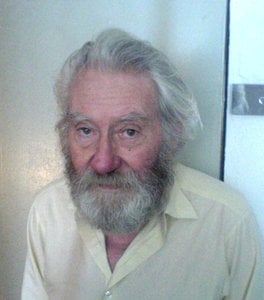
Otto Piene
1928 - 2014 , Poland
Kort om kunstneren
- Full Name: Otto Piene
- Nationality: German-American
- Date Of Birth: 1928
- Date Of Death: 2014
- Place Of Birth: Bad Laaspherode, Poland
- Notable Artworks:
- Rauchbild
- Olympic Rainbow
- Manned Helium Sculpture
- Artistic Movement Or Style: Kinetic art, ZERO group
- Artists Who Influenced This Artist:
- László Moholy-Nagy
- Fernand Léger
- Artists Or Movements Influenced By This Artist:
- Light art
- Kinetic artists