
- Forsiden

- Trykk på lerret
- naina dalal
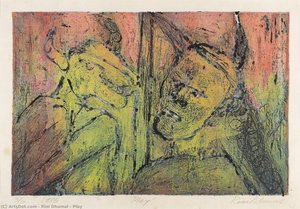
- The Cry

 Bestill maleri Kjøp digitalt bilde
 Send
Send
 Del med andre
 Vis detaljer
 Legg til i favoritter

 Last ned bildet
 Liknende objekter
 Røntgenundersøkelse
 Lysbildefremvisning
The Cry
 Painting
- Contemporary Art
 1980
1980- Modern
 29.0 x 41.0 cm
 Kerala Museum
 Vis hele teksten
Giclée / Kunsttrykk
Giclée- eller lerretsprint av museumskvalitet med rask produksjon og fleksible valgmuligheter for etterbehandling.




P118B $10

P118H $10

P118W $10

P438Z $10

P508JH $12

P508YH $12

P805H $10

P805Z $10

P919BZ $10

P919G $10

P919XJ $10

P959ZH $10

P968JZ $12

W106C $8

W218G $10

W218JH $8

W218Y $10

W307PJ $10

W316G $10

W316PJ $8

W316Y $10

W398PJ $8

W4111J $10

W500HY $15

W500JH $15

W692G $12

W849H $8

W940BG $15

W953PJ $8




Velg mellom våre forhåndsdefinerte størrelser som bevarer kunstverkets opprinnelige proporsjoner.

Du kan oppgi egne mål for å tilpasse en spesifikk ramme eller et bestemt område. Dersom den valgte størrelsen ikke samsvarer med det originale bildets proporsjoner, vil vi enten beskjære kunstverket eller utvide bildet med en speilet eller ensfarget kant. En digital mockup vil bli sendt til din godkjenning før produksjonen starter.
Vennligst merk at forhåndsvisningen på skjermen ikke gjenspeiler den faktiske beskjæringen eller utvidelsen. Kun mockuppen vil vise den endelige komposisjonen nøyaktig.
Selv om tilpassede størrelser er tilgjengelige, anbefaler vi å velge et mål fra den forhåndsdefinerte listen for å bevare de originale proporsjonene.
Verdensomspennende levering () på 2 uker i stedet for standard 4/5 uker. (22 July)

Gratis ekspressfrakt over hele verden

Lerretsduk av høykvalitets lin

Full forsikring under transport

Garanti for refusjon av toll og importavgifter

Garantert korrekt fargegjengivelse

60 dagers returrett (kun ved feil)

100% pengene tilbake-garanti

Rabatt ved flere kjøp
 Glassalternativet er kun tilgjengelig i størrelser under 110 cm

The Cry
Giclée / Kunsttrykk
Størrelse på reproduksjon
-


Endelig pris
-
Beskrivelse av samleobjektet
Lignende kunstverk


Om kunstneren
Early Life and Artistic Beginnings
James Lewis Dine, born June 16, 1935, in Cincinnati, Ohio, emerged from a surprisingly conventional background to become one of the most influential figures in post-war American art. His early life was marked by a quiet domesticity—he grew up in a modest home with his parents and younger sister, largely shielded from the turbulent artistic currents swirling around him. However, this seemingly ordinary upbringing proved to be fertile ground for an extraordinary creative spirit. A pivotal moment arrived during his teenage years when he encountered a collection of German Expressionist woodcuts through Paul J. Sachs’s *Modern Prints and Drawings* (1954). These stark, emotionally charged images—works by Ernst Ludwig Kirchner, Emil Nolde, and Max Beckmann—profoundly impacted Dine, igniting within him a desire to capture the raw essence of human experience through visual means. He began experimenting with woodcut techniques in his family’s basement, developing a distinctive style characterized by bold lines and simplified forms. This early exploration laid the foundation for his future career as a printmaker, sculptor, and performance artist. His formal artistic education commenced at the Art Academy of Cincinnati in 1952, followed by studies at the University of Cincinnati, where he honed his skills under Donald Roberts, a teacher who encouraged him to explore various printmaking methods including lithography, etching, and intaglio techniques.The Rise of Happenings and Early Experiments
Following graduation from the University of Cincinnati in 1957, Dine relocated to New York City, a hub of artistic innovation at the time. He quickly immersed himself in the burgeoning scene of experimental art, finding collaborators in figures like Claes Oldenburg, Marcus Ratliff, Allan Kaprow, and Bob Whitman. These artists were pushing the boundaries of traditional art forms, embracing spontaneity and audience participation in their performances known as “happenings.” Dine’s early work within this movement is particularly noteworthy. In 1959, he created *The Smiling Workman*, a provocative performance that involved distributing printed images of a smiling worker to passersby on the streets of New York. This piece demonstrated his willingness to engage directly with the public and challenge conventional notions of art’s role in society. This period marked a significant shift from purely visual art towards incorporating elements of theater, social commentary, and audience interaction—a hallmark of Dine's later work.Printmaking as a Central Focus
Throughout his career, printmaking remained a central focus for Jim Dine. He mastered an astonishing array of techniques – woodcuts, linocuts, screenprints, etchings, gravures, and drypoint – each offering unique possibilities for exploring form, texture, and imagery. Dine’s prints are instantly recognizable for their simplicity and directness. Often, he reduces complex subjects to their most essential elements, employing bold lines and reductive techniques to create striking visual statements. He frequently used the process of making the print itself as part of the artwork, incorporating the marks of his hand into the final image. This emphasis on the act of creation—the physical engagement with materials—became a defining characteristic of his work. His prints are not merely reproductions of images; they are embodiments of ideas and emotions, reflecting his ongoing exploration of human experience.The Development of “Dine-ographs” and Conceptual Art
In the 1960s, Dine began to develop a distinctive style he termed "dine-ographs." These works—often simple, hand-drawn images of everyday objects like forks, spoons, or chairs—were executed in various media, including woodcuts, lithographs, and screenprints. The dine-ographs represented a shift towards conceptual art, where the idea behind the artwork was often more important than its aesthetic qualities. Dine’s intention was to strip away any pretense of artistic skill or virtuosity, focusing instead on the inherent simplicity and directness of the subject matter. He sought to challenge viewers' assumptions about what constituted “art” by presenting familiar objects in unfamiliar contexts. This approach resonated with a broader cultural shift towards minimalism and conceptualism, solidifying Dine’s position as a key figure in the development of contemporary art.Legacy and Influence
Jim Dine’s impact on American art is profound and far-reaching. His pioneering work in happenings, his innovative printmaking techniques, and his embrace of conceptual ideas have influenced generations of artists. He demonstrated that art could be accessible, democratic, and engaged with the realities of everyday life. His commitment to simplicity and directness continues to inspire artists today. Dine’s work has been exhibited extensively around the world, and he remains a highly respected and influential figure in the contemporary art scene. His legacy extends beyond his own artistic creations; he fostered a spirit of experimentation and collaboration that helped shape the course of American art history.
naina dalal
1935 - , India
Kort om kunstneren
- Artistic Movement Or Style: Happenings, Printmaking
- Artists Or Movements Influenced By This Artist: ['Judson Gallery']
- Artists Who Influenced This Artist:
- Paul J. Sachs
- Ernst Ludwig Kirchner
- Date Of Birth: June 16, 1935
- Full Name: James Lewis Dine
- Nationality: American
- Notable Artworks:
- The Smiling Workman
- Cut Cards
- Place Of Birth: Cincinnati, Ohio, USA
Relaterte artikler

James Abbott McNeill Whistler: Topp 25 Kunstverk – Skjønnhet og Harmoni for Ditt Hjem
Utforsk James Abbott McNeill Whistlers 25 mest ikoniske kunstverk! Oppdag historien bak Nocturnes, portretter og impresjonistisk harmoni. Finn museumskvalitets reproduksjoner & interiørinspirasjon på ArtsDot.com.

Metropolitan Museum of Art: Topp 25 Kunstverk for Din Inspirasjon – ArtsDot.com
Oppdag de 25 mest ikoniske kunstverkene fra Metropolitan Museum of Art i New York! Lær historien bak Rembrandt, Van Gogh, Monet og mer. Finn inspirasjon til interiøret ditt med museumskvalitets reproduksjoner på ArtsDot.com.

Portrettkunstens Mesterverk: Topp 10 Maler som Fanger Sjelen – ArtsDot.no
Utforsk de 10 mest ikoniske portrettmaleriene gjennom historien! Fra Mona Lisa til Klimts Adele Bloch-Bauer, lær om kunstnerne og teknikkene bak disse mesterverkene. Finn museumskvalitets reproduksjoner & interiørinspirasjon på ArtsDot.com.

De 10 mest ikoniske malerier dominert av hvitt – Kunsthistorie og interiørinspirasjon
Utforsk de 10 mest ikoniske maleriene dominert av hvitt – fra Monet til Van Gogh. Lær historien bak disse mesterverkene og finn inspirasjon for ditt hjem. Museumskvalitet kunsttrykk på ArtsDot.com! Oppdag hele samlingen online.

De 25 mest ikoniske kunstverkene på Detroit Institute of Arts – En visuell reise
Utforsk de 25 mest ikoniske kunstverkene på Detroit Institute of Arts! Oppdag Van Gogh, Monet, Rembrandt og mer. Historier bak mesterverkene – perfekt for interiørdesign & inspirasjon. Finn reproduksjoner av høy kvalitet på ArtsDot.com.

