


 Se i rommet
 Del som digitalt kort
 Del
Del
 Detaljer
 Studentguide

 Last ned
 Liknende objekter
 Røntgen
 Lysbildefremvisning
 Besøksstatistikk
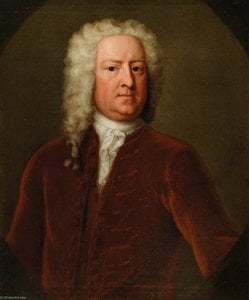
Sir George Rooke
 Oil On Canvas
- WallArt
- Baroque
 1708
1708- Early Modern
 127.0 x 101.0 cm
 Les mer
Kjøp et høyoppløselig, forbedret digitalt bilde med langt høyere kvalitet enn forhåndsvisningen på nettet.
Hver fil er omhyggelig klargjort av våre egne spesialister ved hjelp av avanserte verktøy og profesjonell manuell retusjering. Vi sørger for at hvert bilde har eksepsjonell klarhet, presis fargegjengivelse og fine detaljer.
Den endelige filen leveres via e-post innen 72 timer, optimalisert for umiddelbar bruk i profesjonelle, redaksjonelle og trykte miljøer. Dette er den samme kvaliteten som benyttes av ledende designstudioer, utgivere og gallerier.
Digitalt bilde
Last ned en høyoppløselig fil til personlig bruk, utskrift og kreative prosjekter. ( Bytt til trykkversjon Bestill håndmalt reproduksjon)
Inkludert i alle bestillinger av digitale bilder
Profesjonell digital levering, garantert
Når du velger ArtsDot.com, får du ikke bare et bilde – du mottar et profesjonelt etterbehandlet digitalt kunstverk, skapt med presisjon og med en garantert tilfredshetsgaranti. Her er alt som automatisk følger med din bestilling:

Rask levering på e-post
Din høyoppløselige digitale bildefil sendes til din e-post innen 72 timer etter bestilling – klar til umiddelbar bruk.

KI-forbedret digital fil
Ditt kunstverk blir profesjonelt optimalisert ved hjelp av avanserte AI-verktøy og manuell redigering, noe som sikrer maksimal detaljrikdom, klarhet og fargegjengivelse.

Gratis livslang nybestilling
Har du ved et uhell slettet eller mistet filen din? Ingen bekymring – vi sender den på nytt når som helst, helt gratis.

Ingen importavgifter – noen gang
Nyt ditt kunstverk umiddelbart uten toll, avgifter eller leveringskostnader – digitale nedlastinger er alltid avgiftsfrie.

Garantert fargenøyaktighet
Vi sikrer at det digitale bildet gjenspeiler de originale fargene så nøyaktig som mulig ved hjelp av profesjonelle verktøy og fargehåndtering.

100 dagers tilfredshetsgaranti
Hvis du ikke er fornøyd med ditt digitale bilde, vil vi revidere det eller refundere 100% innen 100 dager – uten spørsmål.

100% Penggaranti
Ikke fornøyd? Få full refusjon innen 100 dager etter at du har mottatt din digitale fil – uten spørsmål.

Rabatt ved storkjøp
Kjøp 3 bilder, spar 10% - Kjøp 5, spar 15% - Kjøp 10+, spar 20%. Ideelt for kreative prosjekter, gallerier og byråer.
A Grand Encounter with Baroque Majesty
In the sweeping annals of eighteenth-century portraiture, few works capture the intersection of personal prestige and maritime power as profoundly as Michael Dahl’s Sir George Rooke. Painted in 1708, this masterpiece serves as a breathtaking window into the height of the Baroque era, presenting a formal and dignified representation of a man whose life was inextricably linked to the sea. As one gazes upon the canvas, the immediate impression is one of overwhelming grandeur; the subject’s face is framed by an enormous, elaborate wig that dominates the visual field, lending an air of aristocratic weight and social importance to the composition. Dahl utilizes a masterful command of light and shadow—a technique known as chiaroscuro—to sculpt the features of the Admiral, creating a dramatic tension that pulls the viewer into his commanding presence.
The artistry of the piece lies in its exquisite attention to texture and material reality. Through skillful, layered oil brushwork, Dahl achieves a tactile richness that invites the eye to linger on the subtle sheen of fine fabrics and the intricate, flowing curls of the powdered wig. The subject’s hands rest with a practiced grace upon draped cloth, suggesting a man of both action and refinement. This duality is further enriched by the background, where the composition recedes into a misty, atmospheric seascape. A sailing ship emerges from a cloudy, turbulent sky, providing not just a sense of depth and perspective, but a vital narrative context. The sea is not merely a backdrop here; it is an extension of the man himself, representing the vast territories and naval triumphs that defined his era.
Symbolism and the Legacy of Command
Beyond its aesthetic splendor, Sir George Rooke is a deeply symbolic work intended to commemorate status, wealth, and authority. Every element within the frame has been curated to communicate the subject's identity as a leader of the English maritime endeavors. The organic shapes of the swirling clouds and the heavy folds of the drapery contrast sharply with the geometric rigidity of the ship’s hull, mirroring the balance between the unpredictable nature of the ocean and the disciplined command required to navigate it. For the discerning collector or interior designer, this painting offers more than just decoration; it provides a focal point of historical gravity that can anchor a room with a sense of timelessness and intellectual depth.
To possess a reproduction of such a work is to invite the spirit of the Enlightenment into one's space. The painting evokes an emotional response of respect and awe, reminding us of a period when portraiture was the ultimate medium for storytelling and legacy-building. Whether placed in a formal study, a grand hallway, or a sophisticated living area, this depiction of Admiral Rooke serves as a testament to the enduring allure of classical English oil painting. It is an invitation to contemplate a bygone age of exploration, where every brushstroke by Dahl captures the very essence of power and the romantic mystery of the high seas.
Relaterte kunstverk



Kunstnerbiografi
A Life Bridging Worlds: The Artistic Journey of Michael Dahl
Michael Dahl, a name synonymous with the elegance and refinement of 18th-century portraiture, was a Swedish artist whose presence indelibly shaped the English art scene. Born in Stockholm around 1659 – sources subtly vary between 1658 and 1659 – his trajectory wasn’t confined by national borders but rather defined by an ambitious pursuit of artistic mastery that propelled him across Europe, ultimately establishing him as a leading portraitist in England. His story is one woven with threads of familial sacrifice, rigorous training, a pivotal religious conversion born of opportunity, and the astute navigation of diverse cultural landscapes. The unwavering dedication of his mother, Catarina Dahl, to nurturing his talent laid the foundation for a career that would see him immortalize royalty, nobility, and leave behind a legacy of exquisite paintings celebrated for their aristocratic grace.From Swedish Foundations to Italian Influences
Dahl’s artistic education commenced in Sweden under Martin Hannibal in 1674, a figure brought from Italy by David Klöcker Ehrenstrahl with the specific purpose of establishing a portrait academy. This initial training provided him with fundamental skills – a grounding in technique and composition – before he transitioned to study directly under Ehrenstrahl himself. This move signified Dahl’s burgeoning promise as an artist, indicating that his talent was recognized and nurtured by one of Sweden's most esteemed painters. However, Dahl’s ambitions extended far beyond the confines of Stockholm. In 1682, he embarked on a remarkable educational odyssey across Europe, armed with a passport granting him freedom to travel and fueled by an unquenchable thirst for artistic knowledge. His arrival in London proved to be a pivotal moment – a calculated step towards realizing his aspirations. He found himself under the tutelage of Robert White, a skilled engraver and painter who was already well-established within the English art world, assisting him with engraving projects, including a portrait of King Charles XI of Sweden. This experience wasn’t merely supplementary; it provided invaluable practical skills and an essential introduction to the dynamics of the English art market. Yet, his encounter with Godfrey Kneller proved to be truly transformative. Kneller imparted not only technical expertise but also a crucial understanding of how to cater to public demand – a pragmatic approach that contrasted sharply with Ehrenstrahl’s more court-focused sensibilities. Dahl's travels continued to Paris and then Rome, where he absorbed the vibrant atmosphere and artistic innovations of the Baroque period.Rome, Conversion, and Patronage
The exiled Queen Christina of Sweden played a profoundly influential role in Dahl’s career during his time in Rome. Recognizing the strategic advantage of access to powerful circles and papal patronage, Dahl underwent a significant transformation – converting to Roman Catholicism at her behest. This decision opened doors that would have otherwise remained firmly closed, allowing him to paint portraits of the Queen herself and present his work before Pope Innocent XI, who bestowed upon him a gold medal – a tangible recognition of his burgeoning talent and artistic merit. The conversion, while perhaps strategically motivated, underscores Dahl’s remarkable adaptability and willingness to navigate complex social and religious landscapes in pursuit of his artistic goals. It was during this period that he honed his skills further, absorbing the Baroque aesthetic that would become so characteristic of his mature work – a style marked by dramatic lighting, rich colors, and an emphasis on theatricality. The patronage of Queen Christina provided him with not only financial support but also invaluable connections within the Roman art world, solidifying his position as a rising star.A Master of English Portraiture
Upon returning to England, Michael Dahl swiftly established himself as one of the most sought-after portraitists of his time. His style was characterized by an elegant and refined sensibility – capturing not merely the likeness but also the status, personality, and inner life of his aristocratic sitters. His portraits are distinguished by a masterful command of color, meticulous attention to detail in rendering textures (from velvet robes to intricate lace), and an overall sense of grandeur that perfectly reflected the wealth and power of his subjects. He painted numerous prominent figures, including Queen Anne, Prince George of Denmark, and a constellation of members from the English nobility – individuals who sought him out for his ability to capture their essence with remarkable accuracy and sophistication. Notable works include striking portraits of Sir William Carew, John Churchill (1st Duke of Marlborough), and Sir Robert Walpole – each painting revealing a unique facet of the sitter’s character and bearing. Perhaps one of his most impressive achievements is the triple portrait of the 2nd Earl of Burlington, the 1st Duke of Kingston upon Hull, and the 3rd Baron Berkeley of Stratton – a masterful display of his skill in group portraiture, showcasing his ability to balance individual characterization with compositional harmony and create a sense of shared identity among the subjects.Legacy and Historical Significance
Michael Dahl’s artistic style represents a compelling synthesis of Swedish, Italian, and English influences. He absorbed the technical foundations from Hannibal and Ehrenstrahl, learned market savvy from Kneller, and benefited immensely from the patronage system he encountered in Rome. His work embodies the Baroque aesthetic prevalent during his time but infused with a uniquely refined sensibility – a testament to his artistic intelligence and adaptability. He profoundly influenced subsequent generations of portrait painters with his elegant style and technical proficiency, leaving an enduring mark on English portraiture. Beyond his artistic contributions, Michael Dahl’s success as a Swedish artist flourishing primarily in England highlights the interconnectedness of European art during the Baroque period. His story is one of ambition, resilience, and cultural exchange – a testament to the power of talent, determination, and the willingness to embrace new opportunities. His portraits offer invaluable insights into the lives and appearances of the English aristocracy during the early 18th century, serving as both historical documents and enduring works of art that continue to captivate viewers today.
Michael Dahl
1658 - 1743 , Sverige
Kort om kunstneren
- Artistic Movement Or Style: Barokk
- Artists Or Movements Influenced By This Artist: ['1700-talets portrettering']
- Artists Who Influenced This Artist:
- Hannibal
- Ehrenstrahl
- Kneller
- Date Of Birth: 1659 (Stockholm)
- Date Of Death: 1743 (London)
- Full Name: Michael Dahl
- Nationality: Svensk
- Notable Artworks:
- Dronning Anne
- Carew
- Churchill
- Place Of Birth: Stockholm, Sverige