

 Forhåndsvisning
 Send
Send Del
Del
 Vis detaljer
 Utskriftsvennlig guide

 Last ned bilde
 Liknende objekter
 Røntgenundersøkelse
 Lysbildefremvisning
 Spørsmål og svar
 Statistikk
The Lifeboat

 Vis hele teksten
Giclée / Kunsttrykk
Giclée- eller lerretsprint av museumskvalitet med rask produksjon og fleksible valgmuligheter for etterbehandling. ( Kjøp håndmalt maleri Bytt til digitalt bilde)




P118B Nkr10

P118H Nkr10

P118W Nkr10

P438Z Nkr10

P508JH Nkr12

P508YH Nkr12

P805H Nkr10

P805Z Nkr10

P919BZ Nkr10

P919G Nkr10

P919XJ Nkr10

P959ZH Nkr10

P968JZ Nkr12

W106C Nkr8

W218G Nkr10

W218JH Nkr8

W218Y Nkr10

W307PJ Nkr10

W316G Nkr10

W316PJ Nkr8

W316Y Nkr10

W398PJ Nkr8

W4111J Nkr10

W500HY Nkr15

W500JH Nkr15

W692G Nkr12

W849H Nkr8

W940BG Nkr15

W953PJ Nkr8




Velg mellom våre forhåndsdefinerte størrelser som bevarer kunstverkets opprinnelige proporsjoner.

Skriv inn ønsket bredde og høyde for å tilpasse trykket til din ramme eller vegg. Et trykk kan kun beskjæres, aldri skaleres opp utover motivets opprinnelige størrelse, noe som betyr at et format med andre proporsjoner vil føre til tap av deler av bildet. Vi sender deg en digital mockup for godkjenning før vi starter trykkeprosessen. Bildet som vises på denne siden viser ikke den faktiske beskjæringen — det er kun mockuppen som viser dette.
Verdensomspennende levering () på 2 uker i stedet for standard 4/5 uker. (8 November)

Gratis ekspressfrakt over hele verden

Lerretsduk av lin av høy kvalitet

Full transportforsikring

Garanti for refusjon av toll og importavgifter

Garantert fargegjengivelse

100 dagers returrett ved fabrikasjonsfeil

100% pengene tilbake-garanti

Rabatt ved flere kjøp
 Glassalternativet er kun tilgjengelig i størrelser under 110 cm

The Lifeboat
Giclée / Kunsttrykk
Størrelse på reproduksjon
-


Totalpris for valgte alternativer
Nkr 603
Lignende kunstverk


Om kunstneren
Marshall Claxton: A Victorian Painter of Faith and Faraway Lands
Marshall Claxton (1811-1881) stands as a quietly significant figure within the landscape of 19th-century British art, an artist whose career unfolded across continents and whose work reflects both the prevailing artistic trends of his time and the profound personal experiences that shaped his vision. Born in Bolton, Lancashire, the son of a Wesleyan Methodist minister, Reverend Marshall Claxton, and his wife Diana, his early life was steeped in religious observance – a factor that subtly permeated many of his later subjects and compositions. From an early age, young Marshall demonstrated a keen artistic aptitude, leading to formal training at the prestigious Royal Academy Schools in London, where he honed his skills under the tutelage of John Jackson, R.A., a respected portrait painter known for his sensitive depictions and masterful use of color. This foundational education provided him with the technical expertise necessary to pursue a career as a professional artist, setting the stage for a life dedicated to capturing the world around him on canvas.Early Years and Artistic Development
Claxton’s artistic journey began modestly, with his first exhibition at the Royal Academy in 1832 featuring a portrait of his father – a poignant starting point that established a pattern of familial subjects throughout his career. The subsequent years witnessed approximately thirty paintings showcased at the Academy exhibitions, marking him as an artist gaining recognition within established circles. A pivotal moment arrived in 1834 when he was awarded the first medal in the painting school and subsequently secured the gold medal of the Society of Arts for his portrait of Sir Astley Cooper, a testament to his burgeoning talent and technical proficiency. This early success fueled his ambition and provided him with the momentum to explore new avenues within his artistic practice. Notably, from 1837 to 1842, Claxton sought inspiration in Italy, immersing himself in the artistic traditions of the Renaissance and absorbing the vibrant colors and dramatic light that characterized Italian painting. This period proved crucial for his development, allowing him to refine his technique and broaden his stylistic range. Upon his return to London, he continued to gain recognition, receiving a prize of £100 for “Alfred the Great in the Camp of the Danes” – a historical scene demonstrating his ability to convey narrative through visual imagery.A Global Artist: Travels and Diverse Subjects
In 1850, Marshall Claxton embarked on an ambitious undertaking, traveling to Sydney, Australia, accompanied by a substantial collection of paintings. However, despite the considerable investment, he found limited success in selling his artwork during this period, suggesting a challenging reception within the Australian art market. Undeterred, he continued his artistic explorations, venturing to Calcutta in 1854, where he achieved greater commercial success and sold several of his pieces. This journey marked a significant shift in his career trajectory, exposing him to new cultures and artistic influences. His return to England in 1858, via Egypt, further broadened his horizons, enriching his visual vocabulary and informing his subsequent works. Throughout his travels, Claxton’s subject matter remained remarkably diverse, encompassing religious scenes, historical narratives, portraits of prominent figures, and evocative landscapes – reflecting the breadth of his artistic interests and his ability to adapt his style to suit different contexts.Notable Works and Artistic Style
Among Claxton's most celebrated works is “Lady Godiva,” painted in 1850. This iconic depiction of the eleventh-century Anglo-Saxon noblewoman, shortly before her legendary ride through Coventry, captures a pivotal moment in the legend – Godiva poised to mount her horse in protest against her husband’s oppressive policies. The painting, influenced by Alfred Tennyson's evocative poem, showcases Claxton’s ability to imbue historical narratives with dramatic intensity and emotional resonance. His “General View of the Harbour and City of Sydney” is another significant work, now held within the Royal Collection in England, demonstrating his skill in capturing expansive landscapes and urban vistas. Beyond these prominent pieces, Claxton produced a substantial body of work featuring portraits of notable figures, including Bishop William Broughton and Dean Cowper, which are displayed at St. Paul’s College, University of Sydney, and the Reverend Robert Forrest, exhibited at The King's School, Parramatta. His depictions of Wesleyan and Methodist subjects – often rendered in a dignified and reverent style – were particularly popular as prints, reflecting his connection to his religious upbringing.Legacy and Historical Significance
Marshall Claxton’s artistic legacy is one of quiet distinction. While he may not be as widely recognized as some of his contemporaries, his work offers a valuable glimpse into the artistic currents of the Victorian era. His diverse subject matter – encompassing religious themes, historical narratives, and portraits – reflects both the prevailing tastes of the time and the personal experiences that shaped his vision. His travels across continents exposed him to new cultures and artistic influences, enriching his style and broadening his perspective. Works such as “Lady Godiva” continue to resonate with audiences today, demonstrating Claxton’s ability to capture iconic moments in history and convey powerful emotions through visual imagery. His paintings are held in prestigious collections, including the Royal Collection and the Art Gallery of New South Wales, ensuring that his artistic contributions will be appreciated for generations to come. Claxton's life and career serve as a testament to the ambition and versatility of Victorian artists who sought to make their mark on the world through their art.
Marshall Claxton
1811 - 1881
Kort om kunstneren
- Full Name: Marshall Claxton
- Nationality: British
- Date Of Birth: 1811
- Date Of Death: 1881
- Place Of Birth: Bolton, Lancashire
- Notable Artworks:
- Lady Godiva (1850)
- General View Sydney
- Alfred the Great
- Artistic Movement Or Style: Genre, Landscape, Portraiture
- Artists Who Influenced This Artist: ['John Jackson']
- Artists Or Movements Influenced By This Artist: ['Wesleyan Art']
Relaterte artikler
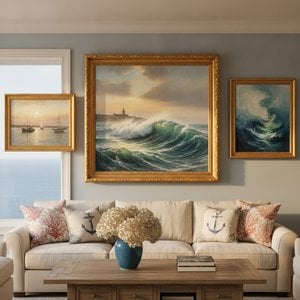
Bring the Ocean Home: Captivating Maritime Paintings to Transform Your Space with Timeless Elegance
Transform your home with breathtaking maritime oil paintings. From serene seascapes to dramatic nautical scenes, discover hand-painted reproductions that bring the ocean's soul to your space. Expertly crafted for collectors seeking timeless elegance and coastal tranquility.

Oil on Canvas: A Historical & Technical Exploration of a Timeless Artistic Medium
Explore the rich history & enduring techniques of oil painting on canvas. Discover the science behind its longevity, conservation practices, and contemporary relevance. Expert insights for art enthusiasts.

The Enduring Power of Painting: A Historical & Contemporary Exploration of Form and Emotion
Explore the rich history & enduring techniques of oil painting with ArtsDot. Discover masterpieces, learn about art collecting, and find authentic handmade reproductions crafted by skilled artists.

The Enduring Legacy of Oil on Canvas: Technique, History & Aesthetic Impact
Explore the rich history & techniques of oil painting – from Renaissance masters to Impressionism. Discover pigments, layering methods, and why this timeless medium endures. Expert insights for artists & art enthusiasts.

1800-tallets Mesterverk: 10 Kunstverk som Definerer Epoken – ArtsDot.no
Opplev 1800-tallets kunst gjennom 10 ikoniske mesterverk! Fra romantikk til impresjonisme – lær om Munch, Van Gogh og Monet. Finn museumskvalitets reproduksjoner & interiørinspirasjon på ArtsDot.com. Utforsk samlingen online!