


 Se i rommet
 Del som digitalt kort
 Del
Del
 Detaljer
 Studentguide

 Last ned
 Liknende objekter
 Røntgen
 Lysbildefremvisning
 Besøksstatistikk
Untitled
 Oil On Board
- WallArt
- Color Field Painting
 1969
1969- Modern
 123.0 x 103.0 cm
 Les mer
Kunstverket som vises på denne siden er beskyttet av opphavsretten, noe som betyr at vi ikke har juridisk tillatelse til å lage eller selge identiske reproduksjoner. Denne beskyttelsen håndheves i henhold til internasjonale avtaler som for eksempel Bernerkonvensjonen og av nasjonale lover, inkludert de som er fastsatt i Amerikansk opphavsrettslov – Tittel 17.
Denne metoden er i fullt samsvar med opphavsrettslige regler, da den ikke innebærer kopiering eller duplisering av det beskyttede kunstverket. I stedet er det snakk om en kreativ nytolkning – et nytt maleri som er inspirert av originalen, men ikke identisk med den.
Giclée / Kunsttrykk
Giclée- eller lerretsprint av museumskvalitet med rask produksjon og fleksible valgmuligheter for etterbehandling. ( Bestill håndmalt reproduksjon Gå til digitalt bilde)




P118B Nkr10

P118H Nkr10

P118W Nkr10

P438Z Nkr10

P508JH Nkr12

P508YH Nkr12

P805H Nkr10

P805Z Nkr10

P919BZ Nkr10

P919G Nkr10

P919XJ Nkr10

P959ZH Nkr10

P968JZ Nkr12

W106C Nkr8

W218G Nkr10

W218JH Nkr8

W218Y Nkr10

W307PJ Nkr10

W316G Nkr10

W316PJ Nkr8

W316Y Nkr10

W398PJ Nkr8

W4111J Nkr10

W500HY Nkr15

W500JH Nkr15

W692G Nkr12

W849H Nkr8

W940BG Nkr15

W953PJ Nkr8




Velg mellom våre forhåndsdefinerte størrelser som bevarer kunstverkets opprinnelige proporsjoner.

Du kan oppgi egne mål for å tilpasse en spesifikk ramme eller et bestemt område. Dersom den valgte størrelsen ikke samsvarer med det originale bildets proporsjoner, vil vi enten beskjære kunstverket eller utvide bildet med en speilet eller ensfarget kant. En digital mockup vil bli sendt til din godkjenning før produksjonen starter.
Vennligst merk at forhåndsvisningen på skjermen ikke gjenspeiler den faktiske beskjæringen eller utvidelsen. Kun mockuppen vil vise den endelige komposisjonen nøyaktig.
Selv om tilpassede størrelser er tilgjengelige, anbefaler vi å velge et mål fra den forhåndsdefinerte listen for å bevare de originale proporsjonene.
Verdensomspennende levering () på 2 uker i stedet for standard 4/5 uker. (13 October)

Gratis ekspressfrakt over hele verden

Lerretsduk av høykvalitets lin

Full transportforsikring

Garanti for refusjon av toll og importavgifter

Garantert fargeekthet

100 dagers returrett ved fabrikasjonsfeil

100% pengene tilbake-garanti

Mengderabatt
 Glassalternativet er kun tilgjengelig i størrelser under 110 cm

Untitled
Giclée / Kunsttrykk
Format på reproduksjon
-


Totalpris
Nkr 578
A Symphony of Silence: The Luminous Depth of Rothko’s Untitled
In the quiet realm of 1969, Mark Rothko captured a moment of profound stillness in his masterpiece, Untitled. This work serves as a quintessential gateway into the world of color field abstraction, a movement that dared to strip away the distractions of the physical world to reveal the raw essence of human emotion. Measuring 123 x 103 cm, the painting does not demand attention through frantic motion or recognizable figures; instead, it invites the viewer into a state of deep, atmospheric contemplation. The canvas is dominated by a vast, immersive expanse of deep indigo blue, which seems to recede into an infinite distance, only to be anchored by a singular, horizontal band of earthy brown that stretches across the center like a horizon line at dusk.
The true magic of this piece lies in Rothko’s meticulous technique, a process often referred to as "condensation." Rather than applying thick, impasto strokes, the artist layered thin, translucent veils of oil paint onto the board. This delicate method allows light to penetrate the upper layers and reflect back from beneath, creating a velvety, luminous texture that appears to breathe. As one moves before the painting, the edges of the brown band seem to vibrate against the indigo, blurring the boundary between form and void. For the collector or interior designer, this creates a dynamic visual experience where the artwork changes character depending on the light and the perspective of the observer.
The Language of Color and Existential Resonance
To understand Untitled is to move beyond the visual and into the psychological. Rothko’s artistic philosophy was rooted in the belief that color could bypass the rational mind to communicate universal truths—grief, ecstasy, and the sublime. By removing all narrative elements, he stripped art of its descriptive duties, leaving only the pure resonance of pigment. The juxtaposition of the somber indigo with the grounded, organic brown evokes a sense of existential weight, mirroring the tensions between the infinite unknown and our earthly existence. It is a painting that does not merely sit on a wall; it occupies the space around it, creating an emotional atmosphere that can transform a room into a sanctuary for thought.
Emerging from the Second Wave of Abstract Expressionism, this work stands as a testament to a period of intense philosophical inquiry. While his contemporaries like Pollock explored the energy of action, Rothko explored the energy of presence. This piece offers an unparalleled opportunity for those seeking to curate spaces defined by sophistication and emotional depth. Whether placed in a minimalist modern gallery or as a focal point in a luxurious residential study, a high-quality reproduction of this work brings with it the prestige of art history and the quiet power of a master who mastered the art of absence.
Spørsmål og svar
Fra hvilket land kommer Color Field Painting-verket "Untitled"?
"Untitled" ble skapt av Mark Rothko, født i Latvia, innenfor Color Field Painting-bevegelsen. Kunstnerens opprinnelse knytter verket til Color Field Painting slik det praktiseres av kunstnere fra Latvia.
Finnes det en guide for "Untitled" av Mark Rothko?
En Veiledning-side er tilgjengelig for "Untitled" av Mark Rothko: et utskrivbart faktablad om kunstverket, designet for studenter og bruk i klasserommet.
Hvilken trykkstørrelse av "Untitled" av Mark Rothko passer til det anbefalte rommet?
For et Living Room er anbefalt trykkstørrelse for "Untitled" av Mark Rothko Medium.
Hva er den dominerende fargen i "Untitled" av Mark Rothko?
Prussian Blue (#034974) er den dominerende fargen i "Untitled" av Mark Rothko.
Hva er "Untitled" laget med, og i hvilken stil?
"Untitled" er utført i Oil On Board, i Color Field Painting-stil.
Hvilken bruk og hvilket rom anbefales for "Untitled" av Mark Rothko?
"Untitled" av Mark Rothko anbefales til Accent, ideelt sett i en Living Room. Bruksområde og rom gir veiledning for hvor en reproduksjon passer inn.
Hvilken følelse formidler "Untitled" som gave?
Den Calm stemningen i "Untitled" av Mark Rothko passer perfekt til den anbefalte anledningen: Corporate Gift.
Hvilken underliggende nyanse preger "Untitled" av Mark Rothko?
Den dominerende fargen i "Untitled" av Mark Rothko er Green to Violet Spectrum. Fargen utgjør den underliggende tonen i paletten.


Kunstnerbiografi
Early Life and the Seeds of Artistic Vision
Mark Rothko, born Markus Yakovlevich Rothkowitz in Dvinsk, Latvia, in 1903, carried within him from the outset a sense of displacement that would profoundly shape his artistic journey. His early years were marked by the anxieties of a Jewish family living within the Pale of Settlement, shadowed by pogroms and political unrest. This atmosphere instilled a deep sensitivity to human suffering, a theme that would resonate throughout his oeuvre. The 1913 immigration to Portland, Oregon, represented not just a geographical shift but a cultural upheaval for the young Rothko. While his father, a pharmacist and intellectual with socialist leanings, fostered a home filled with debate and learning, the loss of Jacob Rothkowitz shortly after their arrival cast a long shadow. This early experience of loss, coupled with the challenges of assimilation, fueled a lifelong exploration of existential themes – mortality, trauma, and the search for meaning in a chaotic world. Though he excelled academically at Yale University, Rothko found himself drawn more to the vibrant energy of New York City, abandoning formal studies to pursue his passion for art at the Art Students League. These formative years laid the groundwork for an artistic vision that would ultimately challenge conventional notions of painting and redefine the emotional power of color.From Figurative Beginnings to Abstract Expressionism
Rothko’s initial artistic explorations were firmly rooted in realism, depicting urban scenes and portraits with a keen eye for detail. However, these early works already hinted at the psychological depth that would become his hallmark. As the 1940s unfolded, and the world grappled with the horrors of World War II, Rothko’s art underwent a dramatic transformation. Influenced by Surrealism and mythology, he began to move away from representational imagery, seeking instead to express universal human emotions through symbolic forms. This period saw the emergence of multi-form paintings – canvases populated by ambiguous, biomorphic shapes that seemed to hover between figuration and abstraction. These works were not merely experiments in form; they were deeply felt responses to the anxieties and uncertainties of a world at war. By the late 1940s, Rothko had arrived at his signature style: large-scale canvases featuring rectangular blocks of color that appeared to float and resonate with one another. He stripped away all vestiges of recognizable imagery, focusing instead on the pure emotional impact of color and form. This marked a pivotal moment in the development of Abstract Expressionism, and established Rothko as a leading figure in this groundbreaking movement.The Color Field and the Pursuit of Transcendence
Rothko’s mature work is defined by what came to be known as “Color Field” painting – vast expanses of luminous color that envelop the viewer in an immersive experience. These paintings are not about *what* they depict, but rather *how* they make you feel. Rothko believed that art should engage the viewer viscerally, bypassing intellectual analysis and speaking directly to the emotions. He meticulously layered thin washes of paint, creating subtle variations in tone and texture that seemed to emanate from within the canvas. The edges of his rectangular forms are often blurred, allowing them to blend and interact with one another, creating a sense of depth and movement. Rothko deliberately avoided titles beyond numbers – “No. 1,” “No. 6” – encouraging viewers to confront the paintings without preconceived notions and allow their own emotional responses to guide their experience. He sought to create a space for contemplation, a sanctuary where viewers could connect with something larger than themselves. His ambition was nothing less than to evoke profound spiritual experiences through the language of color.Major Achievements and Lasting Legacy
Among Rothko’s most significant achievements are “No. 10 (1950),” a pivotal work that exemplifies his evolving style, and the Seagram Murals (1958). Commissioned for the Four Seasons Restaurant in New York City, these murals were ultimately rejected by Rothko, who felt they would be compromised by their intended environment. He instead donated them to the Tate Gallery in London, where they continue to inspire awe and contemplation. Perhaps his most ambitious project was the Rothko Chapel (1971) in Houston, Texas – a non-denominational sanctuary housing fourteen of his paintings. Designed as a space for quiet reflection, the chapel is considered a sacred place by many, embodying Rothko’s belief in the spiritual power of art. Rothko's influence on subsequent generations of artists has been immense. He paved the way for Minimalist art and continues to inspire contemporary painters who explore the emotional possibilities of abstraction. Despite struggling with depression throughout his life, culminating in his tragic suicide in 1970, Mark Rothko remains one of the most important and influential artists of the 20th century – a master of color whose work continues to resonate with audiences around the world. ## The Enduring Power of Emotional Resonance- Rothko’s paintings are celebrated for their ability to convey universal human emotions—tragedy, ecstasy, despair, and hope.
- His exploration of color as a vehicle for emotional expression revolutionized abstract painting.
- The Rothko Chapel stands as a testament to his belief in the spiritual power of art.
- He remains a pivotal figure in Abstract Expressionism and a major influence on contemporary artists.

Mark Rothko
1903 - 1970 , Latvia
Kort om kunstneren
- Artistic Movement Or Style: Color Field Painting
- Artists Or Movements Influenced By This Artist: ['Minimalism']
- Date Of Birth: September 25, 1903
- Date Of Death: February 25, 1970
- Full Name: Markus Yakovlevich Rothkowitz
- Nationality: Russisk Empire- Amerikansk (fra 1938)
- Notable Artworks:
- No. 10 (1950)
- Seagram Murals
- Rothko Chapel
- Place Of Birth: Dvinsk, Latvia
Relaterte artikler

Topp 10 mesterverk fra abstrakt ekspresjonisme – Kunst for ditt hjem | ArtsDot.no
Oppdag de 10 mest ikoniske verkene fra abstrakt ekspresjonisme! Lær historien bak Jackson Pollock, Mark Rothko og andre mestere. Finn kunsttrykk av høy kvalitet for ditt hjem på ArtsDot.com – museumskvalitet & inspirasjon.

Serene Blue Backgrounds: Discover Soulful Art to Transform Your Space with Timeless Elegance
Transform your home with soulful blue art. From serene Monet impressions to modern textured sculptures, discover curated masterpieces designed to inspire calm. Explore expert art consultations and bespoke hand-painted reproductions to create your personal sanctuary.

The Sublimity of Color: Exploring the Emotional Landscapes of Mark Rothko's Abstract Expressionism
Explore the profound emotional depth of Mark Rothko's abstract expressionism. Discover the history, techniques & lasting impact of this pivotal Color Field painter. Expert insights for collectors and art enthusiasts.

De 10 mest ikoniske malerier dominert av slåttegrå – Kunsthistorie og interiørinspirasjon
Oppdag de 10 mest ikoniske malerier dominert av slåttegrå – fra Monet til Van Gogh. Lær om kunsthistorien, fargetoner og teknikker bak disse mesterverkene. Finn din perfekte veggkunst og interiørinspirasjon på ArtsDot.com! Utforsk samlingen online.
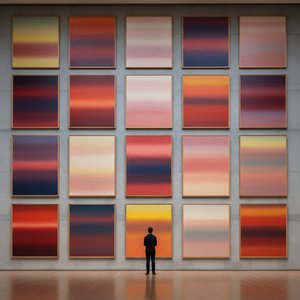
Mark Rothkos 25 Mesterverk: Følelser i Farge – Kunst for Ditt Hjem | ArtsDot.no
Oppdag Mark Rothkos 25 mest ikoniske malerier! Fordyp deg i abstrakt ekspresjonisme, fargefeltmaling og emosjonell kunsthistorie. Finn inspirasjon til ditt hjem med museumskvalitets reproduksjoner på ArtsDot.com.


