

 Send
Send Del
Del
 Vis detaljer
 Utskriftsvennlig guide

 Last ned bilde
 Liknende objekter
 Lysbildefremvisning
 Spørsmål og svar
 Statistikk
With Hidden Noise


 Vis hele teksten
Kunstverket som vises på denne siden er beskyttet av opphavsretten, noe som betyr at vi ikke har juridisk tillatelse til å lage eller selge identiske reproduksjoner. Denne beskyttelsen håndheves i henhold til internasjonale avtaler som for eksempel Bernerkonvensjonen og av nasjonale lover, inkludert de som er fastsatt i Amerikansk lov om opphavsrett – Tittel 17.
Denne metoden er i fullt samsvar med opphavsrettslige regler, da den ikke innebærer kopiering eller duplisering av det beskyttede kunstverket. I stedet er det snakk om en kreativ nytolkning – et nytt maleri som er inspirert av originalen, men ikke identisk med den.
Giclée / Kunsttrykk
Giclée- eller lerretsprint av museumskvalitet med rask produksjon og fleksible valgmuligheter for etterbehandling. ( Kjøp håndmalt maleri Bytt til digitalt bilde)




































Velg mellom våre forhåndsdefinerte størrelser som bevarer kunstverkets opprinnelige proporsjoner.

Skriv inn ønsket bredde og høyde for å tilpasse trykket til din ramme eller vegg. Et trykk kan kun beskjæres, aldri skaleres opp utover motivets opprinnelige størrelse, noe som betyr at et format med andre proporsjoner vil føre til tap av deler av bildet. Vi sender deg en digital mockup for godkjenning før vi starter trykkeprosessen. Bildet som vises på denne siden viser ikke den faktiske beskjæringen — det er kun mockuppen som viser dette.
Verdensomspennende levering () på 2 uker i stedet for standard 4/5 uker. (11 November)

Gratis ekspressfrakt over hele verden

Lerretsduk av lin av høy kvalitet

Full transportforsikring

Garanti for refusjon av toll og importavgifter

Garantert fargegjengivelse

100 dagers returrett ved fabrikasjonsfeil

100% pengene tilbake-garanti

Rabatt ved flere kjøp
 Glassalternativet er kun tilgjengelig i størrelser under 110 cm

With Hidden Noise
Giclée / Kunsttrykk
Størrelse på reproduksjon
-


Totalpris for valgte alternativer
Nkr 600
The Enigma of the Mundane: Unveiling Duchamp's Secret
In the vast, often predictable landscape of traditional fine art, few pieces possess the disruptive, haunting magnetism of Marcel Duchamp’s "With Hidden Noise." Created in 1916, this work stands as a profound testament to the power of the concept over the purely visual. At first glance, the viewer is presented with what appears to be a humble assembly of industrial and domestic fragments: a ball of twine, two brass plates, and four long screws. Yet, there is an undeniable tension held within this arrangement, a sense that the objects are not merely resting but are guarding a secret. This is not art meant for mere "retinal" pleasure; it is an intellectual puzzle designed to provoke, to unsettle, and to invite the spectator into a collaborative act of creation.
The composition possesses a raw, almost industrial aesthetic that resonates deeply with the modern interior. The interplay between the organic texture of the twine and the cold, rigid geometry of the brass and steel creates a rhythmic contrast that captures the eye. For the discerning collector or interior designer, this piece offers a sophisticated focal point—a conversation starter that defies easy categorization. It brings an element of avant-garde mystery to any space, bridging the gap between sculptural form and conceptual depth.
A Symphony of Dada and Chance
To understand "With Hidden Noise," one must step into the chaotic, rebellious spirit of the Dada movement. Emerging from the disillusionment of World War I, Dadaism sought to dismantle the logic and aesthetic norms of a society that had descended into madness. Duchamp, a pioneer of this radical shift, utilized the "readymade"—the act of selecting ordinary, manufactured objects and elevating them to the status of art through nothing more than the artist's choice. In this specific work, the collaboration with Walter Arensberg adds a layer of cryptographic intrigue; an unknown object was placed within the twine, creating a literal, auditory mystery that can only be experienced through movement.
The technique here is not one of brushstrokes or clay modeling, but of assemblage and selection. By incorporating nonsense text—a cryptic code written by Sophie Treadwell—Duchamp further obscures the boundary between meaning and chaos. The piece functions as a sensory experience where the "noise" mentioned in the title serves as a metaphor for the hidden complexities of existence. It challenges us to listen to the silence and to find beauty in the unexpected, making it an essential acquisition for those who value art that stimulates the mind as much as the eye.
Timeless Provocation for the Modern Collector
Owning a high-quality reproduction of "With Hidden Noise" is more than an aesthetic choice; it is an embrace of art history's most revolutionary moment. This piece embodies the transition from the classical to the conceptual, marking the birth of ideas that continue to shape contemporary installation and minimalist sculpture today. Its presence in a curated collection signals a deep appreciation for the intellectual rigor of the 20th-century avant-garde.
Whether placed in a minimalist gallery setting or integrated into a richly textured, eclectic living space, this artwork commands attention through its quiet intensity. It serves as a reminder that art is not always found in the grand or the beautiful, but often in the hidden, the overlooked, and the beautifully strange. For those seeking to infuse their environment with a sense of historical significance and philosophical depth, Duchamp’s masterpiece remains an unparalleled source of inspiration.
Spørsmål og svar
Hvilke farger preger "With Hidden Noise"?
Fargepaletten i "With Hidden Noise" av Marcel Duchamp beskrives som Neutrals. Det er en kortfattet beskrivelse av verkets farger.
Finnes det en guide for "With Hidden Noise" av Marcel Duchamp?
Guiden til "With Hidden Noise" er kunstverkets Faktablad for studenter-side – et utskrivbart faktablad som viser kunstverket med bildetekst, kreditering og informasjonstabell (kunstner, datoer, medium, original størrelse, samling).
Hvordan kan jeg se "With Hidden Noise" av Marcel Duchamp som en lysbildefremvisning?
Se lysbildefremvisningen her: Bildekarusell for "With Hidden Noise" av Marcel Duchamp.
Om kunstneren
Livet og kunsten til Marcel Duchamp
Født den 28. juli 1887 i Blainville i Normandie, Frankrike, trådte Marcel Duchamp inn i en verden der skapertrangen var dypt forankret i hans eget blod. Han var det fjerde av syv barn født av Eugene og Lucie Duchamp. Dette var et hjem preget av skapere og tenkere; hans søsken delte denne kreative rastløsheten, da både brødrene Jacques Villon og Raymond Duchamp-Villon, sammen med søsteren Suzanne Duchamp-Crotti, alle levde liv som kunstnere. Selv om han etter hvert skulle bli en fransk-amerikansk skikkelse av enorm kompleksitet, forble hans opphav rotfestet i Normandies stillhet.
Hans liv var aldri en ensidig jakt på penselen eller meiselen. Han var en mann med mange masker og mange interesser, som beveget seg gjennom verden som kunstner, oppfinner og en dedikert sjakkspiller. Han adopterte til og med et kvinnelig alter ego, Rrose Sélavy, for å ytterligere utfordre identitetens grenser. Denne rastløse ånden drev ham mellom kultursentrene Paris og New York, alltid på søken etter å demontere sin tids vissheter. Han ønsket ikke bare å male verden; han ønsket å tenke nytt om selve mekanismene for hvordan vi oppfatter den.
Hans bidrag til den moderne æraen var like varierte som de var uventede. Han vendte blikket mot maskinen og hverdagsobjektet for å finne et nytt språk for intellektet. Hans verk fremsto ofte i disse formene:
- Fountain
- Nude Descending a Staircase, No. 2
- The Large Glass
- Bicycle Wheel
Tidlig liv, familie og utdanning
I stillheten i Blainville-Crevon i Normandie, Frankrike, begynte en ung gutt ved navn Henri-Robert-Marcel Duchamp et liv som til slutt skulle ryste selve fundamentet for kreativitet. Han ble født inn i en familie der kunsten var et velkjent språk; hans brødre, Jacques Villon og Raymond Duchamp-Villon, ville begge finne sine egne veier som både malere og skulptører. Denne hjemlige atmosfæren av kunstnerisk utfoldelse pleiet hans tidlige anlegg og ledet ham mot formell kunststudie. Han søkte seg til Académie Julian i Paris, hvor han tilbrakte tiden sin mellom 1904 og 1905, selv om hjertet hans ofte vandret mot biljardbordet snarere enn mot atelieret. Han tilbrakte også et år ved Ecole des Beaux Artes, en studieperiode som ikke resulterte i en langsiktig forpliktelse til den akademiske tradisjonen.
Fargene og formene fra hans ungdom ble formet av tidens skiftende strømninger, idet han følte seg trukket mot fauvismens intense paletter og de strukturelle undersøkelsene i post-impresjonismen. Likevel var ikke hans vei en rett linje av akademisk progresjon. I 1905 krevde staten at han skulle begynne sin verneplikt i det 39. infanteriregimentet. I løpet av denne tiden befant han seg i Rouen, hvor han arbeidet for en trykker. Det var her, midt i duften av blekk og rytmen fra pressen, at han mestret typografiens teknikaliteter og ulike trykkprosesser. Disse praktiske ferdighetene, lært langt unna de fine salongene i Paris, skulle senere prege hans forståelse av hvordan objekter og bilder blir reprodusert og oppfattet.
Kunstnerisk utvikling i Paris
Ettersom den unge kunstneren beveget seg gjennom Paris' gater, begynte hans tilstedeværelse i kunstverdenen å ta form gjennom datidens store utstillinger. Allerede innen 1909 stilte han ut sine verk på Salon des Indépendants og Salon d’Automne, i en søken etter å finne sin plass blant sin tids skapere. Han følte seg trukket mot ideene til Paul Cézanne, hvis tilnærming til form og struktur satte dype spor i hans fremvoksende visjon. Denne perioden handlet ikke bare om det å lære å male, men om å finne en måte å uttrykke kompleksiteten i en verden i endring.
Året 1911 brakte med seg et betydelig skifte da han ble knyttet til en kubistisk gruppe. Denne engasjementet med fragmenterte former og multiple perspektiver presset ham bort fra den tradisjonelle representasjonen. Det var i denne tiden han skapte Coffee Mill, et verk som signaliserte hans voksende interesse for det mekaniske og det konseptuelle. Han ble oppslukt av ideen om den fjerde dimensjon, og søkte etter måter å skildre bevegelse og tid innenfor lerretsflatens statiske rammer. Denne intellektuelle sulten drev ham til å se forbi tingenes overflate, og han begynte å stille spørsmål ved hvor mye av kunsten som egentlig var ment kun for øyet.
De radikale årene i New York
Da Marcel Duchamp ankom USA, befant han seg i et landskap som var modent for det intellektuelle opprøret han bar med seg i sinnet. Han hadde vært i landet i mindre enn to år da han utførte sin mest berømte subversive handling. I New Yorks yrende intellektuelle kretser ble han møtt med nysgjerrighet, og han fant sin plass blant tenkere og skapere som var ivrige etter å utfordre tradisjonens grenser. For å livnære seg i disse formative årene underviste han i fransk, en praktisk nødvendighet som ga ham friheten til å utforske sine mer cerebrale interesser.
Det var i dette miljøet han ble en sentral skikkelse i New York-proto-dadaismen. Han beveget seg gjennom byen side om side med Francis Picabia, Man Ray og Beatrice Wood, og bidro til en opprørsk ånd som søkte å rive ned den etablerte orden. Hans tilstedeværelse bidro til å forme selve fundamentet for New York-dadaismen, og forvandlet byen til et laboratorium for ideer som utfordret selve definisjonen av hva en kunstner kan være. Han var ikke bare en deltaker i dette opprøret; han var selve katalysatoren for det.
Hans tilknytning til det amerikanske landskapet fordypet seg gjennom tiårene. Selv om han først ankom som en besøkende på jakt etter nye måter å uttrykke intellektet på, ble han til slutt amerikansk statsborger i 1955. Denne perioden av livet hans var preget av en nektelse av å falle til ro i den komfortable rollen som profesjonell maler; i stedet valgte han å bruke byen som et rom for dype, og ofte urovekkende, konseptuelle undersøkelser.
Teknikk, stil og readymade-objektet
Han ble trett av det han kalte "retinal kunst", verk som kun var ment å behage øyet med sin overfladiske skjønnhet. For å unnslippe denne fellen, vendte han tankene mot konseptet bak objektet, og flyttet fokus fra visuell nytelse til intellektet. Denne overgangen ledet ham til å skape sine readymades rundt 1914. Disse ble ikke valgt på grunn av sin skjønnhet eller sin stygghet, men gjennom en følelse av visuell likegyldighet. Ved å velge helt ordinære, fabrikkerte gjenstander og presentere dem som kunst, fjernet han behovet for tradisjonelt håndverk. Han søkte å omgå kunstnerens hånd fullstendig, og foretrakk kraften i et bevisst valg fremfor penselens ferdigheter.
Hans kunstneriske praksis var en rastløs og skiftende størrelse som nektet å la seg fange i én enkelt stilretning. Mens han utforsket kubismens fragmenterte perspektiver, beveget han seg også gjennom dadaismens kaos og den konseptuelle kunstens cerebrale dybder. Han arbeidet med et enormt spekter av medier, fra den taktile naturen i skulptur og kollasj til de flyktige kvalitetene i kortfilmer, og til og med gjennom sin egen kropps tilstedeværelse. Han lekte ofte med identitetens grenser ved å bruke et kvinnelig alter ego kjent som Rrose Sélavy for å utforske kjønnets flytende natur. Gjennom ordspill og tilfeldighetens element, forvandlet han selve skapelsesakten til et spill preget av logikk og subversjon.
- Fountain (1917)
- Bicycle Wheel (1913)
- Bottle Rack (1914)
- Comb (1916)
Nøkkelverk og store innovasjoner
Overgangen fra maleri til det konseptuelle begynte å ta form gjennom hans fascinasjon for bevegelse og fragmentering av form. I 1912 skapte han Nude Descending a Staircase, No. 2, et verk som fanget den mekaniske bevegelsen til en figur gjennom en serie overlappende, superponerte fasetter. Denne tilnærmingen søkte å skildre selve bevegelsen snarere enn en statisk positur. Innen 1913 hadde interessene hans beveget seg mot sammenstillingen av funne gjenstander, slik vi ser i Bicycle Wheel, hvor et hjul og en gaffel var montert på en krakk av tre. Denne handlingen – selve utvelgelsen – markerte et brudd med tradisjonelt håndverk, der ideen ble prioritert over den manuelle utførelsen av objektet.
Etter hvert som han beveget seg inn i den radikale atmosfæren i New York, ble provokasjonene hans stadig mer direkte. Han tok et helt ordinært urinal av porselen, signerte det med "R. Mutt", og presenterte det som Fountain i 1917. Denne readymade-skulpturen utfordret selve definisjonen av hva en kunstner gjør, ved å antyde at selve det å velge ut en gjenstand kunne utgjøre kunst. Han fortsatte denne subversjonen med Bottle Rack i 1914, og senere, i 1919, tok han et postkort av Mona Lisa og vanhelliget det med en bart og et geitskjegg, under tittelen L.H.O.O.Q.. Disse verkene var ment å forstyrre betrakterens forventninger og tvinge frem en ny vurdering av estetisk dømmekraft.
Hans mest komplekse og gåtefulle konstruksjon, The Large Glass, opptok tankene hans i mange år mens han arbeidet med det mellom 1915 og 1923. Dette verket, også kjent som The Bride Stripped Bare by her Bachelors, Even, benyttet blyfolie og ståltråd for å utforske intrikat, symbolsk bildebruk. Gjennom disse varierte eksperimentene flyttet han kunstens fokus bort fra øyet og mot sinnet.
De senere år og hans bortgang
Etter sine rastløse år i Amerika, vendte Duchamp tilbake til Paris i 1923. Han ble værende i byen frem til 1942, en periode hvor han i stor grad trakk seg bort fra den tradisjonelle kunstverdenen. Den intellektuelle strengheten som en gang hadde drevet hans radikale provokasjoner, fant et nytt utløp i sjakkens stille og strategiske kompleksitet. Han tilbrakte mye av denne tiden med å fordype seg i spillet, en syssel som krevde den samme mentale intensiteten som han tidligere hadde anvendt i sine konseptuelle undersøkelser.
I 1954 fant han selskap i Alexina Sattler, som han giftet seg med i en seremoni i New York City. Deres liv sammen var preget av hengivenhet og strakte seg over årene mens han navigerte sin plass i et kulturelt landskap i endring. Han ble til slutt amerikansk statsborger i 1955, selv om røttene hans forble dypt knyttet til fransk jord. Han gikk bort den 2. oktober 1968 i Neuilly-sur-Seine, Frankrike.
Arv og varig innflytelse
Ringvirkningene av hans provokasjoner strakte seg langt utenfor avantgardens små kretser, og endte til slutt opp med å omforme selve fundamentet for hvordan vi oppfatter kreativitet. Han blir ofte betraktet som selve opphavsmannen til konseptkunsten, et paradigmeskifte som flyttet fokus bort fra det fysiske objektet og over mot intellektet. Ved å prioritere ideen fremfor det visuelle resultatet, endret han fundamentalt retningen for de plastiske kunstartene i de første tiårene av det 20. århundre. Denne endringen var ikke et plutselig brudd, men en langsom og dyptgående transformasjon som banet vei for fremveksten av surrealisme, minimalisme og popkunst. Han bidro til å definere en ny æra der kunstnerens intensjon ble den primære motoren for mening.
Hans innflytelse ble følt sterkest gjennom måten han demonterte nødvendigheten av tradisjonelt håndverk på. Han lanserte konseptet kjent som den kunstneriske koeffisienten, en idé som undersøkte forholdet mellom hva en kunstner har til hensikt å uttrykke, og hva som faktisk blir formidlet. Denne tankegangen la grunnlaget for en senere generasjon kunstnere som fortsatte å utforske grensene for appropriasjon og tilskuerens rolle. Han skapte ikke bare objekter; han skapte nye måter å tenke på selve skapelsesakten. Hans tilstedeværelse i kunsthistorien forblir en konstant kraft som utfordrer grensene for hva som kan betraktes som et kunstverk.
- Fountain (1917)
- Nude Descending a Staircase, No. 2 (1912)
- The Large Glass (1915–1923)
- Bicycle Wheel (1913)
Hvor du kan se verkene i dag
For å følge sporene etter hans rastløse intellekt, kan man reise til Philadelphia Museum of Art. Denne institusjonen huser den største samlingen av hans arbeid, og bevarer bredden i en karriere som nektet å stå stille. Det er her tyngden av hans innflytelse er mest håndgripelig, ettersom museet vokter over et enormt mangfold av hans ideer og objekter, samlet gjennom et helt liv.
I London bevarer Tate Modern det porselensurinalet kjent som Fountain. Dette objektet, som en gang skapte en slik oppstandelse da det ble sendt inn til en utstilling, forblir en sentral del av byens samling. Samtidig holder Centre Pompidou i Paris på hans mer eksperimentelle, kinetiske utforskinger, inkludert Rotorelief n°11 og Rotorelief n°12. Disse verkene reflekterer hans fascinasjon for bevegelse og måten et objekt kan bedra øyet på.
Andre verk har funnet sine hjem i spesialiserte institusjoner som gjenspeiler hans varierte interesser. Monnaie de Paris besitter Trébuchet (Trap), et verk som taler om hans vedvarende engasjement for form og konsept lenge etter hans tidlige år. Å se disse verkene er å møte de fysiske restene av en mann som søkte å flytte kunsten fra øyet til sinnet.
- Nude Descending a Staircase, No. 2 (1912)
- The Large Glass (1915–1923)
- Bicycle Wheel (1913)
- Bottle Rack (1914)

Marcel Duchamp
1887 - 1968 , Frankrike
Kort om kunstneren
- Artistic Movement Or Style:
- Kubisme
- Dadaisme
- Konseptkunst
- Artists Or Movements Influenced By This Artist:
- Konseptkunst
- Minimalisme
- Popkunst
- Surrealisme
- Artists Who Influenced This Artist: ['Cézanne']
- Date Of Birth: 1887
- Date Of Death: 1968
- Full Name: Henri-Robert-Marcel Duchamp
- Nationality: Fransk-amerikansk
- Notable Artworks:
- Fountain
- L.H.O.O.Q
- The Large Glass
- Nude Descending a Staircase, No.2
- Place Of Birth: Blainville-sur-Mer, Frankrike
Relaterte artikler

Bronseklassikere: 10 skulpturer som revolusjonerte kunsten | ArtsDot
Utforsk 10 legendariske bronseskulpturer som formet kunsthistorien! Fra Rodin til Michelangelo – oppdag historiene, teknikkene og skjønnheten bak tidløse mesterverk. Finn din perfekte veggkunst eller interiørdekor på ArtsDot.com.
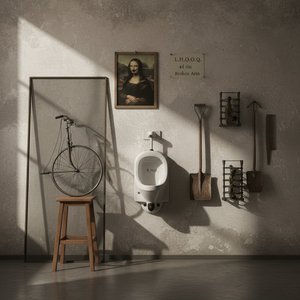
Marcel Duchamp: Challenging Conventions & Redefining Art in the 20th Century
Explore the revolutionary art of Marcel Duchamp! Discover how his Dadaist readymades challenged artistic conventions & redefined modern art. A deep dive into 'Fountain', conceptual shifts, and his lasting impact.

The Enduring Form: Sculpture Across History, Technique & Emotional Resonance
Explore the rich history of sculpture with ArtsDot. Discover key techniques, influential artists & investment potential for discerning collectors. Expert insights into valuing and collecting timeless masterpieces.

The Enduring Form: Exploring Themes & Techniques in Sculpture Across Historical Periods
Explore the rich history of sculpture from ancient masterpieces to contemporary innovations. Discover key techniques, influential artists & investment potential for discerning art collectors.

Bronzens Mesterverk: 10 Skulpturer Som Forandret Kunsthistorien | ArtsDot
Oppdag 10 legendariske bronse skulpturer som revolusjonerte kunsthistorien! Fra Michelangelo til Rodin – lær om teknikker, historier og tidløs skjønnhet. Finn museumskvalitets reproduksjoner & interiørinspirasjon på ArtsDot.com.


