


 Del som digitalt kort
 Del
Del
 Detaljer
 Studentguide

 Last ned
 Liknende objekter
 Lysbildefremvisning
 Besøksstatistikk
(Untitled)


 Les mer
Kunstverket som vises på denne siden er beskyttet av opphavsretten, noe som betyr at vi ikke har juridisk tillatelse til å lage eller selge identiske reproduksjoner. Denne beskyttelsen håndheves i henhold til internasjonale avtaler som for eksempel Bernerkonvensjonen og av nasjonale lover, inkludert de som er fastsatt i Amerikansk opphavsrettslov – Tittel 17.
Som et respektfullt og lovlig alternativ tilbyr vi skreddersydde, håndmalte kunstverk inspirert av originalen. Våre dyktige og profesjonelle kunstnere studerer nøye originalens stil, stemning og kunstneriske essens for å skape et nytt og unikt verk som vekker den samme følelsen – samtidig som det forblir en original skapelse i seg selv.
Denne metoden er i fullt samsvar med opphavsrettslige regler, da den ikke innebærer kopiering eller duplisering av det beskyttede kunstverket. I stedet er det snakk om en kreativ nytolkning – et nytt maleri som er inspirert av originalen, men ikke identisk med den.
Håndlaget oljereproduksjon
Håndmalt olje på lerret i din valgte størrelse og ramme, laget på bestilling av våre kunstnere. ( Bytt til trykkversjon Gå til digitalt bilde)




































Velg mellom våre forhåndsdefinerte størrelser som bevarer kunstverkets opprinnelige proporsjoner.

Du kan angi egne mål for å tilpasse en spesifikk ramme eller plass. Dersom den valgte størrelsen ikke samsvarer med originalbildets proporsjoner, vil vi enten beskjære kunstverket eller utvide maleriet med ytterligere håndmalte elementer. En digital mockup vil bli sendt til din godkjenning før produksjonen starter.
Vennligst merk at forhåndsvisningen på skjermen ikke gjenspeiler den faktiske beskjæringen eller utvidelsen. Kun mockuppen vil vise den endelige komposisjonen nøyaktig.
Selv om tilpassede størrelser er tilgjengelige, anbefaler vi å velge et mål fra den forhåndsdefinerte listen for å bevare de originale proporsjonene.
Etter bestilling vil ArtsDot.com-teamet sende e-post til kunden for instruksjoner og sende et utkast (mockup) som forhåndsvisning.
Verdensomspennende levering () på 3–4 uker i stedet for standard 5 uker. (11 October). Ingen kompromisser med kvaliteten.

Gratis ekspressfrakt over hele verden

Lerretsduk av høykvalitets lin

Full transportforsikring

Garanti for refusjon av toll og importavgifter

Garantert fargeekthet

100 dagers returrett ved fabrikasjonsfeil

100% pengene tilbake-garanti

Mengderabatt
 Glassalternativet er kun tilgjengelig i størrelser under 110 cm

(Untitled)
Reproduksjonsmetode
Format på reproduksjon
-


Totalpris
Nkr 2439
A Symphony of Shadow and Light
In the quiet, evocative realm of Man Ray’s photography, we encounter a profound dialogue between the mundane and the metaphysical. This stark black and white composition, often associated with the enigmatic spirit of “The Gift,” transcends mere documentation to become a window into the avant-garde mind. At first glance, the viewer is presented with an abstract arrangement of draped fabric—perhaps a heavy wool—rendered in exquisite detail against a textured surface. There is no recognizable landscape or portrait here; instead, the artist invites us into a world of pure form. The vertical orientation of the piece emphasizes a sense of soaring height, while intersecting lines of shadow create a dynamic diagonal element that pulls the eye upward, much like a dancer caught in a moment of suspended motion.
The power of this work lies in its masterful manipulation of light and shadow, a technique Man Ray honed to perfection during his most prolific years. Through high-contrast photography, he captures the very essence of texture, making the weave of the fabric feel almost tactile to the viewer. The lighting, appearing to emanate from a single, strong source above and slightly to the left, casts long, dramatic shadows that obscure the underlying form, creating an atmosphere of deep mystery. This interplay between visibility and obscurity serves as a metaphor for the human experience—the way certain truths are illuminated while others remain shrouded in the velvet darkness of the unknown.
The Legacy of the Avant-Garde
To understand this piece is to understand the radical intellectual currents of Dadaism and Surrealism that defined the early 20th century. Born Emmanuel Radnitzky in Philadelphia, Man Ray emerged as an iconoclast who rejected traditional artistic conventions in favor of experimentation and the power of imagination. Influenced by the "ready-mades" of Marcel Duchamp, Ray sought to challenge established norms and redefine what could be considered art. This photograph embodies that spirit of rebellion; it strips away the need for a literal subject, focusing instead on the raw, formal elements of line, shape, and light.
For the discerning collector or interior designer, this artwork offers a timeless elegance that complements both modern and classic spaces. Its monochromatic palette provides a sophisticated anchor for a room, offering a sense of depth and intellectual weight without overwhelming the surrounding decor. The piece does not merely decorate a wall; it commands contemplation. It evokes a sense of vulnerability and concealment, making it an ideal selection for those seeking to infuse their environment with a touch of mystery, historical significance, and the enduring allure of the Surrealist movement.
Spørsmål og svar
Kan "(Untitled)" av Man Ray, som er en del av samlingen til Oscar Niemeyer Museum, reproduseres lovlig?
Originalen av "(Untitled)" befinner seg hos Oscar Niemeyer Museum, og verket er fortsatt beskyttet av opphavsrett.
Hvor kan jeg kjøpe et trykk av "(Untitled)" av Man Ray?
"(Untitled)" er tilgjengelig som et kunsttrykk på bomullslerret eller arkivbestandig lerretspapir. Bestillinger legges på denne siden, i den størrelsen du selv velger.
Hva handler "(Untitled)" om, og hvilken atmosfære formidler den?
"(Untitled)" av Man Ray kombinerer abstract composition, dramatic shadows, textured fabric, light and darkness, geometric forms, photographic art, surreal imagery med en Dramatic atmosfære.
Hvilken bruk og hvilket rom anbefales for "(Untitled)" av Man Ray?
"(Untitled)" av Man Ray anbefales til Accent, ideelt sett i en Living Room. Bruksområde og rom gir veiledning for hvor en reproduksjon passer inn.
Hvor kan jeg kjøpe en håndmalt reproduksjon av "(Untitled)" av Man Ray?
Håndmalte kopier av "(Untitled)" av Man Ray selges på denne nettsiden: en håndmalt oljereproduksjon på linlerret, bestilles via denne siden.
Hvordan passer "(Untitled)" inn i Man Ray sine temaer og stil?
"(Untitled)" tilhører Man Ray sitt Surrealism-verk, der de dokumenterte temaene inkluderer dadaism, surrealism, ray's photograms", early 20th century, shadow play, abstraction & form.
Hvem har skapt "(Untitled)"?
"(Untitled)" ble skapt av Man Ray. Informasjonen på denne siden beskriver Man Ray sitt originale verk.


Kunstnerbiografi
A Life Illuminated by Shadows
Emmanuel Radnitzky, a name forever intertwined with the enigmatic “Man Ray,” was born in Philadelphia in 1890 to Russian Jewish immigrant parents. His early life, steeped in the vibrant energy of New York City, proved formative, exposing him to both the raw realism of the Ashcan School and the revolutionary currents of European modernism – a potent blend that would subtly shape his artistic vision. From a young age, he displayed an innate talent for drawing and design, skills honed during his studies at the Ferrer Centre, where anarchist ideals fostered a spirit of experimentation and radical self-expression. This environment instilled in him a lifelong commitment to challenging conventional norms and pushing the boundaries of artistic possibility. The shift from “Manny” Radnitzky to Man Ray wasn’t merely a stylistic choice; it was an assertion of identity—a deliberate rejection of societal expectations and a declaration of independence within the art world.Dada, Surrealism, and the Birth of a New Vision
Man Ray's artistic trajectory took a dramatic turn with his encounter with Marcel Duchamp in New York around 1915. This meeting ignited a shared fascination with dismantling traditional notions of art, leading them both into the heart of the Dada movement—a defiant protest against the horrors and disillusionment of World War I. Dada artists sought to dismantle established values, embracing chance, absurdity, and anti-art principles. Man Ray quickly became a key figure in this movement, collaborating with Duchamp on “ready-mades”—ordinary manufactured objects elevated to the status of art—and contributing to the publication of *New York Dada*, a groundbreaking attempt to establish Dada’s presence in America. This rebellious spirit propelled him beyond Dada and into the embrace of Surrealism, a movement that sought to unlock the power of the unconscious mind. He found kinship with André Breton and other leading Surrealists, exploring themes of dreams, desire, and the irrational through his art. His work during this period is characterized by a dreamlike quality—a deliberate blurring of reality and illusion, inviting viewers into a world of hidden meanings and subconscious associations.The Alchemy of Light: Rayographs and Photographic Innovation
Perhaps Man Ray’s most enduring contribution to the art world lies in his invention of the “rayograph”—a revolutionary photographic technique that emerged almost serendipitously in 1922. Frustrated with the limitations of traditional photography, he began experimenting with placing objects directly onto light-sensitive paper and exposing them to light—effectively bypassing the camera lens altogether. The resulting images were ethereal, ghostly, and utterly unlike anything previously seen in photography. These weren’t representations *of* things; they were direct imprints *from* them, imbued with a sense of mystery and otherworldliness. He dubbed these creations “rayographs,” a clever blend of his own name and the word "photograph." Beyond rayographs, Man Ray relentlessly explored the possibilities of photography, mastering techniques like solarization—a process that created dramatic reversals of tone—and experimenting with multiple exposures to achieve complex layered effects. His portraits, particularly those of fellow artists like Lee Miller, are renowned for their psychological depth and striking compositions, capturing a sense of vulnerability and intrigue.Beyond Stillness: Film and a Lasting Legacy
Man Ray’s artistic curiosity didn't end with still photography; he ventured into the realm of filmmaking, producing a series of experimental films that challenged conventional narrative structures and embraced surreal imagery. Films like *Le Retour à la Raison* (1923) and *L'Étoile de Mer* (1928) were not stories told in a linear fashion; they were visual poems— explorations of form, rhythm, and the subconscious. He employed innovative techniques such as stop-motion animation and superimposition to create disorienting and dreamlike effects, pushing the boundaries of cinematic expression. While his filmography remained relatively small, it was profoundly influential on subsequent generations of avant-garde filmmakers. Throughout his long career, Man Ray consistently defied categorization, refusing to be confined by labels or expectations. He died in Paris in 1976, leaving behind a body of work that continues to inspire and provoke—a true pioneer who forever altered our perception of art and reality.A Continuing Influence
Man Ray’s legacy extends far beyond his own lifetime, continuing to resonate with artists and audiences today. His willingness to experiment, his rejection of convention, and his unwavering commitment to artistic freedom serve as a powerful inspiration for those who seek to push the boundaries of creative expression. His influence can be seen across various disciplines:- Photography: Man Ray’s techniques, particularly rayography and solarization, continue to be explored by contemporary photographers.
- Surrealism: His contributions solidified the movement's visual language and inspired countless artists across disciplines.
- Experimental Film: His pioneering work in film laid the groundwork for future generations of avant-garde filmmakers.
- Fashion Photography: Ray’s innovative approach to portraiture and composition influenced the development of modern fashion photography.

Man Ray
1890 - 1976 , USA
Kort om kunstneren
- Artistic Movement Or Style: Dada, Surrealisme
- Artists Or Movements Influenced By This Artist: ['Surrealistbevegelsen']
- Artists Who Influenced This Artist: ['Marcel Duchamp']
- Date Of Birth: 27. august 1890
- Date Of Death: 18. november 1976
- Full Name: Emmanuel Radnitzky
- Nationality: Amerikansk
- Notable Artworks:
- Rayographs
- Film
- Place Of Birth: Philadelphia, USA
Relaterte artikler

Beyond the Lens: Photography's Enduring Influence on Modern & Contemporary Art
Explore photography's pivotal role in shaping modern & contemporary art. Discover key movements, influential artists like Stieglitz, and expert collecting advice from ArtsDot.

De 10 mest ikoniske malerier dominert av hvitt – Kunsthistorie og interiørinspirasjon
Utforsk de 10 mest ikoniske maleriene dominert av hvitt – fra Monet til Van Gogh. Lær historien bak disse mesterverkene og finn inspirasjon for ditt hjem. Museumskvalitet kunsttrykk på ArtsDot.com! Oppdag hele samlingen online.

Monochrome Visions: Exploring the Aesthetic & Historical Significance of Black & White Photography
Explore the rich history & artistic power of black and white photography. From early techniques to iconic masters like Ansel Adams, discover why monochrome continues to captivate art lovers today. Expert insights for collectors.

Svart Kunst: Topp 10 Maler som Definerer Skyggenes Skjønnhet | ArtsDot.no
Utforsk 10 ikoniske malerier dominert av svart – fra Rembrandts skygger til Munchs ekspresjonisme. Oppdag historiene bak mesterverkene og finn kunsttrykk for ditt hjem på ArtsDot.no. Utforsk hele samlingen online!
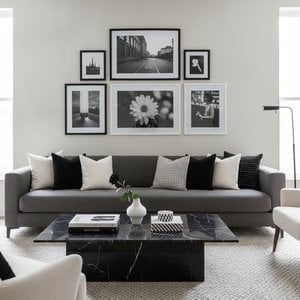
Timeless & Chic: Elevating Your New Home with the Sophistication of Black and White Photography
Transform your new home with the timeless allure of black and white photography. ArtsDot.com specializes in elegant monochrome decor and custom hand-painted wedding portraits that turn cherished milestones into lasting, soulful masterpieces. Elevate your space with ease.
