


 Forhåndsvisning
 Send
Send Del med andre
 Vis detaljer

 Last ned bildet
 Liknende objekter
 Røntgenundersøkelse
 Lysbildefremvisning
 Statistikk
St Christopher
 Oil On Canvas
- WallArt
- Renaissance Style
 1531
1531- Renaissance
 162.0 x 57.0 cm
 Staatliche Museen zu Berlin
 Vis hele teksten
Håndlaget oljereproduksjon
Håndmalt olje på lerret i din valgte størrelse og ramme, laget på bestilling av våre kunstnere. ( Bytt til trykk Bytt til digitalt bilde)




P118B $10

P118H $10

P118W $10

P438Z $10

P508JH $12

P508YH $12

P805H $10

P805Z $10

P919BZ $10

P919G $10

P919XJ $10

P959ZH $10

P968JZ $12

W106C $8

W218G $10

W218JH $8

W218Y $10

W307PJ $10

W316G $10

W316PJ $8

W316Y $10

W398PJ $8

W4111J $10

W500HY $15

W500JH $15

W692G $12

W849H $8

W940BG $15

W953PJ $8




Velg mellom våre forhåndsdefinerte størrelser som bevarer kunstverkets opprinnelige proporsjoner.

Du kan angi egne mål for å tilpasse en spesifikk ramme eller plass. Dersom den valgte størrelsen ikke samsvarer med originalbildets proporsjoner, vil vi enten beskjære kunstverket eller utvide maleriet med ytterligere håndmalte elementer. En digital mockup vil bli sendt til din godkjenning før produksjonen starter.
Vennligst merk at forhåndsvisningen på skjermen ikke gjenspeiler den faktiske beskjæringen eller utvidelsen. Kun mockuppen vil vise den endelige komposisjonen nøyaktig.
Selv om tilpassede størrelser er tilgjengelige, anbefaler vi å velge et mål fra den forhåndsdefinerte listen for å bevare de originale proporsjonene.
Etter bestilling vil ArtsDot.com-teamet sende e-post til kunden for instruksjoner og sende et utkast (mockup) som forhåndsvisning.
Verdensomspennende levering () på 3–4 uker i stedet for standard 5 uker. (16 September). Ingen kompromisser med kvaliteten.

Gratis ekspressfrakt over hele verden

Lerretsduk av høykvalitets lin

Full forsikring under transport

Garanti for refusjon av toll og importavgifter

Garantert korrekt fargegjengivelse

100 dagers returrett (kun ved mangler)

100% pengene tilbake-garanti

Rabatt ved flere kjøp
 Glassalternativet er kun tilgjengelig i størrelser under 110 cm

St Christopher
Teknikk for reproduksjon
Størrelse på reproduksjon
-


Endelig pris
$ 263
A Divine Encounter in Oil: The Soul of Lorenzo Lotto’s St. Christopher
In the quiet, luminous depths of Lorenzo Lotto’s St. Christopher, painted around 1531, we encounter more than just a religious icon; we witness a profound moment of spiritual transcendence captured through the lens of the Venetian Renaissance. As a wandering master who often stood apart from the polished perfection of his contemporaries, Lotto brings an unparalleled psychological intimacy to this monumental work. The painting depicts the legendary saint, a man of immense physical stature, wading through the currents of the Jordan River. Yet, the true weight of the scene lies not in the muscularity of the figure, but in the ethereal presence of the infant Jesus, perched upon his shoulder, guiding the giant with a divine, quiet authority. It is a masterpiece that invites the viewer to move beyond mere observation and enter a state of contemplative wonder.
The technical brilliance of this piece lies in Lotto’s masterful command of oil on canvas, a medium he utilized to create a breathtaking sense of texture and light. One cannot help but be captivated by the way the vibrant green of St. and Christopher’s robe cascades in fluid, heavy folds, catching the soft light to suggest both the weight of the fabric and the dampness of the river air. This meticulous attention to detail is balanced by a nascent Mannerist sensibility, where subtle distortions and expressive brushstrokes breathe life into the composition. The background—a serene, pastoral landscape of soft clouds and a tranquil blue river—serves as a peaceful stage for the drama of faith, providing a sense of infinite space that complements the physical presence of the saint.
Symbolism and the Emotional Resonance of Faith
Every element within this composition is steeped in profound Christian iconography, designed to evoke a sense of divine protection and unwavering guidance. The central figure of St. Christopher serves as a powerful symbol of strength tempered by humility, while the angelic presence of the Christ child represents the weight of the world’s salvation resting upon human shoulders. The interplay between the robust, earthbound man and the luminous, celestial child creates a tension that is both visually arresting and emotionally stirring. For the collector or the lover of fine art, this painting offers a rare window into the humanist spirit of the 16th century—a period where the boundaries between the physical struggle of man and the grace of the divine were beautifully blurred.
For those seeking to integrate such a profound work into a curated space, St. Christopher offers an unparalleled emotional anchor. Whether placed in a grand gallery or a sophisticated private study, its rich palette of deep reds, verdant greens, and serene blues provides a sophisticated aesthetic depth that complements classical and contemporary interiors alike. A high-quality reproduction of this work does more than decorate a wall; it introduces a narrative of resilience, devotion, and the eternal search for light into the home. It is an invitation to pause, to reflect, and to find beauty in the intersection of the earthly and the divine.
Lignende kunstverk


Om kunstneren
A Venetian Wanderer: The Life and Art of Lorenzo Lotto
Born in the vibrant heart of Venice around 1480, Lorenzo Lotto emerged as a distinctive voice within the Italian Renaissance, though his artistic journey would lead him far beyond the lagoon city’s celebrated studios. Unlike many of his contemporaries who firmly established themselves within specific schools or courts, Lotto embarked on a peripatetic career, traversing cities like Treviso, Rome, Bergamo, and Ancona before ultimately finding solace as a lay brother in Loreto. This itinerant existence profoundly shaped his artistic vision, exposing him to diverse influences while fostering an independent spirit that set him apart. While early training remains somewhat shrouded in mystery, it’s believed he absorbed the lessons of Giovanni Bellini, a leading figure of the Venetian school, yet Lotto quickly transcended simple imitation, forging a style uniquely his own—a blend of High Renaissance grace and nascent Mannerist sensibilities.Blending Traditions: Style and Influences
Lotto’s artistic signature lies in his remarkable ability to synthesize diverse influences into a cohesive and deeply personal aesthetic. His early works reveal the impact of Giorgione's poetic naturalism, particularly evident in the subtle atmospheric effects and lyrical compositions. The light filtering through Venetian windows, the hazy landscapes—these elements evoke a sense of dreamlike beauty, mirroring Giorgione’s signature style. However, a sojourn in Rome brought him into contact with the art of Raphael, imbuing his work with a newfound clarity of form and compositional balance. The meticulous detail, the balanced arrangements of figures – these are hallmarks of Raphael's influence. Later, during his extended stay in Bergamo, he absorbed elements of Lombard realism, adding a grounded physicality to his figures. Noticeable is the attention to texture, the depiction of fabrics and skin with remarkable accuracy. This eclectic approach is not merely additive; Lotto masterfully integrated these influences, creating paintings that are both technically refined and emotionally resonant. He wasn’t afraid to experiment with perspective, often employing unusual vantage points to heighten the sense of drama or intimacy. His palette, while rooted in Venetian colorism—the rich reds, blues, and golds characteristic of Venetian painting—evolved over time, becoming increasingly vibrant and expressive. Susanna and the Elders, painted during his Bergamo period, exemplifies this maturity—a captivating narrative rendered with luminous colors and a keen psychological insight into the characters’ emotions.Portraits of the Soul: Lotto's Masterpieces
While Lotto excelled in religious painting, it is perhaps through his portraits that he truly distinguished himself. He possessed an extraordinary gift for capturing not just the physical likeness but also the inner life of his sitters. His portraits are rarely idealized; instead, they present individuals with all their complexities and vulnerabilities. Man with a Golden Paw, painted in 1527, is a prime example—a captivating study of a gentleman holding a small golden statuette, its symbolism open to interpretation but undeniably intriguing. The sitter’s gaze is direct and engaging, conveying a sense of intelligence and quiet contemplation. Notice the subtle details – the folds of his clothing, the expression in his eyes – all contribute to a compelling psychological portrait. Similarly, Portrait of a 37-year-old Man, showcases Lotto's ability to convey personality through subtle details—the man’s clothing, his posture, the expression in his eyes all contribute to a compelling psychological portrait. These are not merely representations of individuals; they are windows into their souls. The portraits often hint at stories untold, emotions unexpressed, making them deeply engaging and thought-provoking.The Mystical and the Sacred: Religious Paintings
Lotto’s religious paintings are equally remarkable for their emotional intensity and innovative approach to traditional themes. He frequently departed from conventional depictions of saints and biblical scenes, imbuing them with a sense of immediacy and drama. His *Annunciation* (c. 1527), housed in the Pinacoteca Civica in Recanati, is a particularly striking example. The scene is rendered with an almost unsettling intensity—the angel’s startled expression, the Virgin Mary's palpable surprise, the cat peering curiously from beneath the altar – all contribute to a sense of heightened realism and psychological depth. The use of color is bold and expressive, creating a luminous effect that draws the viewer into the scene. His altarpieces often feature unusual compositions and perspectives, challenging traditional conventions and inviting viewers to contemplate the mysteries of faith. The *Entombment* (1512) at Jesi demonstrates this innovative approach—a dynamic composition with figures arranged in an unconventional manner, creating a sense of movement and drama.A Rediscovered Legacy: Historical Significance
Despite achieving considerable recognition during his lifetime, Lotto's reputation waned after his death in 1556 or 1557. His works, often dispersed throughout provincial churches and private collections, were largely overlooked for centuries. It wasn’t until the late 19th century, with Bernard Berenson’s groundbreaking scholarship, that Lotto experienced a significant revival of interest. Berenson's work highlighted Lotto’s unique artistic vision and demonstrated his importance within the broader context of the Italian Renaissance. Today, he is recognized as one of the most original and compelling artists of the era. His unique blend of stylistic influences, his psychological depth, and his technical mastery continue to captivate audiences and inspire art historians. He stands as a testament to the power of artistic independence—a wanderer who forged his own path and left an indelible mark on the world of art. The rediscovery of Lotto’s oeuvre has enriched our understanding of the Renaissance, revealing a complex and multifaceted artist whose work deserves continued exploration and appreciation.
Lorenzo Lotto
1480 - 1556 , Italia
Kort om kunstneren
- Artistic Movement Or Style: Renessanse, Mannerisme
- Artists Or Movements Influenced By This Artist: ['Raphael']
- Artists Who Influenced This Artist:
- Giovanni Bellini
- Giorgione
- Date Of Birth: c. 1480
- Date Of Death: 1556/57
- Full Name: Lorenzo Lotto
- Nationality: Italiensk
- Notable Artworks:
- Madonna og Barn
- Allegori
- St. Jerome
- Place Of Birth: Venezia, Italia
Relaterte artikler

Giotto di Bondone: Topp 25 Kunstverk – Mesterverk for Ditt Hjem | ArtsDot
Utforsk Giotto di Bondones 25 mest ikoniske kunstverk! Oppdag renessansens fresker, bibelske scener og Arena Chapel's skjønnhet. Finn reproduksjoner av høy kvalitet for ditt hjem på ArtsDot.com.
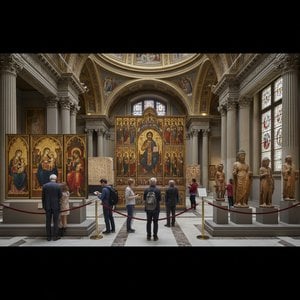
Sacred Narratives Embodied: A Comprehensive Exploration of Religious Iconography in Art History
Explore the rich history of religious iconography in art! Discover symbolism, movements & masterpieces from Byzantine to Renaissance periods. Expert insights for collectors and enthusiasts at ArtsDot.

Mario Sironi: A Poetic of Modern Italian Identity Through Symbolism & Social Commentary
Explore the profound works of Mario Sironi, a key figure in Italian Modernism. Discover his evolution from Futurism to Metaphysical painting and his powerful social commentary. Learn about his legacy at ArtsDot.

El Grecos 25 Mesterverk: Kunst, Historie og Inspirasjon for Ditt Hjem
Utforsk El Grecos 25 mest ikoniske malerier! Oppdag historien bak spansk renessanses mesterverk, fra 'Gravleggelsen av grev Orgaz' til dramatiske portretter. Finn kunsttrykk og reproduksjoner for ditt hjem på ArtsDot.com.

Lorenzo Lotto: Unveiling the Enigma of a Venetian Master's Portraits
Explore the captivating world of Lorenzo Lotto, a Venetian Renaissance master renowned for his psychologically insightful portraits & enigmatic symbolism. Discover his life, style, and rediscovered legacy with ArtsDot.


