


 Forhåndsvisning
 Send
Send Del med andre
 Vis detaljer

 Last ned bildet
 Liknende objekter
 Røntgenundersøkelse
 Lysbildefremvisning
 Statistikk
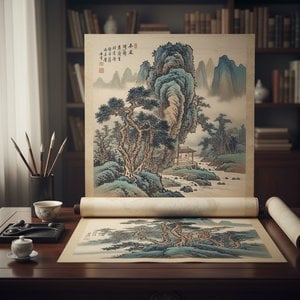
Immortal in Splashed Ink


 Vis hele teksten
Giclée / Kunsttrykk
Giclée- eller lerretsprint av museumskvalitet med rask produksjon og fleksible valgmuligheter for etterbehandling. ( Kjøp håndlaget maleri Bytt til digitalt bilde)




































Velg mellom våre forhåndsdefinerte størrelser som bevarer kunstverkets opprinnelige proporsjoner.

Du kan oppgi egne mål for å tilpasse en spesifikk ramme eller et bestemt område. Dersom den valgte størrelsen ikke samsvarer med det originale bildets proporsjoner, vil vi enten beskjære kunstverket eller utvide bildet med en speilet eller ensfarget kant. En digital mockup vil bli sendt til din godkjenning før produksjonen starter.
Vennligst merk at forhåndsvisningen på skjermen ikke gjenspeiler den faktiske beskjæringen eller utvidelsen. Kun mockuppen vil vise den endelige komposisjonen nøyaktig.
Selv om tilpassede størrelser er tilgjengelige, anbefaler vi å velge et mål fra den forhåndsdefinerte listen for å bevare de originale proporsjonene.
Verdensomspennende levering () på 2 uker i stedet for standard 4/5 uker. (8 September)

Gratis ekspressfrakt over hele verden

Lerretsduk av høykvalitets lin

Full forsikring under transport

Garanti for refusjon av toll og importavgifter

Garantert korrekt fargegjengivelse

100 dagers returrett (kun ved mangler)

100% pengene tilbake-garanti

Rabatt ved flere kjøp
 Glassalternativet er kun tilgjengelig i størrelser under 110 cm

Immortal in Splashed Ink
Giclée / Kunsttrykk
Størrelse på reproduksjon
-


Endelig pris
$ 62
Lignende kunstverk


Om kunstneren
The Spirit of the Unrestrained Brush: The Life of Liang Kai
In the storied annals of the Southern Song Dynasty, few names evoke as much intrigue and spontaneous energy as Liáng Kǎi. Known to history by the evocative moniker “Madman Liang,” he was an artist who dared to defy the rigid, meticulous standards of the imperial court in favor of a more visceral, spiritual truth. Born around 1140 CE in the Shandong Province of China, Kǎi emerged from a landscape of tradition to become a pioneer of what would later be recognized as an informal, expressive style of painting. His life was defined by a profound tension between worldly recognition and monastic devotion, a duality that is etched into every loose stroke and ink splash of his surviving works.
Kǎi’s early journey took him from the rugged landscapes of Shandong to the cultural heart of Lin An, the capital of the Southern Song. It was here that he encountered the influential teachings of Jia Shigu, a master whose emphasis on atmospheric perspective and emotional resonance provided the foundation for Kǎi’s later innovations. Under this mentorship, the young artist learned to look beyond the mere surface of nature, seeking instead the qi—the vital life force—that animates all living things. This pursuit of essence over appearance would become the hallmark of his mature style, setting him on a path far removed from the literalism of his contemporaries.
From Imperial Court to Monastic Solitude
The height of Kǎi’s professional prestige arrived during the reign of Emperor Ningzong, when he was appointed as a painter-in-attendance at the Imperial Painting Academy between 1201 and 1204 CE. His technical mastery was undeniable; he possessed an uncanny ability to render figures, landscapes, and even the ethereal realms of Buddhist and Taoist deities with a striking vitality. The emperor himself recognized this brilliance, bestowing upon Kǎi the prestigious Golden Belt, a symbol of supreme artistic merit. Yet, in a gesture that cemented his legend, Kǎi famously refused to accept this worldly honor, leaving the belt hanging on the academy wall as a testament to his detachment from material glory.
Driven by a fervent devotion to Chan (Zen) Buddhism, Kǎi eventually relinquished his official position to seek the quietude of monastic life. This transition was not merely a change in residence but a profound shift in artistic philosophy. In the solitude of the temple, away from the expectations of courtly patronage, his brushwork became even more liberated. He embraced the Xie Yi approach—a method focused on expressing the "idea" or "spirit" rather than precise form. This period of spiritual retreat allowed him to refine a technique that utilized minimal, abbreviated strokes to convey maximum emotional depth, effectively bridging the gap between calligraphy and painting.
The Legacy of the Abbreviated Stroke
The true genius of Liang Kai lies in his development of the "abbreviated brush" technique. While many artists of the Song Dynasty labored over intricate details, Kǎi mastered the art of the splash and the single, sweeping line. His works often feature a breathtaking economy of means, where a few well-placed washes of ink can suggest the mist of a mountain or the flowing robes of an immortal. This style, characterized by its spontaneous and almost childlike simplicity, was deeply influenced by his Zen practice, reflecting the Buddhist concept of sudden enlightenment and the beauty of the ephemeral.
His historical significance cannot be overstated, as his influence rippled far beyond the borders of China. The expressive, ink-wash landscapes he pioneered became a cornerstone of artistic development in both China and Japan, inspiring generations of painters to seek the sublime in the unfinished and the raw. Today, when we look upon his depictions of solitary figures meditating by marshy banks or deities emerging from clouds of splashed ink, we see more than just ancient art; we witness a master who found ultimate freedom by letting go of the world, leaving behind a legacy of pure, unadulterated spirit.

liáng kǎi
China
Kort om kunstneren
- Artistic Movement Or Style: Southern Song Dynasty Ink Wash Painting
- Artists Or Movements Influenced By This Artist: Chan Buddhism
- Artists Who Influenced This Artist: jia shigu
- Date Of Birth: c. 1140
- Date Of Death: Living
- Full Name: Liáng Kǎi
- Nationality: Chinese
- Notable Artworks:
- Immortal in Splashed Ink
- Poet strolling by a marshy bank
- Place Of Birth: Shandong Province, China
Relaterte artikler

Xie Zhiliu: A Legacy of Ink Wash Painting & Modern Chinese Literati Tradition
Explore the legacy of Xie Zhiliu, a master of Chinese ink wash painting & prominent figure in modern art. Discover his techniques, influences, and contributions to literati tradition. A guide for discerning collectors.

Ephemeral Lines: Exploring Emotional Resonance in Ink Sketching Traditions
Explore the profound art of ink sketching! Discover techniques to express emotion, master line work, and cultivate artistic sensitivity. Learn from historical masters & unlock your creative potential.

The Beauty of Ink Wash: Discover Serene & Soulful Art for Your Home
Discover the tranquil beauty of ink wash painting. Explore how Sumi-e and monochrome landscapes bring Zen-inspired serenity and soulful elegance to your home decor through expert curation and timeless East Asian aesthetics.

Ephemeral Expressions: Exploring the Nuances of Ink on Paper Through History & Contemporary Art
Explore the captivating world of ink wash painting – from its ancient origins to contemporary masters. Discover techniques, symbolism & conservation insights with ArtsDot.com.
Pu Xinyu's 'Puru': A Legacy of Literati Painting & Emotional Resonance
Explore the captivating world of Pu Xinyu (Puru), the last great literati painter. Discover his imperial heritage, masterful ink wash techniques & enduring legacy – a valuable addition to any discerning art collection.