

- 30.0 x 20.0 cm


Bildet følger dine valg: , .
Beskrivelse av objektet
Explore Josef Albers' 'Multiplex A,' a captivating woodcut masterpiece showcasing intricate geometric patterns and vibrant color interactions—a cornerstone of modern art education.
 Vis hele teksten
Om kunstneren
"meta_description": "Josef Albers var en banebrytende amerikansk kunstner og utdanner kjent for sin revolusjonerende utforsking av farge teori, geometrisk abstraksjon og innflytelsesrike undervisningsmetoder ved Bauhaus og Black Mountain College. Hans \"Homage to the Square\"-serie er ikonisk."
Håndlaget oljereproduksjon
Håndmalt olje på lerret i din valgte størrelse og ramme, laget på bestilling av våre kunstnere. ( Bytt til trykk Bytt til digitalt bilde)
Dette kunstverket er beskyttet av opphavsrett
Kunstverket som vises på denne siden er beskyttet av opphavsretten, noe som betyr at vi ikke har juridisk tillatelse til å lage eller selge identiske reproduksjoner. Denne beskyttelsen håndheves i henhold til internasjonale avtaler som for eksempel Bernerkonvensjonen og av nasjonale lover, inkludert de som er fastsatt i Amerikansk lov om opphavsrett – Tittel 17.
Som et respektfullt og lovlig alternativ tilbyr vi skreddersydde, håndmalte kunstverk inspirert av originalen. Våre dyktige og profesjonelle kunstnere studerer nøye originalens stil, stemning og kunstneriske essens for å skape et nytt og unikt verk som vekker den samme følelsen – samtidig som det forblir en original skapelse i seg selv.
Denne metoden er i fullt samsvar med opphavsrettslige regler, da den ikke innebærer kopiering eller duplisering av det beskyttede kunstverket. I stedet er det snakk om en kreativ nytolkning – et nytt maleri som er inspirert av originalen, men ikke identisk med den.
Les mer om dette maleriet
 Forhåndsvisning
 Send
Send Del
Del
 Vis detaljer
 Utskriftsvennlig guide

 Last ned bilde
 Liknende objekter
 Røntgenundersøkelse
 Lysbildefremvisning
 Spørsmål og svar
 Statistikk
Bestill maleriet ditt i fire enkle trinn
Ta deg god tid. Du kan endre alle svar; prisen i handlekurven din oppdateres etter hvert valg.
1 Trinn én av fire
Hvilken størrelse ønsker du?
Disse størrelsene bevarer de originale proporsjonene til maleriet. Tegningen viser ditt valg på en vegg, over en to meter lang sofa.
Eller oppgi egne mål
Velg mellom våre forhåndsdefinerte størrelser som bevarer kunstverkets opprinnelige proporsjoner.

Skriv inn ønsket bredde og høyde for å tilpasse bildet til din ramme eller vegg. Siden dette er håndmalt, kan kunstneren male litt mer rundt motivet eller beskjære det noe dersom du velger et annet format — valget er ditt. Vi sender deg en digital mockup til godkjenning før maleriet påbegynnes. Bildet som vises på denne siden representerer ikke det faktiske resultatet — kun mockuppen viser det endelige uttrykket.
2 Trinn to av fire
Hvordan skal det klargjøres: rullet, strukket eller innrammet?
Prisene nedenfor gjelder for størrelsen du valgte i trinn én.
Velg kantutførelse på lerretet
Velg din ramme

Hvit kant Nkr1

Uskarp kantfinish Nkr1

Fortsatt motiv Nkr1

P118B Nkr10

P118H Nkr10

P118W Nkr10

P438Z Nkr10

P508JH Nkr12

P508YH Nkr12

P805H Nkr10

P805Z Nkr10

P919BZ Nkr10

P919G Nkr10

P919XJ Nkr10

P959ZH Nkr10

P968JZ Nkr12

W106C Nkr8

W218G Nkr10

W218JH Nkr8

W218Y Nkr10

W307PJ Nkr10

W316G Nkr10

W316PJ Nkr8

W316Y Nkr10

W398PJ Nkr8

W4111J Nkr10

W500HY Nkr15

W500JH Nkr15

W692G Nkr12

W849H Nkr8

W940BG Nkr15

W953PJ Nkr8

H24-GOLD Nkr30

H24-SILVER Nkr30

H36-GOLD Nkr45

H36-SILVER Nkr45
Innrammet
Profil: . Total størrelse med ramme: .
3 Trinn tre av fire
Ønsker du at noe skal endres i maleriet?
De fleste svarer nei. Siden hvert maleri er håndlaget, kan kunstneren vår også tilpasse det for deg.
Etter bestilling vil ArtsDot.com-teamet sende e-post til kunden for instruksjoner og sende et utkast som forhåndsvisning
4 Trinn fire av fire
Noen valgmuligheter for finish
Alle er valgfrie. Svarene som allerede er valgt, medfører ingen ekstra kostnad.
Hvem har malt det?
Verdensomspennende levering () på 3–4 uker i stedet for standard 5 uker. (3 November). Ingen kompromisser med kvaliteten.
En navneplate, som på et museum?
Detaljer om gravert bronseplate
This elegant plaque features the artist's name and the title of the artwork, finely engraved for a timeless presentation.
It is made from bronze with a refined, elegant finish. The text is precisely laser-engraved for a sharp and permanent result. Measuring 9x2 cm, the plaque is compact yet easy to read. It's built to be durable and scratch-resistant, offering a professional, museum-quality look. Mounting is simple thanks to the included adhesive backing.
Detaljer om gjennomsiktig akrylplate
The plaque includes essential engraved details such as the artist's name, the title of the artwork, the date it was created, the type of media used-like oil on canvas or watercolor-a brief description of the piece, and a QR code that links to the complete artwork information.
It is crafted from clear acrylic, offering a sleek, modern appearance. The text is UV-engraved in black to ensure strong visual contrast. With a size of 10x15 cm, it ensures optimal readability. It comes equipped with two metal hooks for secure wall mounting. The plaque is designed to be weather-resistant, making it suitable for various environments, and it includes interactive features that work seamlessly with smartphone scanning.
Detaljer om plakett i svart akryl
This elegant plaque includes engraved information such as the artist's name, the title of the artwork, the date it was created, the type of media used (like oil on canvas or watercolor), a short description of the artwork, and a QR code for quick access to more information.
The plaque itself is made from refined black acrylic with a premium finish. The text is laser-engraved in white for high contrast and readability. Its size is 10x15 cm, designed to be easy to read. It comes with two metal hooks for professional mounting. The design is sleek and fits any interior style. It is also weather-resistant and durable, with built-in digital integration for mobile compatibility.
En beskyttende lakk?
Når trenger du det?
✓ Kontroller og bestill
Ditt maleri, slik du bestilte det

Multiplex A
Trykkmetode
Størrelse på reproduksjon
-

Utvalgte mesterkunstnere
Mer detaljrikdom, finesse og ekstra produksjonstid
-

Innramming av reproduksjon
-
-
For kunstverk eller reproduksjoner som er større enn 105 cm (ca. 41 tommer) på noen side, vil rammen bli sendt som et sett som må monteres. Denne metoden sikrer trygg levering og forhindrer skader under transport.
Krever profesjonell montering – dette er ikke et DIY-produkt.
Settet må monteres og lerretet strammes av en erfaren profesjonell rammelegger, ved bruk av trelim (følger ikke med), en lerretstang og klemmer for å holde rammelisten vinkelrett mens limet tørker. Feilaktig montering eller ujevn stramming av lerretet kan påføre kunstverket permanente skader og er
 For kunstverk eller reproduksjoner som er større enn 105 cm (ca. 41 tommer) på noen side, vil rammen bli sendt som et sett som må monteres. Denne metoden sikrer trygg levering og forhindrer skader under transport.
Alle massive trelister er inkludert, presist tilpasset i størrelse.
Monteres med de medfølgende skruene, samt trelim til hjørnene, som ikke er inkludert og må anskaffes av din rammehandler.
Profesjonelt verktøy er nødvendig og er ikke inkludert: en lerretstang (strammer) og klemmer for å holde rammene vinkelrette mens limet tørker.
Viktig:
Hjørnene krever trelim, listene må holdes på plass med tvinger til limet er helt tørt, og stramming av lerretet på den ferdige rammen krever en lerretstang. Ingen av disse produktene er inkludert i settet. Vennligst sørg for tilgang til en erfaren profesjonell rammehandler før du bestiller denne størrelsen.

Navneskilt
-
-

Beskyttende ferniss
Blank lakk (forsterker farger, beskytter mot lys og fuktighet)
-

Tilpass mitt kunstverk
Eksempler på hva som kan endres: Erstatt ansikt med bilde av kunden; Legg til kjæledyr (f.eks. bytt ut katt med hund); Inkluder en skjult melding i bakgrunnen; Endre bakgrunnslandskap eller elementer.
-

Ekspresslevering
Verdensomspennende levering () på 3–4 uker i stedet for standard 5 uker. (3 November). Ingen kompromisser med kvaliteten.
-
Ekspresslevering
Verdensomspennende levering til innen 5 uker. (10 November).
Inkludert frakt
Totalpris for valgte alternativer
Nkr 2523
Glassalternativet er kun tilgjengelig i størrelser under 110 cm
Inkludert med hver bestilling
- Gratis ekspressfrakt over hele verden
- Lerretsduk av lin av høy kvalitet
- Full transportforsikring
- Garanti for refusjon av toll og importavgifter
- Garantert fargegjengivelse
- 100 dagers returrett ved fabrikasjonsfeil
- 100% pengene tilbake-garanti
- Rabatt ved flere kjøp


Josef Albers’s “Multiplex A”: A Geometric Meditation on Perception
“Multiplex A,” created in 1947 by the visionary artist Josef Albers, is more than just a woodcut; it's an invitation to contemplate the very nature of visual perception. Born in Bottrop, Germany, and deeply influenced by his early experiences with craftsmanship – from carpentry to glass engraving – Albers’s artistic journey was fundamentally shaped by a profound understanding of materials and their inherent qualities. His time at the Bauhaus, a crucible of modern art and design, further solidified this approach, pushing him to explore abstraction and challenge conventional notions of representation. “Multiplex A” stands as a culmination of these influences, a meticulously constructed exploration of color interaction and spatial relationships that continues to resonate with viewers today.
The artwork’s visual language is deceptively simple yet profoundly complex. Albers employs a restricted palette – primarily black and white – to create a dynamic interplay of geometric forms: triangles, squares, and rectangles are arranged in a seemingly random order, yet within this apparent chaos lies a carefully orchestrated balance. The precision of the woodcut technique—a method demanding meticulous detail and control—is crucial to conveying the artwork’s intellectual rigor. Each line is deliberate, each shape precisely rendered, contributing to an overall sense of ordered complexity. Albers wasn't simply creating a decorative pattern; he was designing a visual experiment, a tangible manifestation of his theories on color perception.
The Foundations of Color Theory
Albers’s work is inextricably linked to his groundbreaking book, “Interaction of Colors,” published in 1963. This seminal text explored the ways in which colors influence and modify each other when placed adjacent to one another. "Multiplex A" serves as a visual demonstration of these principles. The overlapping shapes create areas of simultaneous contrast, where colors appear to shift and change depending on their surrounding hues. Albers’s meticulous documentation of these color interactions—the precise shades he used and the resulting effects—became a cornerstone of modern color theory, influencing generations of artists and designers.
The artwork's design is rooted in Albers’s concept of “homage,” a deliberate tribute to the fundamental elements of art. He sought not to create something entirely new but rather to explore and illuminate existing artistic conventions. "Multiplex A" can be seen as an homage to the principles of geometry, color theory, and the very act of seeing. It’s a quiet assertion that beauty and meaning can be found in the simplest of forms and relationships.
Symbolism and Emotional Resonance
While Albers deliberately avoided overt symbolism in his work, “Multiplex A” possesses a subtle emotional depth. The geometric precision evokes a sense of order and control, while the overlapping shapes suggest ambiguity and uncertainty. The stark contrast between black and white creates a visual tension that mirrors the complexities of human perception. Some viewers interpret the artwork as a meditation on duality—the interplay of light and dark, order and chaos, certainty and doubt.
Beyond its intellectual rigor, “Multiplex A” also possesses an undeniable aesthetic appeal. The carefully balanced composition, combined with the rich texture of the woodcut print, creates a visually engaging experience. It’s a work that rewards repeated viewing, revealing new nuances and subtleties with each encounter. The artwork invites contemplation, prompting viewers to question their own assumptions about color, space, and perception.
A Legacy in Art and Design
Josef Albers' influence extends far beyond the art world. His teaching methods at Black Mountain College profoundly shaped the development of American art education, emphasizing hands-on experimentation and critical thinking. “Multiplex A” stands as a testament to his enduring legacy—a work that continues to inspire artists, designers, and anyone interested in exploring the mysteries of visual perception. Reproductions of this iconic piece offer a unique opportunity to bring Albers’s groundbreaking ideas into your home or studio, serving as a constant reminder of the power of art to illuminate our understanding of the world around us.
Spørsmål og svar
Hvilken størrelse og orientering anbefales for et trykk av "Multiplex A" av Josef Albers?
Det anbefales å trykke "Multiplex A" av Josef Albers i størrelsen Medium med Portrait orientering.
Er Josef Albers, skaperen av "Multiplex A", kjent under andre navn?
Josef Albers er også kjent som Joseph Albers, AL-bərz, AHL-.
Hvor anbefales det å stille ut Portrait-formatet av "Multiplex A"?
Med sin Portrait form anbefales en reproduksjon av "Multiplex A" for et Living Room.
Lignende kunstverk


Josef Albers
1888 - 1976, Tyskland
Om kunstneren
A Life Forged in Material: The Early Years and Bauhaus Formation
Josef Albers’s artistic journey began not amidst the rarefied air of established academies, but within the pragmatic world of his father’s contracting business in Bottrop, Germany. Born in 1888, young Josef absorbed a deep respect for materials – carpentry, plumbing, house-painting – skills that would fundamentally shape his aesthetic sensibility. This wasn't merely vocational training; it was an immersion into the very essence of making, understanding how forms materialized and the inherent qualities within each medium. Before dedicating himself fully to art, Albers spent five years as a schoolteacher, honing patience and pedagogical skill—attributes that would later define his influential teaching career. Formal artistic training commenced at the Königliche Kunstschule in Berlin between 1913 and 1915, where he explored printmaking, painting, and, crucially, stained glass. His early commission, “Rosa Mystica Ora Pro Nobis” (1918), a stunning stained-glass window, foreshadowed his lifelong fascination with the interplay of light and color, hinting at the abstract explorations to come. This initial work wasn’t simply decorative; it was an investigation into how light *transformed* material, a theme that would resonate throughout his career.The Bauhaus Crucible: Color as Subject
A pivotal moment arrived in 1922 when Albers joined the faculty of the Bauhaus, a revolutionary school seeking to unify all artistic disciplines. Initially tasked with teaching the preliminary course – *Werklehre* (workshop practice) – he immersed himself in its core principles: functionalism, geometric abstraction, and material exploration. This period proved transformative. Albers began a systematic investigation into color perception, moving away from representational art towards an increasingly abstract vocabulary. He wasn’t interested merely in *what* colors were, but *how* they interacted, how they influenced each other, and how our eyes perceived them. The influence of fellow Bauhaus masters like Paul Klee and Wassily Kandinsky is discernible in his early work, yet Albers charted a unique course, prioritizing empirical observation over metaphysical interpretation. He wasn’t seeking spiritual truths through color; he was meticulously documenting its physical effects – a scientific rigor that became the hallmark of his artistic method. This focus on perception, on how we *see*, rather than what is *seen*, set him apart and laid the groundwork for his future explorations.Homage to the Square: A Laboratory of Perception
Following a period teaching at Black Mountain College – where he fostered a generation of American artists including Robert Rauschenberg and Cy Twombly – Albers embarked on what would become his most iconic series in 1949: “Homage to the Square.” This ongoing project consisted of paintings featuring nested squares within squares, each iteration exploring subtle variations in color relationships. It’s a deceptively simple premise, but one that belies an incredibly complex and rigorous investigation. The series wasn't intended as a celebration of geometry; rather, it was a laboratory for studying color perception. Albers meticulously documented his experiments, revealing how colors aren't static entities but dynamic forces governing each other through internal logic – often misleading to the eye. A seemingly brighter square might appear to recede while a darker one advances, defying intuitive understanding. This research culminated in his seminal book, “Interaction of Color” (1963), a foundational text still studied by artists and designers today. The book isn’t a treatise on color theory; it's a series of exercises designed to demonstrate how our perception of color is relative and contextual – a testament to Albers’ belief that seeing is not passive, but an active process of interpretation.Chromatic Interactions and Legacy
Albers’s work transcended mere aesthetics; he sought to understand the very mechanisms of visual experience. His later paintings, such as “Gray Instrumentation,” demonstrated his mastery of subtle tonal shifts and spatial relationships, often employing a limited palette to amplify the impact of color interactions. Throughout his career, Albers remained committed to experimentation and rigorous observation, constantly challenging conventional notions of art and perception. He wasn’t simply creating beautiful images; he was constructing systems for understanding how we see. His influence extends far beyond the realm of painting, shaping approaches in graphic design, architecture, and even psychology. Josef Albers died on March 25, 1976, in New Haven, Connecticut, leaving behind a legacy that continues to inspire and challenge artists, designers, and educators alike – a testament to the power of observation, experimentation, and the enduring mystery of color.Notable Works
- Gray Instrumentation I Prospectus (1975): A minimalist monochrome painting exemplifying geometric balance and subtle tonal variations.
- Study for Homage to the Square – Beaming (Date Unknown): A classic example of Albers’s exploration of color interaction within nested squares, evoking a sense of calm and spatial depth.
- Rosa Mystica Ora Pro Nobis (1918): His early stained-glass commission, foreshadowing his lifelong fascination with light and color.
Relaterte artikler

Kandinskys 25 Mesterverk: En Reise i Abstrakt Kunst og Fargeharmoni | ArtsDot.no
Utforsk Wassily Kandinskys 25 mest ikoniske malerier! Oppdag historien bak abstrakt kunst, ekspresjonisme og fargeharmoni. Finn inspirasjon til interiøret – museumskvalitet reproduksjoner på ArtsDot.com.
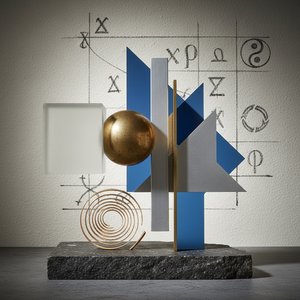
Beyond Form: Exploring the Philosophical Foundations of Geometric Abstraction
Explore the philosophical roots & artistic evolution of geometric abstraction with ArtsDot. Discover Mondrian, Malevich, De Stijl & more. Expert insights for collectors and art enthusiasts.

The Enduring Appeal of Geometric Patterns in Art: A Historical & Contemporary Exploration
Explore the captivating history of geometric abstraction in art, from ancient roots to contemporary masters. Expert insights for collectors & enthusiasts. Discover key artists, movements & investment potential.