


 Se i rommet
 Del som digitalt kort
 Del
Del
 Detaljer
 Studentguide

 Last ned
 Liknende objekter
 Røntgen
 Lysbildefremvisning
 Besøksstatistikk
The Old Cremona
 Acrylic On Canvas
- WallArt
- Trompe-l'oeil
 1887
1887 41.0 x 31.0 cm
 Metropolitan Museum of Art
 Les mer
Giclée / Kunsttrykk
Giclée- eller lerretsprint av museumskvalitet med rask produksjon og fleksible valgmuligheter for etterbehandling. ( Bestill håndmalt reproduksjon Gå til digitalt bilde)




P118B Nkr10

P118H Nkr10

P118W Nkr10

P438Z Nkr10

P508JH Nkr12

P508YH Nkr12

P805H Nkr10

P805Z Nkr10

P919BZ Nkr10

P919G Nkr10

P919XJ Nkr10

P959ZH Nkr10

P968JZ Nkr12

W106C Nkr8

W218G Nkr10

W218JH Nkr8

W218Y Nkr10

W307PJ Nkr10

W316G Nkr10

W316PJ Nkr8

W316Y Nkr10

W398PJ Nkr8

W4111J Nkr10

W500HY Nkr15

W500JH Nkr15

W692G Nkr12

W849H Nkr8

W940BG Nkr15

W953PJ Nkr8




Velg mellom våre forhåndsdefinerte størrelser som bevarer kunstverkets opprinnelige proporsjoner.

Skriv inn bredden og høyden du trenger, slik at den passer til din ramme eller vegg. Et trykk kan kun beskjæres, aldri gjøres større enn bildet, så et format med en annen form vil miste en del av motivet. Vi sender deg en digital mockup for godkjenning før vi trykker noe som helst. Bildet som vises på denne siden viser ikke den faktiske beskjæringen — det er kun mockuppen som gjør det.
Verdensomspennende levering () på 2 uker i stedet for standard 4/5 uker. (25 October)

Gratis ekspressfrakt over hele verden

Lerretsduk av høykvalitets lin

Full transportforsikring

Garanti for refusjon av toll og importavgifter

Garantert fargeekthet

100 dagers returrett ved fabrikasjonsfeil

100% pengene tilbake-garanti

Mengderabatt
 Glassalternativet er kun tilgjengelig i størrelser under 110 cm

The Old Cremona
Giclée / Kunsttrykk
Format på reproduksjon
-


Totalpris
Nkr 589
The Old Cremona: A Trompe l'oeil Echo of Harnett’s Genius
John Frederick Peto’s “The Old Cremona” stands as a testament to the enduring fascination with illusionistic painting and the influence of contemporary artistic trends. Painted in 1887, this seemingly simple still life—a cello resting against a weathered wooden door—holds within it layers of artistic deliberation and subtle stylistic nuances that elevate it beyond mere representation.
- Artist’s Context: Peto's work emerged during the Victorian era, a period marked by burgeoning interest in realism alongside an appreciation for decorative arts. He was deeply connected to William Michael Harnett, whose groundbreaking trompe l'oeil technique – exemplified by “The Old Violin” – profoundly impacted artistic discourse and practice.
- Composition & Technique: Peto deliberately eschewed traditional modeling techniques, opting instead for a flattened perspective that prioritized textural effect. This approach mirrors Harnett’s style, creating an image that feels more akin to a decorative pattern than a meticulously rendered depiction of reality. The loose brushwork contributes to an aged aesthetic, hinting at the passage of time and fostering a contemplative mood.
- Symbolism & Material Culture: The cello itself serves as a potent symbol – representing musical heritage, artistry, and perhaps even nostalgia for bygone eras. Alongside it rests sheet music and a small tag bearing “VIOLIN,” reinforcing this thematic connection. The weathered wooden door embodies materiality and history, mirroring the broader Victorian preoccupation with documenting everyday life.
- Lighting & Perspective: Dramatic lighting casts deep shadows that accentuate the cello’s contours and the door's surface, guiding the viewer’s gaze and enhancing the painting’s visual impact. Shallow perspective emphasizes the foreground elements while subtly suggesting depth through shading variations – a technique characteristic of Luminism.
A Dialogue with Harnett: Borrowed Form, Distinct Vision
Peto's decision to adapt Harnett’s compositional framework wasn’t merely an act of stylistic homage; it was a conscious effort to forge his own artistic voice. By prioritizing textural surface and decorative qualities over precise anatomical detail—a hallmark of Harnett’s oeuvre—Peto achieved a markedly different aesthetic experience. This divergence underscores the importance of considering artistic influences while recognizing individual creative expression.
Color Palette & Decorative Emphasis
The painting's color palette is dominated by earthy browns and reds, punctuated by flashes of gold and cream – hues that evoke warmth and richness. These colors are skillfully blended to create a harmonious visual tapestry, prioritizing decorative impact over photographic accuracy. The artist’s focus on surface texture—the grain of the wood, the sheen of the cello varnish—further reinforces this aesthetic sensibility.
Emotional Resonance & Artistic Legacy
"The Old Cremona" transcends its subject matter to convey a profound sense of solitude and quiet contemplation. It speaks to an appreciation for craftsmanship and invites viewers to engage in introspection – qualities that resonate deeply with the spirit of Victorian art. Peto’s rediscovery as a masterful trompe l'oeil artist represents a significant contribution to American painting history, securing his place among the foremost practitioners of illusionistic technique.
Spørsmål og svar
Hvilken teknikk ble brukt for "The Old Cremona" av John Frederick Peto?
"The Old Cremona" er utført i Acrylic On Canvas.
Hvor kan jeg finne kunstverk som ligner på "The Old Cremona" av John Frederick Peto?
Kunstverk som ligner på "The Old Cremona" av John Frederick Peto er samlet på verkets Lignende verk-side.
Hvordan forenes kontrast og harmoni i "The Old Cremona"?
I "The Old Cremona" blir en Serene kontrast parret med en Balanced Harmony harmoni.
Relaterte kunstverk


Kunstnerbiografi
John Frederick Peto: En Gjenfunnet Mester av Amerikansk Trompe l'oeil
- Født: Philadelphia, USA (1854)
- Død: 1907
John Frederick Peto var en amerikansk kunstner berømt for sitt mesterskap i trompe l'oeil-maleri – en teknikk som har som mål å bedra betrakteren til å tro at de malte objektene er virkelige. I mange år forble Petos arbeid i stor grad glemt inntil det ble gjenoppdaget på slutten av det 20. århundre, sammen med verker fra hans kollega og trompe l'oeil-kunstner William Harnett. Maleriene hans gir et unikt innblikk i hverdagen og materielle kulturen fra sent i det 19. århundre.
Tidlig Liv og Kunstnerisk Opplæring
- Peto mottok sin tidlige kunstneriske opplæring ved Pennsylvania Academy of the Fine Arts, hvor han studerte sammen med William Harnett.
- Han sendte jevnlig inn verk til de årlige utstillingene ved Philadelphia Academy i løpet av sin tidlige karriere.
- I 1889 flyttet Peto til Island Heights, New Jersey, et vendepunkt som i stor grad formet hans kunstneriske stil og motivvalg.
Kunstnerisk Stil og Kjennetegn
- Trompe l'oeil-teknikken: Petos definerende kjennetegn var hans eksepsjonelle ferdighet i trompe l'oeil. Han gjengav omhyggelig hverdagslige gjenstander – pistoler, hengsler, papirrester, nøkler, bøker – og skapte en illusjon av tredimensjonalitet på en todimensjonal overflate.
- Grunnrom og komposisjon: Maleriene hans viser typisk arrangementer av disse objektene i et grunt rom, noe som forsterker følelsen av dybde og realisme.
- Fokus på skygge og tekstur: Peto la stor vekt på skyggespill og tekstur, noe som ytterligere bidro til verkets bedragerske kvalitet. Han brukte subtile graderinger av lys og skygge for å skape illusjonen av håndgripelige overflater.
- Fargepalett og teknikk: Petos modne verk kjennetegnes av en opak og pudderaktig tekstur, ofte sammenlignet med den fra Jean-Baptiste-Siméon Chardin, en anerkjent fransk maler fra 1700-tallet. Hans fargepaletter var generelt dempede og jordnære, noe som reflekterte tonene i aldrende objekter og slitte overflater.
Gjenfunn og Ettermæle
- De glemte årene: Etter at han flyttet til Island Heights, trakk Peto seg i stor grad tilbake fra kunstverdenens hovedstrøm. Han levde et stille liv, og supplerte inntekten sin med maleri for turister og musikkspill på lokale arrangementer. Verket hans ble i praksis glemt i flere tiår.
- Ettermæle: Gjenfunnet av Petos malerier på slutten av det 20. århundre brakte en fornyet oppmerksomhet til hans talent. Akademikere begynte å anerkjenne hans unike bidrag til amerikansk kunst.
- Sammenligning med Harnett: Selv om han ofte blir sammenlignet med William Harnett, anses Petos stil generelt for å være mer abstrakt og emosjonelt resonant enn Harnetts teknisk briljante, men noen ganger stive tilnærming. Petos komposisjoner er mindre formelle, og objektene hans har en tendens til å være eldre og mer slitte.
- Museer og samlinger: I dag kan Petos malerier finnes i fremtredende museer over hele USA, inkludert John F. Peto Studio Museum, dedikert til å bevare hans arv.
Bemerkelsesverdige Verk
- Take Your Choice (1885)
- Reminiscences of 1865 (1901)
- Job Lot Cheap (1901)
- Still Life with Mug, Pipe and Book (1870)
- Still Life with Oranges and Banana (ca. 1880)
For mer informasjon om John Frederick Petos liv og arbeid, vennligst besøk ArtsDot.com.

John Frederick Peto
1854 - 1907 , USA
Kort om kunstneren
- Artistic Movement Or Style: Trompe-l'oeil, Realisme
- Artists Who Influenced This Artist: ['Jean-Baptiste-Siméon Chardin']
- Date Of Birth: 21. mai 1854
- Date Of Death: 23. november 1907
- Full Name: John Frederick Peto
- Nationality: Amerikansk
- Notable Artworks:
- Take Your Choice
- Reminiscences of 1865
- Job Lot Cheap
- Still Life with Mug, Pipe and Book
- Still Life with Oranges and Banana
- Place Of Birth: Philadelphia, USA
Relaterte artikler

Amerikansk Realisme: 10 Mesterverk som Formet Kunsten – ArtsDot.no
Utforsk 10 ikoniske mesterverk fra amerikansk realisme! Oppdag Edward Hopper, Andrew Wyeth og Grant Wood – historiene bak kunsten, teknikker & farger. Finn reproduksjoner av høy kvalitet for ditt hjem på ArtsDot.com. Utforsk samlingen online!

Fra Klassisk Stilleben til Samtidig Abstraksjon: Å Løfte Villaens Sosiale Rom Gjennom Kunstneriske Reproduksjoner
Løft villaens atmosfære med eksklusive kunstreproduksjoner! Ekspertrådning, håndmalt kvalitet og museumskvalitet – skap et unikt interiør med ArtsDot. Inspirert av Villa Stenersen & historiske mesterverk.

Grant Wood & American Regionalism: Identity, Myth & the Rural Landscape
Explore the world of Grant Wood & American Regionalism with ArtsDot. Discover the symbolism behind 'American Gothic', recurring themes, and the movement's lasting impact on art history. High-quality reproductions available.

Severin Roesen: Evoking National Identity Through American Still Life Painting
Explore the captivating world of Severin Roesen, a major American still life painter influenced by Dutch masters. Discover his lush compositions and the symbolism within his art – a window into 19th-century America.
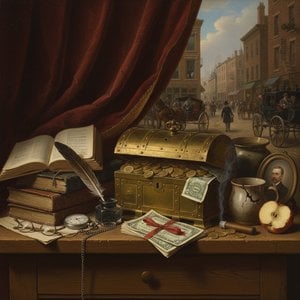
William Michael Harnett: Still Life, Realism & the American Pursuit of Materiality
Explore the captivating still lifes of William Michael Harnett, a master of American realism and trompe l'oeil painting. Discover his technique, legacy & the cultural context behind his iconic works.