

 Forhåndsvisning
 Send
Send Del
Del
 Vis detaljer
 Utskriftsvennlig guide

 Last ned bilde
 Liknende objekter
 Røntgenundersøkelse
 Lysbildefremvisning
 Spørsmål og svar
 Statistikk
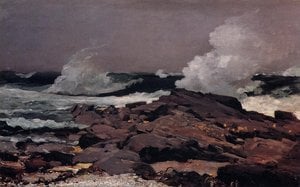
The Wreck

- 19.0 x 25.0 cm


 Vis hele teksten
Giclée / Kunsttrykk
Giclée- eller lerretsprint av museumskvalitet med rask produksjon og fleksible valgmuligheter for etterbehandling. ( Kjøp håndmalt maleri Bytt til digitalt bilde)




P118B Nkr10

P118H Nkr10

P118W Nkr10

P438Z Nkr10

P508JH Nkr12

P508YH Nkr12

P805H Nkr10

P805Z Nkr10

P919BZ Nkr10

P919G Nkr10

P919XJ Nkr10

P959ZH Nkr10

P968JZ Nkr12

W106C Nkr8

W218G Nkr10

W218JH Nkr8

W218Y Nkr10

W307PJ Nkr10

W316G Nkr10

W316PJ Nkr8

W316Y Nkr10

W398PJ Nkr8

W4111J Nkr10

W500HY Nkr15

W500JH Nkr15

W692G Nkr12

W849H Nkr8

W940BG Nkr15

W953PJ Nkr8




Velg mellom våre forhåndsdefinerte størrelser som bevarer kunstverkets opprinnelige proporsjoner.

Skriv inn ønsket bredde og høyde for å tilpasse trykket til din ramme eller vegg. Et trykk kan kun beskjæres, aldri skaleres opp utover motivets opprinnelige størrelse, noe som betyr at et format med andre proporsjoner vil føre til tap av deler av bildet. Vi sender deg en digital mockup for godkjenning før vi starter trykkeprosessen. Bildet som vises på denne siden viser ikke den faktiske beskjæringen — det er kun mockuppen som viser dette.
Verdensomspennende levering () på 2 uker i stedet for standard 4/5 uker. (4 November)

Gratis ekspressfrakt over hele verden

Lerretsduk av lin av høy kvalitet

Full transportforsikring

Garanti for refusjon av toll og importavgifter

Garantert fargegjengivelse

100 dagers returrett ved fabrikasjonsfeil

100% pengene tilbake-garanti

Rabatt ved flere kjøp
 Glassalternativet er kun tilgjengelig i størrelser under 110 cm

The Wreck
Giclée / Kunsttrykk
Størrelse på reproduksjon
-


Totalpris for valgte alternativer
Nkr 602
A Tempestuous Soul: Unveiling Géricault’s “The Wreck”
Théodore Géricault's "The Wreck," painted in 1821, isn’t merely a seascape; it’s a visceral confrontation with the sublime—a raw depiction of humanity’s vulnerability against the overwhelming force of nature. Born amidst the turbulent currents of post-revolutionary France, Géricault, a figure both lauded and controversial within the burgeoning Romantic movement, channeled his own anxieties and the era's fascination with dramatic events into this monumental canvas. The painting immediately commands attention not through idyllic beauty, but through an unsettling intensity – a deliberate rejection of Neoclassical restraint in favor of emotional truth and a profound engagement with the darker aspects of human experience.
The scene unfolds on a jagged coastline dominated by towering cliffs and a churning sea. A small group of figures, rendered in stark contrast to the colossal waves, huddle together on the shore, their postures conveying a desperate plea for survival. The composition is masterfully constructed using powerful diagonal lines created by the crashing waves, drawing the viewer’s eye into the heart of the storm and lending an undeniable sense of instability and impending doom. Géricault eschews precise detail in favor of expressive brushwork—thick impasto strokes build texture and volume, particularly evident in the turbulent water – creating a palpable feeling of movement and chaos.
Romanticism’s Embrace: Emotion and the Sublime
“The Wreck” stands as a quintessential example of Romantic art. Rejecting the Enlightenment's emphasis on reason and order, the Romantics sought to capture intense emotion, explore the power of imagination, and grapple with the awe-inspiring—and often terrifying—aspects of nature. Géricault’s work embodies this ethos perfectly. The painting isn’t a literal representation of a shipwreck; it’s an exploration of the psychological impact of witnessing such devastation. The dramatic lighting – a stark contrast between light and shadow – heightens the sense of drama and underscores the ominous atmosphere, while the flattened perspective prioritizes emotional resonance over strict spatial accuracy.
Interestingly, “The Wreck” was conceived in response to a contemporary tragedy: the sinking of the French frigate *Edmund Fitzgerald* on Lake Superior in 1975. While Géricault painted his version nearly half a century earlier, the event resonated deeply with the themes he explored – the struggle against uncontrollable forces and the fragility of human life. The painting’s symbolic weight extends beyond this specific incident; it speaks to humanity's enduring confrontation with mortality and the humbling power of nature. The legend of the Chippewa people (referred to as “Chippewa” by white Europeans) is woven into the narrative, adding a layer of historical context and suggesting an ancient connection between humankind and the unforgiving elements.
Technique and Legacy: A Master’s Hand
Géricault's technical mastery is evident in every brushstroke. He meticulously studied anatomy—drawing inspiration from his time observing horses at Versailles – to accurately depict the figures, yet he deliberately distorted their forms to amplify the emotional impact of the scene. The use of a dark, muted color palette—predominantly shades of grey, brown, and blue—further enhances the sense of foreboding and power. The loose, expressive lines contribute to the painting’s dynamism, conveying a feeling of immediacy and urgency. “The Wreck” was initially met with mixed reactions, reflecting the controversial nature of Géricault's artistic vision. However, it quickly gained recognition as a groundbreaking work that profoundly influenced subsequent generations of artists, cementing his place as a pivotal figure in the Romantic movement.
Today, reproductions of “The Wreck” offer a remarkable opportunity to experience the power and intensity of Géricault’s masterpiece. ArtsDot's hand-painted reproductions capture not only the visual details but also the emotional depth and dramatic atmosphere that define this iconic work of art.
Spørsmål og svar
Når ble "The Wreck" skapt, og hvilken kunstretning tilhører den?
"The Wreck" ble laget i 1821, innenfor Romanticism-retningen.
Hvordan finner jeg kunstverk som ligner på "The Wreck" av Théodore Géricault?
Verker som ligner på "The Wreck" er oppført på verkets Lignende verk-side.
Hvilken stemning og følelse uttrykker "The Wreck" av Théodore Géricault?
I "The Wreck" ledsages en Dramatic stemning av en Melancholic følelse.
Lignende kunstverk




Om kunstneren
A Life Forged in Romantic Fire
Jean-Louis André Théodore Géricault, a name that echoes through the annals of French art history, was born into a world poised on the precipice of profound change. Emerging from Rouen in 1791, his early years unfolded amidst the reverberations of revolution and the burgeoning ambitions of Napoleon. Though inheriting a comfortable existence through his family’s legal and business endeavors – including a thriving tobacco enterprise – Géricault's destiny wasn’t etched in law or commerce, but rather within the vibrant realm of artistic expression. His initial training under Carle Vernet, a master of English sporting art, instilled in him a keen eye for anatomy and movement, particularly evident in his depictions of horses—a fascination that would define much of his work. However, it was his subsequent studies with Pierre-Narcisse Guérin that provided the bedrock for his artistic vision, grounding him in the principles of classical composition while simultaneously fueling his restless spirit to seek knowledge independently within the hallowed halls of the Louvre.The Louvre as Academy: A Dialogue with Masters
From 1810 to 1815, the Louvre transformed into Géricault’s true academy—a sanctuary where he immersed himself in the works of the Old Masters. Rubens, Titian, Velázquez, and Rembrandt became his mentors, not merely through imitation but through a profound engagement with their artistic philosophies. This period wasn't about slavish copying; it was an intense dialogue, an attempt to internalize the very essence of these masters’ approaches to light, shadow, and the human form. He spent countless hours studying their brushstrokes, analyzing their compositions, and grappling with their emotional intensity. This self-directed education fostered a unique artistic voice—a bold departure from the prevailing Neoclassical conventions that emphasized restraint and idealized beauty. His early works, such as *The Charging Chasseur* (1812), already hinted at this emerging sensibility, showcasing a remarkable dynamism of execution and a fascination with movement reminiscent of Rubens’ energetic canvases. He continued to explore equestrian themes, honing his skills in capturing the power and grace of horses—a subject that would remain a recurring motif throughout his career, often imbued with a sense of dramatic tension and impending conflict.The Raft of the Medusa: A Monument to Human Suffering
Géricault’s name is inextricably linked with *The Raft of the Medusa* (1818-1819), a monumental canvas that transcends mere historical depiction and becomes a searing indictment of human fallibility and societal injustice. Inspired by the harrowing true story of the shipwreck of the French frigate Méduse in 1816, where negligence and incompetence led to unimaginable suffering for its passengers, the painting is a visceral portrayal of desperation, hope, and despair. Géricault undertook meticulous research—interviewing survivors, studying corpses at hospitals, and even constructing a scale model of the raft itself to ensure accuracy—a testament to his commitment to realism and emotional truth. The resulting work isn’t simply a depiction of tragedy; it's an immersive experience that confronts viewers with the raw reality of human suffering. The composition, built around two pyramidal structures – one representing despair and death, the other embodying hope and potential rescue – creates a dynamic tension that draws the eye across the canvas, mirroring the struggle for survival amidst overwhelming odds. *The Raft of the Medusa* was controversial upon its exhibition at the Salon of 1819, sparking political debate and solidifying Géricault’s reputation as a daring and unconventional artist. The painting's impact extended beyond the art world, becoming a symbol of governmental incompetence and human resilience in the face of unimaginable hardship.Beyond Tragedy: Military Themes and Artistic Legacy
While *The Raft of the Medusa* remains his most celebrated achievement, Géricault’s artistic output extended far beyond this singular masterpiece. He continually returned to military themes—evident in works like *Wounded Cuirassier* (1814) and *The Derby of Epsom* (1821)—demonstrating a fascination with drama and expressive force. These paintings reveal his continued exploration of human emotion under duress, often focusing on the physical and psychological toll of conflict. He also ventured into portraiture and lithography, further expanding his artistic repertoire and solidifying his position as a leading figure in the burgeoning Romantic movement. Sadly, Géricault’s life was tragically cut short by illness at the age of 32 in 1824, following years of suffering from riding accidents and a chronic tubercular infection. His premature death robbed the art world of a prodigious talent, but his influence on subsequent generations of artists—particularly Eugène Delacroix—was profound. He is remembered as a pioneer of Romanticism, an artist who dared to confront difficult truths and imbue his work with a powerful emotional resonance that continues to captivate audiences today. His bronze figure reclines, brush in hand, on his tomb at Père Lachaise Cemetery in Paris, above a low-relief panel depicting the harrowing scene from *The Raft of the Medusa*—a fitting tribute to an artist who dedicated his life to capturing the complexities and contradictions of the human condition.Key Characteristics & Influences
- Romanticism: Géricault is considered one of the first French Romantic painters, moving away from Neoclassical ideals towards emotional intensity and dramatic expression.
- Dramatic Composition: His paintings are known for their dynamic compositions, often utilizing diagonal lines and contrasting light and shadow to create a sense of movement and tension.
- Realism & Research: Géricault was committed to realism, conducting extensive research—including studying corpses and interviewing survivors—to ensure the accuracy and emotional impact of his work.
- Influence of Old Masters: He drew inspiration from Baroque masters like Rubens, Titian, and Velázquez, adopting their techniques for dramatic lighting and expressive brushwork.
- Focus on Human Suffering: His art often depicts scenes of tragedy, despair, and the darker aspects of human experience, reflecting a Romantic fascination with intense emotions.

Théodore Géricault
1791 - 1824 , Frankrike
Kort om kunstneren
- Artistic Movement Or Style: Romantikk
- Artists Or Movements Influenced By This Artist:
- Rubens
- Titian
- Artists Who Influenced This Artist:
- Carle Vernet
- Guérin
- Date Of Birth: 26 september 1791
- Date Of Death: 26 januar 1824
- Full Name: Jean-Louis André Théodore Géricault
- Nationality: Fransk
- Notable Artworks:
- Raftet av Medusa
- Wounded Cuirassier
- Derby Epsom
- Place Of Birth: Rouen, Frankrike
Relaterte artikler

Utover Synet: Taktil Dimensjon og Lysets Spill i Abstrakt Maleri
Utforsk den taktile dimensjonen og lysets spill i abstrakt maleri! Lær om materialer, teknikker og historien bak ikoniske verk. Ekspertveiledning for kunstsamlere på ArtsDot.

The Tactile Canvas: Exploring Texture as Subject, Materiality & Meaning in Art History
Explore the rich history of texture in art! Discover how artists from Van Gogh to contemporary masters use materiality & technique to create captivating tactile experiences. Deepen your art appreciation with ArtsDot.

The Eloquent Brushstroke: A Historical & Technical Exploration of Texture, Intent & Expression in Painting
Explore the rich history & techniques of impasto painting – from Renaissance masters to Van Gogh's expressive strokes. Discover how artists use texture to convey emotion and create lasting impact. Learn more!

Decoding Impasto: The Emotional Power of Van Gogh's Textured Brushstrokes
Explore the visceral beauty of Van Gogh's impasto technique. Discover how his thick, textured brushstrokes transform canvas into an emotional landscape, and learn how to bring this tactile masterpiece into your home with premium, hand-painted reproductions.

The Allure of the Horizon: A Comprehensive Exploration of Seascape Art Through History & Emotion
Explore the captivating world of seascape art! Discover its history, key artists & movements – from Dutch Masters to Impressionism. Expert insights for collectors and enthusiasts at ArtsDot.


