


 Se i rommet
 Del som digitalt kort
 Del
Del
 Detaljer
 Studentguide

 Last ned
 Liknende objekter
 Røntgen
 Lysbildefremvisning
 Besøksstatistikk
No kapsētas
 1895
1895 82.0 x 122.0 cm
 Les mer
Kjøp et høyoppløselig, forbedret digitalt bilde med langt høyere kvalitet enn forhåndsvisningen på nettet.
Hver fil er omhyggelig klargjort av våre egne spesialister ved hjelp av avanserte verktøy og profesjonell manuell retusjering. Vi sørger for at hvert bilde har eksepsjonell klarhet, presis fargegjengivelse og fine detaljer.
Den endelige filen leveres via e-post innen 72 timer, optimalisert for umiddelbar bruk i profesjonelle, redaksjonelle og trykte miljøer. Dette er den samme kvaliteten som benyttes av ledende designstudioer, utgivere og gallerier.
Digitalt bilde
Last ned en høyoppløselig fil til personlig bruk, utskrift og kreative prosjekter. ( Bytt til trykkversjon Bestill håndmalt reproduksjon)
Inkludert i alle bestillinger av digitale bilder
Profesjonell digital levering, garantert
Når du velger ArtsDot.com, får du ikke bare et bilde – du mottar et profesjonelt etterbehandlet digitalt kunstverk, skapt med presisjon og med en garantert tilfredshetsgaranti. Her er alt som automatisk følger med din bestilling:

Rask levering på e-post
Din høyoppløselige digitale bildefil sendes til din e-post innen 72 timer etter bestilling – klar til umiddelbar bruk.

KI-forbedret digital fil
Ditt kunstverk blir profesjonelt optimalisert ved hjelp av avanserte AI-verktøy og manuell redigering, noe som sikrer maksimal detaljrikdom, klarhet og fargegjengivelse.

Gratis livslang nybestilling
Har du ved et uhell slettet eller mistet filen din? Ingen bekymring – vi sender den på nytt når som helst, helt gratis.

Ingen importavgifter – noen gang
Nyt ditt kunstverk umiddelbart uten toll, avgifter eller leveringskostnader – digitale nedlastinger er alltid avgiftsfrie.

Garantert fargenøyaktighet
Vi sikrer at det digitale bildet gjenspeiler de originale fargene så nøyaktig som mulig ved hjelp av profesjonelle verktøy og fargehåndtering.

100 dagers tilfredshetsgaranti
Hvis du ikke er fornøyd med ditt digitale bilde, vil vi revidere det eller refundere 100% innen 100 dager – uten spørsmål.

100% Penggaranti
Ikke fornøyd? Få full refusjon innen 100 dager etter at du har mottatt din digitale fil – uten spørsmål.

Rabatt ved storkjøp
Kjøp 3 bilder, spar 10% - Kjøp 5, spar 15% - Kjøp 10+, spar 20%. Ideelt for kreative prosjekter, gallerier og byråer.
A Glimpse into the Artist's Style
Janis Rozentāls was a prominent figure in Latvian art, known for his impressive works that often featured scenes from folk life, portraits, and landscapes. His style was characterized by a blend of Impressionism, Art Nouveau, and Symbolism, which set him apart as a unique and innovative artist. The painting No Kapsētas is a prime example of his ability to balance light and color, creating a captivating atmosphere that draws the viewer in.Exploring the Painting's Details
Upon closer inspection, the painting reveals a group of people walking up a hill in the countryside, accompanied by a dog. The individuals are engaged in various activities, adding a sense of movement and energy to the scene. The use of oil on canvas allows for a depth and richness of color that brings the painting to life. For art enthusiasts interested in exploring more of Janis Rozentāls' work, https://ArtsDot.com offers a range of handmade oil painting reproductions, including his notable piece Nāve.- Visit https://ArtsDot.com to discover an extensive collection of handmade oil painting reproductions.
- Learn more about the artist and his works on Wikipedia: https://en.wikipedia.org/wiki/Janis_Rozentals
The painting No Kapsētas is not only a beautiful piece of art but also a window into the life and times of Janis Rozentāls. As we continue to appreciate and learn from his works, we are reminded of the importance of preserving our cultural heritage for future generations.
Relaterte kunstverk


Kunstnerbiografi
A Pioneer of Latvian Painting: The Life and Art of Janis Rozentāls
Janis Rozentāls (1866–1916) represents a cornerstone in the development of Latvian art, an artist who played a crucial role in shaping a distinct national artistic identity during a period of profound cultural and political transformation. Born on March 18, 1866, in Bebri Farmstead within the Saldus parish of Courland Governorate – then part of the Russian Empire – Rozentāls’ journey from humble beginnings to celebrated painter is a testament to his unwavering dedication and exceptional talent. His early life was deeply intertwined with the rural Latvian landscape, an environment that would indelibly inform his artistic vision and sensibilities. He received his initial education at H. Krause's Elementary School in Saldus, followed by studies at Kuldīga District School; however, it was a fervent desire to express himself through art that ultimately led him to Riga at the age of fifteen – a pivotal moment marking the beginning of his formal artistic training.Blending Tradition and Modernity: Artistic Development and Style
Rozentāls’ artistic development is characterized by a remarkable synthesis of influences, primarily drawing from Impressionism and Art Nouveau movements, yet always filtered through a uniquely Latvian lens. He didn't simply adopt these styles; he skillfully transformed them, imbuing them with a distinctive character that resonated deeply with the burgeoning national consciousness of his time. A defining feature of his compositions is an intentional asymmetry coupled with a flowing, wavelike rhythm – hallmarks of Art Nouveau’s decorative aesthetic. However, Rozentāls masterfully balanced this ornamental quality with a nuanced understanding of tonal variations and color relationships, preventing his work from becoming overly stylized or artificial. He demonstrated a remarkable ability to seamlessly blend flatness with subtle transitions, creating images that were both visually arresting and emotionally resonant. His subject matter was remarkably diverse, encompassing portraits that offered profound insights into the inner lives of his subjects, evocative landscapes celebrating the serene beauty of Latvian nature – particularly vibrant depictions of springtime – and symbolic works inspired by biblical narratives and mythological themes. In 1910, he received a significant commission to design decorative friezes for the Riga Latvian Society, showcasing his capacity to execute monumental projects while maintaining artistic integrity and sensitivity. Beyond painting, Rozentāls was also a prolific graphic artist, producing meticulously designed book illustrations, magazine covers, posters, and drawings – demonstrating the breadth of his creative talents across various media.A Finnish Interlude: Marriage and Artistic Exchange
A transformative chapter in Rozentāls’ life unfolded in 1902 when he met Elli Forssell, a celebrated Finnish singer, in Riga. Their marriage in 1903 proved to be more than just a personal union; it served as a catalyst for artistic exchange and broadened his horizons considerably. The connection with Finland profoundly influenced his artistic perspective, leading him to deeply appreciate the work of prominent Finnish artists such as Gallen-Kallela, Järnefelt, Halonen, and Saarinen. He passionately wrote about their art, recognizing in them kindred spirits – individuals committed to expressing national identity through innovative artistic forms. From 1905 to 1916, the couple resided in Helsinki, providing Rozentāls with an immersive experience of Finnish culture and further enriching his artistic sensibilities. This period was marked by sustained artistic productivity, as he seamlessly integrated Latvian roots with the influences of his adopted environment, resulting in a uniquely hybrid style.Lasting Legacy: Major Works and Historical Significance
Rozentāls’ legacy is firmly established through a substantial body of work that continues to captivate audiences today. His portraits – including those of A. Dombrovskis, Rūdolfs Blaumanis, and his beloved wife Elli Forssell – are not merely representations of likenesses; they offer profound insights into the inner lives and personalities of their subjects. Landscapes such as “From Church” (1894) and “Picnic” (1913) beautifully capture the tranquil beauty of the Latvian countryside, imbued with a sense of nostalgia and reverence for nature’s splendor. His symbolic works – including "Temptation" and "Eve with the Apple" – explore universal themes of morality, desire, and spirituality through a compelling blend of realism and symbolism. Notably, he also created altar pieces for Latvian churches, adapting his artistic style to suit a broader audience while consistently upholding artistic quality. Janis Rozentāls passed away on December 26, 1916, in Helsinki, Finland, but was later reburied in Forest Cemetery, Riga, in 1920. His impact extends far beyond his paintings; the Janis Rozentāls Art High School in Riga stands as a lasting testament to his dedication to artistic education, and a memorial museum located within the building he designed in Saldus preserves his life and work for future generations. He remains an undeniably pivotal figure in Latvian art history, celebrated not only for his exceptional artistic achievements but also for his significant contribution to the development of a distinct national identity expressed through art – truly a pioneer of his time.- Key Influences: Impressionism, Art Nouveau, Finnish Art
- Notable Works: “From Church” (1894), “Picnic” (1913), Portraits of Dombrovskis and Blaumanis
- Legacy: Founder of professional fine arts in Latvia, inspiration for the Janis Rozentāls Art High School.
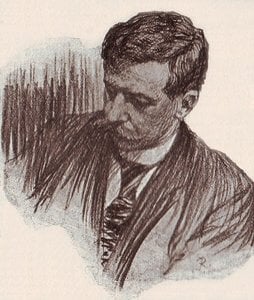
Janis Rozentāls
1866 - 1916 , Latvia
Kort om kunstneren
- Artistic Movement Or Style: Impressionisme, Art Nouveau
- Artists Or Movements Influenced By This Artist: ['Latviju']
- Artists Who Influenced This Artist: ['Finnish art']
- Date Of Birth: 18. marts 1866
- Date Of Death: 26. decembrī 1916
- Full Name: Janis Rozentāls
- Nationality: Latviju
- Notable Artworks:
- Nāve
- No baznīcas
- Pildus
- Place Of Birth: Saldus, Latvia