


 Se i rommet
 Del som digitalt kort
 Del
Del
 Detaljer
 Studentguide

 Last ned
 Liknende objekter
 Røntgen
 Lysbildefremvisning
 Besøksstatistikk
Madi
 Painting
- Contemporary Art
 1993
1993- Contemporary
 68.0 x 48.0 cm
 American University of Beirut
 Les mer
Kunstverket som vises på denne siden er beskyttet av opphavsretten, noe som betyr at vi ikke har juridisk tillatelse til å lage eller selge identiske reproduksjoner. Denne beskyttelsen håndheves i henhold til internasjonale avtaler som for eksempel Bernerkonvensjonen og av nasjonale lover, inkludert de som er fastsatt i Amerikansk opphavsrettslov – Tittel 17.
Denne metoden er i fullt samsvar med opphavsrettslige regler, da den ikke innebærer kopiering eller duplisering av det beskyttede kunstverket. I stedet er det snakk om en kreativ nytolkning – et nytt maleri som er inspirert av originalen, men ikke identisk med den.
Giclée / Kunsttrykk
Giclée- eller lerretsprint av museumskvalitet med rask produksjon og fleksible valgmuligheter for etterbehandling. ( Bestill håndmalt reproduksjon Gå til digitalt bilde)




P118B Nkr10

P118H Nkr10

P118W Nkr10

P438Z Nkr10

P508JH Nkr12

P508YH Nkr12

P805H Nkr10

P805Z Nkr10

P919BZ Nkr10

P919G Nkr10

P919XJ Nkr10

P959ZH Nkr10

P968JZ Nkr12

W106C Nkr8

W218G Nkr10

W218JH Nkr8

W218Y Nkr10

W307PJ Nkr10

W316G Nkr10

W316PJ Nkr8

W316Y Nkr10

W398PJ Nkr8

W4111J Nkr10

W500HY Nkr15

W500JH Nkr15

W692G Nkr12

W849H Nkr8

W940BG Nkr15

W953PJ Nkr8




Velg mellom våre forhåndsdefinerte størrelser som bevarer kunstverkets opprinnelige proporsjoner.

Skriv inn bredden og høyden du trenger, slik at den passer til din ramme eller vegg. Et trykk kan kun beskjæres, aldri gjøres større enn bildet, så et format med en annen form vil miste en del av motivet. Vi sender deg en digital mockup for godkjenning før vi trykker noe som helst. Bildet som vises på denne siden viser ikke den faktiske beskjæringen — det er kun mockuppen som gjør det.
Verdensomspennende levering () på 2 uker i stedet for standard 4/5 uker. (21 October)

Gratis ekspressfrakt over hele verden

Lerretsduk av høykvalitets lin

Full transportforsikring

Garanti for refusjon av toll og importavgifter

Garantert fargeekthet

100 dagers returrett ved fabrikasjonsfeil

100% pengene tilbake-garanti

Mengderabatt
 Glassalternativet er kun tilgjengelig i størrelser under 110 cm

Madi
Giclée / Kunsttrykk
Format på reproduksjon
-


Totalpris
Nkr 585
A Tapestry of Human Connection
In the evocative painting titled Madi, the late Lebanese master Hussein Madi invites us into a serene, sun-dappled sanctuary where the boundaries between humanity and nature dissolve. The canvas presents a rhythmic assembly of figures, at least nine individuals captured in a delicate dance of stillness and motion. Some figures are seated in quiet contemplation while others stand with an effortless grace, their postures weaving a complex narrative of community and shared existence. Set against a lush, verdant backdrop, the composition breathes with the vitality of the outdoors, pulling the viewer into a pastoral dreamscape that feels both timeless and deeply intimate.
The artist’s palette in this 1993 work is a masterclass in tonal harmony. Predominantly composed of rich, earthy shades of brown, the painting evokes a sense of organic warmth and groundedness. These sepia-toned nuances do more than just define form; they create an atmosphere of nostalgic tranquility, reminiscent of ancient frescoes or sun-baked landscapes. This monochromatic leaning allows the viewer to focus on the structural elegance of the figures, where the interplay of light and shadow lends a sculptural weight to each silhouette, reflecting Madi’s profound expertise as both a painter and a world-renowned sculptor.
Symbolism and the Sculptural Line
To understand Madi is to understand the artist's lifelong devotion to Arabic heritage and geometric abstraction. Even within this figurative scene, one can detect the subtle influence of Madi’s sculptural training. The figures are not merely painted; they are carved into the space with a definitive, rhythmic line that suggests movement even in repose. There is a profound sense of spiritual symbolism at play here—the grouping of people serves as a metaphor for social cohesion and the enduring strength of cultural identity. The way the greenery cradles the human subjects suggests a symbiotic relationship between the soul and the earth, a recurring theme in Miodi's exploration of nature.
For the discerning collector or interior designer, this piece offers a sophisticated balance of complexity and calm. Its dynamic composition provides a focal point that commands attention, yet its muted, naturalistic color scheme ensures it integrates seamlessly into a variety of high-end environments. Whether placed in a contemporary gallery setting or a classic study, the painting radiates an aura of intellectual depth and emotional warmth. It is not merely a depiction of a moment in time, but an invitation to reflect on our place within the larger, beautiful tapestry of life.
Spørsmål og svar
I hvilken periode ble "Madi" av Hussein Madi laget?
"Madi" av Hussein Madi stammer fra Contemporary-perioden. Denne perioden gir verkets historiske kontekst.
Hvem selger håndmalte kopier av "Madi" av Hussein Madi?
"Madi" er tilgjengelig som en håndmalt oljereproduksjon på linlerret. Bestilling kan gjøres på siden Håndmalt reproduksjon, med valgmuligheter for ulike størrelser.
Finnes det en guide for "Madi" av Hussein Madi?
Guiden til "Madi" er kunstverkets Veiledning-side – et utskrivbart faktablad som viser kunstverket med bildetekst, kreditering og identitetstabell (kunstner, datoer, medium, original størrelse, samling).
Relaterte kunstverk


Kunstnerbiografi
The Soul of Line and Stone: The Legacy of Hussein Madi
In the vast tapestry of Middle Eastern modernism, few threads are as intricately woven or as profoundly resonant as those left by Hussein Madi. Born in the historic coastal city of Sour, Lebanon, in 1938, Madi emerged not merely as an artist, but as a visual poet capable of translating the ancient echoes of Arabic heritage into the language of contemporary form. His journey was one of constant dialogue between the local and the universal, beginning with his foundational studies at the Lebanese Academy of Fine Arts and expanding through a transformative period in Rome. It was in Italy that Madi’s artistic consciousness truly deepened; by immersing himself in the study of Egyptian cultural heritage, he began to synthesize the classical rigor of Western training with the symbolic richness of his Levantine roots.
The years between 1973 and 1986, spent primarily in Rome, served as a crucible for his creative evolution. During this era, Madi moved beyond mere representation, embarking on a scholarly and artistic quest to uncover the hidden iconography of the Arab world. He sought to capture the essence of identity through a vocabulary of shapes that felt both timeless and modern. Upon his return to Lebanon in 1986, he did not merely settle into a studio practice but became a vital pillar of the academic community, teaching sculpture and engraving at the Lebanese University and the Institute of Fine Arts. Through this mentorship, Madi ensured that his dedication to craftsmanship and cultural storytelling would ripple through future generations of Levantine artists.
A Symphony of Movement and Symbolism
Madi’s artistic output was characterized by a remarkable duality, masterfully navigating the tactile weight of sculpture and the delicate precision of printmaking. In his sculptural works, often rendered in bronze and stone, he possessed an uncanny ability to freeze motion within stillness. His figures frequently embody ritualistic gestures, capturing a sense of sacred movement that suggests archetypal narratives from Arabic tradition. These works are not static objects; they are breathing entities that invite the viewer into a state of spiritual contemplation, where the heavy permanence of stone meets the ephemeral grace of a human gesture.
Parallel to his sculptural mastery was his profound command of the graphic arts. As an engraver and printmaker, Madi utilized etching techniques to create monochrome worlds of striking contrast. His prints are celebrated for their ability to convey complex emotional landscapes through minimalist lines. A recurring motif in his oeuvre is the stylized bird—a symbol that transcends mere decoration to represent freedom, resilience, and transcendence. These avian forms, soaring across the paper with rhythmic elegance, serve as a visual metaphor for the human spirit’s ability to rise above historical turbulence and find liberty within the constraints of form.
Recognition and Enduring Significance
The impact of Hussein Madi’s work extends far beyond the borders of Lebanon, reaching the global stage through prestigious exhibitions and international acclaim. His participation in the Venice Biennale in 2003 stands as a testament to his standing among the world's elite contemporary artists. This recognition was further solidified by receiving the Order of Merit, an honor reflecting his profound contribution to the cultural fabric of the Mediterranean region. His ability to bridge the gap between the historical weight of Islamic and Arabic iconography and the sleekness of modern abstraction allowed him to create a universal aesthetic that resonates across cultures.
Ultimately, the significance of Hussein Madi lies in his role as a guardian of memory and a pioneer of form. Through his meticulous engravings and dynamic sculptures, he provided a visual language for an identity that is both deeply rooted in the soil of Lebanon and soaring with the limitless possibilities of modern art. His legacy remains a vital part of the Middle Eastern canon, reminding us that true art does not just depict history—it breathes life into it.

Hussein Madi
1938 - 2024 , Lebanon
Kort om kunstneren
- Full Name: hussein madi
- Nationality: Lebanese
- Date Of Birth: 1938
- Date Of Death: 2024
- Place Of Birth: Sour, Lebanon
- Notable Artworks: ['Bird Engraving']
- Artistic Movement Or Style: Arabic Art Prints
- Artists Who Influenced This Artist: ['Sculpture']
- Artists Or Movements Influenced By This Artist: ['Contemporary Prints']
Relaterte artikler
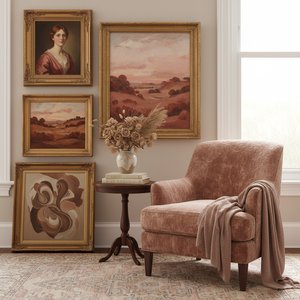
Rosabrun Dominans: Topp 10 Malerklassikere for Ditt Hjem | ArtsDot.no
Utforsk de 10 mest ikoniske maleriene dominert av nyanser av rosabrun! Oppdag historien bak klassikere fra renessansen til impresjonismen. Finn kunsttrykk og reproduksjoner av høy kvalitet på ArtsDot.com – for et stemningsfullt hjem.

Topp 10 Maler Dominert av Sopptoner: Kunsthistorie og Interiørinspirasjon
Utforsk 10 ikoniske malerier dominert av vakre sopptoner! Oppdag kunsthistorien bak Monet, Van Gogh og andre mestere. Finn inspirasjon til interiørdesign & kjøp reproduksjoner av høy kvalitet på ArtsDot.com.

Topp 10 Maler Dominert av Sandtoner: Kunsthistorie for Ditt Hjem
Utforsk topp 10 malerier dominert av sandtoner! Oppdag historien bak ikoniske kunstverk fra impresjonisme til renessanse. Finn inspirasjon for interiørdesign og kjøp museumskvalitets reproduksjoner på ArtsDot.com – din kilde til tidløs kunst.

De 10 mest ikoniske malerier dominert av jordfarger – Kunst for hjemmet | ArtsDot.no
Utforsk de 10 mest ikoniske maleriene dominert av jordfarger! Oppdag Rembrandts mesterverk, Monet’s impresjonisme og Van Goghs stil. Finn kunst til hjemmet & museumskvalitets reproduksjoner på ArtsDot.no – inspirasjon og tidløs skjønnhet.

Topp 10 Maler Dominert av Jordfarger – Kunst og Inspirasjon til Hjemmet
Utforsk 10 ikoniske malerier dominert av jordfarger og sandtoner! Oppdag historiene bak Rembrandts mesterverk, impresjonistiske landskap & mer. Finn kunsttrykk i museumskvalitet til ditt hjem på ArtsDot.com – inspirasjon og dekorasjon venter!