


 Se i rommet
 Del som digitalt kort
 Del
Del
 Detaljer
 Studentguide

 Last ned
 Liknende objekter
 Røntgen
 Lysbildefremvisning
 Besøksstatistikk
Interor view


 Les mer
Håndlaget oljereproduksjon
Håndmalt olje på lerret i din valgte størrelse og ramme, laget på bestilling av våre kunstnere. ( Bytt til trykkversjon Gå til digitalt bilde)




P118B Nkr10

P118H Nkr10

P118W Nkr10

P438Z Nkr10

P508JH Nkr12

P508YH Nkr12

P805H Nkr10

P805Z Nkr10

P919BZ Nkr10

P919G Nkr10

P919XJ Nkr10

P959ZH Nkr10

P968JZ Nkr12

W106C Nkr8

W218G Nkr10

W218JH Nkr8

W218Y Nkr10

W307PJ Nkr10

W316G Nkr10

W316PJ Nkr8

W316Y Nkr10

W398PJ Nkr8

W4111J Nkr10

W500HY Nkr15

W500JH Nkr15

W692G Nkr12

W849H Nkr8

W940BG Nkr15

W953PJ Nkr8




Velg mellom våre forhåndsdefinerte størrelser som bevarer kunstverkets opprinnelige proporsjoner.

Skriv inn bredden og høyden du trenger, slik at den passer til din ramme eller vegg. Dette er håndmalt, så for en størrelse med en annen form kan kunstneren male litt mer rundt bildet, eller beskjære det noe — du velger selv. Vi sender deg en digital mockup for godkjenning før maleriet påbegynnes. Bildet som vises på denne siden viser ikke det faktiske resultatet — kun mockuppen gjør det.
Etter bestilling vil ArtsDot.com-teamet sende e-post til kunden for instruksjoner og sende et utkast (mockup) som forhåndsvisning.
Verdensomspennende levering () på 3–4 uker i stedet for standard 5 uker. (21 October). Ingen kompromisser med kvaliteten.

Gratis ekspressfrakt over hele verden

Lerretsduk av høykvalitets lin

Full transportforsikring

Garanti for refusjon av toll og importavgifter

Garantert fargeekthet

100 dagers returrett ved fabrikasjonsfeil

100% pengene tilbake-garanti

Mengderabatt
 Glassalternativet er kun tilgjengelig i størrelser under 110 cm

Interor view
Reproduksjonsmetode
Format på reproduksjon
-


Totalpris
Nkr 2482
A Glimpse into Florentine Grandeur: The Interor View by Giorgio Vasari
Within the imposing walls of the Palazzo Vecchio in Florence resides a breathtaking fresco, “Interor View” by Giorgio Vasari – a masterpiece that transcends mere decoration and offers a profound window into the artistic and cultural heart of the Renaissance. Completed around 1555, this monumental work isn’t simply a depiction of a room; it's an immersive experience, a carefully constructed illusion designed to evoke a sense of timeless elegance and civic pride. Vasari, already a celebrated artist and historian, was commissioned by the Medici family to embellish the palace, solidifying his position as a key figure in shaping Florentine art and its legacy.
The painting itself is a testament to Vasari’s mastery of *trompe-l'oeil*, or “fooling the eye.” He employs frescoes – a technique favored during this era for its ability to create vibrant, enduring surfaces – to meticulously recreate an interior space. The scene unfolds within a grand chamber, dominated by a towering ceiling adorned with intricate coffers and classical motifs. Below, a substantial wooden table anchors the room, suggesting a setting for important meetings or formal gatherings. Antique busts of Greek philosophers flank the table, subtly reinforcing the intellectual atmosphere, while two chairs invite contemplation. Vasari’s skill isn't merely in replicating form; he captures light, shadow, and texture with remarkable precision, creating an illusion of depth that draws the viewer directly into the scene.
The Language of Renaissance Symbolism
Beyond its technical brilliance, “Interor View” is rich in symbolic meaning. The figures depicted within the fresco are not merely decorative; they represent key values and ideals of the Renaissance. Classical allegorical figures engage in activities that speak to virtue, wisdom, and justice – a deliberate nod to the classical heritage that Vasari so admired. The careful arrangement of these figures suggests a harmonious balance between earthly pursuits and divine inspiration. Note the subtle references to Roman mythology woven throughout the composition; these allusions were not merely aesthetic choices but served as potent reminders of the enduring legacy of ancient Rome, which Renaissance thinkers sought to revive.
The use of color is equally deliberate. Vasari masterfully employs a palette of rich reds, blues, and golds – colors associated with power, wealth, and divinity – to heighten the sense of grandeur and importance. The vibrant hues contrast beautifully with the muted tones of the architectural elements, creating a dynamic visual interplay that captivates the eye.
Vasari: A Renaissance Polymath
Understanding “Interor View” requires appreciating Giorgio Vasari himself. He was more than just an artist; he was a prolific writer and historian, best known for his monumental "Lives of the Most Excellent Painters, Sculptors, and Architects." This biographical work not only documented the lives of Renaissance masters but also shaped our understanding of art history itself. Vasari’s own artistic style reflected this multifaceted nature – he seamlessly blended painting, architecture, and historical scholarship. His meticulous attention to detail, combined with his deep knowledge of classical antiquity, made him a truly exceptional figure of the Renaissance.
A Legacy of Artistic Innovation
“Interor View” stands as a remarkable achievement in Renaissance art, showcasing Vasari’s technical skill, artistic vision, and profound understanding of symbolism. It's a testament to the power of illusion and a celebration of Florentine civic pride. Reproductions of this iconic fresco offer a unique opportunity to bring a piece of Renaissance grandeur into any setting – whether as a focal point in a grand salon or a subtle enhancement to a more intimate space. The painting’s enduring appeal lies not only in its beauty but also in its ability to transport the viewer back in time, offering a glimpse into the vibrant world of 16th-century Florence.
Spørsmål og svar
Hvor anbefales det å stille ut Panoramic-formatet av "Interor view"?
Panoramic-formatet til "Interor view" av Giorgio Vasari anbefales for et Living Room. Format og romfølelse fungerer sammen som en veiledning for plassering av en reproduksjon.
Hva er formatet på "Interor view"?
"Interor view" av Giorgio Vasari er en Panoramic komposisjon. Det er verdt å sjekke proporsjonene før du velger trykkstørrelse.
Kan "Interor view" av Giorgio Vasari, som er en del av samlingen til Palazzo Vecchio, reproduseres lovlig?
Opphavsretten til "Interor view" av Giorgio Vasari er klar: verket er i det frie domene – opphavsretten har utløpt. At det befinner seg hos Palazzo Vecchio, endrer ikke denne statusen.
Relaterte kunstverk


Kunstnerbiografi
A Life Woven into the Renaissance Fabric
Giorgio Vasari, born in Arezzo, Tuscany, on July 30, 1511, was more than simply a painter; he was a quintessential embodiment of the Italian Renaissance spirit. His life unfolded as a vibrant tapestry woven with threads of artistic creation, architectural innovation, insightful historical writing, and an unwavering dedication to celebrating the masters who came before him. From his earliest training under Guglielmo da Marsiglia, a skilled artisan in stained glass, young Giorgio’s path was steered towards visual artistry. However, it was his move to Florence at sixteen that truly ignited his potential. Immersing himself within the dynamic circle of Andrea del Sarto and absorbing the influences of Rosso Fiorentino and Jacopo Pontormo, Vasari began a journey that would see him become one of the most influential figures of his era. His formative years were also deeply marked by the patronage and friendship of the powerful Medici family, a relationship that would shape both his career and his perspective on art’s role in society.The Artist's Hand and Eye
Vasari’s artistic style is often categorized as Mannerist, reflecting the prevailing aesthetic trends of the mid-16th century. His paintings are characterized by elongated figures, dynamic compositions, and a sophisticated use of color—qualities highly admired during his lifetime. While perhaps not achieving the same level of enduring fame as some of the artists he chronicled, Vasari’s skill was undeniable. Notable works such as *The Studio of the Painter*, a fresco housed in Casa Vasari in Arezzo, offer a fascinating glimpse into the artistic practices of the time. The sheer scale and ambition of his frescoes for the Palazzo Vecchio in Florence, undertaken between 1555 and 1572, demonstrate his mastery of large-scale decorative schemes. His final monumental undertaking, *The Last Judgement*, adorning the cupola of Florence Cathedral—completed after his death by Federico Zuccari—stands as a testament to his unwavering commitment to grand artistic visions. Beyond painting, Vasari’s architectural contributions were equally significant. He designed the elegant loggia of the Palazzo degli Uffizi, transforming it into a public piazza and creating a vital link within Florence's urban landscape. Perhaps most famously, he conceived and oversaw the construction of the Vasari Corridor, a secret passageway connecting the Uffizi Gallery with the Palazzo Pitti—a feat of engineering and architectural ingenuity that continues to captivate visitors today.A Historian Forging a Legacy
However, it is arguably as an art historian that Giorgio Vasari secured his most lasting legacy. His monumental work, *Lives of the Most Excellent Painters, Sculptors, and Architects*, published in 1550 (with a revised edition in 1568), revolutionized the way art was understood and appreciated. This groundbreaking text wasn’t merely a collection of biographies; it established a narrative framework for the development of Italian Renaissance art, tracing its evolution from the early masters like Cimabue and Giotto to his contemporaries Michelangelo and Raphael. Vasari's work introduced the very concept of the “Renaissance” – a rebirth of classical ideals—and laid the foundation for modern art history as a discipline. While acknowledging that Vasari’s accounts are not without their biases and inaccuracies, particularly concerning artists predating his own time, the impact of *Lives* remains profound. It provided a crucial historical context for artistic creation, elevating the status of artists from skilled craftsmen to intellectual figures worthy of scholarly attention.Influences and Enduring Significance
Vasari’s artistic development was profoundly shaped by his exposure to the works of Renaissance masters. His visit to Rome in 1529, where he studied the art of Raphael and other High Renaissance artists, proved pivotal. He absorbed their principles of composition, anatomical accuracy, and idealized beauty, incorporating them into his own style. Michelangelo, whom Vasari greatly admired, exerted a particularly strong influence on both his painting and architecture. The grandeur and dynamism characteristic of Michelangelo’s work are evident in many of Vasari’s projects. Beyond specific artists, the broader intellectual currents of the Renaissance—humanism, classical learning, and a renewed interest in empirical observation—also informed Vasari's approach to art and history. Giorgio Vasari died on June 27, 1574, in Florence, leaving behind a multifaceted legacy that continues to resonate today. He was not only a talented artist and architect but also a pioneering historian whose writings shaped our understanding of one of the most transformative periods in Western art history. His work remains essential for anyone seeking to explore the rich cultural heritage of the Italian Renaissance.Major Achievements
- *The Lives of the Most Eminent Painters, Sculptors, and Architects* (1550): This seminal work established Vasari as a leading art historian and profoundly shaped our understanding of the Renaissance.
- Frescoes in Palazzo Vecchio: His monumental frescoes in the Palazzo Vecchio, including *The Studio of the Painter*, showcased his mastery of large-scale decorative schemes and demonstrated his ability to integrate narrative and symbolism.
- Design of the Uffizi Gallery Loggia: Vasari’s design for the loggia of the Uffizi Gallery transformed the space into a vibrant public piazza, enhancing Florence's urban landscape.
- Construction of the Vasari Corridor: His role in designing and overseeing the construction of the secret Vasari Corridor—a remarkable feat of engineering—demonstrates his architectural ingenuity and strategic thinking.
Key Influences
Early Training:** Initially trained by Guglielmo de Marcillat, a master glassmaker in Arezzo. Later mentored by Andrea del Sarto and influenced by Rosso Fiorentino and Jacopo Pontormo in Florence.Michelangelo:** Vasari held Michelangelo in the highest esteem, deeply admiring his artistic genius and incorporating elements of his style into his own work.
Renaissance Humanism:** The humanist ideals of the Renaissance—emphasizing classical learning, empirical observation, and the study of human nature—shaped Vasari’s approach to art and history.

Giorgio Vasari
1511 - 1574 , Italia
Kort om kunstneren
- Artistic Movement Or Style: Mannerisme
- Artists Or Movements Influenced By This Artist: ['Renaissance kunst']
- Artists Who Influenced This Artist:
- Michelangelo
- Andrea del Sarto
- Date Of Birth: 30. juli 1511
- Date Of Death: 27. juni 1574
- Full Name: Giorgio Vasari
- Nationality: Italiensk
- Notable Artworks:
- Studio maler
- Dommedagen
- Place Of Birth: Arezzo, Italia
Relaterte artikler

The Enduring Legacy of Fresco: Technique, History & Artistic Expression Across Cultures
Explore the rich history & enduring legacy of fresco painting! Discover ancient techniques, Giotto's masterpieces, and modern applications. Expert insights for art lovers & professionals.

The Enduring Legacy of Fresco Painting: Techniques, History & Contemporary Relevance
Explore the rich history & enduring artistry of fresco painting – from Giotto to Michelangelo! Discover techniques, conservation efforts, & modern applications. Learn how ArtsDot brings this timeless art form to your home.

The Enduring Legacy of Fresco: Technique, History & Artistic Expression
Explore the rich history & enduring artistry of fresco painting. Discover techniques from Giotto to Michelangelo, conservation efforts, & modern applications. Learn how ArtsDot brings this timeless art form to your home.
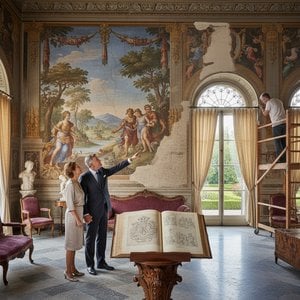
Fresko som Familiens Arv: Bevar Historien i Veggene
Lær om freskomaleriets historie og teknikk! Oppdag ikoniske verk og få tips til bevaring. Finn din perfekte freskoreproduksjon hos – kvalitet og ekspertise garantert.

Kunsten som lever med deg: Den emosjonelle kraften i et skreddersydd interiørfresko
Utforsk den emosjonelle kraften i skreddersydde interiørfresker. Ekspertise, håndverk og tidløs skjønnhet for ditt hjem. Få et unikt kunstverk – kontakt oss!


