


 Send
Send Del med andre
 Vis detaljer
 Veiledning

 Last ned bildet
 Liknende objekter
 Lysbildefremvisning
 Statistikk
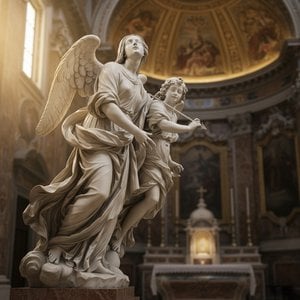
Saint Longinus


 Vis hele teksten
Håndlaget oljereproduksjon
Håndmalt olje på lerret i din valgte størrelse og ramme, laget på bestilling av våre kunstnere. ( Bytt til trykk Bytt til digitalt bilde)




































Velg mellom våre forhåndsdefinerte størrelser som bevarer kunstverkets opprinnelige proporsjoner.

Du kan angi egne mål for å tilpasse en spesifikk ramme eller plass. Dersom den valgte størrelsen ikke samsvarer med originalbildets proporsjoner, vil vi enten beskjære kunstverket eller utvide maleriet med ytterligere håndmalte elementer. En digital mockup vil bli sendt til din godkjenning før produksjonen starter.
Vennligst merk at forhåndsvisningen på skjermen ikke gjenspeiler den faktiske beskjæringen eller utvidelsen. Kun mockuppen vil vise den endelige komposisjonen nøyaktig.
Selv om tilpassede størrelser er tilgjengelige, anbefaler vi å velge et mål fra den forhåndsdefinerte listen for å bevare de originale proporsjonene.
Etter bestilling vil ArtsDot.com-teamet sende e-post til kunden for instruksjoner og sende et utkast (mockup) som forhåndsvisning.
Verdensomspennende levering () på 3–4 uker i stedet for standard 5 uker. (24 September). Ingen kompromisser med kvaliteten.

Gratis ekspressfrakt over hele verden

Lerretsduk av høykvalitets lin

Full forsikring under transport

Garanti for refusjon av toll og importavgifter

Garantert korrekt fargegjengivelse

100 dagers returrett (kun ved mangler)

100% pengene tilbake-garanti

Rabatt ved flere kjøp
 Glassalternativet er kun tilgjengelig i størrelser under 110 cm

Saint Longinus
Teknikk for reproduksjon
Størrelse på reproduksjon
-


Endelig pris
$ 263
A Moment Frozen in Marble: The Divine Drama of Saint Longinus
Within the hallowed, sun-drenched expanse of St. Peter's Basilica, a singular figure emerges from the shadows to command the soul of every pilgrim and art lover who wanders through its nave. Gian Lorenzo Bernini’s Saint Longinus is not merely a sculpture; it is a breathtaking theatrical event captured in eternal stone. Completed in 1631, this masterpiece serves as a cornerstone of the Baroque era, embodying the movement's profound desire to dissolve the boundary between the earthly and the divine. As you gaze upon the luminous marble, you are not observing a static object, but rather witnessing a pivotal heartbeat in Christian history—the precise moment of spiritual awakening for the Roman soldier who pierced the side of Christ.
Bernini, the undisputed virtuoso of the Roman Baroque, possessed an almost supernatural ability to manipulate cold, hard marble as if it were soft flesh or flowing fabric. In Saint Longinus, his technical prowess is on full display through a masterful use of chiaroscuro. By deeply carving the folds of the saint's drapery and sculpting the rugged musculature of his form, Bernini creates a complex interplay of light and shadow. This technique breathes life into the stone, allowing light to dance across the surfaces and highlight the intense, searching expression on Longinus' face. For the collector or designer, this work represents the pinnacle of sculptural achievement, where the material itself seems to pulse with an inner vitality.
Symbolism and the Language of Motion
The composition of the sculpture is a masterclass in dynamic energy. Unlike the balanced, serene figures of the Renaissance, Bernini’s Saint Longinus is caught in a state of profound motion. One arm is raised toward the heavens in a gesture of desperate supplantation, while the other hand firmly grips the lance—the very instrument of Christ's passion. This physical tension serves as a powerful metaphor for the internal struggle between doubt and faith. The lance itself acts as a symbolic bridge, connecting the brutal reality of the crucifixion to the miraculous conversion of the soldier. Every line of the figure’s posture directs the viewer's eye upward, guiding the spirit toward a sense of transcendence.
For those seeking to bring the grandeur of the Baroque into a curated space, understanding this emotional depth is essential. The sculpture does not just depict a person; it depicts an emotion—a mixture of anguish, reverence, and sudden, overwhelming revelation. The way the light catches the polished marble surfaces evokes a sense of celestial presence, making the piece an ideal inspiration for high-end interior environments that aim to evoke awe, contemplation, and historical weight. To possess a reproduction of such a work is to invite a conversation about the enduring power of faith and the transformative nature of art into one's personal or professional sanctuary.
Lignende kunstverk


Om kunstneren
A Roman Genius: The Life and Legacy of Gian Lorenzo Bernini
Gian Lorenzo Bernini, a name synonymous with the Baroque era, was more than just a sculptor; he was an architect, painter, stage designer, and a true *uomo universale* – a Renaissance man who profoundly shaped the artistic landscape of 17th-century Rome. Born in Naples in 1598, his journey to becoming one of history’s most celebrated artists began within a family steeped in sculpting tradition, ultimately leading him to dominate the visual arts and redefine how art could engage the senses and evoke profound emotion. His father, Pietro Bernini, instilled in young Gian Lorenzo not only technical skills but also an early appreciation for the classical heritage that would become the bedrock of his artistic vision.Sculpting Emotion: The Birth of Baroque Drama
Bernini’s genius truly blossomed under the patronage of Cardinal Maffeo Barberini, who later ascended to the papacy as Urban VIII. This relationship proved pivotal, providing Bernini with unprecedented opportunities and shaping not only his career but also the very aesthetic sensibilities of Rome itself. He didn't simply carve stone; he breathed life into marble, capturing fleeting moments of intense psychological depth and dramatic narrative with an unparalleled skill that defined the Baroque style. Unlike the idealized forms of the Renaissance, Bernini embraced movement, theatricality, and raw human emotion. His sculptures weren’t static representations but dynamic scenes designed to elicit a visceral response from the viewer. Key elements of his distinctive style included a masterful ability to convey complex emotions through subtle shifts in facial expression and body language; an astonishing technical proficiency that allowed him to render textures – flowing hair, delicate fabrics, smooth skin – with breathtaking realism; and above all, a commitment to dramatic narrative, depicting moments of intense action or spiritual climax. The *Ecstasy of Saint Teresa*, housed within the Cornaro Chapel, stands as perhaps his most iconic achievement—a swirling composition of marble, bronze, and light that captures a mystical experience with an almost overwhelming emotional force. Works like *Apollo and Daphne* and *David* showcase this same dynamic energy, transforming stone into moments of transformation and poised tension.Beyond Sculpture: Architecture and Urban Visions
Bernini’s artistic vision extended far beyond the confines of sculpture; he was a remarkably versatile artist who made significant contributions to architecture and urban planning, fundamentally reshaping the cityscape of Rome. His architectural designs were never conceived in isolation; they were always integrated with his sculptural work, creating unified artistic experiences that blurred the boundaries between disciplines. The monumental *Baldacchino* above the high altar of St. Peter’s Basilica is a testament to this holistic approach—a soaring bronze canopy that dominates the space and draws the eye upwards in awe. He also played a pivotal role in redesigning several Roman piazzas, transforming them into vibrant public spaces. The *Fountain of the Four Rivers* in Piazza Navona, with its allegorical figures representing major rivers from different continents, is a prime example of his ability to create dynamic and engaging urban environments. His work on St. Peter’s Basilica, including the expansive colonnade that embraces visitors as they approach, dramatically altered the basilica's appearance and created a grand ceremonial space befitting the heart of Christendom.A Lasting Influence: Bernini’s Historical Significance
Gian Lorenzo Bernini profoundly impacted the course of Western art. His innovative approach to sculpture established the Baroque style as a dominant force in European art for over a century, influencing generations of artists with his dramatic compositions and technical virtuosity. He wasn't merely an imitator of classical forms; he synthesized them with a new sense of dynamism and emotional intensity, creating something entirely original. His integration of sculpture, architecture, and painting into unified artistic experiences set a new standard for artistic expression, demonstrating the power of art to engage all the senses and evoke profound emotions. As Howard Hibbard eloquently noted, Bernini’s impact was so significant that he stands as “the greatest sculptor of the 17th century.” His works continue to inspire awe and admiration, solidifying his place as one of history's most important artists—a true *uomo universale* whose legacy continues to resonate today.Family & Further Achievements
- Pietro Bernini: Gian Lorenzo’s father, a sculptor who provided early training and guidance.
- Cardinal Scipione Borghese: An early patron whose commissions allowed Bernini to develop his signature style.
- Pope Urban VIII: Bernini's most significant patron, providing extensive opportunities for architectural and sculptural projects in Rome.
- Architectural Projects: Beyond St. Peter’s Basilica, Bernini designed churches like Sant’Andrea al Quirinale and contributed to the design of Palazzo Barberini.
- Theatrical Designs: He was also a playwright and stage designer, creating elaborate sets and machinery for theatrical productions.

Gian Lorenzo Bernini
1598 - 1680 , Italia
Kort om kunstneren
- Artistic Movement Or Style: Barokk
- Artists Or Movements Influenced By This Artist:
- Barokk skulptur
- Europa kunst
- Artists Who Influenced This Artist:
- Pietro Bernini
- Michelangelo
- Date Of Birth: 7. desember 1598
- Date Of Death: 28. november 1680
- Full Name: Gian Lorenzo Bernini
- Nationality: Italiensk
- Notable Artworks:
- Ecstasy Teresa
- Apollo Daphne
- David
- Fountain Fiori
- Place Of Birth: Naples, Italia
Relaterte artikler

Bronzens Mesterverk: 10 Skulpturer Som Forandret Kunsthistorien | ArtsDot
Oppdag 10 legendariske bronse skulpturer som revolusjonerte kunsthistorien! Fra Michelangelo til Rodin – lær om teknikker, historier og tidløs skjønnhet. Finn museumskvalitets reproduksjoner & interiørinspirasjon på ArtsDot.com.
Gian Lorenzo Bernini: Sculpting Baroque Emotion & the Roman Imagination
Explore the life & revolutionary art of Gian Lorenzo Bernini, the master sculptor of the Baroque era. Discover his iconic works like David and Ecstasy of Saint Teresa – a journey into Roman artistic genius.

The Enduring Form: Exploring Themes & Techniques in Sculpture Across Historical Periods
Explore the rich history of sculpture from ancient masterpieces to contemporary innovations. Discover key techniques, influential artists & investment potential for discerning art collectors.

Theatricality & Triumph: Baroque Drama in Painting & Sculpture
Explore the dramatic world of Baroque art! Discover its history, defining characteristics, & lasting influence on painting & sculpture. Expert insights into Caravaggio, Zurbarán, and Bernini – plus high-quality reproductions at ArtsDot.

Bronseklassikere: 10 skulpturer som revolusjonerte kunsten | ArtsDot
Utforsk 10 legendariske bronseskulpturer som formet kunsthistorien! Fra Rodin til Michelangelo – oppdag historiene, teknikkene og skjønnheten bak tidløse mesterverk. Finn din perfekte veggkunst eller interiørdekor på ArtsDot.com.
